Rural Economy and Connectivity Committee
Stage 1 Report on the Transport (Scotland) Bill
Summary of conclusions and recommendations
Overall conclusion
The Committee supports the general principles of the Bill and recommends to the Parliament that they be agreed to.
Low Emission Zones (LEZs)
Objectives
The Committee agrees that it would be beneficial to include in the Bill a clear definition of what a Low Emission Zone (LEZ) is and what its objectives should be, drawing on those that are set out in the Policy Memorandum. It therefore recommends that the Scottish Government brings forward an appropriate amendment at Stage 2 to insert such a definition.
The Committee is also of the view that effective introduction of LEZs will require steps to be taken in advance to provide improvements in public transport provision and to put in place measures such as park and ride facilities and improved active travel opportunities.
Enforcement and compliance
The Committee acknowledges that challenges could arise should a LEZ contain, for example, healthcare facilities such as hospitals which may need to be accessed by a large number of people but on an infrequent basis. It calls on the Scottish Government to be aware of this potential scenario and seek to address it in the proposed guidance for local authorities.
The Committee recommends that Local Authorities considering the introduction of LEZs should take on board the learning from the experience of the London LEZ and create a strong consumer focus to help increase compliance and public acceptance of the zones. This should include education on why the zone is important and the benefits it will deliver, together with a strong appeals process to address queries on penalties, circumstances when drivers require to access the zone in emergency situations, etc.
The Committee considers that there is merit in several of the points raised in the Law Society of Scotland's submission calling for more detail to be provided on the face of the Bill on emissions standards, penalty charges, offences and appeals which relate to LEZs. It recommends that the Scottish Government reflects on these points and considers bringing forward amendments where appropriate to address these points at Stage 2.
The Committee calls on the Scottish Government to provide a clear indication in advance of Stage 2 of how it intends to take into account the evidence received during the course of the Stage 1 scrutiny when it is creating the guidance on LEZs. It notes that this guidance will need to be published promptly in order to be of full use to local authorities.
The need for national standards
The Committee believes that to avoid confusion and to encourage compliance there must be consistency across the country as to which vehicles can enter a LEZ and which are exempt. It calls on the Scottish Government to set a national minimum technical emissions standard for vehicles which can enter a LEZ. It notes the Scottish Government's willingness to address this matter in the regulations which will be brought following the implementation of the Bill's provisions.
The Committee also recommends that standardised signage should be developed for LEZs to encourage familiarisation and reduce confusion amongst road users who might visit several different zones across Scotland.
The Committee calls on the Scottish Government to carefully consider how local authorities will effectively communicate the purpose and impact of LEZs to people who live and work in their areas. It believes that a comprehensive package of information should be provided by local authorities at planning, development and implementation stages to allow people to contribute views on proposals and to have sufficient time to prepare for the changes.
The Committee recommends that further work should be done to quantify the financial cost of a life lost to air pollution in a similar way to the calculation that is already available for a life lost in a road traffic accident. It welcomes the Scottish Government's indication that it is willing to consider carrying out this work.
The displacement effect and the need for a holistic approach
It is clear to the Committee that LEZs could potentially have a range of knock-on impacts and unintended consequences for individuals, communities and businesses. They could also impact on traffic management, planning and the environment in other localities around the periphery of zones. The Committee is clear that implementation of LEZs should be planned carefully in order to avoid unintended consequences such as significant displacement of traffic or pollution.
The Committee calls on the Scottish Government to ensure that the regulations and guidance on LEZs are structured in a way which will encourage a wider, holistic approach to public health, place making, traffic management, public transport provision and modal shift.
The Committee is also of the view that LEZs should not be introduced unless appropriate steps are taken in advance to provide improvements in public transport provision and to put in place measures such as park and ride facilities and improved active travel opportunities to incentivise people to make a choice not to take vehicles into the zone.
The Committee believes that Regional Transport Partnerships (RTPs) could have an important role in helping deliver this. Support for planning transport networks and providing appropriate infrastructure, such as bus lanes, must also be available to help ease the transition, reduce congestion, encourage modal shift and help increase public acceptance of LEZs.
Timescales, technology and financial implications
The Committee recognises that there is an urgent need to address the environmental issues around poor air quality given their impact on public health. However, in order for LEZs to be a success they must have public support, understanding and buy in, especially in times of fiscal constraint.
The Committee acknowledges the financial burden that might be faced by businesses and individual motorists should they need to upgrade or replace vehicles to meet the necessary emissions standards. It notes that this is likely to present a particular challenge for those on lower incomes.
It calls on the Scottish Government to consider how those operating in the voluntary and community transport sectors might be supported to either retrofit or upgrade their vehicles so that they are not disproportionately impacted by the introduction of LEZs.
It is also of the view that if a meaningful step change is to occur in the improving the emissions efficiency of commercial vehicles, this needs to be managed in a way which is both realistic and ambitious.
The Committee acknowledges that the Scottish Government is considering how the Low Emission Support Fund might help support users of light good vehicles and that bus retrofit funding is already available. It therefore calls on the Scottish Government to consider how it can develop existing schemes and create additional incentives and support which will encourage commercial vehicle upgrades. The Committee notes that if successful this could, in turn, result in a consequential trickle down effect of environmentally compliant vehicles which will help feed the second hand market.
The Committee notes that the Scottish Government anticipates that approved devices in the form of Automatic Number Plate Recognition cameras will be used to enforce LEZs in the same manner as they do in relation to other existing moving traffic offences. It is reassured that this will deal with concerns about the use of private and foreign number plates raised by the road haulage industry. However, it recommends that clarity on such matters should be provided to the road haulage industry and, in due course, in the relevant regulations and associated guidance.
Finance - low emissions zones
The Committee is aware of the challenging financial circumstances under which local authorities are currently operating. It is of the view that the implementation of LEZs will not be a success unless they have the appropriate finance and staff resources available to them.
While it appreciates that more work is required in order to establish the details of how LEZs will operate, the Committee notes with concern that there is currently no formula or methodology established for how the split between local and central government funding will work in practice. It calls on the Scottish Government to provide clarity on the funding methodology which will apply, in advance of Stage 2.
Bus Services
General decline of bus passenger numbers
The Committee acknowledges the widespread concern at the decline in bus use across Scotland. It notes that there are a variety of factors which are contributing to this decline, such as the reduction of direct bus support in rural areas, and congestion and a lack of appropriate infrastructure in some urban areas.
The Committee notes the concerns expressed by several stakeholders in evidence that the bus services proposals in the Bill are unlikely to make a marked difference in arresting the decline in bus patronage.
The Committee calls on the Scottish Government to work with local authorities to help support an improvement in bus lane and other relevant infrastructure. The Committee notes that Bus Service Improvement Partnerships could play a role in the development of this infrastructure.
Accessibility and quality of bus services
The Committee believes that the ability to access transport can play a fundamental role in how a person can contribute to and participate in society. It notes the suggestions made on the Bill from the Equality and Human Rights Commission and asks the Scottish Government to reflect on and respond to these in detail before Stage 2 of the Bill.
The Committee calls on the Scottish Government to consider whether an appropriate quality assurance framework could be developed and applied to the bus industry to help raise standards and drive improvement in the passenger experience.
Provision of bus services by local authorities
The Committee believes that the current provisions in the Bill to allow councils to run their own bus services may not deliver the desired policy outcome, given that it was strongly suggested in evidence that few local authorities are likely to have the financial resources to take advantage of the options set out in the legislation.
The Committee considers that the requirement in the Bill that local authorities will only be able to provide bus services if they are to meet "an unmet public transport need" creates an unnecessary restriction. It therefore recommends that the Scottish Government brings forward an amendment at Stage 2 to remove this restriction and provide greater flexibility to local authorities in their ability to provide local bus services.
The Committee calls on the Scottish Government to provide additional information on how it would expect the provisions which will allow councils to run bus services to operate in practice and to indicate what guidance and support will be available to local authorities to ensure that they do not fall foul of competition law.
The Committee notes that the Bill as currently drafted could have implications for local authorities who make significant investment in vehicles, depots and staff to meet unmet need, and then subsequently find that commercial operators seek to run services on the same routes. The Committee calls on the Scottish Government to respond to these concerns and provide an indication as to how local authorities might safeguard their investment in such situations.
The Committee recommends that the Scottish Government consider how any disputes in relation to the interaction between local authority provided services and those provided by commercial operators would be dealt with. For example, if a local authority service uses part of the route on a commercial corridor. It calls on the Scottish Government to bring forward an amendment to this effect or set out how it might address this issue in regulations.
The Committee notes that some local authorities currently lack the experience or expertise which may be required to run their own bus services. It calls on the Scottish Government to consider how appropriate guidance and financial support, possibly redirected from existing monies, might be provided where needed to help build knowledge and capacity.
The Committee notes that several stakeholders are supportive of the use of arm's length companies to run local authority bus services. It calls on the Scottish Government to consider whether an option to this effect should be included in the Bill at Stage 2.
Bus Service Improvement Partnerships
The Committee notes that the proposals in the Bill around Bus Service Improvement Partnerships (BSIPs) are generally welcomed. However, it also notes that a number of local authorities question whether they will be able to take up a partnership in practice. It is acknowledged that this may be for a variety of reasons. However, the Committee is aware that one of the major reasons would be the time and resource required to create a partnership agreement.
The Committee welcomes the further information provided by the Scottish Government which helpfully outlines how BSIPs will work in practice and how they will differ from the previous scheme. However, the Committee notes that this clarity is lacking in the Bill as drafted. It calls on the Scottish Government to ensure that this clarity of structure and purpose is made clear in guidance and any associated regulations.
The practicalities of partnership working
The Committee acknowledges that what is determined to be a "sufficient number" of objections to the creation of a BSIP will be determined in regulations. However, it calls on the Scottish Government to carefully consider how this assessment is made. It notes that the market share of any operators that object, the number of services they operate as well as location and frequency may have a significant impact. It calls on the Scottish Government to be mindful that it is not simply a case of the overall number of objections involved.
The Committee notes the evidence which suggests that the enforcement of compliance with BSIPs may lack balance as the Traffic Commissioner will have jurisdiction to enforce the operators' commitments but not those of local authorities. The Committee believes that in order for a partnership to be truly effective, a level playing field should apply insofar as is possible. It therefore calls on the Scottish Government to reflect on whether the Bill might be amended to address this issue.
The Committee notes concerns expressed in evidence that provisions relating to BSIPs as drafted do not contain the obligation to invest in infrastructure improvements that existed within the Statutory Quality Partnership model. The Committee would again highlight the importance of infrastructure such as bus lanes in facilitating bus service improvement by reducing congestion and encouraging an increase in bus use. It calls on the Scottish Government to bring forward an amendment at Stage 2 to include such an obligation in the provisions which relate to BSIPs .
Local bus service franchising
The Committee notes that, in practice, franchising may only be taken up by a small number of local authorities which have the time and resources to establish a framework.
The Committee notes that local authorities would require access to commercially held route patronage and revenue information in order to fully evaluate whether it would be appropriate and beneficial for it to enter into a franchise. It calls on the Scottish Government to consider whether the service data provisions contained in the Bill might facilitate the provision of this information or whether the Bill might need to be amended to provide for this.
The Committee notes that if franchising is to succeed in areas where routes operate across local authority boundaries, RTPs are likely to have an important strategic and coordinating role.
The Committee notes the concerns of existing commercial operators as to the negative impact franchising may have on their businesses and the people they employ if introduced in areas in which they operate. It calls on the Scottish Government to provide greater clarity in guidance as to how any transition process would be supported and any negative impact mitigated.
The Committee notes concerns raised by stakeholders about the potential lack of democratic accountability and transparency of the independent panel which will take the final decision on a franchising proposal. It also notes the suggestion that the use of such an approach in England was deemed to be flawed and was subsequently removed from the relevant legislation. The Committee calls on the Scottish Government to provide a response to these concerns prior to Stage 2.
Service data
The Committee acknowledges that the provisions requiring the sharing of certain data by operators are likely to be of benefit to local authorities in allowing them to reduce risks when contemplating the replacement of services that have been withdrawn by operators.
The Committee would encourage the Scottish Government to work with all stakeholders when developing the guidance to establish whether some sort of 'fair use' policy may be helpful in relation to data requests.
The Committee also sees advantage in patronage and revenue information being shared with local authorities by bus operators to aid consideration of whether a local bus service franchising arrangement should be introduced. It calls on the Scottish Government to consider this issue and provide its views on whether it might be appropriate in its response to this report.
The Committee welcomes the Scottish Government playing a coordinating role in the creation and agreement of the format in which service data will be provided. It believes that consistency is essential in how this data is compiled. However, it notes that creating this consistency across the board may mean time and financial resources to reformat data which doesn't conform to the standard. It calls on the Scottish Government to consider this additional burden when setting the parameters for the data collection.
The Committee would encourage the Scottish Government to consider what technological solutions can be made available to help reduce any bureaucracy around the use and provision of data. It believes that the provision of real time information in an easily digestible format will make an important contribution to the increase in bus use.
The Committee also notes the importance of the accessibility of the information that is provided to ensure that all sections of society can access transport effectively. This includes people with disabilities and those for whom English is not their first language.
Finance - bus services provisions
The Committee recognises that the various provisions relating to bus services are intended to provide local authorities with a range of options to assist them in ensuring that efficient and reliable bus services can be provided in a way that best suits their respective circumstances.
However, the Committee is concerned that whilst many of these provisions are broadly considered to be positive steps, the reality may be that few of them are taken up in practice due to a lack of financial resources to facilitate their set up and operation. The Committee calls on the Scottish Government to provide details of how it intends to monitor take-up and implementation of the various provisions and to indicate whether any additional financial or advisory support will be made available to assist local authorities to prepare and implement the various provisions.
Ticketing arrangements and schemes
The Committee is concerned that whilst the provisions in the Bill may well deliver some improvements, for example by encouraging a greater degree of inter-operability through the introduction of a national technical standard, these alone will not deliver the aspirations for ticketing arrangements and schemes that are shared by stakeholders.
The Committee is concerned that the provisions on ticketing arrangements and schemes in the Bill lack ambition and feels that an opportunity has been missed to deliver a meaningful step change in integrated public transport provision in Scotland. The Committee is of the view that this can only be achieved through the introduction of a single ticketing scheme operating across all modes and operators.
The Committee acknowledges that this would require a significant level of commitment by and cooperation between public transport providers, integration of booking and financial systems and other measures. However, the Committee calls on the Scottish Government to show leadership in this area and to bring forward proposals for the development of a single ticket scheme to be inserted into the Bill before it completes its parliamentary passage.
National technical standard for smart ticketing
The Committee notes the intended purpose of the provisions in the Bill for a national standard for smart ticketing. It also acknowledges the broad support for these in the evidence it received.
National Smart Ticketing Advisory Board
The Committee fully subscribes to the views expressed in evidence that the membership of the National Smart Ticketing Advisory Board should consist of a broad representation from all key stakeholder groups, with particular attention paid to geographical spread and accessibility.
The Committee welcomes the commitment from the Scottish Government for the Advisory Board to consider the need for paper and cash methods of payment. The Committee supports the availability of multiple methods of payment. It reiterates the call from the Mobility and Access Committee for Scotland for thorough Equality Impact Assessments to be carried out on ticketing, to ensure that the needs of all potential users, particularly older and disabled people are fully taken into account.
However, the Committee considers that the remit of the Advisory Board should be widened to include a responsibility to bring forward proposals for a single ticketing scheme to apply across all modes of public transport in Scotland as recommended in this report. It calls on the Scottish Government to bring forward an amendment to this effect before the Bill has completed its parliamentary passage.
Directions and reporting
The Committee notes the evidence received which suggests that whilst the provisions in the bill allow Ministers to instruct local authorities to introduce a smart ticketing scheme, a gap exists in that there is no power to allow local authorities to instruct operators to participate. The Committee therefore questions whether local authorities, or indeed the Scottish Government, would have a mandate to instruct operators to do so. If no such mandate exists, the Committee suggests that this could present a significant barrier to the introduction of such schemes, should an operator choose not to participate. It calls on the Scottish Government to provide it with view on how it envisages such issues might be addressed in practice.
The Committee questions the need for additional reporting on smart ticketing at a time when local authority resources are already stretched. It recommends that the Scottish Government should consider whether managing reporting at a regional level or by utilising alternative less resource-intensive technological solutions may be more appropriate to obtain the information it requires.
Finance - ticketing arrangements and schemes
The Committee notes the potential financial impact of Part 3 of the Bill on local authorities and RTPs. Before any power to direct local authorities to set up or vary a scheme is used, the Scottish Government should ensure adequate funding is available. The Committee also recognises that the requirement for local authorities to produce annual reports on smart-ticketing schemes will require staff resources. It therefore calls on the Scottish Government to reconsider the classification of this as negligible within the Financial Memorandum.
Pavement parking and double parking
The Committee acknowledges the vital importance of maintaining clear pavements and walkways. However, it considers that there must also be a recognition that people have a desire to park near their homes, community transport providers require to access their service users and delivery services need to access their customers. The Committee is of the view that the suggestion made by some stakeholders that a limited amount of pavement parking could be permitted in pressured areas provided a minimum of 1.5M pavement space remains for access is worthy of consideration as an additional exemption which might be made available to local authorities It recommends that the Scottish Government examines this proposal and considers whether such an approach might be incorporated within the pavement parking provisions and reports back to the Committee.
The Committee notes the exemptions which are available and welcomes the Scottish Government's willingness to consider whether greater clarity can be provided in the Bill or in regulations as to where and how exemptions can be applied. It notes the suggestion in evidence that a better definition of 'obstruction' on pavements could be helpful in this regard and calls on the Scottish Government to consider making an appropriate amendment at Stage 2 .
The provisions in this Part of the Bill apply only to pavements. The Committee heard some concerns in evidence that dedicated cycleways may also be blocked by vehicles. Given that such cycleways are increasingly becoming an integral feature of the urban environment, the Committee calls on the Scottish Government to consider whether it would be appropriate to extend the provisions to cover cycleways.
The Committee also notes that there is no provision in the Bill for additional or alternative parking if pavement parking is made an offence. It heard that this may create a problem in circumstances where a significant number of vehicles are displaced and they have nowhere else to park. It calls on the Scottish Government to provide details of how it anticipates local authorities might address such issues, particularly where availability of suitable land and financial resources might be limited.
Delivery/loading exemption
The Committee believes that the exemption in the bill to allow 20 minutes for loading and unloading of deliveries may have the unintended consequence of creating a national exemption for pavement parking by commercial vehicles. However, more fundamentally, it is concerned that the 20 minute time limit is an arbitrary one and, on that basis, it questions the appropriateness of including this provision in legislation. The Committee also has significant concerns about how workable and enforceable this provision would be in practice.
The Committee therefore calls on the Scottish Government to bring forward an amendment at Stage 2 to remove the 20 minute exemption for deliveries and loading from the Bill. It considers that a more appropriate and workable mechanism for managing commercial delivery and loading arrangements should be developed and included in guidance.
Dropped kerbs
The Committee considers the issue of parking across dropped kerbs at pedestrian and other recognised crossing places to be as significant a barrier to the accessibility of urban streets, facilities and services as pavement and double parking, both of which are being prohibited by the Bill. It considers that supplementing these provisions with a prohibition of parking across such formally recognised crossing points (as distinct from residential driveways) would provide a package of measures which would more comprehensively enhance accessibility in urban areas.
The Committee therefore calls on the Scottish Government to bring forward an amendment at Stage 2 to prohibit parking over pedestrian crossing points and other public access points.
Enforcement and finance
The Committee acknowledges the concerns expressed by local authorities about the cost of implementation, managing the process of exemptions and enforcement in relation to the parking prohibition provisions in the Bill. The Committee believes that without robust and appropriately funded enforcement many of the provisions will be ineffective in practice.
The Committee acknowledges the challenging situation local authorities face in terms of finance and resources. It welcomes the Scottish Government commitment to work with local authorities and COSLA, through a parking standards working group, to develop more robust costs for each of the respective areas. It calls on the Scottish Government to respond to the findings of this working group and to provide additional support to councils should it determine that this is required.
The Committee is concerned that the provisions in the Bill may also lead to an unintentional two-tier system for parking enforcement in areas where there is no decriminalised parking enforcement. It calls on the Scottish Government to consider whether the Bill could be used as a mechanism to speed up and simplify the bureaucracy around the current decriminalisation process which allows the transition of responsibility to local authorities from Police Scotland control.
The Committee seeks clarity from the Scottish Government on whether it intends the parking regulations in the Bill to be a ‘power’ for use by local authorities, or a ‘duty’ which they will be required to apply. It considers the provision of such clarity to be necessary as it may have implications for those local authorities that have not as yet opted to decriminalise parking enforcement.
The Committee welcomes the Scottish Government's intention to undertake a nationwide campaign before any parking changes are implemented. It calls on the Scottish Government to ensure that the campaign is as widespread and inclusive as possible and include vulnerable groups and those for which English may not be their first language.
Road works
The Committee welcomes the proposals in the Bill regarding road works and is of the view that they will provide a positive framework to help to continue to improve the quality, safety and performance of roadworks in Scotland.
However, the Committee is concerned, that although there is effective guidance available about how road works should operate there is a problem with inspection and enforcement of that guidance at a local level. As mentioned earlier in this report, the Committee acknowledges the challenging situation local authorities face in terms of finance and resources. However, it would encourage them to consider how inspection and enforcement practices can be improved where possible in their local areas.
The Committee asks the Scottish Government to reflect on the points raised in the evidence submission by the Law Society in relation to road works and consider bringing forward amendments where appropriate at stage 2.
Regional Transport Partnership finance
The Committee welcomes the proposals in the Bill which bring greater flexibility to the management of RTP finance.
Canals
The Committee notes the provisions in the Bill which will allow for an increase in the number of Scottish Canals board members.
The Committee recognises that the Bill does not contain any proposals to amend the legislation which covers the upkeep and maintenance of canals. It notes that the Scottish Government does not currently have any plans to update the relevant legislation. However, the Committee calls on the Scottish Government to set out in writing how, if no legislative change is required, the current challenges in maintaining Scotland's canal infrastructure might be addressed.
Workplace parking levy - forthcoming amendment to the Bill
The Committee is aware that the Scottish Government has announced that it is to support an agreed Scottish Green Party amendment at Stage 2 of the Bill on the granting of powers to local authorities to introduce a workplace parking levy. It is understood that Scottish Government support for this amendment is contingent on the exclusion of NHS premises.
The Committee is concerned that this amendment, which will seek to make a significant addition to the Bill, is to be brought forward at Stage 2. It therefore considers it to be essential that it is has the opportunity to scrutinise the terms of any such amendment. The Committee therefore requires a timetable for Stage 2 consideration which will allow it to take oral evidence on the proposed amendment from key stakeholders, before making a formal decision on the amendment.
Introduction
The Transport (Scotland) Bill was introduced by the Cabinet Secretary for Finance and Constitution, Derek Mackay MSP, on 8 June 2018. The Rural Economy and Connectivity Committee was designated by the Parliamentary Bureau as the lead committee for Stage 1 consideration of the Bill.
The membership of the Committee changed during the consideration of this Bill. Kate Forbes MSP was replaced by Maureen Watt MSP on 9 September 2018.
The Committee launched a call for views on the Bill which ran from 29 June to 28 September 2018. This resulted in 95 individual written submissions and 278 responses to an accompanying online survey. The Committee was also copied in to 487 campaign emails as part of Living Streets Scotland and Guide Dogs Scotland campaigns relating specifically to the pavement parking and double parking provisions in the Bill.
The Committee took oral evidence on the Bill from September to November 2018 from a range of local authorities, national bodies, businesses and communities groups. As part of its evidence gathering the Committee also undertook the following activity to inform its consideration of the Bill:
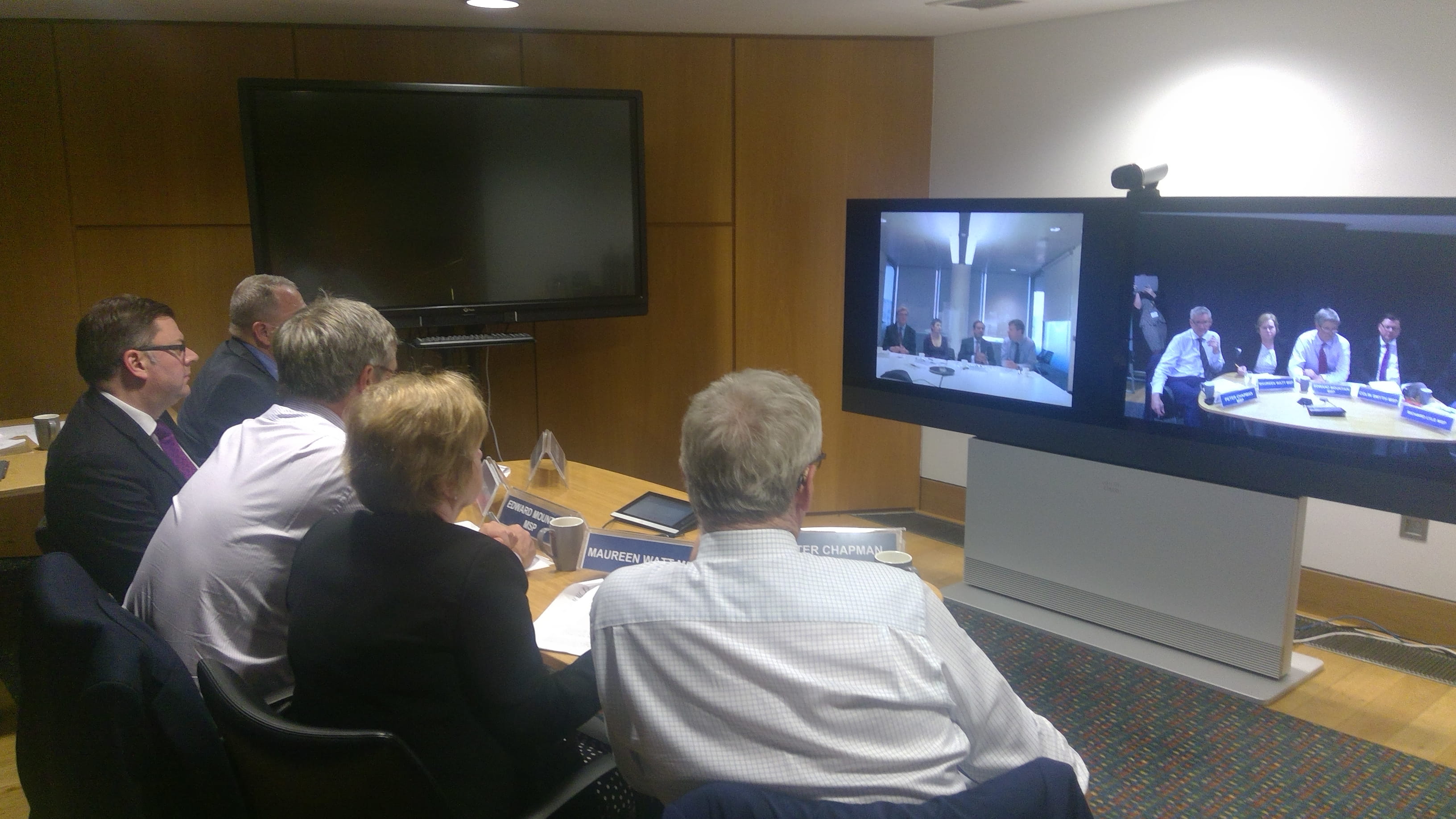
a video conference with transport authorities in London to discuss low emission zones; bus services and smart ticketing;
an evening discussion event attended by a wide range of stakeholders in the Scottish Parliament on 24 October 2018. 47 people from a range of community groups, local authorities and business interests were present;
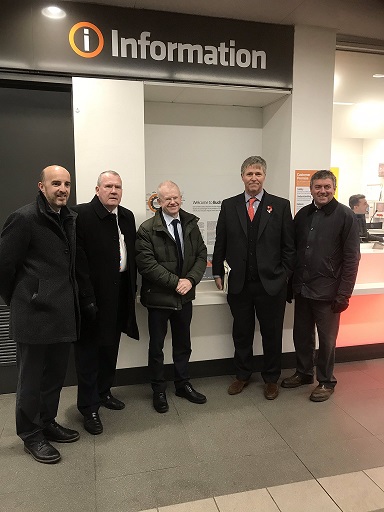
a visit to Strathclyde Partnership for Transport in Glasgow to discuss recent transport developments in Glasgow city centre. This included a tour of Buchanan Bus Station, refurbished Buchanan Street Subway Station, bus gate at Nelson Mandela Place and Union Street redevelopment; and
Committee Member Colin Smyth visited the Scottish Youth Parliament on behalf of the Committee to attend a meeting of the Transport, Environment and Rural Affairs Committee, and participate in workshops on the Bill.
Purpose and content of the Bill
The Bill covers a range of different transport topics in six parts:
Low Emissions Zones - Part 1 of the Bill enables the creation of enforceable low emission zones in Scotland, with the aim of improving air quality and reducing greenhouse gas emissions. This would restrict driving in certain areas by vehicles which fail to meet emission standards.
Bus services - Part 2 is intended to provide local transport authorities with options to improve bus services in their areas. This could include partnership working with operators, local franchising or running their own buses. Part 2 also aims to improve the information given to passengers.
Smart ticketing - Part 3 would create a national technological standard for smart ticketing to assist the implementation and operation of smart ticketing across public transport in Scotland, and provide local transport authorities with further powers for smart ticketing arrangements and schemes.
Responsible parking – Part 4 proposes to improve safety for roads users and pedestrians by prohibiting double parking and parking on pavements.
Road works - Part 5 would strengthen the role of the Scottish Road Works Commissioner (SRWC) and improve the regulation of road works.
Regional Transport Partnerships and Scotland’s canals - Part 6 gives Regional Transport Partnerships more financial flexibility. It also allows Scottish Ministers to vary the membership and structure of the Scottish Canals Board.
Low Emission Zones (LEZs)
Air pollution is a major environmental risk to human health1. Poor air quality is linked to a number of health problems, including lung cancer, strokes, cardiovascular disease and premature death. Low Emission Zones (LEZs) are areas where access is restricted for vehicles which do not meet specified vehicle emission standards. Part 1 of the Bill would create a system allowing local authorities to establish, operate, amend and revoke LEZ schemes. The Policy Memorandum accompanying the Bill states that:
Low emission zones will help to protect human health; support the achievement of, and progress beyond, compliance with Scottish and European air quality legislative requirements, whilst contributing to improvements in road network operations and helping to tackle congestion (in tandem with other transport policies); encourage modal shift towards active travel and public transport; and support placemaking to improve town and city spaces in order to create attractive places to live, work and visit.
Transport (Scotland) Bill - Policy MemorandumThe Bill proposes that an LEZ would:
restrict the driving of vehicles within an LEZ to those that meet the specified emissions standards or are exempted from the LEZ restrictions;
require anyone who drives a car within an LEZ that is neither exempt nor meets the required emissions standard to pay a civil penalty charge;
allow for a nationally consistent penalty charge notice and for the amount of the civil penalty to be set, and varied, by the Scottish Ministers in secondary legislation;
include an initial grace period, following the establishment of an LEZ, during which enforcement action will not be taken;
allow for enforcement of LEZ restrictions, which although not specified in the Bill, would be likely to be carried out using automatic number plate recognition (ANPR) enabled CCTV cameras; and
allow Scottish Ministers powers to make regulations specifying emissions standards, exempt vehicles, the amount of any penalty charge and other detailed aspects of LEZ scheme operation.
Research into the effectiveness of LEZs shows that they have the potential to reduce emissions of nitrogen oxides and particulate matter. However, their effectiveness can be dependent on the quality of their design, implementation and integration with other measures.
Objectives, exemptions and enforcement
The Committee considered the objectives, boundaries and exemptions applied to the proposed LEZs.
Objectives
Some stakeholders, including Scottish Environment Link, called for clarity on the objectives and definition of LEZs in Scotland and argued that they should be included in the Bill. As an example, it noted that whilst the Bill states that revenue raised from penalties should be used by the local authority to further the objectives of the zone, there is no statement included which makes clear what those objectives are. Scottish Environment Link also argued that it should be a requirement to introduce LEZs in polluted areas. 1
The Committee agrees that it would be beneficial to include in the Bill a clear definition of what a Low Emission Zone is and what its objectives should be, drawing on those that are set out in the Policy Memorandum. It therefore recommends that the Scottish Government brings forward an appropriate amendment at Stage 2 to insert such a definition.
The Committee is also of the view that effective introduction of LEZs will require steps to be taken in advance to provide improvements in public transport provision and to put in place measures such as park and ride facilities and improved active travel opportunities.
Enforcement and compliance
The Committee is aware that there tends to be two approaches taken to the enforcement of LEZs. One is to charge for entry if a person wants to access a LEZ in a below standard vehicle. The other is a blanket ban to stop the entry of any below standard vehicles and to levy a civil penalty if this ban is breached. It is the latter approach that is proposed in the Bill to apply in Scotland.
Some stakeholders such as the RAC foundation2 supported a 'charge for entry' approach similar to that which is used in the operation of LEZs in London. It argued that 'whilst it is important that wealthier people should not be able to ‘buy’ their way past the restrictions, we are concerned that a ban could create a huge barrier to those who may need to enter a zone for rare ‘one-off’ type trips'3 . It was felt that this would become particularly important if, for example, an LEZ contained a hospital or care facilities that needed to be accessed by a large number of people, but on an infrequent basis. It was also noted that such one-off trips may not, in some cases, be readily achieved by using public transport.
In its discussions with the London transport authorities the Committee heard that in order to improve the public's acceptance of and compliance with the LEZ, it must have a very strong consumer focus. It was told that in London there is a powerful appeals process which could be used, for example, if someone is victim of a cloned number plate or has accidentally driven in the zone. Transport for London stated that to help enforce compliance, efforts should be made to avoid the system being perceived as punitive, such as a traffic warden enforcing parking restrictions might be. Rather, the goal should be to make the LEZ publicly acceptable. It was also suggested that information and education should be made available to help people understand the goal of the zone and how important it is for the environment and public health in the area it covers.
The Law Society raised a number of detailed points related to LEZs in its written submission. It argued that the emission standard should be set out clearly from the start (as it forms the basis on which a penalty will be imposed), with powers under regulations to change that standard over time, as required.
In relation to penalty charges, the Society proposed that there should be a limit (to be proportionate and fair to all persons), that there should be more clarity on both who is liable to pay the penalty and what would happen if a person was liable for several penalty charges in multiple LEZs. It also stated that several elements of the LEZ scheme should be set out on the face of the Bill, such as the level of offence for non-compliance with a LEZ. It also suggested that and the means of appeal should also feature on the face of the Bill, particularly given that monies raised from penalties can be retained by the local authority. The Society argued that the adjudication of disputes should be an independent process.
The Committee questioned the Scottish Government Bill team on the level of the civil penalty that will be applied should a vehicle not meet the emissions standards which apply to a LEZ. It was advised that no conclusions on what the actual penalty would be had yet been reached and that this would be determined as the detail of the relevant regulations is developed. The Committee notes that it will be a matter for Scottish Ministers to bring forward the regulations for parliamentary scrutiny and these will state the proposed level of the penalty charges.
Edinburgh Council argued that more detail on exemptions is essential. It noted the level of detail available in Part 4 - Pavement Parking and Double Parking and argued that the same level of comprehensive detail is needed in order to guide local authorities in creating LEZs.4
The Committee acknowledges that challenges could arise should a LEZ contain, for example, healthcare facilities such as hospitals which may need to be accessed by a large number of people but on an infrequent basis. It calls on the Scottish Government to be aware of this potential scenario and seek to address it in the proposed guidance for local authorities.
The Committee recommends that Local Authorities considering the introduction of LEZs should take on board the learning from the experience of the London LEZ and create a strong consumer focus to help increase compliance and public acceptance of the zones. This should include education on why the zone is important and the benefits it will deliver, together with a strong appeals process to address queries on penalties, circumstances when drivers require to access the zone in emergency situations, etc.
The Committee considers that there is merit in several of the points raised in the Law Society's submission calling for more detail to be provided on the face of the Bill on emissions standards, penalty charges, offences and appeals which relate to LEZs. It recommends that the Scottish Government reflects on these points and considers bringing forward amendments where appropriate to address these points at Stage 2.
The Committee calls on the Scottish Government to provide a clear indication in advance of Stage 2 of how it intends to take into account the evidence received during the course of the Stage 1 scrutiny when it is creating the guidance on LEZs. It notes that this guidance will need to be published promptly in order to be of full use to local authorities.
Impact of LEZs at a local, regional and national level
The need for national standards
The Committee questioned whether the LEZ provisions in the Bill struck the right balance between national standards and local flexibility. Many stakeholders were concerned that there would be complexity and confusion for people travelling between cities as to which vehicles could and could not enter different LEZs across the country.
The Committee heard that the geography of Scotland would mean that there was a high likelihood that delivery drivers could enter several LEZs in different cities on the same day. Many stakeholders strongly argued that it would therefore be impractical to have different standards applied to the LEZs in the various cities. It was noted that whichever major city had the strictest standards could be seen as the de-facto standard, in particular for businesses such as the haulage industry.
In its written submission, Friends of the Earth Scotland said that, whilst it agrees that there needs to be a national framework for LEZs, it is concerned that the provisions in the Bill do not necessarily strike the right balance between which LEZ standards should be set by Ministers, which should be left to the discretion of local authorities and which should be overseen by the Scottish Environment Protection Agency. Friends of the Earth suggested, for example, that Scottish Ministers should set a minimum emissions standard for LEZs but that there should be flexibility built in to allow for local authorities to set higher standards should they choose to do so.
Seventy nine percent of respondents to the Committee's survey indicated that they either supported or strongly supported Ministerial powers to specify exempt vehicles. A representative of motoring organisation IAM Roadsmart said —
We represent private car drivers, who do not want to have to have a different permit to enable them to go into every one of the 32 council areas in Scotland or each of the four cities...we believe that the core elements of low-emission zones—how they are run, how they are organised and how they are enforced—should be consistent across Scotland.
Rural Economy and Connectivity Committee 24 October 2018 [Draft], Neil Greig, contrib. 34, http://www.scottish.parliament.uk/parliamentarybusiness/report.aspx?r=11732&c=2120856
In responding to questioning on this issue, the Cabinet Secretary stated—
You raise an important issue. The objective is that, by 2020, our four main cities—Glasgow, Edinburgh, Dundee and Aberdeen—will have in place LEZs. I want us to be in a position where a van that complies with the LEZ in Glasgow would, if it went to Dundee, comply with the LEZ there, too...I fully recognise your point, and we will be seeking to address that through the associated regulations.
Rural Economy and Connectivity Committee 21 November 2018 [Draft], Michael Matheson, contrib. 131, http://www.scottish.parliament.uk/parliamentarybusiness/report.aspx?r=11799&c=2131104
The Committee also heard that motorists are facing an ever-evolving landscape in the advice they are given regarding the regulatory standards their vehicles may be required to meet. IAM Roadsmart told the Committee that people make purchasing decisions based on buying agreements which typically cycle every 3-4 years.3 This means that people are making decisions on which cars to buy now which may clash with the levels required by the LEZ when they are implemented. The Committee was also informed that not enough people are making the change to electric or hybrid vehicles.
The Committee believes that to avoid confusion and to encourage compliance there must be consistency across the country as to which vehicles can enter a LEZ and which are exempt. It calls on the Scottish Government to set a national minimum technical emissions standard for vehicles which can enter a LEZ. It notes the Scottish Government's willingness to address this matter in the regulations which will be brought following the implementation of the Bill's provisions.
The Committee also recommends that standardised signage should be developed for LEZs to encourage familiarisation and reduce confusion amongst road users who might visit several different zones across Scotland.
The Committee calls on the Scottish Government to carefully consider how local authorities will effectively communicate the purpose and impact of LEZs to people who live and work in their areas. It believes that a comprehensive package of information should be provided by local authorities at planning, development and implementation stages to allow people to contribute views on proposals and to have sufficient time to prepare for the changes.
The Committee also notes that a report published by Friends of the Earth Scotland in January 2019 suggested that the number of deaths that are associated with air pollution in Scotland is 2,500 a year, which is 10 times the number of deaths that are associated with road traffic accidents. The Scottish Government agreed that it would consider whether more work could be done to quantify the cost of a life lost to air pollution in a similar way to the calculation completed for a life lost in a road traffic accident.
The Committee recommends that further work should be done to quantify the financial cost of a life lost to air pollution in a similar way to the calculation that is already available for a life lost in a road traffic accident. It welcomes the Scottish Government's indication that it is willing to consider carrying out this work.
The displacement effect and the need for a holistic approach
The Committee also considered the impact of a LEZ, not only in the zone itself, but also in the surrounding areas. When the Committee discussed the LEZ proposals with local authorities and other stakeholders they were generally positive about their introduction. However, they were clear that they must be be considered holistically as part of a range of other activities to encourage modal shift and better traffic management and be part of the local authority's wider approach to place making. When asked whether he was supportive of the proposals, Bruce Kiloh from Strathclyde Partnership for Transport said—
Yes—provided that we think about not only emissions from vehicles, but the complementary measures that councils, RTPs and other partners deliver that relate to traffic management and bus priorities.
Rural Economy and Connectivity Committee 19 September 2018, Bruce Kiloh, contrib. 68, http://www.scottish.parliament.uk/parliamentarybusiness/report.aspx?r=11678&c=2112768
The Committee heard concerns about the displacement effect that LEZs could have. It was felt there could be a danger that more polluting vehicles would be pushed into neighbouring zones or out to other smaller cities. Some witnesses questioned the logic of focusing on a number of small geographic areas when the goal should be an increase in environmentally friendly vehicles across the board. The Scottish Taxi Association said—
...if we improve the standard of our vehicles and our fleet across the board, that is perfectly logical and reasonable, but why would we do it only in certain streets or in a certain area?
Rural Economy and Connectivity Committee 24 October 2018 [Draft], Tony Kenmuir (Scottish Taxi Association), contrib. 5, http://www.scottish.parliament.uk/parliamentarybusiness/report.aspx?r=11732&c=2120827
The Committee noted that drivers from regional and travel to work areas would also be particularly impacted. Jim Grieve from South East of Scotland Transport Partnership spoke about incentives and drivers to encourage compliance and called for a wider regional view to be taken on the zones so that the benefits are more equitable. He said—
... the carrots are cleaner air, less congestion, more reliable bus trips and funding coming in to the authority to improve those things. Commuters from neighbouring authorities, however, who travel into the city, particularly in single-occupancy cars, will have to look for alternative means of getting to the city, be it an upgraded car, better bus services or active travel.
Rural Economy and Connectivity Committee 19 September 2018, Jim Grieve, contrib. 74, http://www.scottish.parliament.uk/parliamentarybusiness/report.aspx?r=11678&c=2112774
The RAC Foundation noted that LEZs could be an issue for some motorists, particularly those who live in rural areas, where the air quality issue is not as significant, who want to access the city on an occasional basis. It argued that it may be challenging to encourage those in such areas to upgrade to newer, cleaner, more expensive vehicles for people.4
When further considering the impact of displacement the Committee heard that strain will be put on neighbouring areas as people alter routes in order to avoid the zones. Concerns were expressed by local authorities and it was suggested that such pressure points would need to be identified and the impact addressed prior to introduction. Edinburgh Council said—
There will be displacement, and a fair bit of work needs to be done on modelling and anticipating that. In Edinburgh, for example, it will put more stress on the Edinburgh city bypass, which is already under significant stress.
Rural Economy and Connectivity Committee 19 September 2018, Jim Grieve, contrib. 92, http://www.scottish.parliament.uk/parliamentarybusiness/report.aspx?r=11678&c=2112792
In its discussions with Transport for London the Committee learned that, in advance of the implementation of the LEZ, London put in place measures to increase the availability of alternative means of travelling to help increase compliance. For example, the bus network increased in frequency and other developments were put in place around rail and cycling.
The Committee is also aware that modern day consumers have very high expectations in terms of delivery times and services. When further considering the impact of displacement the Committee discussed the potential contribution that distribution centres might make to reducing the number of large vehicles entering cities. These would act as delivery hubs on the outskirts of cities or larger towns for goods which are then transferred onto smaller, more environmentally friendly vehicles for local delivery. However, it heard from the Road Haulage Association that it would take 28 smaller vans to carry the same load as a large 44-tonne articulated lorry . It was also noted that this additional traffic could have unintended consequences in terms of increased congestion and the additional number of vehicles could impact on the environment even though they were more environmentally friendly.
Congestion was also noted as a problem in realising the benefits on Euro 6 compliant engines. For example, the Committee was advised that efficiency savings from bus engines will not become apparent until the bus hits a certain speed. It was suggested that this could be challenging to achieve in our congested cities and town centres.
It is clear to the Committee that LEZs could potentially have a range of knock-on impacts and unintended consequences for individuals, communities and businesses. They could also impact on traffic management, planning and the environment in other localities around the periphery of zones. The Committee is clear that implementation of LEZs should be planned carefully in order to avoid unintended consequences such as significant displacement of traffic or pollution.
The Committee calls on the Scottish Government to ensure that the regulations and guidance on LEZs are structured in a way which will encourage a wider, holistic approach to public health, place making, traffic management, public transport provision and modal shift.
As mentioned earlier in this report, the Committee is also of the view that LEZs should not be introduced unless appropriate steps are taken in advance to provide improvements in public transport provision and to put in place measures such as park and ride facilities and improved active travel opportunities to incentivise people to make a choice not to take vehicles into the zone.
It believes that Regional Transport Partnerships (RTPs) could have an important role in helping deliver this. Support for planning transport networks and providing appropriate infrastructure, such as bus lanes, must also be available to help ease the transition, reduce congestion, encourage modal shift and help increase public acceptance of LEZs.
Timescales, technology and financial implications
The Committee heard concerns about the pace of the implementation of LEZs. Some stakeholders were concerned that the changes would be implemented too quickly and road users would have neither the time nor the financial means to allow them to upgrade their vehicles. For example, The Road Haulage Association said—
Our concern is the timeframes that are being mentioned and the ability of our industry and the technology that surrounds it to accommodate these changes at this pace.
Rural Economy and Connectivity Committee 24 October 2018 [Draft], Martin Reid (Road Haulage Association), contrib. 7, http://www.scottish.parliament.uk/parliamentarybusiness/report.aspx?r=11732&c=2120829
Other stakeholders were concerned that the grace periods proposed in the Bill were too lengthy and that the danger to the environment and to public health from pollutants was serious enough to require more accelerated action. Some environment stakeholders cautioned that the vehicle compliance standards that will apply in LEZs (Euro 6 for diesel and Euro 4 for petrol) will have been in force for 11 years by the time LEZ enforcement begins. Friends of the Earth on behalf of Scottish Environment Link said—
The current provision is that the low-emission zone schemes would be brought in in 2024 to 2026, so we could be talking about a private car that is up to 22 years old if it is a petrol car or 12 years old if it is a diesel one. We would expect to see those changes in fleet turnover anyway...we asked what the current provision does that the second-hand car market would not do naturally anyway.
Rural Economy and Connectivity Committee 24 October 2018 [Draft], Gavin Thomson, contrib. 24, http://www.scottish.parliament.uk/parliamentarybusiness/report.aspx?r=11732&c=2120846
Sixty two percent of respondents to the Committee's online survey either supported or strongly supported allowing local authorities to set grace periods, during which enforcement action will not be taken. In setting out the Scottish Government's position, the Cabinet Secretary stated—
The provisions on grace periods give local authorities options. There can be a one-year period through to a four-year period for individuals who are not resident in the LEZ, to allow them to make the necessary transition. Whether a local authority goes for a two, three or four-year grace period is for it to decide, based on local consultation when it is introducing the LEZ. There can also be an extended grace period for those who are residents in the LEZ. The local authority can go as far as a six-year grace period to allow residents to make the transition that may be necessary. We recognise that businesses and local residents need time to make the transition, but the local authority will decide what that is.
Rural Economy and Connectivity Committee 21 November 2018 [Draft], Michael Matheson, contrib. 112, http://www.scottish.parliament.uk/parliamentarybusiness/report.aspx?r=11799&c=2131085
The Committee recognises that there is an urgent need to address the environmental issues around poor air quality given their impact on public health. However, in order for LEZs to be a success they must have public support, understanding and buy in, especially in times of fiscal constraint.
Cost implications of meeting the LEZ technical standards
Concerns were raised about the potential cost implications for businesses and individual motorists should they be required to upgrade their vehicles to meet the relevant emissions standards which will apply. The Committee heard that the provisions in the Bill would be likely to impact most on people with lower incomes as it would be more likely that they would be driving older, more polluting vehicles.
It was also suggested that support should be put in place to help community transport vehicles comply with the zone requirements. Vehicles used for community transport are often older as operators tend to run them for a lengthy period to maximise their investment. It was argued they should be supported to enable either retrofitting of existing vehicles or upgrading to newer vehicles to meet the standards.
The Cabinet Secretary said that the Scottish Government recognises the potential implications for people on lower incomes. He commented that there should be a number of second hand cars available which comply with the standards. He said—
We have to be alive to that issue, but the regulation that we bring forward will try to accommodate that potential risk.
Rural Economy and Connectivity Committee 21 November 2018 [Draft], Michael Matheson, contrib. 110, http://www.scottish.parliament.uk/parliamentarybusiness/report.aspx?r=11799&c=2131083
The Scottish Taxi Association expressed the view that the current funding offered by he Energy Savings Trust for vehicle upgrades whereby interest-free loans are available to those who have taxis that are over 10 years was not the most effective approach. The Association argued that finance should be made available for larger companies who buy the newest vehicles to allow for a flourishing second hand market which also meets emissions standards. It said—
..the person you want to give the finance to is the one with the newest vehicle because you want them to keep changing it and you want their vehicles to make their way down the food chain and create that second-hand market.
Rural Economy and Connectivity Committee 24 October 2018 [Draft], Tony Kenmuir, contrib. 58, http://www.scottish.parliament.uk/parliamentarybusiness/report.aspx?r=11732&c=2120880
The Road Haulage Association noted that the only option available to its members would be to buy an entirely new Euro 6 compliant vehicle. It argued that this distorts the value of the second-hand market for Euro 5 vehicles and their ability to finance the upgrade, creating a barrier to compliance. It noted that an option to retrofit existing vehicles to a Euro 6 standard could be highly beneficial. It said—
...the reality for our industry is that, should we be required or forced to jump early, technology is not backing us to do that and neither are the economics just yet.
Rural Economy and Connectivity Committee 24 October 2018 [Draft], Martin Reid, contrib. 12, http://www.scottish.parliament.uk/parliamentarybusiness/report.aspx?r=11732&c=2120834
This point was echoed by the Scottish Taxi Association which argued that as the change from Euro 5 to Euro 6 standards only involves ancillary changes and not a full engine replacement it is relatively cheap to do. The difference being a few thousand pounds compared to the £45,000 cost of replacing the vehicle. Its representative said—
We want to manage the emissions—not necessarily the age—of the vehicles, and it is much more economically sound practice to keep a well-maintained, safe vehicle that passes emission standards running than to scrap it and build another one to replace it.
Rural Economy and Connectivity Committee 24 October 2018 [Draft], Tony Kenmuir, contrib. 18, http://www.scottish.parliament.uk/parliamentarybusiness/report.aspx?r=11732&c=2120840
The Road Haulage Association also noted that emission standards proposed for LEZs in Scotland are higher than those which apply for LEZs in some European countries, affecting the ability of operators to buy and sell older vehicles into the Scottish second-hand market – a valuable source of income for hauliers wishing to update their fleet.8
The Committee notes that in considering the Financial Memorandum (FM) associated with the Bill, the Finance and Constitution (FAC) Committee explored the financial impact of introducing LEZs on small businesses and was told that a Low Emission Support Fund had been created and that the Scottish Government is currently exploring how this fund could help support users of light goods vehicles which are predominately used by small business.
The FAC Committee also considered the costs to bus operators to retrofit their vehicles and what level of financial support would be made available to them. The Bill Team confirmed that a Bus Emissions Abatement Retrofit (BEAR) programme is currently under way and phase 2 of the programme, which has now been launched, will offer to large operators 40 per cent of the total cost of retrofit, rising to 60 per cent for smaller operators.9
The Scottish Government stated that it recognises that there would also be a cost for bus operators in moving to the Euro 6 standard and indicated that it intends to set out further detail on this along with the regulation. It confirmed to the Committee that it has provided almost £8 million in the bus emissions abatement programme, which supports bus service providers to introduce retrofit kits on their existing non-Euro 6 buses to reduce emissions to the Euro 6 level.10
The Committee acknowledges the financial burden that might be faced by businesses and individual motorists should they need to upgrade or replace vehicles to meet the necessary emissions standards. It notes that this is likely to present a particular challenge for those on lower incomes.
It calls on the Scottish Government to consider how those operating in the voluntary and community transport sectors might be supported to either retrofit or upgrade their vehicles so that they are not disproportionately impacted by the introduction of LEZs.
It is also of the view that if a meaningful step change is to occur in the improving the emissions efficiency of commercial vehicles, this needs to be managed in a way which is both realistic and ambitious.
The Committee acknowledges that the Scottish Government is considering how the Low Emission Support Fund might help support users of light good vehicles and that bus retrofit funding is already available. It therefore calls on the Scottish Government to consider how it can develop existing schemes and create additional incentives and support which will encourage commercial vehicle upgrades. The Committee notes that if successful this could, in turn, result in a consequential trickle down effect of environmentally compliant vehicles which will help feed the second hand market.
Automatic Number Plate Recognition (ANPR)
The Committee is aware that many existing LEZs use Automatic Number Plate Recognition (ANPR) cameras to enforce the zone. The Committee heard some concerns from road freight industry representatives as to how this system would be able to cope with private registration plates which are used widely in that sector. They indicated that companies may purchase a number of plates which will rotate round their fleet and that this may make some vehicles appear older and therefore more polluting. They also questioned how the system would recognise the high number of foreign vehicles which currently deliver to Scotland.
The Committee notes from the Policy Memorandum that it is the Scottish Government's intention that regulations under the Bill will set standards for ‘approved devices’ that may be used in LEZs and that these will provide for ANPR cameras to be used for monitoring and enforcement. The Policy Memorandum also states—
This will enable the enforcement regime to stand up to scrutiny, legal challenge and appeals as any penalty charge notice would be expected to be underpinned by a record of a contravention produced by an ‘approved device’. This is standard practice for moving traffic offences.
Transport (Scotland) Bill - Policy Memorandum
The Committee notes that the Scottish Government anticipates that approved devices in the form of ANPR cameras will be used to enforce LEZs in the same manner as they do in relation to other existing moving traffic offences. It is reassured that this will deal with concerns about the use of private and foreign number plates raised by the road haulage industry. However, it recommends that clarity on such matters should be provided to the road haulage industry and, in due course, in the relevant regulations and associated guidance.
Finance - low emissions zones
In written submissions, some respondents expressed the view that the costs of implementing LEZs had been significantly underestimated and that setting up and implementing these zones will cost much more than is outlined in the FM.
The funding being made available to support the introduction of LEZs was a topic which was scrutinised by the FAC Committee. The findings of that scrutiny are outlined below.
The Bill Team acknowledged when questioned that it was very difficult to make quantifiable predictions at the present time as work is currently being undertaken by local authorities on the design of LEZs. The Bill Team informed the FAC Committee that it hoped to have more clarity when the detail is available through the regulations and when the local authority design work is further progressed.1
It was noted from the FM that the costs of delivering the LEZ will be split between the Scottish Government and local authority, “with no fixed or established formula or mechanism defined currently in Scotland to precisely apportion this”.
The FAC Committee pursued the question of how the costs would be split between central and local government. The Bill Team explained that this year, the Scottish Government has provided funding to support local authorities in delivering the design of LEZs however the total costs around the introduction of LEZs, associated infrastructure and back-office enforcement and support systems is not yet fully understood. It was also explained that costs will vary depending on the specific proposals made by local authorities and the scale of the LEZ. In addition, the Bill Team confirmed that the Scottish Government has not yet identified what proportion of costs would be borne by local authorities and by central Government and that the Scottish Government will continue to work with local authorities on this.1
The FAC Committee questioned whether it was standard practice to have an optimism bias of 44 per cent and an assumption of 10 per cent risk on year 1 costs, as set out in the FM. The Scottish Government confirmed that this was indeed standard practice based on the recommendations of the Department for Transport’s WebTag which is used by the Scottish Transport Appraisal Guidance.1
The Committee acknowledges the scrutiny of the Bill's Financial Memorandum by Finance and Constitution Committee.
The Committee is aware of the challenging financial circumstances under which local authorities are currently operating. It is of the view that the implementation of LEZs will not be a success unless they have the appropriate finance and staff resources available to them.
While it appreciates that more work is required in order to establish the details of how LEZs will operate, the Committee notes with concern that there is currently no formula or methodology established for how the split between local and central government funding will work in practice. It calls on the Scottish Government to provide clarity on the funding methodology which will apply, in advance of Stage 2.
Bus Services
Bus services in Scotland currently operate under a regulatory regime set out in the Transport Act 1985, as amended by the Transport (Scotland) Act 2001 and the Transport (Scotland) Act 2005. Part 2 of the Bill proposes further amendments to this regulatory system, including provisions to—
amend the current legislative framework regarding the provision of bus services by local authorities
replace Bus Quality Partnerships with Bus Service Improvement Partnerships
replace Bus Quality Contracts with Local Service Franchises
require bus operators seeking to vary or cancel a local bus services to provide financial and patronage information to the relevant local transport authority
allow Scottish Ministers to make regulations requiring bus operators, local transport authorities and the Traffic Commissioner to provide bus service information in a standard format (also known as open data) to allow for the provision of better service information to the public.
Background to bus services in Scotland
Bus services are generally provided by commercial operators ranging from companies with only a few buses to those with several hundred. Approximately 80% of Scottish local bus services are operated commercially with the remaining 20% supported by local authorities. This varies significantly across Scotland, with some rural areas being more heavily subsidised, owing to distributed populations, lower patronage and longer trip distances. In addition, a number of bus services are operated by community transport providers in areas with limited, or no, suitable public transport. The major exception in Scotland being Lothian Buses – which remains in public ownership but acts as a commercial company.
Local authorities are responsible for bus infrastructure, including bus stations and stops, bus lanes etc. They are also responsible for the provision of passenger information. In 2016-17 fare revenue accounted for 57% of operators’ revenue. Adjusting for the effects of inflation, this figure is the same as it was in 2007-08. Financial support from the Scottish Government and local authorities accounted for 43%.
General decline of bus passenger numbers
Overall, the numbers of passengers on the buses has seen a marked decrease. In particular, it was noted that younger people tend not to use buses and that 'on demand transport' was the preferred option.
Many stakeholders argued that the single most important action to support the bus industry in Scotland would be to reverse the decline of bus usage. It was felt that stopping the decline in bus use would help to meet a range of environmental, place making and active travel objectives. However, some felt that measures included in the Bill as drafted would not be sufficient to arrest the decline.
Strathclyde Partnership for Transport said—
While recognising that there is no single action to address the serious issues facing buses, the Bill as it stands seems unlikely to create the right conditions for the step-change required in the west of Scotland bus market to arrest decline and deliver growth.1
It was noted that the rate of decline is varied across Scotland and that different interventions would be needed to address different issues. Transform Scotland said
...the issues in urban areas are congestion and parking, whereas in rural areas...it will probably be necessary to look at alternative ways of delivering a bus service that meets people’s aspirations instead of having a 47-seat vehicle trundle along a country road once every second day.
Rural Economy and Connectivity Committee 03 October 2018, Chris Day (Transform Scotland), contrib. 113, http://www.scottish.parliament.uk/parliamentarybusiness/report.aspx?r=11714&c=2118180
Scottish Rural Action argued that getting people back on the buses in rural areas would require a significant increase in service provision, a reduction in journey times, more seamless journeys, better transport connections and fare reductions. Emma Cooper said—
As the bill is drafted, it will not have a significant impact on services—it will not give us better bus services in rural areas or a greater number of them.
Rural Economy and Connectivity Committee 03 October 2018, Emma Cooper, contrib. 140, http://www.scottish.parliament.uk/parliamentarybusiness/report.aspx?r=11714&c=2118207
The Committee also heard that many of the challenges facing bus services are outwith the control of the operators and involve higher levels of car use, infrastructure and congestion. George Mair from the Confederation of Passenger Transport said—
If the operator fails to deliver, they can be pulled up in front of the commissioner and have their licence removed, but nobody is calling on the local authority to ask why it did not deliver that priority measure or better infrastructure...
Rural Economy and Connectivity Committee 03 October 2018, George Mair, contrib. 124, http://www.scottish.parliament.uk/parliamentarybusiness/report.aspx?r=11714&c=2118191
Professor David Gray from Robert Gordon University said—
The bill tackles the symptoms, but the underlying disease probably needs to be tackled through planning and changes in local authorities.
Rural Economy and Connectivity Committee 03 October 2018, Professor David Gray (Robert Gordon University), contrib. 112, http://www.scottish.parliament.uk/parliamentarybusiness/report.aspx?r=11714&c=2118179
Chris Day from Transform Scotland argued that, particularly in urban areas, infrastructure is a critical part of the picture. He said—
It is probably fair to say that, in recent years, very few councils have spent as much time and resource on infrastructure as we would like them to spend...there is a clear correlation in Edinburgh between the expansion of bus lanes and bus priorities and the growth of patronage on Lothian Buses. Lothian Buses was losing passengers until the late 1990s, when we began to see bus lanes being extended in Edinburgh. That is when Lothian Buses began to see massive growth.
Rural Economy and Connectivity Committee 03 October 2018, Chris Day, contrib. 128, http://www.scottish.parliament.uk/parliamentarybusiness/report.aspx?r=11714&c=2129479
The Scottish Government stated that it believed that all of the proposals in the Bill as a whole will help to arrest the decline of bus patronage. The Cabinet Secretary said—
We do not want to stand back and just allow patronage levels to continue to decline without taking proactive measures to encourage people to use the bus. That is why we are taking forward a range of measures in the bill that I believe will support local authorities and bus operators to deliver more effective bus services in their areas. The provisions around the bus service improvement partnerships, low-emission zones and smart ticketing will all support and encourage people to use buses.
Rural Economy and Connectivity Committee 21 November 2018 [Draft], Michael Matheson, contrib. 10, http://www.scottish.parliament.uk/parliamentarybusiness/report.aspx?r=11799&c=2130983
The Committee acknowledges the widespread concern at the decline in bus use across Scotland. It notes that there are a variety of factors which are contributing to this decline, such as the reduction of direct bus support in rural areas, and congestion and a lack of appropriate infrastructure in some urban areas.
The Committee notes the concerns expressed by several stakeholders in evidence that the bus services proposals in the Bill are unlikely to make a marked difference in arresting the decline in bus patronage.
The Committee calls on the Scottish Government to work with local authorities to help support an improvement in bus lane and other relevant infrastructure. The Committee notes that Bus Service Improvement Partnerships could play a role in the development of this infrastructure and will consider these further later in the report.
Accessibility and quality of bus services
Public transport can have a significant impact on people's ability to access, contribute and participate in society on an equal basis. The Committee received a submission from the Equality and Human Rights Commission (EHRC) on the Bill which argued that disability access should be named as a service standard to which all vehicles are subject. It also argued that when considering service improvements, local transport authorities should consider demands on routes by groups such as parents, carers and disabled people. This information can help in making decisions on where improvements in public transport provision can be most effective in delivering benefits. The EHRC advised the Committee that the UN Convention on the Rights of People with Disabilities (CRPD) is also relevant in this regard. 8
In relation to the setting of fares, the EHRC noted that fares have direct relevance to the Fairer Scotland Duty which applies both to Scottish Government and local government functions. It advocated for setting fares in such a way which reduces inequalities by facilitating travel to work and college as this could assist in narrowing gaps in income and promoting solidarity.8
The Committee believes that the ability to access transport can play a fundamental role in how a person can contribute to and participate in society. It notes the suggestions made on the Bill from the Equality and Human Rights Commission and asks the Scottish Government to reflect on and respond to these in detail before Stage 2 of the Bill.
The Committee heard during its informal discussion event that the quality of bus provision is mixed across Scotland. It was noted that for rail services the SQUIRE policy framework is in place to ensure standards across the board. The objective of this policy is to drive improvement in the quality of the passenger experience. Participants at the event suggested that there could be a role for a similar bus quality regime given the amount of public money which is given to the industry.
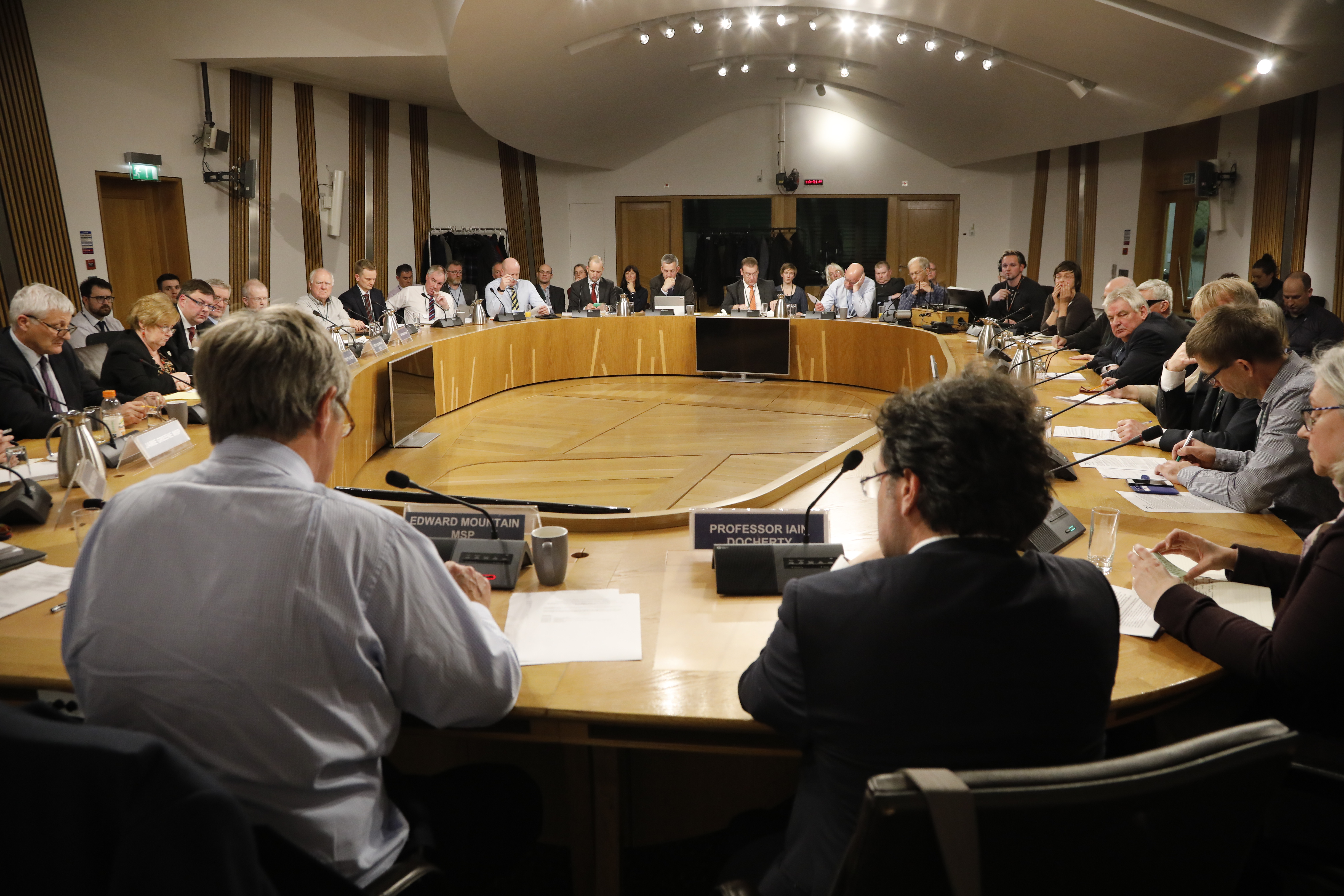
The Committee calls on the Scottish Government to consider whether an appropriate quality assurance framework could be developed and applied to the bus industry to help raise standards and drive improvement in the passenger experience.
Provision of bus services by local authorities
The Bill seeks to amend the Transport Act 1985 to allow a local authority, or a company formed by a local authority or model III Regional Transport Partnership, to provide local bus services. This is subject to two criteria being met—
the services are meeting an unmet public transport need; and
if commercially operated services are operating without subsidy, a council run service cannot compete with them.
The Committee notes that that the proposals in the Bill would not affect the status of Lothian Buses which is Scotland's only bus operator to have remained in continuous public ownership.
The Committee's online survey results highlighted strong support for the proposals to allow local authorities to provide bus services with 88% of respondents either in support or strongly in support. The Committee considered the provisions set out in the Bill and questioned whether the criteria set out in the Bill would mean that, in practice, local authorities would only be allowed to run loss making routes. It further questioned whether any local authority would find this to be a financially attractive proposal.
In response to this line of questioning, Gordon Mackay from the Society of Chief Officers of Transportation in Scotland (SCOTS) said—
Clearly, councils currently operate in a difficult financial environment, and I think that the number of councils that would take up the current offer would be somewhere between nil and very low.
Rural Economy and Connectivity Committee 19 September 2018, Gordon Mackay (Society of Chief Officers of Transportation in Scotland), contrib. 21, http://www.scottish.parliament.uk/parliamentarybusiness/report.aspx?r=11678&c=2112721
The Convention of Scottish Local Authorities (COSLA) argued that local authorities should have the option to provide a wider suite of services if this meets the needs of communities2. It argued that not including this in the Bill is a missed opportunity. HITRANS noted that there are many positive examples of local authority provided services, for example, in Moray through their Dial-a-Ride network and in the Western Isles where the Council operate Bus na Comhairle.3 David Summers from Highland Council noted that—
The proposed power is to run services that the private sector has not registered. Such services might be loss making for private operators but not necessarily for us. In Moray, the private sector operator recently withdrew a route but, by using a school bus in off-peak time, the council replaced the service at what I understand is more or less break-even. The consideration is not whether the service is loss making but whether any commercial operator is providing it.
Rural Economy and Connectivity Committee 19 September 2018, David Summers, contrib. 30, http://www.scottish.parliament.uk/parliamentarybusiness/report.aspx?r=11678&c=2112730
When asked about why the Bill had been drafted in relation to unmet need and whether this provision should be dropped from the Bill the Cabinet Secretary said he was aware of the evidence received by the Committee and that it may be possible to extend the provisions as currently drafted. He said—
...my mind is open to the possibility of extending the provisions in the bill to give local authorities greater scope to look at running bus services in their areas.
Rural Economy and Connectivity Committee 21 November 2018 [Draft], Michael Matheson, contrib. 28, http://www.scottish.parliament.uk/parliamentarybusiness/report.aspx?r=11799&c=2131001
The Committee believes that the current provisions in the Bill may not deliver the desired policy outcome, given that it was strongly suggested in evidence that few local authorities are likely to have the financial resources to take advantage of the options set out in the legislation.
The Committee considers that the requirement in the Bill that local authorities will only be able to provide bus services if they are to meet "an unmet public transport need" creates an unnecessary restriction. It therefore recommends that the Scottish Government brings forward an amendment at Stage 2 to remove this restriction and provide greater flexibility to local authorities in their ability to provide local bus services.
The Committee was made aware of a number of points which could be addressed to help improve the delivery of local authority bus services in practice. For example, Lothian Buses is generally held up as an exemplar of a municipal bus service. However, Stagecoach argued that Lothian's ownership model has not been the only factor which has aided its success. For example, Edinburgh has no competing suburban rail service, the city has a series of bus priority measures in the form of greenways, parking in the city centre is less prevalent and parking charges more accurately reflect the costs of car use, and the bus is widely used by all socio-economic groups. Their submission stated—
The Lothian model cannot simply be transplanted to other areas of Scotland and be expected to operate as successfully in different conditions.6
The Society of Chief Officers of Transportation in Scotland cautioned that if a local authority did start up a service it could theoretically become commercially attractive at a later date. A private operator may then decide to provide a rival service, requiring the authority to cease direct operations despite the financial and material investment in vehicles, depot infrastructure, staff etc.7
First Bus raised concerns that the provision would currently allow a local authority to run its own service without having to publicly tender for that service. It argued that this would lack transparency and could distort the operation of the market with possible implications for competition law. First Bus advocated that this should only be permitted where no tender bids are received for the subsidised service and that any local authority service must operate under the same quality and safety requirements as commercial operators. It also advocated that the contract should be awarded for the same period as originally envisaged before a competitive tendering exercise is again carried out. 8
It also suggested that existing or new local authority services should continue to operate at arms-length as per the Transport Act 1985 and only be allowed to “blind bid” for tenders and contracts with a local authority in the same manner as any other commercial operator.
The Committee notes advice set out in the written submission from the Competition and Markets Authority (CMA) that steps should be taken to ensure that no operator, local authority owned or not, has an unfair operating advantage in a deregulated market or in the bidding process for a tendered service. It states that where state-owned enterprises, private firms and third sector organisations might be competing alongside each other, competition should not be affected by ownership.
The CMA also suggested that transport authorities should refer to its Competition Impact Assessment guidelines when considering entering into or making significant changes to the market. It stated—
These guidelines set out how policy makers should consider competition issues and the impact to consumers when developing new policies. We also suggest that there should be rules or guidance to ensure that once established, a LA operation does not then diversify its services to compete with commercial services…The guidance should also specify how and when LAs should assess a change of circumstances such that a commercial operator may then be willing to serve the previously unmet need.
Highland Council also noted that there is no provision in the Bill for local authorities to consult with the public or local commercial operators about whether it should take on the service. In addition it also advocated that the Bill should include a provision to allow councils the option to create their own arms-length companies to run any bus services. 9
The Committee notes the competition concerns voiced by bus operators that the lack of a requirement for local authorities to tender would lack transparency and could distort the commercial bus market. However, it also notes the CMA's Competition Impact Assessment guidelines, which are specifically designed to avoid this. The Committee calls on the Scottish Government to provide additional information on how it would expect these provisions to operate in practice and to indicate what guidance and support will be available to local authorities to ensure that they do not fall foul of competition law.
The Committee notes that the Bill as currently drafted could have implications for local authorities who make significant investment in vehicles, depots and staff to meet unmet need, and then subsequently find that commercial operators seek to run services on the same routes. The Committee calls on the Scottish Government to respond to these concerns and provide an indication as to how local authorities might safeguard their investment in such situations.
The Committee recommends that the Scottish Government consider how any disputes in relation to the interaction between local authority provided services and those provided by commercial operators would be dealt with. For example, if a local authority service uses part of the route on a commercial corridor. It calls on the Scottish Government to bring forward an amendment to this effect or set out how it might address this issue in regulations.
The Committee notes that some local authorities currently lack the experience or expertise which may be required to run their own bus services. It calls on the Scottish Government to consider how appropriate guidance and financial support, possibly redirected from existing monies, might be provided where needed to help build knowledge and capacity.
The Committee notes that several stakeholders are supportive of the use of arm's length companies to run local authority bus services. It calls on the Scottish Government to consider whether an option to this effect should be included in the Bill at Stage 2.
Bus Service Improvement Partnerships
The Bill proposes the abolition of statutory bus Quality Partnerships (QP) and their replacement with Bus Service Improvement Partnerships (BSIP). A BSIP will involve two key elements, a plan and a scheme. The plan will outline how the partnership will implement the policies and meet stated objectives. The scheme should, for example, set out the area and time period within which the plan applies. The Bill sets out detailed procedures for the development, adoption, variation and revocation of BSIPs in a new schedule that would be added to the Transport (Scotland) Act 2001. Full details of the procedures set out in this schedule are described in the explanatory notes which accompany the Bill.
Overall, the Committee heard strong support for BSIPs. Ninety-two percent of survey respondents supported or strongly supported this provision. The principle of bus partnerships was also welcomed by both local authorities and commercial operators. Many of whom thought that BSIPs would provide a more flexible and achievable means of statutory partnership working. For example, bus operators such as Stagecoach and Lothian buses were very supportive of partnerships. Stagecoach said that—
We support efforts to facilitate partnership working between local authorities and bus operators. This remains the fastest and most cost-efficient means by which to deliver improvements for bus passengers. 1
However, a number of local authorities noted that the take up of the existing QPs had been poor across the board and some questioned whether they would be able to take up the new BSIP in practice. For example, Perth and Kinross Council said—
Due to the complexities of establishing SQPs these have rarely been formed in Scotland overall. The process for establishing a BSIP is also an in depth and lengthy process so it may be that this power is also unused. We consider due to the low level of commercial services in Perth and Kinross, this process would not be applicable.2
COSLA noted in written evidence that while BSIPs may improve some of the flaws of the overly complex QPs and Statutory Quality Contracts it may not go far enough. It said—
While the provision in the Bill may be an improvement, it perhaps does not represent the sea change required. 3
HITRANS, welcomed the efforts that have been made to improve partnership working in the Bill. However, it stated that the absence of these positive steps was the reason for the failure to date to establish a previous scheme and that there were a number of extenuating factors which played a role. For example, a lack of bus operator confidence to make long term commitments in terms of fares and frequency levels. It argued that further consideration needs to be given as to how all parties can be incentivised and / or compelled to improve bus provision. It also strongly argued that the success of any BSIP would depend on significant capital and revenue investment to deliver positive outcomes for the passenger rather than provision within existing or proposed legislation. 4
This view was also supported by SCOTS which said—
The route to establishing a BSIP is long and protracted and it is again possible that without support these powers will be left unused. 5
The Committee notes that the proposals in the Bill around BSIPs are generally welcomed. However, it also notes that a number of local authorities question whether they will be able to take up a partnership in practice. It is acknowledged that this may be for a variety of reasons. However, the Committee is aware that one of the major reasons would be the time and resource required to create a partnership agreement. The Committee will comment further on the funding available to support BSIPs later in the report.
The Committee compared the previous QPss to the proposed BSIPs. It noted that this is one of the most detailed parts in the Bill and questioned witnesses about the differences between the two schemes. The expert panel of witnesses were unable to give the Committee a robust response on how they understood the two schemes to differ in practice.
The Scottish Government said—
Bus service improvement partnerships will operate differently because they will look beyond infrastructure and whether we provide bus prioritisation in certain areas. The bill also allows partnerships to look at issues such as frequency of service and fare levels. It provides them with a range of different provisions and much more flexibility to deal with that type of issue in a way that they cannot under the existing quality partnership arrangements.
Rural Economy and Connectivity Committee 21 November 2018 [Draft], Michael Matheson, contrib. 12, http://www.scottish.parliament.uk/parliamentarybusiness/report.aspx?r=11799&c=2130985
The Committee received follow-up information from Scottish Government officials which explained that BSIPs would differ from QPs in several ways, summarised as follows—
they do not limit the local transport authority to investing in infrastructure, extending their actions to include measures which could include for example the implementation of policies on parking;
they extend the range of standards beyond that allowed in the QP, including being able to agree frequencies on certain routes and/or setting maximum fare levels;
they encourage the development of a genuine partnership approach through joint working from the start and then throughout the partnership with operators given a say in whether the plans or schemes developed by the partnership can proceed;
once agreed all operators in the area will be required to meet the service standards laid out in schemes or risk losing the ability to operate in the partnership area;
additionally, the traffic commissioner will be able to refuse an application to register a service in the area if they consider that the applicant will not be able to meet the required service standards; and
in comparison to QPs, BSIPs also offer increased transparency and accountability for communities, with consultation undertaken as part of the development of a partnership and LTAs required to publish annual reports on the effectiveness of schemes.
The Committee welcomes the further information provided by the Scottish Government which helpfully outlines how BSIPs will work in practice and how they will differ from the previous scheme. However, the Committee notes that this clarity is lacking in the Bill as drafted. It calls on the Scottish Government to ensure that this clarity of structure and purpose is made clear in guidance and any associated regulations.
The practicalities of partnership working
One key proposal which was brought to the Committee's attention was that a local transport authority would not be allowed to proceed with a bus service improvement partnership proposal if a "sufficient number" of bus operators that would be affected by the proposals object to it during the initial consultation phase. What constitutes a "sufficient number" is not defined on the face of the Bill and will appear in regulations.
The Confederation of Passenger Transport responded that one operator alone could not stop a partnership from proceeding. It would need to be supported by the rest of the operators. It stated that—
It is right that either the local authority can tell the operator that it does not think that it is getting enough or the operator can tell the council that it is asking too much and is not offering enough—it is a negotiation.
Rural Economy and Connectivity Committee 03 October 2018, George Mair, contrib. 157, http://www.scottish.parliament.uk/parliamentarybusiness/report.aspx?r=11714&c=2118224
However, East Dunbartonshire Council raised concerns over this power as it feared that it could increase the resources required and the time taken to agree the partnership.2 Fife Council argued consideration must be given to not just the number of operators objecting but the number of local services they operate, and their frequencies as this will have a significant impact. The "sufficient number" must be carefully assessed. 3
The Committee acknowledges that what is determined to be a "sufficient number" of objections to the creation of a BSIP will be determined in regulations. However, it calls on the Scottish Government to carefully consider how this assessment is made. It notes that the market share of any operators that object, the number of services they operate as well as location and frequency may have a significant impact. It calls on the Scottish Government to be mindful that it is not simply a case of the overall number of objections involved.
Bus industry representatives such as Lothian Buses4 and the Confederation of Passenger Transport5 indicated that they support efforts to facilitate partnership working between local authorities and bus operators. However, concerns were raised that although the Traffic Commissioner will enforce compliance with an operator's commitments under a BSIP, there will be no such enforcement of a local authority's commitments. Lothian Buses argued that increasing the flexibility of the existing framework, whilst retaining a commitment for some form of reciprocal action from the transport authority for any investment or improvements made by operators, would be the optimal result.
The Confederation of Passenger Transport said that while it welcomed the scope for parking supply and pricing in relation to BSIPs, it noted that the drafting removes the obligation for an authority to invest in infrastructure improvements that existed within the Statutory Quality Partnership model. It argued that this would discourage operator involvement instead of encouraging cooperation on an equal footing. 5
First Bus raised concerns that the Bill would allow BSIPs to specify the pricing of multi operator tickets. It argued that this would act as a market distortion and may force operators out of the market as these tickets will, by default, set the prices at which operators’ own products are sold. First Bus also highlighted concerns that the provisions will allow the authority to restrict levels of service provision – subject to regulations which have not yet been drafted – as it felt that this too would impose a market distortion on operators and potentially limit the supply demanded by customers. 7
The Committee notes the evidence which suggests that the enforcement of compliance with BSIPs may lack balance as the Traffic Commissioner will have jurisdiction to enforce the operators' commitments but not those of local authorities. The Committee believes that in order for a partnership to be truly effective, a level playing field should apply insofar as is possible. It therefore calls on the Scottish Government to reflect on whether the Bill might be amended to address this issue.
The Committee notes concerns expressed in evidence that provisions relating to BSIPs as drafted do not contain the obligation to invest in infrastructure improvements that existed within the Statutory Quality Partnership model. The Committee would again highlight the importance of infrastructure such as bus lanes in facilitating bus service improvement by reducing congestion and encouraging an increase in bus use. It calls on the Scottish Government to bring forward an amendment at Stage 2 to include such an obligation in the provisions which relate to BSIPs .
Local Bus Service Franchising
Franchising is a system where the transport authority awards the exclusive right to run a bus route or routes for a set period to the most competitive bidder. Although current legislation within the Transport (Scotland) Act (2001) allows transport authorities to set up Quality Contracts (QC) which are a form of franchising, no such contract has ever been developed in Scotland. The Bill proposes the abolition of bus quality contracts and their replacement with local bus service franchises.
Under these provisions, bus service franchising could come into effect once a local transport authority develops an overarching franchising framework and then enters into franchise agreements with bus operators. The Bill sets out detailed procedures for the development, delay, adoption, variation and revocation of a franchising framework. Further details are also set out in the explanatory notes which accompany the Bill. Scottish Ministers will have powers to issue guidance on the exercise of these functions.
There was strong support for bus franchising in responses to the Committee's online survey with 77% in support or strongly in support. The Committee heard about the benefits that franchising has had for Transport for London. However, it noted the large costs associated with the provision of such a service. Historically, the London network has only covered 75% of its costs through fare revenue and has required significant taxpayer support. It was also advised that the circumstances in London vary from those experienced in Scotland. For example, it was highlighted that demographics, level of car ownership, available funding and political will differ between Scotland and London and that this could impact on the success of the implementation of franchising.
The Confederation of Passenger Transport argued in oral evidence that the range of issues around franchising were "huge and complex".1 It cautioned that bus franchising has been attempted in the north of England and that it has been extremely expensive. There have also been examples where it had not been appropriately scoped and money had been wasted. It argued that checks and balances are needed and that the process must be robust and properly financed.
Transform Scotland argued that the success of the franchising component of the bill would depend on the scale of the local area. It suggested that the numbers of staff required to run a franchise in Edinburgh or Glasgow would be large and that there has been a loss of transport planning expertise in local authorities. Chris Day said—
The simple answer to your question is that franchises potentially represent an enormous workload that I do not think local authorities are currently equipped to take on.
Rural Economy and Connectivity Committee 03 October 2018, Chris Day, contrib. 175, http://www.scottish.parliament.uk/parliamentarybusiness/report.aspx?r=11714&c=2118242
Views from local authorities about their ability or willingness to operate a franchise were mixed. For example, Edinburgh City Council said that it did not envisage using the franchising powers.3Whereas East Dunbartonshire council welcomed the powers.4 Concerns were voiced by some small local authorities about their ability to use the new powers. Clackmannanshire Council stated that—
The use of franchising may be appropriate for larger council areas or larger regional schemes, where there are already existing profitable bus routes in place. However, we would not envisage adopting a franchising approach, due to the lengthy process involved in setting up a franchise and the lack of long term commercial viability of the existing bus network. Franchising would make this unattractive to us as a small local authority. 5
SCOTS noted that the proposals set out in the Bill are a departure from the current market approach. It stated that the Bill, in practice, would require local authorities wishing to adopt franchising to undertake viability modelling, market testing and independent assessment of any franchising proposals. All of which would require time and money. It argued that franchising could have a transformative effect on the bus market but only if the ability to allow cross-subsidy between commercial and non-commercial routes is facilitated. 6
Fife Council stated that while franchising is a useful option it is not clear whether it will look to implement a franchise in the near future. It noted that it has spent time encouraging competition for contracts in Fife. It raised the concern that if a franchise excludes some or all operators from an area, there is a danger that some companies will leave or collapse leading to a reduced marketplace and little competition for a renewed franchise. 7
Fife Council also noted that in order for a local authority to make the necessary decisions to set up a franchise it would require sufficient advance route patronage and revenue information to be made available. It noted that there appears to be no provision for this in the Bill.7
The Committee notes that historically the prospect of franchising has been resisted by bus operators in Scotland. For example, Stagecoach stated that it is fundamentally opposed to the introduction of franchising of local bus services. It argued that any unmet need can be addressed by a local authority through the existing mechanism for tendering socially necessary services, or discussed with local operators to see if revisions to the commercial network can fill the need. It said—
...franchising is not a panacea to current bus patronage trends. 9
Lothian Buses stated that—
Franchising will not lead to bus service improvements that can’t already be delivered under the current legislative regime. It will distract from the fundamental issues of congestion, improving day-to-day performance, modernising ticketing and ultimately delivering the best possible service for customers.10
Stagecoach also cautioned that moving from a deregulated environment to a franchised regime could incur significant transitional costs. It questioned whether operators would be compensated to what it perceived to be business confiscation. It also questioned what would happen to existing bus depots, staff and pension provisions should an operator lose out in the franchising process. It cautioned that should a Local Authority voice an intention to pursue a franchising model then this uncertainty could postpone investment and other commercial decisions.11
However, HITRANS welcomed the fact that the Bill lowers the threshold for considering franchising and address a perceived powerlessness of local authorities to intervene when there is market failure or commercial operators do not meet the aspirations of local communities. 12
Professor David Gray from Robert Gordon University argued that the success of franchises would also depend on RTPs having a more formalised, empowered and strategic role. This was especially true in rural areas due to the high number of routes which cross boundaries. 13
SCOTS acknowledged that the role of an independent audit on franchising proposals is an important check and challenge. However, it also argued that the suggested independent panel that would make the final decision would not be conducive to supporting local democratic control, would undermine the consultation process and should be removed from the Bill.6 Glasgow City Council15, Strathclyde Partnership for Transport16 and the Scottish Association for Public Transport17 also argued that those with democratic accountability should take the final decision on the whether a franchise proceeds, rather than an independent panel as proposed.
In a written submission, the Urban Transport Group also raised concerns about an independent panel making the final decision on a franchising proposal. In a written submission, the Urban Transport Group asserted that—
The complete failure of the 2008 Westminster legislation in relation to franchising led to the recognition that the panel process was fundamentally flawed and it was subsequently completely removed in the 2017 Westminster Act nearly ten years later. 18
The UNITE trade union argued that there should be a robust process for appointing the panel, full transparency in the assessment and auditing process itself; and an option to appeal a decision to an independent adjudicator. It also called for trade union involvement in appointing the panel and for the terms and conditions of bus drivers to be included as part of the franchising process. 19
The Committee notes that, in practice, franchising may only be taken up by a small number of local authorities which have the time and resources to establish a framework.
The Committee notes that local authorities would require access to commercially held route patronage and revenue information in order to fully evaluate whether it would be appropriate and beneficial for it to enter into a franchise. It calls on the Scottish Government to consider whether the service data provisions contained in the Bill might facilitate the provision of this information or whether the Bill might need to be amended to provide for this.
The Committee notes that if franchising is to succeed in areas where routes operate across local authority boundaries, RTPs are likely to have an important strategic and coordinating role.
The Committee notes the concerns of existing commercial operators as to the negative impact franchising may have on their businesses and the people they employ if introduced in areas in which they operate. It calls on the Scottish Government to provide greater clarity in guidance as to how any transition process would be supported and any negative impact mitigated.
The Committee notes concerns raised by stakeholders about the potential lack of democratic accountability and transparency of the independent panel which will take the final decision on a franchising proposal. It also notes the suggestion that the use of such an approach in England was deemed to be flawed and was subsequently removed from the relevant legislation. The Committee calls on the Scottish Government to provide a response to these concerns prior to Stage 2.
Service data
The Bill would amend the Transport Act 1985 to allow a local authority or RTPs the power to request certain commercial information once it has been informed that a bus operator intends to significantly vary or cancel a service, including—
the number of passengers using the service, the journeys made by those passengers and the fares paid by those passengers (known as patronage data)
the revenue obtained by operating the service (known as revenue data)
The intention is to allow the local authority to better ensure sufficient bus service provision in the area and the data may be shared with other operators it considers likely to run a replacement service (subject to certain conditions). The Bill sets out the time frame which the information should cover and the ability of the traffic commissioner to impose a penalty for non compliance.
The Bill also proposes to give Scottish Ministers the power to make regulations requiring those applying to register/vary or cancel a bus service, bus operators, local transport authorities and the Traffic Commissioner to provide information on bus routes, stopping places, timetables, fares and tickets. This would include real-time information and information on the operation of services in the past.
The Scottish Government states that the purpose of these provisions is to ensure that the public have access to free, high quality information on bus travel options in a standard format. The Policy Memorandum which accompanies the Bill indicates that "...it is proposed to ensure consistency as far as practicable with similar requirements being developed in England under powers in the UK Bus Services Act 2017 in order to minimise costs and make best use of shared systems. including those of the larger operators which provide services in both jurisdictions".
Overall, local authorities were supportive of any power that would enable them to obtain patronage and revenue information for commercial service variation or cancellation. It was seen as a significant help to local authorities when considering how to replace services at short notice and would allow them to better understand the reasons for service withdrawal and increase strategic oversight. Bus Users Scotland were also supportive of this proposal. It commented that the provision would allow incoming operators to get off to the best start and help them to better design their networks and routes.
Bus operator Lothian Buses commented it already responds to ad hoc requests for patronage and revenue data from local authorities as a result of service de-registrations. However, it raised the concerns that sharing and justifying this data may become more political at a local level. It said it—
...would not be in favour of having to share and justify every perceived negative registration change, with parties that are driven by political geographical boundaries rather than common sense practical solutions.1
It was noted that Bill outlines the patronage information to be made available as "the number of passengers using the service, the journeys made by those passengers and the fares paid by them". Fife council questioned whether this would provide a sufficient level of detail. It suggested that an amendment to the Bill would be useful to include origin/destination data by individual journey as well as departure time. It argued that this would be crucial if another commercial operator will consider replacement journeys or whether the Council will fund replacements.2 However, some bus operators voiced concerns that they could be subject to an excessive number of data requests in every instance of de-registration.
The Committee acknowledges that the provisions requiring the sharing of certain data by operators are likely to be of benefit to local authorities in allowing them to reduce risks when contemplating the replacement of services that have been withdrawn by operators.
The Committee would encourage the Scottish Government to work with all stakeholders when developing the guidance to establish whether some sort of 'fair use' policy may be helpful in relation to data requests.
As discussed earlier in this report, the Committee also sees advantage in patronage and revenue information being shared with local authorities by bus operators to aid consideration of whether a local bus service franchising arrangement should be introduced. It calls on the Scottish Government to consider this issue and provide its views on whether it might be appropriate in its response to this report.
There was a general welcome for the provision in the Bill which provides powers to require the operators of local services to provide information on routes, timetables, running times and fares publicly and in a specified format. However, some commercial operators worried that they would be blamed for poor punctuality when they believe the causes of delays to mostly be congestion and poor infrastructure which are factors out with their control.
It was considered essential that when data is provided it is done in a consistent manner. However, some stakeholders noted that information providers, including Councils, could face additional costs to convert the data into the preferred format if it is not held in that way already. Stakeholders were clear that this should be based around the existing Travel Line Scotland platform rather than try to establish something new. There were calls for coordination of this work by Transport Scotland.
It was also noted that the provisions of this information to help passengers should be made available across multiple formats from paper timetables, on-street timetables (whether printed or electronic), and online through both websites and apps. Clackmannanshire Council suggested that efficiencies could be achieved if there were one single mandatory process for operators, requiring them to adopt electronic registration and de-registration of services, linking directly into each council’s timetabling system and incorporating notification to the Office of the Traffic Commissioner. It argued that this would reduce the amount of time spent updating and checking information together with reducing the potential for errors. 3
The Equality and Human Rights Commission highlighted the existing legal requirement which states that information must be provided inclusively, with reasonable adjustments being made to enable disabled peoples full access to it.4
In its written submission to the Committee, the Royal National Institute of Blind People (RNIB) in Scotland called for all bus services in Scotland to have a minimum standard for service information ensuring that this information is accessible to all, including availability on request for braille, large print and audio. The RNIB also called for the introduction of audio announcements on buses and mandatory disability training for bus drivers.5
The Committee welcomes the Scottish Government playing a coordinating role in the creation and agreement of the format in which service data will be provided. It believes that consistency is essential in how this data is compiled. However, it notes that creating this consistency across the board may mean time and financial resources to reformat data which doesn't conform to the standard. It calls on the Scottish Government to consider this additional burden when setting the parameters for the data collection.
The Committee would encourage the Scottish Government to consider what technological solutions can be made available to help reduce any bureaucracy around the use and provision of data. It believes that the provision of real time information in an easily digestible format will make an important contribution to the increase in bus use.
The Committee also notes the importance of the accessibility of the information that is provided to ensure that all sections of society can access transport effectively. This includes people with disabilities and those for whom English is not their first language.
Finance - bus services provisions
The Committee considered the finances in relation to the bus provisions in the Bill. Overall, there was a common thread running through each of the topics. There was a clear message from stakeholders that it was unlikely that the legislation would be of practical use without suitable financial resources behind it. The following examples illustrate some of these views.
COSLA argued that in relation to some provisions there are few existing examples in Scotland upon which to develop robust estimates on the financial implications of the Bill. As a result, the FM is not able to provide a precise estimate of the likely costs associated. It said—
While the Bill may provide an opportunity to invest current resources in different ways, the lack of new money – both capital and revenue – is likely to continue to be a constraining factor on Local Authorities’ ambition and act as a brake on attempts to improve bus patronage. 1
In relation to the provision of bus services by local authorities the Confederation of Passenger Transport cautioned that although the Bill seeks to strike a reasonable balance the set up costs including vehicles, depots, driver training, licensing etc. would be significant at a time when local authorities are operating in extremely constrained financial circumstances. It also noted that some local authorities have had similar powers for years and not used them. It said—
It is a huge risk to go down this path and say, “Let’s just turn the clock back, give them a licence and let them get on and deliver these services.” That might happen, but there is a big risk that it would not work.
Rural Economy and Connectivity Committee 03 October 2018, George Mair, contrib. 137, http://www.scottish.parliament.uk/parliamentarybusiness/report.aspx?r=11714&c=2118204
Transform Scotland commented that—
The critical issue is, if a council leader or chief executive is asked why their council does not provide commercial bus services in competition with a certain operator in an area that is failing, they will need to carefully consider the financial implications of providing those services. Bus wars are expensive to win and very expensive to lose.
Rural Economy and Connectivity Committee 03 October 2018, Chris Day, contrib. 141, http://www.scottish.parliament.uk/parliamentarybusiness/report.aspx?r=11714&c=2118208
Professor David Gray from Robert Gordon University commented on finance for Bus Quality Improvement Partnerships. He said—
Partnerships succeed only with revenue and capital funding available to deliver the local authority side of things on the ground. That is the key issue: the bill can change the provisions that are available to a local authority, but without the capital and revenue funding to deliver and sustain it, the partnerships will fail as well.
Rural Economy and Connectivity Committee 03 October 2018, Professor Gray, contrib. 160, http://www.scottish.parliament.uk/parliamentarybusiness/report.aspx?r=11714&c=2118227
North Lanarkshire Council said—
Given the opportunities for operators to withdraw from the process and stop any plan it is difficult to see authorities investing the necessary time and money, without support from Government, when the outcome is so uncertain. 5
In relation to bus franchising, SCOTS argued for the ability for both franchising and municipal operations to be operated on a cost-neutral basis as a minimum and for appropriate financial support to be made available to allow that to happen.6
Aberdeen City Council said in relation to franchising that it is—
...supportive of this provision; but are acutely aware that most models for franchising result in significant ongoing public investment.7
Campaign Group, Get Glasgow Moving argued that—
It is a huge oversight that the Transport Bill does not properly consider how funds will be raised to pay for the massive improvements in public transport that we need to deliver 'inclusive growth' and slash carbon emissions from the transport sector...8
In terms of franchising First Bus argued that the costs of operating a franchised network would be higher than a deregulated one with less operational experience, less efficiency and compliance costs for contracts. It stated—
The financial memorandum does not consider the high cost to operators of loss of business in the event of a Franchise being implemented. This will have serious impact on direct and indirect employees of the business(es) concerned. Even the risk of a Franchise can lead to reduced or stopped investment in a local business and considerable threat to its ongoing viability. 9
The Committee recognises that the various provisions relating to bus services are intended to provide local authorities with a range of options to assist them in ensuring that efficient and reliable bus services can be provided in a way that best suits their respective circumstances.
However, the Committee is concerned that whilst many of these provisions are broadly considered to be positive steps, the reality may be that few of them are taken up in practice due to a lack of financial resources to facilitate their set up and operation. The Committee calls on the Scottish Government to provide details of how it intends to monitor take-up and implementation of the various provisions and to indicate whether any additional financial or advisory support will be made available to assist local authorities to prepare and implement the various provisions.
Ticketing arrangements and schemes
Part 3 of the Bill introduces a requirement for local authorities making a mandatory ticketing scheme under the Transport (Scotland) 2001 Act to ensure that these would include smart ticketing arrangements that meet national technological standards.
In both written and oral evidence, there was general support for the provisions on ticketing arrangements and schemes. The Committee heard that these provisions must contribute towards multi-modal travel, making it cheaper, clearer and easier for passengers (including tourists) to use public transport, offering a range of payment methods to ensure transport is accessible for all and making the best use of new technologies.
The Committee is aware of the ongoing challenges in achieving the vision of integrated transport in Scotland. Robert Samson said—
It has taken a long time even to get to where we are. I think that it was first mentioned in 2004 in “Scotland’s transport future” that the aim was that passengers would be able to get one ticket that could get them anywhere in Scotland. We are sitting here 14 years later and we still have not got there.
Rural Economy and Connectivity Committee 03 October 2018, Robert Samson, contrib. 15, http://www.scottish.parliament.uk/parliamentarybusiness/report.aspx?r=11714&c=2118082
The Committee is concerned that whilst the provisions in the Bill may well deliver some improvements, for example by encouraging a greater degree of inter-operability through the introduction of a national technical standard, these alone will not deliver the aspirations for ticketing arrangements and schemes that are shared by stakeholders.
The Committee is concerned that the provisions on ticketing arrangements and schemes in the Bill lack ambition and feels that an opportunity has been missed to deliver a meaningful step change in integrated public transport provision in Scotland. The Committee is of the view that this can only be achieved through the introduction of a single ticketing scheme operating across all modes and operators.
The Committee acknowledges that this would require a significant level of commitment by and cooperation between public transport providers, integration of booking and financial systems and other measures. However, the Committee calls on the Scottish Government to show leadership in this area and to bring forward proposals for the development of a single ticket scheme to be inserted into the Bill before it completes its parliamentary passage.
National technical standard for smart ticketing
The Committee heard general support for a national technical standard for smart ticketing. However, it queried whether it was necessary to specify this given the existence of a de-facto standard maintained by ITSO Ltd. (previously the Integrated Transport Smartcard Organisation). The ITSO Specification is a secure technical electronic platform on which smart ticketing schemes can be built. It defines how different smart ticketing systems should 'talk' to each other. The ITSO Specification is unique in that it covers all components of transport smartcard schemes - media, point of service and back office systems. North Lanarkshire Council stated—
The UK already has a national standard in the form of ITSO. This is already widely used across Scotland. 1
The Scottish Government in evidence highlighted that the purpose of these provisions were to achieve inter-operability, without forcing providers to commit to a single national smart card. It stated—
We want to encourage and enable a national infrastructure: a common platform that will make it easier to introduce smart ticketing and smart ticketing products consistently across the whole of Scotland,
Rural Economy and Connectivity Committee 12 September 2018, Gordon Hanning (Scottish Government), contrib. 46, http://www.scottish.parliament.uk/parliamentarybusiness/report.aspx?r=11660&c=2109980
The Committee notes the intended purpose of the provisions in the Bill for a national standard for smart ticketing. It also acknowledges the broad support for these in the evidence it received.
National Smart Ticketing Advisory Board
There was general support for proposal in the Bill to create the National Smart Ticketing Advisory Board, whose purpose is to advise Scottish Ministers on the national technological standard and smart ticketing. 85% of respondents to the Committee's survey supported this provision. However, some respondents to the call for views, such as East Ayrshire Council1, were concerned that the Board could delay the implementation of smart ticketing. Others, such as SCOTS, questioned whether there is a need for a Board at all—
... [we] cannot see any significant benefits from a National Smart Ticketing Advisory Board2
A few written responses to the Committee also highlighted the importance of getting the right people involved in the Board such as consumer representatives, different-sized operators and having a geographical spread of Members.
As part of the Board's role to advise Scottish Ministers on smart ticketing, it will need to consider issues related to accessibility. Indeed, responses from groups such as Age Scotland3, Disability Equality Scotland4 and the Mobility and Access Committee for Scotland5, raised the need for smart ticketing arrangements to be accessible and for the impacts for people unused to digital payments, particularly on older people to be fully considered.
The Committee fully subscribes to the views expressed in evidence that the membership of the National Smart Ticketing Advisory Board should consist of a broad representation from all key stakeholder groups, with particular attention paid to geographical spread and accessibility.
The Committee welcomes the commitment from the Scottish Government for the Advisory Board to consider the need for paper and cash methods of payment. The Committee supports the availability of multiple methods of payment. It reiterates the call from the Mobility and Access Committee for Scotland for thorough Equality Impact Assessments to be carried out on ticketing, to ensure that the needs of all potential users, particularly older and disabled people are fully taken into account.
However, the Committee considers that the remit of the Advisory Board should be widened to include a responsibility to bring forward proposals for a single ticketing scheme to apply across all modes of public transport in Scotland as recommended in this report. It calls on the Scottish Government to bring forward an amendment to this effect before the Bill has completed its parliamentary passage.
Directions and reporting
The Bill varies the relationship between local authorities and Scottish Ministers in ticketing schemes. It creates a power for Scottish Ministers to issue a direction requiring one or more local transport authorities to exercise their powers to make or vary a ticketing scheme. The Bill would also require local authorities to prepare annual reports to Scottish Ministers about the ticketing arrangements and schemes they have made, varied or revoked in each operating year. These provisions in the Bill were supported by survey respondents, but to a slightly lesser extent than the other ticketing proposals - with 75% supporting the Scottish Ministers' power to issue a direction and 78% supporting local authorities submitting annual reports.
Several local authorities, for example, South Lanarkshire1 and North Ayrshire2, oppose granting Scottish Ministers the power to require a local authority to establish a smart ticketing scheme, as it reduces local government autonomy and could impose additional burdens on such authorities. The role of operators, in delivering this direction, was raised by David Summers, Highland Council, as a potential gap—
...there is a provision in the bill to allow ministers to instruct local authorities to introduce a smart ticketing scheme, but there is no power to allow local authorities to instruct operators to participate, so the ministerial instruction gets stuck halfway.
Rural Economy and Connectivity Committee 19 September 2018, David Summers, contrib. 52, http://www.scottish.parliament.uk/parliamentarybusiness/report.aspx?r=11678&c=2112752
Similarly, some local authorities and their representatives raised issues with the requirement to publish annual reports on their ticketing powers—
South Lanarkshire cannot see any significant benefits from...the requirement for local authorities to produce annual reports on the use of ticketing powers.4
East Dunbartonshire Council made the point in written evidence that it may be more sensible for the Regional Transport Partnership to deliver the annual report, as they operate a number of ticketing arrangements in the local authority area.5
The Committee notes the evidence received which suggests that whilst the provisions in the bill allow Ministers to instruct local authorities to introduce a smart ticketing scheme, a gap exists in that there is no power to allow local authorities to instruct operators to participate. The Committee therefore questions whether local authorities, or indeed the Scottish Government, would have a mandate to instruct operators to do so. If no such mandate exists, the Committee suggests that this could present a significant barrier to the introduction of such schemes, should an operator choose not to participate. It calls on the Scottish Government to provide it with view on how it envisages such issues might be addressed in practice.
The Committee questions the need for additional reporting on smart ticketing at a time when local authority resources are already stretched. It recommends that the Scottish Government should consider whether managing reporting at a regional level or by utilising alternative less resource-intensive technological solutions may be more appropriate to obtain the information it requires.
Finance - ticketing arrangements and schemes
Financial concerns were raised principally by local authorities on these provisions. Concerns were based around being directed to set up or vary a ticketing scheme by Scottish Ministers, but without having the resources to actually create such a scheme in practice. Others stressed the administrative burden of running local multi-operator ticketing schemes and producing annual reports to Scottish Ministers on the use of these powers—
Fife Council would be concerned regarding the burden in administration caused by running local multi-operator ticketing schemes. Even if the scheme is a national one, there will be implications for the administrative effort in managing the existing national entitlement card. Any such powers coming to local councils should be properly resourced given pressures already on local councils’ already stretched budgets.1
Operators' financial concerns instead focused more on the technological standards. George Mair, identified that different back offices exist, but that operators are introducing smart-ticketing more quickly and at a lower cost than expected, but that additional funding would assist—
Money is always helpful, although, so far, things have happened more quickly and have been less costly to the Scottish Government than had been expected.
Rural Economy and Connectivity Committee 03 October 2018, George Mair, contrib. 105, http://www.scottish.parliament.uk/parliamentarybusiness/report.aspx?r=11714&c=2118172
In their written submission, First Group plc expressed the view that those operators who have already invested in systems and staff training should not be unduly penalised by other operators who have not done so being given a subsidy in order to introduce a national standard.3
The Committee notes the potential financial impact of Part 3 of the Bill on local authorities and regional transport partnerships. Before any power to direct local authorities to set up or vary a scheme is used, the Scottish Government should ensure adequate funding is available. The Committee also recognises that the requirement for local authorities to produce annual reports on smart-ticketing schemes will require staff resources. It therefore calls on the Scottish Government to reconsider the classification of this as negligible within the Financial Memorandum.
Pavement parking and double parking
Under current legislation, it is an offence to—
drive on the pavement;
place or deposit anything on a road that causes an obstruction;
leave a vehicle in such a way as to cause an obstruction to other people;
park a heavy commercial vehicle on a pavement; or
leave a vehicle, or trailer, parked on a road (which includes the pavement) in a position that may cause a danger to other road users.
However, parking on the pavement or double parking are not specific offences and Part 4 of the Bill contains provisions to prohibit these actions.
These provisions will—
Prohibit parking on the pavement (subject to a number of exemptions)
Prohibit double parking (subject to a number of exemptions)
Allow local authorities to exempt certain streets/part of streets from the prohibition on pavement parking
Create a system for the enforcement of the pavement parking and double parking prohibitions. This would be a local authority duty, similar to that used where enforcement of parking restrictions has been decriminalised
Allow for vehicles parked in contravention of a prohibition on pavement or double parking to be moved, removed and eventually disposed of, subject to a number of safeguards
The Committee heard a variety of views on the proposed prohibitions on pavement parking and double parking.
There was strong support in the Committee's online survey for the proposals, with 83% of respondents supporting a prohibition on pavement parking and 87% supporting a prohibition on double parking. There were also calls from mobility and active travel groups for better enforcement and greater penalties for those who obstruct the pavements, walkways and cycle paths. In particular, for mobility groups, the obstruction of pavements was seen, not just as an inconvenience, but as a barrier to fully accessing and participating in society.
However, there were calls from the road haulage and delivery industry for greater understanding as the demands of customers and businesses are requiring ever-increasing levels of deliveries. They highlighted the nature of streetscape and roads infrastructure in Scotland's cities and towns which they stated was not conducive to deliveries by large vehicles.
The Committee noted that Section 149 of the Equality Act requires due regard to be given to advancing equality. The prohibition of on-street parking advances equality for disabled people, by affording them greater access to other goods facilities and services. It also affects disabled people's autonomy, relevant to Article 19 and their right to mobility relevant to Article 20(b) of the UN Convention on the Rights of Persons with Disabilities.
However, the Committee also heard that in many residential areas the narrowness of the roadway is such that residents may have no choice but to pavement park with two wheels on the kerb. If they did not adopt this approach, the road would be blocked to other road users, including public transport or emergency services. Stakeholders also noted that, in certain circumstances, double or pavement parking is essential. For example, community transport vehicles may need close access to homes for pick up/drop off of people with a mobility issue.
In view of these often practical requirements, the Committee questioned whether it would perhaps be simpler and more cost effective to allow local authorities the ability to apply specific restrictions on pavement parking on particular streets instead of applying a blanket ban and then having to determine which streets could be exempted as proposed in the Bill.
The Scottish Government said in response that—
The intention of the bill is not to have a blanket ban; it allows for exceptions in some areas, perhaps where there are narrow roads with wide pedestrian ways. There is scope in the bill for local authorities to identify areas and apply an exemption, as long as the pedestrian pathway is at least 1.5m wide. It will be for individual local authorities to identify the areas in their authorities where that would be appropriate, depending on the circumstances.
Rural Economy and Connectivity Committee 21 November 2018 [Draft], Michael Matheson, contrib. 158, http://www.scottish.parliament.uk/parliamentarybusiness/report.aspx?r=11799&c=2131131
Living Streets Scotland stated that a compromise could be found. It argued that part of the problem with the current law is that although there is an overarching provision against 'obstruction' of the pavement it is not very well defined. It suggested that better definition of the term in guidance would allow it to be used and implemented more effectively. It said—
An effective compromise would be to get the law right so that it says that obstruction is not allowed and to get the guidance right so that it defines “obstruction”...It would be up to the driver to make a judgement about whether they would be obstructing the pavement. The enforcement person could make a simple measurement: if a wheelchair could not get past, the driver would be breaking the law.
Rural Economy and Connectivity Committee 07 November 2018 [Draft], Stuart Hay, contrib. 26, http://www.scottish.parliament.uk/parliamentarybusiness/report.aspx?r=11763&c=2125703
The Committee also notes from evidence submitted by other stakeholders that a minimum of 1.5M is required for access. The Committee considered whether it would be simpler and cheaper for local authorities if the Bill stated that pavement parking is an offence, only if the available pavement remaining for access is less than 1.5M. This would allow, where possible, both access to pedestrians as well as movement on the road and a simpler exemptions process for councils. In relation to exemptions on streets which allow 1.5M access. Inclusion Scotland noted that—
Such a facility can be created by putting a line on the pavement provided that there is sufficient access for people to use the pavement. If there is justification for that, councils could do that under the legislation. The bill would make the procedures that have to be gone through a lot simpler. It includes a more efficient way of managing parking.
Rural Economy and Connectivity Committee 07 November 2018 [Draft], Stuart Hay, contrib. 11, http://www.scottish.parliament.uk/parliamentarybusiness/report.aspx?r=11763&c=2125337
The Scottish Government stated that it would consider whether clarification on the amount of free space required on the pavement could be made clearer. The Cabinet Secretary said—
We can look to see whether it would be better to make that clear in the bill or through the regulation or guidance that accompanies the bill.
Rural Economy and Connectivity Committee 21 November 2018 [Draft], Michael Matheson, contrib. 164, http://www.scottish.parliament.uk/parliamentarybusiness/report.aspx?r=11799&c=2131137
A call for the parking provisions to be extended to cover parking in cycle lanes and dedicated cycleways was raised by several stakeholders, including Cycling Scotland5 and SPOKES6. When giving evidence to the Committee, Scottish Government officials advised that local authorities already have powers to make cycle lanes mandatory and can prevent people from stopping or parking in a cycle lane by using traffic regulation orders. It was confirmed that cycle lanes are not covered in the bill as it stands.7
The Committee acknowledges the vital importance of maintaining clear pavements and walkways. However, it considers that there must also be a recognition that people have a desire to park near their homes, community transport providers require to access their service users and delivery services need to access their customers. The Committee is of the view that the suggestion made by some stakeholders that a limited amount of pavement parking could be permitted in pressured areas provided a minimum of 1.5M pavement space remains for access is worthy of consideration as an additional exemption which might be made available to local authorities It recommends that the Scottish Government examines this proposal and considers whether such an approach might be incorporated within the pavement parking provisions and reports back to the Committee.
The Committee notes the exemptions which are available and welcomes the Scottish Government's willingness to consider whether greater clarity can be provided in the Bill or in regulations as to where and how exemptions can be applied. It notes the suggestion in evidence that a better definition of 'obstruction' on pavements could be helpful in this regard and calls on the Scottish Government to consider making an appropriate amendment at Stage 2 .
The provisions in this Part of the Bill apply only to pavements. The Committee heard some concerns in evidence that dedicated cycleways may also be blocked by vehicles. Given that such cycleways are increasingly becoming an integral feature of the urban environment, the Committee calls on the Scottish Government to consider whether it would be appropriate to extend the provisions to cover cycleways.
The Committee also notes that there is no provision in the Bill for additional or alternative parking if pavement parking is made an offence. It heard that this may create a problem in circumstances where a significant number of vehicles are displaced and they have nowhere else to park. It calls on the Scottish Government to provide details of how it anticipates local authorities might address such issues, particularly where availability of suitable land and financial resources might be limited.
Delivery/loading exemption
The parking provisions include an exemption which allows vehicles being used for business purposes to park on the pavement "for no longer than is necessary for the delivery, collection, loading or unloading and in any event for no more than a continuous period of 20 minutes.” This was an issue which was discussed in both oral evidence and written submissions. Although seventy four percent of respondents to the Committee's online survey either support or strongly support the proposed exemptions overall,there were considerable concerns about the proposed 20 minute rule.
The Committee questioned whether this exemption could, in effect, undermine the main policy intention of this part of the Bill, which is to free up pavements for the benefit of pedestrians. It also questioned how practical this exemption would be in practice and how easy it would be to enforce.
In its written submission, East Dunbartonshire Council highlighted the practical challenges local authorities might face in enforcing this exemption. It said—
...unless the officer remains at a parked vehicle for longer than 20 minutes and visualises the infringement taking place, the driver will be able to argue their case and say that they have not remained stationery for a period of time longer than 20 minutes. This isn’t a reasonable expectation for an enforcement officer and indeed represents a serious misallocation of Council resources.
The wording of the exemption specifies clearly that it applies only to commercial vehicles that are delivering or collecting goods or loading from and unloading to any premises. However, some stakeholders felt that this could potentially be open to abuse by drivers who seek to use this exemption for their own personal benefit.
The Scottish Government noted that it will remain a criminal offence for an HGV or a lorry to park on a pavement and that it was trying to achieve a balance for those smaller vans that are carrying out a delivery or picking up and require to park on the pavement to do so. The Scottish Government argued that these smaller vans may not obstruct the whole of the pavement, but they may use part of the pavement for a short time in order to carry out the delivery or to pick up the goods where they would not be reasonably able to do that by parking elsewhere. The Cabinet Secretary said—
We are trying to achieve the objective that you set out and improve access for those who have mobility issues or visual issues, those with prams etc., in order to take away the potential hazards that they may face, while recognising that there will be instances in which parking on the pavement is the only option that the driver of the vehicle has in order to pick something up or drop it off, and they need time to carry that out.
Rural Economy and Connectivity Committee 21 November 2018 [Draft], Michael Matheson, contrib. 149, http://www.scottish.parliament.uk/parliamentarybusiness/report.aspx?r=11799&c=2131122
The Committee questioned the Cabinet Secretary on the practical application and enforcement difficulties this exemption might present. In response he indicated that he would be willing to explore these matters further. He said—
I am more than happy to look at it again to see whether we have got the balance right and, if there are potential unintended consequences...whether we can address them. Let me take that away and have a look at it, and if there is a way in which we can address some of those concerns or possibly provide greater clarity, I will be more than happy to do that.
Rural Economy and Connectivity Committee 21 November 2018 [Draft], Michael Matheson, contrib. 151, http://www.scottish.parliament.uk/parliamentarybusiness/report.aspx?r=11799&c=2131124
The Committee believes that the exemption in the bill to allow 20 minutes for loading and unloading of deliveries may have the unintended consequence of creating a national exemption for pavement parking by commercial vehicles. However, more fundamentally, it is concerned that the 20 minute time limit is an arbitrary one and, on that basis, it questions the appropriateness of including this provision in legislation. The Committee also has significant concerns about how workable and enforceable this provision would be in practice.
The Committee therefore calls on the Scottish Government to bring forward an amendment at Stage 2 to remove the 20 minute exemption for deliveries and loading from the Bill. It considers that a more appropriate and workable mechanism for managing commercial delivery and loading arrangements should be developed and included in guidance.
Dropped kerbs
The legality of parking in front of a dropped kerb is not covered in the Bill. However, the Committee heard in evidence that dropped kerbs at pedestrian crossings and other recognised crossing places are essential for people with wheelchairs or other mobility issues. Parking across a dropped kerb may mean that people are unable to cross the road or access certain areas or services. This can have a variety of larger, consequential impacts such as increasing social isolation.
In giving evidence to the Committee, Iain Smith of Inclusion Scotland provided a practical example of the difficulties that parking across a dropped kerb could cause those with a mobility issue. He said—
Without them, those people are trapped... we asked our members for examples, and we got back comments such as, “Cars parked across a dropped kerb meant that I had to go round the block to find somewhere to cross the road and I missed a doctor’s appointment.” The issue is that important...
Rural Economy and Connectivity Committee 07 November 2018 [Draft], Iain Smith, contrib. 34, http://www.scottish.parliament.uk/parliamentarybusiness/report.aspx?r=11763&c=2125360
When discussing this issue with stakeholders the proposal to include dropped kerbs in the Bill received widespread support. Mobility groups called for a blanket ban on parking at dropped kerbs, with the option for local authorities to make exemptions where appropriate. Cycling Scotland also highlighted the importance of dropped kerbs to cyclists moving from the roadway to a cycle track and stated that blocking these with a parked vehicle can present a potential safety risk.2
Sottish Government officials advised the Committee that discussions are taking place with stakeholders to identify which dropped kerbs could be in scope and that consideration would be given to whether a national ban on parking at known crossing points might be taken forward under secondary legislation.3
The Committee considers the issue of parking across dropped kerbs at pedestrian and other recognised crossing places to be as significant a barrier to the accessibility of urban streets, facilities and services as pavement and double parking, both of which are being prohibited by the Bill. It considers that supplementing these provisions with a prohibition of parking across such formally recognised crossing points (as distinct from residential driveways) would provide a package of measures which would more comprehensively enhance accessibility in urban areas.
The Committee therefore calls on the Scottish Government to bring forward an amendment at Stage 2 to prohibit parking over pedestrian crossing points and other public access points.
Enforcement and finance
Local authorities were generally supportive of any measures which would improve pavement use by pedestrians, in particular those with young children or mobility issues. However, it was noted that the parking provisions in the Bill would mean that effectively every street would initially be subject to the prohibitions. This would significantly increase the proportion of each local authority area across which enforcement will be required.
Local authorities were therefore concerned that the provisions in the bill would impact on their resources and, as a consequence, their ability to enforce the new parking prohibitions.
The Committee also heard that enforcement would be more challenging in rural local authorities which are spread over large geographical areas. For example, Perth and Kinross Council said—
In relation to enforcement the very dispersed nature of the area again would make enforcement a complex task. Again, it is difficult to comprehend what level of additional resources would be required to carry out effective enforcement but it will be again significant. The key point in this as, reluctantly, without effective enforcement the Bill will not deliver what it was provided to do, in reality it would be undermined.1
Other stakeholders asserted that enforcement of existing parking laws is challenging for local authorities and questioned their ability to enforce the additional prohibitions proposed in the Bill. Iain Smith from Inclusion Scotland said—
If there is not effective enforcement, the provisions will not be worth the paper that they are written on. It will be up to local authorities to work with their local communities to ensure that the provisions, if enacted, are properly implemented and enforced.2
The Committee also heard that there may be practical considerations which would make it difficult for local authorities to enforce the new provisions. For example, City of Edinburgh Council stated that—
The exemptions provide for a wide range of vehicles and actions where vehicles may park on the footway or double park. As a result, when a parking ticket is contested on the grounds that the vehicle/action is permitted to park on the footway or to double park, the Council would need to provide evidence to the contrary. It is unlikely that such evidence would be available, meaning that the majority of tickets will be cancelled. This largely makes the restrictions within the Bill unenforceable.3
SCOTS also raised concerns and said—
We believe the “Order” process for defining exemptions is bureaucratic, expensive and potentially unworkable. 4
The Committee notes that across Scottish local authorities there is a mix of decriminalised parking enforcement where the local authority has responsibility for parking laws and other local authority areas where Police Scotland is the traffic authority. The Committee raised concerns that there could be a two-tier system under the bill: one tier for pavement parking, and the second for other parking offences that are not decriminalised at the moment. For example, parking on double yellow lines.
The Committee also heard concerns about how an additional financial burden might be placed by the Bill on local authorities that have not yet decriminalised their parking. For example, North Ayrshire Council said-
Whilst supportive of the restriction of double parking the Council has reservations about the potential implications for existing and older residential streets. This may result in a substantial number of requests for exemptions or the provision of additional parking. This would have substantial resource implications for all Local Authorities at a time where budgets are substantially constrained and decreasing. 5
The Law Society argued that if any new civil fixed penalties or offences are being created, these must be well publicised as it is important that individuals are able to guide their conduct in light of clear understanding of the law. 6
The Committee also noted the significant bureaucracy that is involved in the process of decriminalising parking enforcement and questioned whether this could be eased by inserting appropriate provisions in the Bill. In response, the Cabinet Secretary said—
You are right about some of the bureaucracy around the decriminalisation process. I will consider the point that you have raised to see whether we could use the bill to simplify or improve that process. I do not know whether that would be possible, but I am more than happy to look at the issue and to engage with our colleagues in the Convention of Scottish Local Authorities on whether there is a way in which we can improve the process.
Rural Economy and Connectivity Committee 21 November 2018 [Draft], Michael Matheson, contrib. 180, http://www.scottish.parliament.uk/parliamentarybusiness/report.aspx?r=11799&c=2131153
The Committee also received correspondence from the FAC Committee in which it outlined its conclusions on the scrutiny of those elements of the FM which relate to the pavement and double-parking provisions in the Bill. The FAC Committee indicated that it had also heard concerns that the funding set out in the FM would not be sufficient and that the burden that would be placed on local authorities as a result of the Bill would be significant. The FAC Committee questioned the methodology used to estimate the costs to local authorities in enforcing pavement and double parking bans. It also explored the issue raised by respondents that making local exemptions to the parking bans could mean that the costs could escalate substantially from the estimates in the FM.8
For example, North Lanarkshire Council stated that a major review of all of the footways will have to be undertaken to identify locations where exemption orders will be required as there is no data currently available to allow the council to make this decision without visiting each location. It said—
The costs to review the existing network, promote exemption orders, provide appropriate signing and to enforce the provisions of the Bill have not been adequately considered and without appropriate funding from Government will not be implemented as envisaged.9
In response to these concerns, the Scottish Government said that it is very difficult to cost the assessment and, particularly, the implementation, with the potential number of exemptions that local authorities may wish to promote. The Bill Team explained that the Scottish Government is continuing to work with local authorities and COSLA, through a parking standards working group, to develop more robust costs for each of the respective areas.10
During its informal discussion event on the Bill, the REC Committee also heard calls for clarity from the Scottish Government on whether it intends to make the parking provisions in the Bill a ‘power’ (whereby Local Authorities can apply the provisions should they choose to do so) or a ‘duty’ (whereby they are required to apply the provisions).
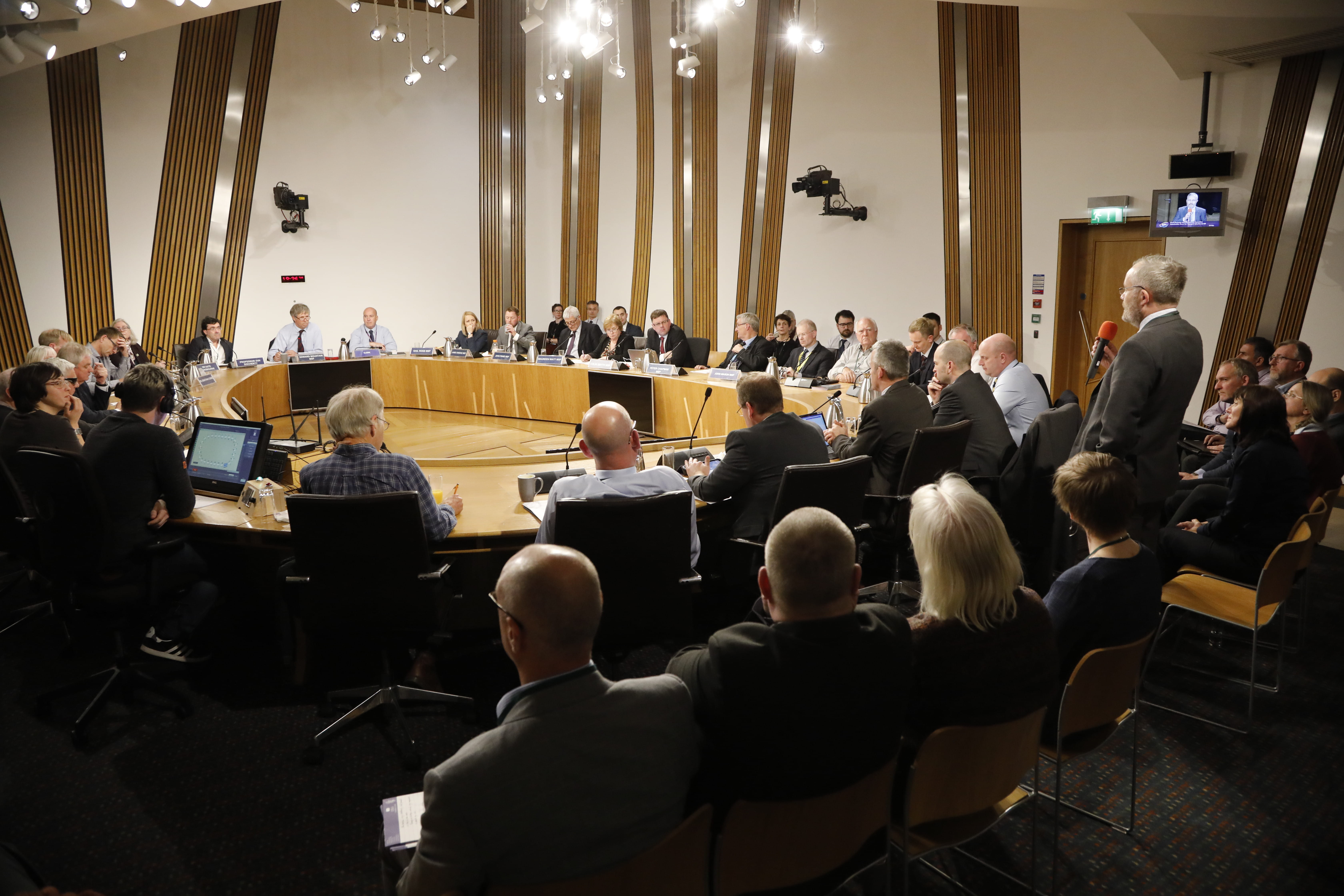
The Committee acknowledges the concerns expressed by local authorities about the cost of implementation, managing the process of exemptions and enforcement in relation to the parking prohibition provisions in the Bill. The Committee believes that without robust and appropriately funded enforcement many of the provisions will be ineffective in practice.
The Committee acknowledges the challenging situation local authorities face in terms of finance and resources. It welcomes the Scottish Government commitment to work with local authorities and COSLA, through a parking standards working group, to develop more robust costs for each of the respective areas. It calls on the Scottish Government to respond to the findings of this working group and to provide additional support to councils should it determine that this is required.
The Committee is concerned that the provisions in the Bill may also lead to an unintentional two-tier system for parking enforcement in areas where there is no decriminalised parking enforcement. It calls on the Scottish Government to consider whether the Bill could be used as a mechanism to speed up and simplify the bureaucracy around the current decriminalisation process which allows the transition of responsibility to local authorities from Police Scotland control.
The Committee seeks clarity from the Scottish Government on whether it intends the parking regulations in the Bill to be a ‘power’ for use by local authorities, or a ‘duty’ which they will be required to apply. It considers the provision of such clarity to be necessary as it may have implications for those local authorities that have not as yet opted to decriminalise parking enforcement.
The Committee welcomes the Scottish Government's intention to undertake a nationwide campaign before any parking changes are implemented. It calls on the Scottish Government to ensure that the campaign is as widespread and inclusive as possible and include vulnerable groups and those for which English may not be their first language.
Road works
The Bill proposes a number of changes to the legislation governing the regulation of road works in Scotland. This includes provisions relating to:
the power and status of the Scottish Road Works Commissioner;
the consenting mechanism for organisations wishing to undertake work in a road involving apparatus;
safety measures for carrying out works in roads;
qualifications for supervisors and operatives;
commencement and completion notices; and the
reinstatement of roads following works.
The Committee heard that stakeholders were content overall with the proposals in the Bill regarding road works. For example, respondents to the online survey were overwhelmingly in favour of the proposed new powers for the Scottish Road Works Commissioner and their staff. It was felt by several witnesses that the existing quality of roadworks in Scotland was superior to elsewhere in the UK and that the proposals in the Bill were a positive framework to continue to improve that quality and drive up standards. Scottish Water said—
There is no particular provision that causes a concern in terms of the additional approach to regulation, noticing and penalties. Our perception overall is that that will generally just continue to drive up the quality of road works in Scotland...
Rural Economy and Connectivity Committee 07 November 2018 [Draft], Mark McEwen (Scottish Water), contrib. 81, http://www.scottish.parliament.uk/parliamentarybusiness/report.aspx?r=11763&c=2125407
The Committee noted the frustrations which can be experienced by drivers and local businesses when successive road works extend over a long period and there are times when no work appears to be actively being conducted. It explored whether there was anything in the Bill that will give the Scottish Road Works Commissioner the power to ensure that utility companies manage such situations more effectively.
When questioned on this issue, Scottish Government officials said—
The New Roads and Street Works Act 1991 makes provision for local authorities to issue a direction under section 125 of the act, which says that road works have to take as short a time as possible. There is an obligation for that to happen anyway, but there is provision for a specific direction. The Commissioner’s office will get additional powers to see how local authorities are using that direction. It will absolutely be a level playing field; the Commissioner will be able to look at roads authorities as well as utility companies and get information about whether that is happening.
Rural Economy and Connectivity Committee 21 November 2018 [Draft], Kat Quane, contrib. 208, http://www.scottish.parliament.uk/parliamentarybusiness/report.aspx?r=11799&c=2131181
Overall, it was felt by stakeholders that the proposals in the Bill would help improve quality and safety leading to less disruption for road users and improved journey times. In particular, it was felt that Quality Improvement Plans would encourage work to be done right first time and create a positive culture with high expectations on contractors. In terms of staff qualifications the Committee heard that there is already a requirement to have qualified staff on site but that the Bill will help to tighten up what is already in place and enhance the culture of responsibility. The Scottish Road Works Commissioner said—
The provisions in the bill should improve the current situation in Scotland. It will be difficult to get it absolutely perfect; there is a lot of human nature involved, and a lot of different operatives, companies and contracts. However, it will certainly lead to an improvement in safety at road works sites, which is a big issue, and the quality of reinstatements.
Rural Economy and Connectivity Committee 07 November 2018 [Draft], Angus Carmichael, contrib. 89, http://www.scottish.parliament.uk/parliamentarybusiness/report.aspx?r=11763&c=2125415
The Committee noted that the Roadworks Commissioner is developing a smart phone app which will allow the proposals in the Bill for contractors to more quickly provide updates on the start and finish of road works. The Committee notes this could, at the present time, be limited by location and available signal.
Despite the positive feedback received on the Bill proposals the Committee did hear concerns that roadworks can be a serious obstruction and potential hazard to people with disabilities and parents with small children. The Committee is aware that the 'Red Book Guidance' is available to help guide those responsible for roadworks to ensure accessibility needs are recognised. However, it was told that this guidance is not being appropriately enforced. Mark Hunter from the Mobility and Access Committee for Scotland (MACS) said—
Application of the very good guidance that already exists is not good enough and we would like to see better inspection and enforcement.
Rural Economy and Connectivity Committee 07 November 2018 [Draft], David Hunter, contrib. 86, http://www.scottish.parliament.uk/parliamentarybusiness/report.aspx?r=11763&c=2125412
The Committee also heard that there has been a difference in views between BT Openreach and the Roadworks Commissioner about releasing data relating to certain road works. BT Openreach considers that there some of its operations can involve information that is critical to national infrastructure which requires a special level of encryption and security. BT Openreach noted that if it was required to release this data by legislation they would do so but only if the appropriate security provisions could be agreed.5
When asked to provide comment on this particular issue, the Cabinet Secretary said —
Further security measures might need to be put in place to restrict access to information on the system. I expect the commissioner to keep the situation under review and to consider whether they have to update those security measures and put further measures in place so that only those who are entitled to access the information can access it.
Rural Economy and Connectivity Committee 21 November 2018 [Draft], Michael Matheson, contrib. 197, http://www.scottish.parliament.uk/parliamentarybusiness/report.aspx?r=11799&c=2131170
The Committee also questioned whether the proposed new power of unannounced entry which is included in the Bill was proportionate. The Scottish Government sought to reassure the Committee, advising it that this power would only be used following a warrant from a Judge and that, in the majority of cases, enforcement would happen at the roadside.7
The Law Society of Scotland (LSS) proposed changes to the proposed power so that warrants for entry can only be obtained after entry has been refused, and that warrants should be obtained only when matters are urgent and be valid for a limited period of 28 days. The LSS also said that sections 18E(3) and (4) of the Bill regarding liability of authorised persons should be deleted as it does not consider it proportionate to include a blanket immunity to anyone, as they should be subject to law as relevant and appropriate. 8
The Scottish Government sought to reassure the Committee, advising it that this power would only be used following a warrant from a Judge and that, in the majority of cases, enforcement would happen at the roadside.9
The LSS also suggested several changes in relation to Compliance Notices, which were including a right of appeal to the courts, and that amendments to criminal offences should be by way of primary legislation rather than by affirmative regulations. It also proposed more clarity on fixed penalty charges in relation to the maximum fine, and the circumstances in which it would be issued.8
The Committee welcomes the proposals in the Bill regarding road works and is of the view that they will provide a positive framework to help to continue to improve the quality, safety and performance of roadworks in Scotland.
However, the Committee is concerned, that although there is effective guidance available about how road works should operate there is a problem with inspection and enforcement of that guidance at a local level. As mentioned earlier in this report, the Committee acknowledges the challenging situation local authorities face in terms of finance and resources. However, it would encourage them to consider how inspection and enforcement practices can be improved where possible in their local areas.
The Committee asks the Scottish Government to reflect on the points raised in the evidence submission by the Law Society in relation to road works and consider bringing forward amendments where appropriate at stage 2.
Regional Transport Partnership finance
The Bill proposes several provisions which change how Regional Transport Partnerships are funded. For example, the Bill proposes that—
Councils fund the balance of the Transport Partnership‘s estimated costs rather than their actual costs. This change would allow the Partnership to carry surplus funds from one year to the next where its actual costs for a year are less than estimated.
Transport Partnerships will have the ability to hold and operate capital funds, renewal and repair funds and insurance funds in a similar way to councils.
Transport Partnerships will have the power to borrow and lend money and to operate a loan fund, subject to the terms of certain local government regulations.
The Bill also adds a requirement on Transport Partnerships to prepare a forecast of its net expenses each year and provide it to its constituent councils to aid them in meeting their duty.
Overall, these powers were welcomed by stakeholders and seen to be a sensible approach to the governance of Regional Transport Partnerships. A representative of SCOTS said—
We have lobbied hard for this. Year after year, we have been in a difficult position. My finance colleagues tell me that, in relation to the many projects that we are involved in, we have had to implement huge workarounds. That flexibility will be hugely beneficial.
Rural Economy and Connectivity Committee 19 September 2018, Charlie Hoskins, contrib. 152, http://www.scottish.parliament.uk/parliamentarybusiness/report.aspx?r=11678&c=2112852
Strathclyde Partnership for Transport said that these proposals will address a previous oversight in legislation. Its representative stated—
We want to be able to take a much longer and more holistic view of the transport network and how we deliver for that, and the proposals will open up flexibility that will put us on an equal footing with councils. We will benefit from being able to do that.
Rural Economy and Connectivity Committee 19 September 2018, Bruce Kiloh, contrib. 151, http://www.scottish.parliament.uk/parliamentarybusiness/report.aspx?r=11678&c=2112851
The Committee welcomes the proposals in the Bill which bring greater flexibility to the management of Regional Transport Partnership finance.
Canals
The board of Scottish Canals currently comprises a Chair, Vice Chair and between one and four other members. This means that the Board as a whole must currently consist of between three and six members. The Bill would change this so that both the minimum and maximum number of other members of the Board is increased so that the minimum becomes four and the maximum becomes nine.
The Committee asked about the effective upkeep of Scotland's canal network and whether the current legislation is robust enough to provide for this.
The Cabinet Secretary said—
There are no plans at present to update the legislation, largely because no marked deficiencies have been highlighted to us. Some of the challenges that face our canal infrastructure are not about legislation but about the age of canals and the need to update and upgrade them. As canals go through my constituency, I know that any issues are largely down to infrastructure challenges. If Scottish Canals were to highlight particular deficiencies in or challenges around the existing legislative structure, I would be more than willing to consider what it said, but at present it has not done so.
Rural Economy and Connectivity Committee 21 November 2018 [Draft], Michael Matheson, contrib. 231, http://www.scottish.parliament.uk/parliamentarybusiness/report.aspx?r=11799&c=2131204
The Committee notes the provisions in the Bill which will allow for an increase in the number of Scottish Canals board members.
The Committee recognises that the Bill does not contain any proposals to amend the legislation which covers the upkeep and maintenance of canals. It notes that the Scottish Government does not currently have any plans to update the relevant legislation. However, the Committee calls on the Scottish Government to set out in writing how, if no legislative change is required, the current challenges in maintaining Scotland's canal infrastructure might be addressed.
Conclusion
The Committee supports the general principles of the Bill and recommends to the Parliament that they be agreed to.
Workplace parking levy - forthcoming amendment to the Bill
The Committee is aware that the Scottish Government has announced that it is to support an agreed Scottish Green Party amendment at Stage 2 of the Bill on the granting of powers to local authorities to introduce a workplace parking levy. It is understood that Scottish Government support for this amendment is contingent on the exclusion of NHS premises.
The Committee is concerned that this amendment, which will seek to make a significant addition to the Bill, is to be brought forward at Stage 2. It therefore considers it to be essential that it is has the opportunity to scrutinise the terms of any such amendment. The Committee therefore requires a timetable for Stage 2 consideration which will allow it to take oral evidence on the proposed amendment from key stakeholders, before making a formal decision on the amendment.
Annex A - Extract from minutes
20th Meeting, 2018 (Session 5), Wednesday 27 June
1. Transport (Scotland) Bill (in private): The Committee agreed its approach to the scrutiny of the Bill at Stage 1.
Gail Ross declared an interest as Honorary Vice President of the Friends of the Far North Line.
22nd Meeting, 2018 (Session 5), Wednesday 12 September
2. Transport (Scotland) Bill: The Committee took evidence on the Bill at Stage 1 from— Tasha Geddie, Transport Scotland Bill Team, Stephen Thomson, Head of Environmental & Sustainability Policy, Peter Grant, Team Leader – Bus Policy, Gordon Hanning, Head of Integrated Ticketing Unit, George Henry, Policy Manager – Parking, Kat Quane, Policy Officer – Road Works, Joanne Gray, Policy Manager – Regional Transport Partnerships, Chris Wilcock, Head of Ports, Shipping, Freight and Canals, Kevin Gibson, Legal Department, Alison Martin, Legal Department, Anne Cairns, Legal Department, and Claire McGill, Legal Department, Scottish Government
23rd Meeting, 2018 (Session 5), Wednesday 19 September
2. Transport (Scotland) Bill: The Committee took evidence on the Bill at Stage 1 from— Gordon MacKay, Chair, and Charlie Hoskins, Member, Society of Chief Officers of Transportation in Scotland; Jim Grieve, Head of Programmes, SESTRAN; Bruce Kiloh, Head of Policy and Planning, Strathclyde Partnership for Transport; Paul Lawrence, Executive Director of Place, City of Edinburgh Council; David Summers, Principal Passenger Transport Officer, Highland Council.
25th Meeting, 2018 (Session 5), Wednesday 3 October
3. Transport (Scotland) Bill: The Committee took evidence on the Bill at Stage 1 from— George Mair, Director - Scotland, Confederation of Passenger Transport; Simon Hulme, IT Director, CalMac Ltd; Robert Samson, Senior Stakeholder Manager, Transport Focus; George Mair, Director - Scotland, Confederation of Passenger Transport; Gavin Booth, Director for Scotland, Bus Users Scotland; Emma Cooper, Chief Executive, Scottish Rural Action; Chris Day, Policy Advisor, Transform Scotland; Professor David Gray, Professor of Transport Policy, Robert Gordon University.
Stewart Stevenson declared an interest as Honorary Vice President of the Scottish Association for Public Transport.
26th Meeting, 2018 (Session 5), Wednesday 24 October
3. Transport (Scotland) Bill: The Committee took evidence on the Bill at Stage 1 from— Martin Reid, Policy Director, Road Haulage Association; Gavin Thomson, Air Pollution Campaigner at Friends of the Earth Scotland, Scottish Environment Link; Tony Kenmuir, Treasurer and member of the Executive Committee, Scottish Taxi Federation; Neil Greig, Policy and Research Director, IAM RoadSmart.
28th Meeting, 2018 (Session 5), Wednesday 7 November
4. Transport (Scotland) Bill: The Committee took evidence on the Bill at Stage 1 from— Stuart Hay, Director, Living Streets Scotland; John Lauder, National Director, Sustrans Scotland; Iain Smith, Policy and Public Affairs Officer, Inclusion Scotland; David Hunter, Member, Mobility and Access Committee for Scotland; Alex Rae, NRSWA Manager for Scotia Gas Networks, on behalf of Street Works UK; Elizabeth Draper, Head of Compliance & Regulation for Streetworks, Openreach; Angus Carmichael, Scottish Roadworks Commissioner; Mark McEwen, General Manager – Customer Service, Scottish Water;
30th Meeting, 2018 (Session 5), Wednesday 21 November
2. Transport (Scotland) Bill: The Committee took evidence on the Bill at Stage 1 from— Michael Matheson, Cabinet Secretary for Transport, Infrastructure and Connectivity, Pete Grant, Bus Policy Team Leader, Gordon Hanning, Head of Integrated Ticketing Unit, Stephen Thomson, Head of Air Quality, George Henry, Parking Policy Manager, Kat Quane, Road Works Policy Officer, Joanne Gray, Policy Manager on Regional Transport Partnerships, Brian Spence, Canals Policy Officer, Kevin Gibson, Solicitor, Debbie Blair, Solicitor, Anne Cairns, Solicitor, and Magdalene Boyd, Solicitor, Scottish Government. Stewart Stevenson declared interests as Honorary Vice President of Rail Future UK and as Honorary Vice President of the Scottish Association for Public Transport.
4. Transport (Scotland) Bill (in private): The Committee reviewed the evidence it has heard on the Transport (Scotland) Bill at Stage 1.
Annex B - Written submissions and analysis of survey responses
Chartered Institution of Highways and Transportation (269KB pdf)
Civil Engineering Contractors Association Scotland (117KB pdf)
Highland and Islands Transport Partnership (HITRANS) (313KB pdf)
Society of Chief Officers of Transportation in Scotland (140KB pdf)
The Committee were copied into emails sent to MSP's as part of a campaign by Living Street Scotland on the Bill. The Committee received 285 of these campaign emails.
The Committee were also sent emails as part of a campaign by Guide Dogs Scotland on the Bill. The Committee received 202 of these campaign emails.
Annex C - Correspondence and other evidence
The Committee held an informal video conference with London transport stakeholders about their experience of low emission zones, smart ticketing and bus regulation, in the context of the Committee's work on the Transport (Scotland) Bill.
On 24 October, the Committee held a discussion forum in the Parliament to hear people's views on the Transport (Scotland) Bill. 47 people from a range of community groups, local authorities and business interests were present. The evening started with a panel of academics briefly sharing their views on the Bill and then discussion was opened up to the floor.
Sources
Rural Economy and Connectivity Committee. (2018, November 7). Official Report. Retrieved from <a href="http://www.parliament.scot/parliamentarybusiness/report.aspx?r=11763" target="_blank">http://www.parliament.scot/parliamentarybusiness/report.aspx?r=11763</a>
RAC Foundation. (2018, October). Written Submission. Retrieved from <a href="https://www.parliament.scot/S5_Rural/RAC_Foundation_TB.pdf" target="_blank">https://www.parliament.scot/S5_Rural/RAC_Foundation_TB.pdf</a>
RAC Foundation. (2018, September). Written submission. Rural Economy and Connectivity Committee. Retrieved from <a href="http://www.parliament.scot/S5_Rural/RAC_Foundation_TB.pdf" target="_blank">http://www.parliament.scot/S5_Rural/RAC_Foundation_TB.pdf</a>
Rural Economy and Connectivity Committee. (2018, September 19). Official Report. Retrieved from <a href="http://www.parliament.scot/parliamentarybusiness/report.aspx?r=11678" target="_blank">http://www.parliament.scot/parliamentarybusiness/report.aspx?r=11678</a>
Rural Economy and Connectivity Committee 24 October 2018 [Draft], Neil Greig, contrib. 34, <a href="http://www.scottish.parliament.uk/parliamentarybusiness/report.aspx?r=11732&c=2120856" target="_blank">http://www.scottish.parliament.uk/parliamentarybusiness/report.aspx?r=11732&c=2120856</a>
Rural Economy and Connectivity Committee 21 November 2018 [Draft], Michael Matheson, contrib. 131, <a href="http://www.scottish.parliament.uk/parliamentarybusiness/report.aspx?r=11799&c=2131104" target="_blank">http://www.scottish.parliament.uk/parliamentarybusiness/report.aspx?r=11799&c=2131104</a>
Rural Economy and Connectivity Committee. (2018, October 24). Official Report. Retrieved from <a href="http://www.parliament.scot/parliamentarybusiness/report.aspx?r=11732" target="_blank">http://www.parliament.scot/parliamentarybusiness/report.aspx?r=11732</a>
Rural Economy and Connectivity Committee 19 September 2018, Bruce Kiloh, contrib. 68, <a href="http://www.scottish.parliament.uk/parliamentarybusiness/report.aspx?r=11678&c=2112768" target="_blank">http://www.scottish.parliament.uk/parliamentarybusiness/report.aspx?r=11678&c=2112768</a>
Rural Economy and Connectivity Committee 24 October 2018 [Draft], Tony Kenmuir (Scottish Taxi Association), contrib. 5, <a href="http://www.scottish.parliament.uk/parliamentarybusiness/report.aspx?r=11732&c=2120827" target="_blank">http://www.scottish.parliament.uk/parliamentarybusiness/report.aspx?r=11732&c=2120827</a>
Rural Economy and Connectivity Committee 19 September 2018, Jim Grieve, contrib. 74, <a href="http://www.scottish.parliament.uk/parliamentarybusiness/report.aspx?r=11678&c=2112774" target="_blank">http://www.scottish.parliament.uk/parliamentarybusiness/report.aspx?r=11678&c=2112774</a>
Rural Economy and Connectivity Committee 19 September 2018, Jim Grieve, contrib. 92, <a href="http://www.scottish.parliament.uk/parliamentarybusiness/report.aspx?r=11678&c=2112792" target="_blank">http://www.scottish.parliament.uk/parliamentarybusiness/report.aspx?r=11678&c=2112792</a>
Rural Economy and Connectivity Committee 24 October 2018 [Draft], Martin Reid (Road Haulage Association), contrib. 7, <a href="http://www.scottish.parliament.uk/parliamentarybusiness/report.aspx?r=11732&c=2120829" target="_blank">http://www.scottish.parliament.uk/parliamentarybusiness/report.aspx?r=11732&c=2120829</a>
Rural Economy and Connectivity Committee 24 October 2018 [Draft], Gavin Thomson, contrib. 24, <a href="http://www.scottish.parliament.uk/parliamentarybusiness/report.aspx?r=11732&c=2120846" target="_blank">http://www.scottish.parliament.uk/parliamentarybusiness/report.aspx?r=11732&c=2120846</a>
Rural Economy and Connectivity Committee 21 November 2018 [Draft], Michael Matheson, contrib. 112, <a href="http://www.scottish.parliament.uk/parliamentarybusiness/report.aspx?r=11799&c=2131085" target="_blank">http://www.scottish.parliament.uk/parliamentarybusiness/report.aspx?r=11799&c=2131085</a>
Rural Economy and Connectivity Committee 21 November 2018 [Draft], Michael Matheson, contrib. 110, <a href="http://www.scottish.parliament.uk/parliamentarybusiness/report.aspx?r=11799&c=2131083" target="_blank">http://www.scottish.parliament.uk/parliamentarybusiness/report.aspx?r=11799&c=2131083</a>
Rural Economy and Connectivity Committee 24 October 2018 [Draft], Tony Kenmuir, contrib. 58, <a href="http://www.scottish.parliament.uk/parliamentarybusiness/report.aspx?r=11732&c=2120880" target="_blank">http://www.scottish.parliament.uk/parliamentarybusiness/report.aspx?r=11732&c=2120880</a>
Rural Economy and Connectivity Committee 24 October 2018 [Draft], Martin Reid, contrib. 12, <a href="http://www.scottish.parliament.uk/parliamentarybusiness/report.aspx?r=11732&c=2120834" target="_blank">http://www.scottish.parliament.uk/parliamentarybusiness/report.aspx?r=11732&c=2120834</a>
Rural Economy and Connectivity Committee 24 October 2018 [Draft], Tony Kenmuir, contrib. 18, <a href="http://www.scottish.parliament.uk/parliamentarybusiness/report.aspx?r=11732&c=2120840" target="_blank">http://www.scottish.parliament.uk/parliamentarybusiness/report.aspx?r=11732&c=2120840</a>
Finance and Constitution Committee. (2018, November 14). Official Report. Retrieved from <a href="http://www.parliament.scot/parliamentarybusiness/report.aspx?r=11788&mode=pdf" target="_blank">http://www.parliament.scot/parliamentarybusiness/report.aspx?r=11788&mode=pdf</a>
Rural Economy and Connectivity Committee. (2018, November 21). Official Report. Retrieved from <a href="http://www.parliament.scot/parliamentarybusiness/report.aspx?r=11799" target="_blank">http://www.parliament.scot/parliamentarybusiness/report.aspx?r=11799</a>
Strathclyde Partnership for Transport (SPT). (2018, October). Written submission. Retrieved from <a href="https://www.parliament.scot/S5_Rural/Strathclyde_Partnership_for_Transport_(SPT).pdf" target="_blank">https://www.parliament.scot/S5_Rural/Strathclyde_Partnership_for_Transport_(SPT).pdf</a>
Rural Economy and Connectivity Committee 03 October 2018, Chris Day (Transform Scotland), contrib. 113, <a href="http://www.scottish.parliament.uk/parliamentarybusiness/report.aspx?r=11714&c=2118180" target="_blank">http://www.scottish.parliament.uk/parliamentarybusiness/report.aspx?r=11714&c=2118180</a>
Rural Economy and Connectivity Committee 03 October 2018, Emma Cooper, contrib. 140, <a href="http://www.scottish.parliament.uk/parliamentarybusiness/report.aspx?r=11714&c=2118207" target="_blank">http://www.scottish.parliament.uk/parliamentarybusiness/report.aspx?r=11714&c=2118207</a>
Rural Economy and Connectivity Committee 03 October 2018, George Mair, contrib. 124, <a href="http://www.scottish.parliament.uk/parliamentarybusiness/report.aspx?r=11714&c=2118191" target="_blank">http://www.scottish.parliament.uk/parliamentarybusiness/report.aspx?r=11714&c=2118191</a>
Rural Economy and Connectivity Committee 03 October 2018, Professor David Gray (Robert Gordon University), contrib. 112, <a href="http://www.scottish.parliament.uk/parliamentarybusiness/report.aspx?r=11714&c=2118179" target="_blank">http://www.scottish.parliament.uk/parliamentarybusiness/report.aspx?r=11714&c=2118179</a>
Rural Economy and Connectivity Committee 03 October 2018, Chris Day, contrib. 128, <a href="http://www.scottish.parliament.uk/parliamentarybusiness/report.aspx?r=11714&c=2129479" target="_blank">http://www.scottish.parliament.uk/parliamentarybusiness/report.aspx?r=11714&c=2129479</a>
Rural Economy and Connectivity Committee 21 November 2018 [Draft], Michael Matheson, contrib. 10, <a href="http://www.scottish.parliament.uk/parliamentarybusiness/report.aspx?r=11799&c=2130983" target="_blank">http://www.scottish.parliament.uk/parliamentarybusiness/report.aspx?r=11799&c=2130983</a>
The Equality and Human Rights Commission. (2018, October). Written submission. Retrieved from <a href="https://www.parliament.scot/S5_Rural/Equality_and_Human_Rights_Commission_TB.pdf" target="_blank">https://www.parliament.scot/S5_Rural/Equality_and_Human_Rights_Commission_TB.pdf</a>
Rural Economy and Connectivity Committee 19 September 2018, Gordon Mackay (Society of Chief Officers of Transportation in Scotland), contrib. 21, <a href="http://www.scottish.parliament.uk/parliamentarybusiness/report.aspx?r=11678&c=2112721" target="_blank">http://www.scottish.parliament.uk/parliamentarybusiness/report.aspx?r=11678&c=2112721</a>
COSLA. (2018, October). Written submission. Retrieved from <a href="https://www.parliament.scot/S5_Rural/COSLA_TB.pdf" target="_blank">https://www.parliament.scot/S5_Rural/COSLA_TB.pdf</a>
HITRANS. (2018, October). Written submission. Retrieved from <a href="https://www.parliament.scot/S5_Rural/HITRANS_TB.pdf" target="_blank">https://www.parliament.scot/S5_Rural/HITRANS_TB.pdf</a>
Rural Economy and Connectivity Committee 19 September 2018, David Summers, contrib. 30, <a href="http://www.scottish.parliament.uk/parliamentarybusiness/report.aspx?r=11678&c=2112730" target="_blank">http://www.scottish.parliament.uk/parliamentarybusiness/report.aspx?r=11678&c=2112730</a>
Rural Economy and Connectivity Committee 21 November 2018 [Draft], Michael Matheson, contrib. 28, <a href="http://www.scottish.parliament.uk/parliamentarybusiness/report.aspx?r=11799&c=2131001" target="_blank">http://www.scottish.parliament.uk/parliamentarybusiness/report.aspx?r=11799&c=2131001</a>
Stagecoach. (2018, September). Written Submission to the Rural Economy and Connectivity Committee. Retrieved from <a href="http://www.parliament.scot/parliamentarybusiness/CurrentCommittees/109147.aspx" target="_blank">http://www.parliament.scot/parliamentarybusiness/CurrentCommittees/109147.aspx</a>
Society of Chief Officers of Transportation in Scotland. (2018, October). Written submission. Retrieved from <a href="https://www.parliament.scot/S5_Rural/Society_of_Chief_Officers_of_Transportation_in_Scotland.pdf" target="_blank">https://www.parliament.scot/S5_Rural/Society_of_Chief_Officers_of_Transportation_in_Scotland.pdf</a>
FirstGroup plc UK Bus Division. (2018, October). Written submission. Retrieved from <a href="https://www.parliament.scot/S5_Rural/FirstGroup_plc_UK_Bus_Division_TB.pdf" target="_blank">https://www.parliament.scot/S5_Rural/FirstGroup_plc_UK_Bus_Division_TB.pdf</a>
Highland Council. (2019, October). Written submission. Retrieved from <a href="https://www.parliament.scot/S5_Rural/Highland_Council_TB.pdf" target="_blank">https://www.parliament.scot/S5_Rural/Highland_Council_TB.pdf</a>
Stagecoach UK Bus. (2018, October). Written submission. Retrieved from <a href="https://www.parliament.scot/S5_Rural/Stagecoach_UK_Bus_TB.pdf" target="_blank">https://www.parliament.scot/S5_Rural/Stagecoach_UK_Bus_TB.pdf</a>
Perth and Kinross Council. (2018, September). Written Submission to the Rural Economy and Connectivity Committee. Retrieved from <a href="http://www.parliament.scot/S5_Rural/Perth_and_Kinross_Council_tb.pdf" target="_blank">http://www.parliament.scot/S5_Rural/Perth_and_Kinross_Council_tb.pdf</a>
COSLA. (2018, September). Written Submission to the Rural Economy and Connectivity Committee. Retrieved from <a href="http://www.parliament.scot/S5_Rural/COSLA_TB.pdf" target="_blank">http://www.parliament.scot/S5_Rural/COSLA_TB.pdf</a>
Society of Chief Officers of Transport Scotland. (2018, September). Written submission to the Rural Economy and Connectivity Committee. Retrieved from <a href="http://www.parliament.scot/S5_Rural/Society_of_Chief_Officers_of_Transportation_in_Scotland.pdf" target="_blank">http://www.parliament.scot/S5_Rural/Society_of_Chief_Officers_of_Transportation_in_Scotland.pdf</a>
Rural Economy and Connectivity Committee 21 November 2018 [Draft], Michael Matheson, contrib. 12, <a href="http://www.scottish.parliament.uk/parliamentarybusiness/report.aspx?r=11799&c=2130985" target="_blank">http://www.scottish.parliament.uk/parliamentarybusiness/report.aspx?r=11799&c=2130985</a>
Rural Economy and Connectivity Committee 03 October 2018, George Mair, contrib. 157, <a href="http://www.scottish.parliament.uk/parliamentarybusiness/report.aspx?r=11714&c=2118224" target="_blank">http://www.scottish.parliament.uk/parliamentarybusiness/report.aspx?r=11714&c=2118224</a>
East Dunbartonshire Council. (2018, October). Written submission. Retrieved from <a href="https://www.parliament.scot/S5_Rural/East_Dunbartonshire_Council.pdf" target="_blank">https://www.parliament.scot/S5_Rural/East_Dunbartonshire_Council.pdf</a>
Fife Council. (2018, October). Written submission. Retrieved from <a href="https://www.parliament.scot/S5_Rural/Fife_Council_TB.pdf" target="_blank">https://www.parliament.scot/S5_Rural/Fife_Council_TB.pdf</a>
Lothian Buses. (2018, October). Written submission. Retrieved from <a href="https://www.parliament.scot/S5_Rural/Lothian_Buses_TB.pdf" target="_blank">https://www.parliament.scot/S5_Rural/Lothian_Buses_TB.pdf</a>
Confederation of Passenger Transport (CPT) Scotland. (2018, October). Written submission. Retrieved from <a href="https://www.parliament.scot/S5_Rural/Confederation_of_Passenger_Transport_Scotland.pdf" target="_blank">https://www.parliament.scot/S5_Rural/Confederation_of_Passenger_Transport_Scotland.pdf</a>
Confederation of Passenger Transport. (2018, October 03). Oral evidence to the Rural Economy and Connectivity Committee. Retrieved from <a href="http://www.parliament.scot/parliamentarybusiness/report.aspx?r=11714" target="_blank">http://www.parliament.scot/parliamentarybusiness/report.aspx?r=11714</a>
Rural Economy and Connectivity Committee 03 October 2018, Chris Day, contrib. 175, <a href="http://www.scottish.parliament.uk/parliamentarybusiness/report.aspx?r=11714&c=2118242" target="_blank">http://www.scottish.parliament.uk/parliamentarybusiness/report.aspx?r=11714&c=2118242</a>
City of Edinburgh Council. (2018, October). Written submission. Retrieved from <a href="https://www.parliament.scot/S5_Rural/City_of_Edinburgh_Council_TB.pdf" target="_blank">https://www.parliament.scot/S5_Rural/City_of_Edinburgh_Council_TB.pdf</a>
Clackmannanshire Council. (2018, September). Written Submission to the Rural Economy and Connectivity Committee. Retrieved from <a href="http://www.parliament.scot/S5_Rural/Clackmannanshire_Council_TB.pdf" target="_blank">http://www.parliament.scot/S5_Rural/Clackmannanshire_Council_TB.pdf</a>
Stagecoach. (2018, September). Written Submission to the Rural Economy and Connectivity Committee. Retrieved from <a href="http://www.parliament.scot/S5_Rural/Stagecoach_UK_Bus_TB.pdf" target="_blank">http://www.parliament.scot/S5_Rural/Stagecoach_UK_Bus_TB.pdf</a>
Lothian Buses. (2018, September). Written Submission to the Rural Economy and Connectivity Committee. Retrieved from <a href="http://www.parliament.scot/S5_Rural/Lothian_Buses_TB.pdf" target="_blank">http://www.parliament.scot/S5_Rural/Lothian_Buses_TB.pdf</a>
Rural Economy and Connectivity Committee. (2018, October 3). Official Report. Retrieved from <a href="http://www.parliament.scot/parliamentarybusiness/report.aspx?r=11714&mode=pdf" target="_blank">http://www.parliament.scot/parliamentarybusiness/report.aspx?r=11714&mode=pdf</a>
Glasgow City Council. (2018, October). Written submission. Retrieved from <a href="https://www.parliament.scot/S5_Rural/Glasgow_City_Council_TB.pdf" target="_blank">https://www.parliament.scot/S5_Rural/Glasgow_City_Council_TB.pdf</a>
Strathclyde Partnership for Transport. (2018, October). Written submission. Retrieved from <a href="https://www.parliament.scot/S5_Rural/Strathclyde_Partnership_for_Transport_(SPT).pdf" target="_blank">https://www.parliament.scot/S5_Rural/Strathclyde_Partnership_for_Transport_(SPT).pdf</a>
Scottish Association for Public Transport. (2018, October). Written submission. Retrieved from <a href="https://www.parliament.scot/S5_Rural/Scottish_Association_for_Public_Transport.pdf" target="_blank">https://www.parliament.scot/S5_Rural/Scottish_Association_for_Public_Transport.pdf</a>
Urban Transport Group. (2018, October). Written submission. Retrieved from <a href="https://www.parliament.scot/S5_Rural/Urban_Transport_Group_TB.pdf" target="_blank">https://www.parliament.scot/S5_Rural/Urban_Transport_Group_TB.pdf</a>
UNITE. (2018, October). Written submission. Retrieved from <a href="https://www.parliament.scot/S5_Rural/UNITE_TB.pdf" target="_blank">https://www.parliament.scot/S5_Rural/UNITE_TB.pdf</a>
Lothian Buses. (2018, September). Written Submission to the Rural Economy and Connectivity Committee. Retrieved from <a href="http://www.parliament.scot/parliamentarybusiness/CurrentCommittees/109147.aspx" target="_blank">http://www.parliament.scot/parliamentarybusiness/CurrentCommittees/109147.aspx</a>
Clackmannanshire Council. (2018, October). Written submission. Retrieved from <a href="https://www.parliament.scot/S5_Rural/Clackmannanshire_Council_TB.pdf" target="_blank">https://www.parliament.scot/S5_Rural/Clackmannanshire_Council_TB.pdf</a>
Equality and Human Rights Commission. (2018, October). Written submission. Retrieved from <a href="https://www.parliament.scot/S5_Rural/Equality_and_Human_Rights_Commission_TB.pdf" target="_blank">https://www.parliament.scot/S5_Rural/Equality_and_Human_Rights_Commission_TB.pdf</a>
Royal National Institute of Blind People. (2018, October). Written submission. Retrieved from <a href="https://www.parliament.scot/S5_Rural/Royal_National_Institute_of_Blind_People.pdf" target="_blank">https://www.parliament.scot/S5_Rural/Royal_National_Institute_of_Blind_People.pdf</a>
Rural Economy and Connectivity Committee 03 October 2018, George Mair, contrib. 137, <a href="http://www.scottish.parliament.uk/parliamentarybusiness/report.aspx?r=11714&c=2118204" target="_blank">http://www.scottish.parliament.uk/parliamentarybusiness/report.aspx?r=11714&c=2118204</a>
Rural Economy and Connectivity Committee 03 October 2018, Chris Day, contrib. 141, <a href="http://www.scottish.parliament.uk/parliamentarybusiness/report.aspx?r=11714&c=2118208" target="_blank">http://www.scottish.parliament.uk/parliamentarybusiness/report.aspx?r=11714&c=2118208</a>
Rural Economy and Connectivity Committee 03 October 2018, Professor Gray, contrib. 160, <a href="http://www.scottish.parliament.uk/parliamentarybusiness/report.aspx?r=11714&c=2118227" target="_blank">http://www.scottish.parliament.uk/parliamentarybusiness/report.aspx?r=11714&c=2118227</a>
North Lanarkshire Council. (2018, September). Written Submission to the Rural Economy and Connectivity Committee. Retrieved from <a href="http://www.parliament.scot/S5_Rural/North_Lanarkshire_Council_TB.pdf" target="_blank">http://www.parliament.scot/S5_Rural/North_Lanarkshire_Council_TB.pdf</a>
Aberdeen City Council. (2018, September). Written Submission to the Rural Economy and Connectivity Committee. Retrieved from <a href="http://www.parliament.scot/S5_Rural/Aberdeen_City_Council_TB.pdf" target="_blank">http://www.parliament.scot/S5_Rural/Aberdeen_City_Council_TB.pdf</a>
Get Glasgow Moving. (2018, September). Written Submission to the Rural Economy and Connectivity Committee. Retrieved from <a href="http://www.parliament.scot/parliamentarybusiness/CurrentCommittees/109147.aspx" target="_blank">http://www.parliament.scot/parliamentarybusiness/CurrentCommittees/109147.aspx</a>
First Bus. (2018, September). Written Submission to the Rural Economy and Connectivity Committee. Retrieved from <a href="http://www.parliament.scot/parliamentarybusiness/CurrentCommittees/109147.aspx" target="_blank">http://www.parliament.scot/parliamentarybusiness/CurrentCommittees/109147.aspx</a>
Rural Economy and Connectivity Committee 03 October 2018, Robert Samson, contrib. 15, <a href="http://www.scottish.parliament.uk/parliamentarybusiness/report.aspx?r=11714&c=2118082" target="_blank">http://www.scottish.parliament.uk/parliamentarybusiness/report.aspx?r=11714&c=2118082</a>
North Lanarkshire Council. (2018, September). Written Submission. Rural Economy and Connectivity Committee. Retrieved from <a href="http://www.parliament.scot/S5_Rural/North_Lanarkshire_Council_TB.pdf" target="_blank">http://www.parliament.scot/S5_Rural/North_Lanarkshire_Council_TB.pdf</a>
Rural Economy and Connectivity Committee 12 September 2018, Gordon Hanning (Scottish Government), contrib. 46, <a href="http://www.scottish.parliament.uk/parliamentarybusiness/report.aspx?r=11660&c=2109980" target="_blank">http://www.scottish.parliament.uk/parliamentarybusiness/report.aspx?r=11660&c=2109980</a>
East Ayrshire Council. (2018, October). Written submission. Retrieved from <a href="https://www.parliament.scot/S5_Rural/East_Ayrshire_Council_TB.pdf" target="_blank">https://www.parliament.scot/S5_Rural/East_Ayrshire_Council_TB.pdf</a>
Society of Chief Officers of Transportation in Scotland. (2018, September). Written Submission. Rural Economy and Connectivity Committee. Retrieved from <a href="http://www.parliament.scot/S5_Rural/Society_of_Chief_Officers_of_Transportation_in_Scotland.pdf" target="_blank">http://www.parliament.scot/S5_Rural/Society_of_Chief_Officers_of_Transportation_in_Scotland.pdf</a>
Age Scotland. (2018, October). Written submission. Retrieved from <a href="https://www.parliament.scot/S5_Rural/Age_Scotland_TB.pdf" target="_blank">https://www.parliament.scot/S5_Rural/Age_Scotland_TB.pdf</a>
Disability Equality Scotland. (2018, October). Written submission. Retrieved from <a href="https://www.parliament.scot/S5_Rural/Disability_Equality_Scotland_TB.pdf" target="_blank">https://www.parliament.scot/S5_Rural/Disability_Equality_Scotland_TB.pdf</a>
Mobility and Access Committee for Scotland. (2018, October). Written submission. Retrieved from <a href="https://www.parliament.scot/S5_Rural/Mobility_and_Access_Committee_for_Scotland_(MACS).pdf" target="_blank">https://www.parliament.scot/S5_Rural/Mobility_and_Access_Committee_for_Scotland_(MACS).pdf</a>
South Lanarkshire Council. (2018, October). Written submission. Retrieved from <a href="https://www.parliament.scot/S5_Rural/South_Lanarkshire_Council_TB.pdf" target="_blank">https://www.parliament.scot/S5_Rural/South_Lanarkshire_Council_TB.pdf</a>
North Ayrshire Council. (2018, October). Written submission. Retrieved from <a href="https://www.parliament.scot/S5_Rural/North_Ayrshire_Council_TB.pdf" target="_blank">https://www.parliament.scot/S5_Rural/North_Ayrshire_Council_TB.pdf</a>
Rural Economy and Connectivity Committee 19 September 2018, David Summers, contrib. 52, <a href="http://www.scottish.parliament.uk/parliamentarybusiness/report.aspx?r=11678&c=2112752" target="_blank">http://www.scottish.parliament.uk/parliamentarybusiness/report.aspx?r=11678&c=2112752</a>
South Lanarkshire Council. (2018, September). Written Submission. Rural Economy and Connectivity Committee. Retrieved from <a href="http://www.parliament.scot/S5_Rural/South_Lanarkshire_Council_TB.pdf" target="_blank">http://www.parliament.scot/S5_Rural/South_Lanarkshire_Council_TB.pdf</a>
Fife Council. (2018, September). Written Submission. Rural Economy and Connectivity Committee. Retrieved from <a href="http://www.parliament.scot/S5_Rural/Fife_Council_TB.pdf" target="_blank">http://www.parliament.scot/S5_Rural/Fife_Council_TB.pdf</a>
Rural Economy and Connectivity Committee 03 October 2018, George Mair, contrib. 105, <a href="http://www.scottish.parliament.uk/parliamentarybusiness/report.aspx?r=11714&c=2118172" target="_blank">http://www.scottish.parliament.uk/parliamentarybusiness/report.aspx?r=11714&c=2118172</a>
Rural Economy and Connectivity Committee 21 November 2018 [Draft], Michael Matheson, contrib. 158, <a href="http://www.scottish.parliament.uk/parliamentarybusiness/report.aspx?r=11799&c=2131131" target="_blank">http://www.scottish.parliament.uk/parliamentarybusiness/report.aspx?r=11799&c=2131131</a>
Rural Economy and Connectivity Committee 07 November 2018 [Draft], Stuart Hay, contrib. 26, <a href="http://www.scottish.parliament.uk/parliamentarybusiness/report.aspx?r=11763&c=2125703" target="_blank">http://www.scottish.parliament.uk/parliamentarybusiness/report.aspx?r=11763&c=2125703</a>
Rural Economy and Connectivity Committee 07 November 2018 [Draft], Stuart Hay, contrib. 11, <a href="http://www.scottish.parliament.uk/parliamentarybusiness/report.aspx?r=11763&c=2125337" target="_blank">http://www.scottish.parliament.uk/parliamentarybusiness/report.aspx?r=11763&c=2125337</a>
Rural Economy and Connectivity Committee 21 November 2018 [Draft], Michael Matheson, contrib. 164, <a href="http://www.scottish.parliament.uk/parliamentarybusiness/report.aspx?r=11799&c=2131137" target="_blank">http://www.scottish.parliament.uk/parliamentarybusiness/report.aspx?r=11799&c=2131137</a>
Cycling Scotland. (2018, October). Written submission. Retrieved from <a href="https://www.parliament.scot/S5_Rural/Cycling_Scotland_TB.pdf" target="_blank">https://www.parliament.scot/S5_Rural/Cycling_Scotland_TB.pdf</a>
SPOKES. (2018, October). Written submission. Retrieved from <a href="https://www.parliament.scot/S5_Rural/Spokes_TB.pdf" target="_blank">https://www.parliament.scot/S5_Rural/Spokes_TB.pdf</a>
Rural Economy and Connectivity Committee 21 November 2018 [Draft], Michael Matheson, contrib. 149, <a href="http://www.scottish.parliament.uk/parliamentarybusiness/report.aspx?r=11799&c=2131122" target="_blank">http://www.scottish.parliament.uk/parliamentarybusiness/report.aspx?r=11799&c=2131122</a>
Rural Economy and Connectivity Committee 21 November 2018 [Draft], Michael Matheson, contrib. 151, <a href="http://www.scottish.parliament.uk/parliamentarybusiness/report.aspx?r=11799&c=2131124" target="_blank">http://www.scottish.parliament.uk/parliamentarybusiness/report.aspx?r=11799&c=2131124</a>
Rural Economy and Connectivity Committee 07 November 2018 [Draft], Iain Smith, contrib. 34, <a href="http://www.scottish.parliament.uk/parliamentarybusiness/report.aspx?r=11763&c=2125360" target="_blank">http://www.scottish.parliament.uk/parliamentarybusiness/report.aspx?r=11763&c=2125360</a>
Perth and Kinross Council. (2018, September). Written submission to Rural Economy and Connectivity Committee. Retrieved from <a href="http://www.parliament.scot/S5_Rural/Perth_and_Kinross_Council_tb.pdf" target="_blank">http://www.parliament.scot/S5_Rural/Perth_and_Kinross_Council_tb.pdf</a>
Rural Economy and Connectivity Committee 07 November 2018 [Draft], Iain Smith, contrib. 7, <a href="http://www.scottish.parliament.uk/parliamentarybusiness/report.aspx?r=11763&c=2125333" target="_blank">http://www.scottish.parliament.uk/parliamentarybusiness/report.aspx?r=11763&c=2125333</a>
Edinburgh City Council. (2018, September). Written submission to Edinburgh City Council. Retrieved from <a href="http://www.parliament.scot/S5_Rural/City_of_Edinburgh_Council_TB.pdf" target="_blank">http://www.parliament.scot/S5_Rural/City_of_Edinburgh_Council_TB.pdf</a>
Society of Chief Officers of Transport Scotland (SCOTS). (2018, September). Written Submission to Rural Economy and Connectivity Committee. Page 6. Retrieved from <a href="http://www.parliament.scot/S5_Rural/Society_of_Chief_Officers_of_Transportation_in_Scotland.pdf" target="_blank">http://www.parliament.scot/S5_Rural/Society_of_Chief_Officers_of_Transportation_in_Scotland.pdf</a>
Law Society of Scotland. (2018, October). Written submission. Retrieved from <a href="https://www.parliament.scot/S5_Rural/The_Law_Society_of_Scotland_TB.pdf" target="_blank">https://www.parliament.scot/S5_Rural/The_Law_Society_of_Scotland_TB.pdf</a>
Rural Economy and Connectivity Committee 21 November 2018 [Draft], Michael Matheson, contrib. 180, <a href="http://www.scottish.parliament.uk/parliamentarybusiness/report.aspx?r=11799&c=2131153" target="_blank">http://www.scottish.parliament.uk/parliamentarybusiness/report.aspx?r=11799&c=2131153</a>
Rural Economy and Connectivity Committee. (2018, December 4). Letter from the Finance and Constitution Committee. Retrieved from <a href="https://www.parliament.scot/S5_Rural/20181204_Finance_and_Constitution_Cttee_-_Transport_Bill_FM.pdf" target="_blank">https://www.parliament.scot/S5_Rural/20181204_Finance_and_Constitution_Cttee_-_Transport_Bill_FM.pdf</a>
North Lanarkshire Council. (2018, September). Written submission to Rural Economy and Connectivity Committee. Retrieved from <a href="http://www.parliament.scot/S5_Rural/North_Lanarkshire_Council_TB.pdf" target="_blank">http://www.parliament.scot/S5_Rural/North_Lanarkshire_Council_TB.pdf</a>
Rural Economy and Connectivity Committee. (2018, September 12). Official Report. Retrieved from <a href="http://www.parliament.scot/parliamentarybusiness/report.aspx?r=11660" target="_blank">http://www.parliament.scot/parliamentarybusiness/report.aspx?r=11660</a>
Rural Economy and Connectivity Committee 07 November 2018 [Draft], Mark McEwen (Scottish Water), contrib. 81, <a href="http://www.scottish.parliament.uk/parliamentarybusiness/report.aspx?r=11763&c=2125407" target="_blank">http://www.scottish.parliament.uk/parliamentarybusiness/report.aspx?r=11763&c=2125407</a>
Rural Economy and Connectivity Committee 21 November 2018 [Draft], Kat Quane, contrib. 208, <a href="http://www.scottish.parliament.uk/parliamentarybusiness/report.aspx?r=11799&c=2131181" target="_blank">http://www.scottish.parliament.uk/parliamentarybusiness/report.aspx?r=11799&c=2131181</a>
Rural Economy and Connectivity Committee 07 November 2018 [Draft], Angus Carmichael, contrib. 89, <a href="http://www.scottish.parliament.uk/parliamentarybusiness/report.aspx?r=11763&c=2125415" target="_blank">http://www.scottish.parliament.uk/parliamentarybusiness/report.aspx?r=11763&c=2125415</a>
Rural Economy and Connectivity Committee 07 November 2018 [Draft], David Hunter, contrib. 86, <a href="http://www.scottish.parliament.uk/parliamentarybusiness/report.aspx?r=11763&c=2125412" target="_blank">http://www.scottish.parliament.uk/parliamentarybusiness/report.aspx?r=11763&c=2125412</a>
Rural Economy and Connectivity Committee 21 November 2018 [Draft], Michael Matheson, contrib. 197, <a href="http://www.scottish.parliament.uk/parliamentarybusiness/report.aspx?r=11799&c=2131170" target="_blank">http://www.scottish.parliament.uk/parliamentarybusiness/report.aspx?r=11799&c=2131170</a>
Rural Economy and Connectivity Committee. (2018, November 21). Official Report. Retrieved from <a href="http://www.parliament.scot/parliamentarybusiness/report.aspx?r=11763" target="_blank">http://www.parliament.scot/parliamentarybusiness/report.aspx?r=11763</a>
Rural Economy and Connectivity Committee 19 September 2018, Charlie Hoskins, contrib. 152, <a href="http://www.scottish.parliament.uk/parliamentarybusiness/report.aspx?r=11678&c=2112852" target="_blank">http://www.scottish.parliament.uk/parliamentarybusiness/report.aspx?r=11678&c=2112852</a>
Rural Economy and Connectivity Committee 19 September 2018, Bruce Kiloh, contrib. 151, <a href="http://www.scottish.parliament.uk/parliamentarybusiness/report.aspx?r=11678&c=2112851" target="_blank">http://www.scottish.parliament.uk/parliamentarybusiness/report.aspx?r=11678&c=2112851</a>
Rural Economy and Connectivity Committee 21 November 2018 [Draft], Michael Matheson, contrib. 231, <a href="http://www.scottish.parliament.uk/parliamentarybusiness/report.aspx?r=11799&c=2131204" target="_blank">http://www.scottish.parliament.uk/parliamentarybusiness/report.aspx?r=11799&c=2131204</a>