Social Justice and Social Security Committee
Social Justice and Social Security Committee Session 6 Legacy Report
Social Justice and Social Security Committee
Committee remit
The Committee was established in June 2021, and its remit was—
To consider and report on matters falling within the responsibility of the Cabinet Secretary for Social Justice, excluding matters relating to housing and tenants’ rights.
This included scrutiny of subjects such as—
the Scottish Government's policies on welfare and poverty
the social security system in Scotland
homelessness and rough sleeping
fuel poverty and debt advice services
violence against women and girls and domestic violence
social justice (looking at ways to create a fairer Scotland)
third sector including social economy and the Office of the Scottish Charity Regulator (OSCR)
Devolved social security
The focus of social security policy in Scotland this session has been continued development of benefits administered by Social Security Scotland up to the end of 2025. This has included 'safe and secure' transfer of benefits from the Department for Work and Pensions (DWP).
Social Security Scotland was created following passage of the Social Security (Scotland) Act 2018. The Bill set out the Scottish Government's overarching principles, how applications would be made and appeal processes. The Bill did not set out the detail or eligibility for any of the new benefits, instead, this was done via secondary legislation. The Committee therefore spent a lot of Session 6 scrutinising regulations setting up benefits to be delivered by Social Security Scotland, including the Carer Support Payment, Adult Disability Payment and Funeral Support Payment.
The Scotland Act 1998, as amended in 2016, provides for the devolution of 12 benefits,i and also allows—
top-up to reserved benefits (except housing costs). This has been used to create the Scottish Child Payment.
new benefits in devolved areas (except pensions). This has been used to create the Best Start Grant – early learning and school payments.
Primary legislation
The Committee considered a range of subject matters throughout its scrutiny of primary legislation in Session 6, and these are detailed below.
Carer's Allowance Supplement (Scotland) Bill
The Carer's Allowance Supplement (Scotland) Bill provided for an increase in the payment amount of the Carer's Allowance Supplement for the period from 1 October 2021 to 31 March 2022.
A call for views ran from 2 July 2021 to 12 August. The timetable was expedited to allow for the December 2021 payment to be made at the increased rate set out in the Bill.
The Committee supported the general principles of the Bill and recommended to the Parliament that they be agreed to. The Bill was passed on 7 October 2021 and became the Carer’s Allowance Supplement (Scotland) Act 2021 on 15 November 2021.
Charities (Regulation and Administration) (Scotland) Bill
The Charities (Regulation and Administration) (Scotland) Bill made changes to the Charities and Trustee Investment (Scotland) Act 2005 and—
gave the Office of the Scottish Charity Regulator (OSCR) wider powers to investigate charities and charity trustees;
amended the rules on who can be a charity trustee or a senior office-holder in a charity;
increased the information that OSCR holds about charity trustees;
updated the information which needs to be included on the Scottish Charity Register;
created a record of charities that have merged.
There was general agreement amongst Committee Members that the Bill would help to improve transparency and accountability in the charity sector, as well as strengthening OSCR’s current powers and achieving greater consistency with other UK jurisdictions.
However, from our scrutiny, it was also clear charities were more apprehensive about how the provisions would work in practice. We were therefore clear that OSCR should work with the sector to allay charities’ concerns via support and guidance.
We supported the general principles of the Bill, and took the view that its provisions were appropriate and proportionate, and needed to support OSCR in fulfilling its role as the regulator. The Bill was passed on 28 June 2023 and became an Act on 9 August 2023.
Scottish Employment Injuries Advisory Council Bill
This Member's Bill, introduced by Mark Griffin MSP, sought to establish a new body, the Scottish Employment Injuries Advisory Council. The purpose of this body was to provide expertise about support for people who can no longer work as a result of workplace injury or disease.
While the Committee acknowledged the "good and genuine intentions of the Member in Charge" in bringing forward the Bill, the Committee was not able to support its general principles. This was because Members were uncertain whether the Bill would be able to bring about the change and modernisation stakeholders wanted. Members also thought timing was an issue, given the expected Scottish Government consultation on the Industrial Injuries Disability Benefit.
Also, as Ministers would have remained constrained by an agency agreement with the Department for Work and Pensions until case transfer of the benefit was complete, this meant that recommendations made by the Advisory Council would not have been workable.
Housing (Scotland) Bill (Parts 5 and 6)
The Housing (Scotland) Bill made a number of changes to the law in relation to housing. Part 5 on homelessness prevention, and an element of Part 6 on fuel poverty, fell within the Committee's remit.
In terms of the policy behind the Bill and its impact on homelessness, the Committee recognised the legislation presented an opportunity to move away from crisis management towards prevention. However, we were concerned by the perceived lack of detail in the Bill. We therefore asked for additional information on issues such as how the proposed 'Ask and Act' duty, which mandates that public bodies proactively ask people about their housing situation and take early action to prevent homelessness, would work in practice.
The Committee also highlighted that it was not clear when provisions would be implemented, and we asked for an update on this, as well as on whether a phased approach to implementation would be taken.
Despite concerns mentioned above, we ultimately recommended to the Local Government, Housing and Planning Committee that we supported Parts 5 and 6 of the Bill. The Bill was passed on 30 September 2025 and became an Act on 6 November 2025.
Social Security (Amendment) (Scotland) Bill
This Bill amended the Social Security (Scotland) Act 2018, making changes to the Scottish social security system.
The Committee considered that the amendment of the Social Security (Scotland) Act 2018 had been undertaken in a way that took account of the ethos of the 2018 Act, while amending it to take account of developments in the Scottish social security system. We recommended to the Parliament that the general principles of the Bill be agreed to.
However, we also heard that changes to the system that appeared straightforward could have unintended consequences. We determined that this had made it difficult at times to ensure that the social security principles were upheld throughout the Bill. The Committee therefore indicated in its report that further reassurance that fairness, dignity and respect were at the heart of the Bill's provisions would be welcome.
The Bill was passed on 3 December 2024 and became an Act on 23 January 2025.
Wellbeing and Sustainable Development (Scotland) Bill
The Wellbeing and Sustainable Development (Scotland) Bill was a Member’s Bill introduced by Sarah Boyack MSP, and its aim was to promote consideration by public bodies of sustainable development and the wellbeing of future generations.
While the Committee supported the policy intentions of the Bill, a majority of Committee Members concluded that it should not proceed to Stage 2. In doing so, Members acknowledged the presumption against creating any further SPCB-supported bodies, as well as the Bill's likely impact, cost and effectiveness.
Inquiries
The inquiry work we undertook this session covered a breadth of topics.
Low income and debt
This inquiry set out to better understand the challenges faced by people with low incomes and debt problems, against a backdrop of increasing pressure from the global “cost of living crisis”.
We sought the views of people on low incomes who had experience of debt, as well as from front line debt advisers, public sector and third sector organisations, creditors, regulators and the Accountant in Bankruptcy. We also met informally with the Anchor Project, which is based in Shetland, to hear about preventative models of support and advice for families.
The recommendations made in our report were wide-ranging, and covered issues such as rising energy prices, management and recovery of public debt, council tax, rent arrears, school meal debt and digital exclusion. In considering early intervention and prevention, we highlighted mechanisms such as information and awareness raising campaigns, advice delivery, and funding for money advice agencies to test better ways of working with people with mental health issues.
Kinship care
As part of this inquiry, we heard from representatives for kinship carers, a local authority, COSLA and organisations that support and provide advice to kinship carers. A number of kinship carers were also invited into the Parliament to speak to Committee members about their experiences and the issues and barriers they face in accessing support, financial and otherwise.
Our inquiry report stated that we shared the widespread support for implementation of a Scottish Recommended Allowance for kinship and foster care, and we welcome the Scottish Government's introduction of this.
Child poverty and parental employment
The Committee's inquiry into child poverty and parental employment aimed to consider how the Scottish Government is working with local authorities, employers, and other partners at a local level to tackle child poverty through improving employability. It considered the broad range of interconnected policies required, such as childcare, education and transport, and plans for delivery of the ‘parental employment offer’ announced in Best Start, Bright Futures: tackling child poverty delivery plan 2022 to 2026.
We wrote to the Cabinet Secretary for Social Justice on 10 February 2026 requesting an update regarding any progress made in this area, with specific reference to the recommendations in our report. The response received from the Cabinet Secretary covered updates in relation to employability, childcare provision, transport, access to skills and training and fair work. The letter also emphasised the Tackling Child Poverty Delivery Plan 2026-31 will be a "robust framework" for the next Scottish Government to drive forward progress.
Child poverty was a key issue within our remit. It came up across much of the scrutiny we undertook, and early in 2022 we took evidence on the Scottish Government's second Tackling Child Poverty Delivery Plan.
 The Scottish Parliament
Scottish Child Payment
The Committee held a short inquiry into the effectiveness of the Scottish Child Payment in reducing child poverty in Scotland. As part of this, we held two evidence sessions and heard from panels of stakeholders which included academics and the third sector. All stakeholders were very supportive of the Payment and many were enthusiastic about its positive impact on families’ finances.
Many witnesses emphasised the importance of the collection and use of data to ensure there is a robust evidence base to support policy making. Following evidence taking, the Committee wrote to the Cabinet Secretary for Social Justice to highlight the evidence, and to raise issues related to qualitative and quantitative data collection, as well as modelling and administrative data. The Cabinet Secretary's response to this letter informed the Committee's ongoing work on this issue.
Financial considerations when leaving an abusive relationship
We also undertook a significant inquiry into financial considerations when leaving an abusive relationship, which focused on economic abuse and coercive control. During the inquiry we looked at a diverse set of issues, including social security systems, the role of local authorities, public debt, legal aid and the Scottish Government's Equally Safe strategy.
A key issue for stakeholders we heard from was the invaluable impact of the Fund to Leave, alongside a request for it to be reinstated. The Scottish Government's £500,000 Fund to Leave was a pilot which ran from October 2023 to March 2024. It offered victim/survivors grants of up to £1,000 “to pay for the essentials they need when leaving a relationship with an abusive partner.” It was administered by Women’s Aid groups in five local authorities.
The Committee made a number of recommendations, including the following key recommendation related to the Fund to Leave—
We ask the Scottish Government to provide a progress update on its assessment of the effectiveness of the Fund to Leave pilot and confirmation of when a decision is expected on whether it will be reintroduced.
Following our inquiry, the Scottish Government announced it would be reintroducing the payment and seeking to make it permanent. The Committee welcomed this announcement, which was highlighted during the Chamber debate on the Committee’s report.
Toward the end of this parliamentary session, the Committee wrote to the Minister for Equalities seeking an update on implementation of some of the recommendations the Committee made. The response the Committee received reiterated the Scottish Government's commitment to the new Fund to Leave and confirmed that the next Equally Safe strategy is due for publication in "the winter of 2026".
 The Scottish Parliament
Budget scrutiny
The Committee has scrutinised the Scottish Government's budget every year this session, examining it from the perspective of different elements of its remit:
2022-23: The Committee's first year of budget scrutiny focussed on the fact that its remit was an expansion on the previous Social Security Committee, and now also took in social justice issues. The Committee therefore asked the Scottish Government for an overview of how it would work to "poverty proof policy decisions" across all governmental portfolios.
2023-24: The Committee noted that its strategic aims, agreed at the outset of this parliamentary session, stated its commitment to taking a human rights-based approach to its work. Members therefore decided to look at whether the Scottish Government has taken a human rights-based approach when formulating its budget.
2024-25: The economic context for this budget was significant and the cost of living crisis was mentioned throughout the Committee's pre-budget report, alongside how the Scottish Government would prioritise spending. The Committee’s report noted that a key issue raised by stakeholders was the importance of meeting people's essential needs.
2025-26: Members scrutinised third sector funding principles and noted the Scottish Government’s acknowledgement that improvement was needed in this area. The Committee concluded that short-term funding cycles create financial instability and divert time and resource away from the delivery of services, and asked the Scottish Government how multi-year funding would be included in its Funding Principles from that point onwards.
2026-27: Given the significant impact of social security expenditure on the Scottish Government's budget, the Committee scrutinised the effectiveness of the Scottish Government's programme of devolved social security expenditure. Within its pre-budget report, the Committee made the point that, while it is crucial that social security spend supports those who need it, the Scottish Government should aim for long term improvements to population health and wealth that would reduce demand for social security.
 The Scottish Parliament
Thematic evidence sessions and post-legislative scrutiny
In addition to the Committee’s inquiry work and the scrutiny of legislation, the Committee also held a number of one-off evidence sessions. These are detailed below.
Fuel poverty
The Scottish Government published its Fuel Poverty Strategy in 2022. The Committee undertook scrutiny of it to ensure that the Strategy met the needs of low income households. Members were particularly concerned about the impact of the pandemic and price rises on households' ability to afford the essentials.
As part of its scrutiny, the Committee met with a panel of people that support households in fuel poverty, which was followed by a meeting with those with lived experience of fuel poverty. To ensure people were able to share their experiences in confidence, the meeting was held in private, and covered topics including rural inequality, energy efficiency programmes and the warm home discount.
Following the evidence session, the Committee wrote to the Scottish Government for an update on its fuel poverty targets. The Scottish Government confirmed that progress towards meeting these, as set in the Fuel Poverty (Targets, Definition and Strategy) (Scotland) Act 2019, are measured as part of the national Scottish House Condition Survey (SHCS).
Post-legislative scrutiny
In 2024, the Committee undertook post-legislative scrutiny of the Child Poverty (Scotland) Act 2017, to explore what difference a statutory approach had made to achieving the Act's stated policy aims. The Act introduced the following targets to be met in the financial year beginning 1 April 2030:
The 2030 targets are that, of children living in households in Scotland—
(a) less than 10% fall within section 3 (relative poverty),
(b) less than 5% fall within section 4 (absolute poverty),
(c) less than 5% fall within section 5 (combined low income and material deprivation),
(d) less than 5% fall within section 6 (persistent poverty).
The Committee concluded that, while the statutory footing had had a positive impact on reducing child poverty, the Act did not specify what would happen were the child poverty targets to be missed.
Members recommended that the Scottish Government should put more effort and consideration into cross-governmental working, as well as considering how it would work with local partners, to reach the targets.
Social Security Independent Advocacy Service
The Committee’s session with Advice Direct Scotland (ADS) provided important insight into the transition of the Social Security Independent Advocacy Service, which ADS assumed in February 2026 following the end of VoiceAbility’s contract (delivered from 2022).
Andrew Bartlett (CEO) outlined ADS’s transition and service‑delivery plans, including proposals to ensure consistent coverage across all local authority areas and the use of technology to manage demand while maintaining person-centred support. Members also explored how the service will assist people who face barriers when engaging with Social Security Scotland.
Local Housing Allowance
We held an evidence session on Local Housing Allowance (LHA), during which the impact of the current system on poverty and homelessness was discussed. How the system could be reformed and possible increases to the amount available via the benefit was also raised.
In addition to this, Members considered the extent to which Discretionary Housing Payments are used to support tenants in cases where LHA does not cover the entire amount of rent being charged in the private rented sector. A key issue is that the DHP is a short-term measure, which is not guaranteed.
The LHA rate a household is entitled to depends on its location, with bedroom entitlement based on family size and characteristics. A key issue with the LHA is the shared room rate for under-35s. If the household contains only a single person aged under 35 years old, the shared room rate may apply. The impact is that single people under 35 years of age who are unable to afford private rents are unable to enter the private rented sector. Greater flexibility in the eligibility for LHA might address this issue.
Funeral support payment
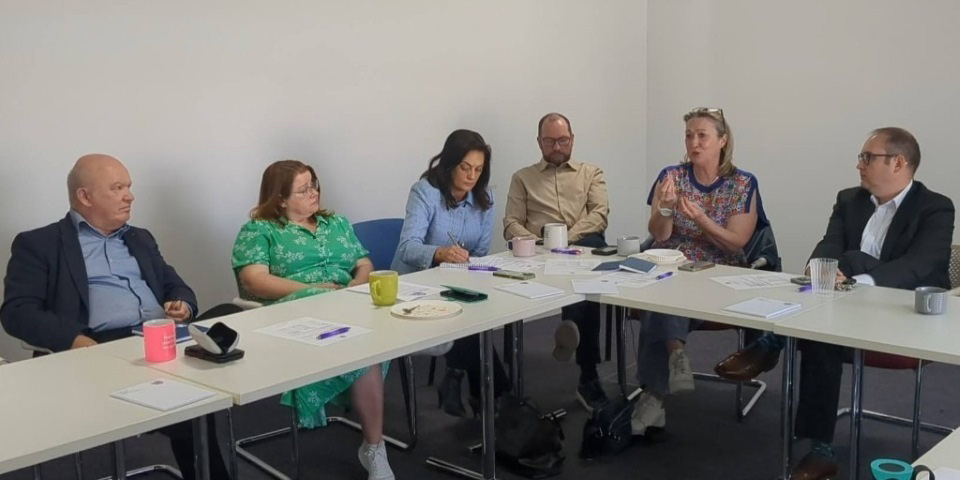
The Committee's one-off evidence session on the Funeral Support Payment (FSP) took the form of a round table, and engaged funeral directors, a third sector organisation and a social enterprise.
Issues raised included funeral costs being above the FSP, the inconsistency of burial costs across local authorities, and funeral directors bearing the risk and costs when there is non-payment, due to the FSP being provided to individuals and not the funeral directors.
Suggestions for improvements included some administrative changes that Social Security Scotland could make, such as sharing data with funeral directors, which would enable them to know the name of the person in receipt of FSP and in circumstances when the person changes funeral director. A suggestion to address the risks and costs to funeral directors would be to pay the FSP to funeral directors directly and to monitor the impact of that change.
Job Start Payment
We held a roundtable evidence session on the Job Start Payment (JSP) as one of our final evidence sessions. We heard from stakeholders about reasons for low application and authorisation rates of the benefit, and what could be done to improve this, alongside information on the adequacy and coherence of current support for young people seeking employment more generally.
Despite changes made to the JSP in response to feedback, and following an evaluation, uptake has remained consistently low. In 2024-25, only 19% of eligible individuals accessed the benefit, with 1,860 applications processed and 39% authorised.
Adult Disability Payment
The Committee held an evidence session with stakeholders on the independent review of Adult Disability Payment (ADP) chaired by Edel Harris OBE, following publication of the Scottish Government's response to the review. Given this happened towards the end of Session, there was not time to do in-depth scrutiny of the response.
The Scottish Government indicated its intention to progress many of the recommendations in early 2026. However, they deferred 16 recommendations to be considered by the next Scottish Government. Most of these recommendations were in the ‘A better future’ section of the report and were referred to by Edel Harris as being more radical and important.
Cross-committee work
The Committee worked alongside the Criminal Justice Committee and the Health, Social Care and Sport Committee this session to consider progress made on the implementation of the recommendations of the Scottish Drug Deaths Taskforce. A separate legacy report for this work was produced and is available here: Cross-Committee work on Tackling Drug Deaths and Drug Harm Session 6 Legacy Report.
Engagement
The Committee undertook engagement work alongside a number of notable inquiries and scrutiny of primary legislation throughout the session. Examples of this work are detailed below.
During our inquiry into low income and debt our scrutiny work was guided and informed by people experiencing debt and financial hardship as part of an 'experts by experience' panel. The panel followed formal committee meetings and were involved in a series of sessions to build awareness of the parliamentary process and the policy background to the issues being discussed. The panel members shared their experiences and worked together to consider actions which formed the basis of the recommendations contained in the Committee’s inquiry report.
The Committee also carried out scrutiny of Parts 5 and 6 of the Housing (Scotland) Bill, and undertook engagement facilitated by Crisis as part of this. Individuals who took part discussed issues including circumstances leading to homelessness, experience with support organisations and their general thoughts on the provisions in the Bill.
An inquiry we carried out into financial considerations when leaving an abusive relationship was also bookended by engagement with some members of Scottish Women's Aid's Survivor Reference Group. The meetings we had with the members of the Group provided Committee Members with an opportunity to hear about the experiences of women who have faced financial and economic abuse. The Group also provided their perspectives on the Committee's call for views ahead of formal evidence taking, as well as their thoughts on what they had heard throughout the inquiry once it was drawing to a close.
Looking ahead to Session 7
Remit and capacity
At the start of this report, we highlighted that the remit of this Committee expanded from that of Session 5 to include social justice issues, in addition to social security. While we welcomed the opportunity to scrutinise such a breadth of topics, we have often felt our capacity was constrained by being a committee that meets on a Thursday.
Given that Social Security Scotland was only newly established when Session 6 began, and the number of benefits expected to be devolved throughout the session, one of our main reflections is that it was not appropriate for the Social Justice and Social Security Committee to meet on a Thursday, as this did not provide sufficient time for scrutiny of this new service and the devolved benefits.
The Convener raised this issue on a number of occasions throughout Session 6, including at the Conveners Group.
Going into Session 7, we strongly recommend that any Committee with a similar remit meets on a Tuesday or Wednesday.
Devolution of benefits and the operation of Social Security Scotland
Social Security Scotland is central to the administration of devolved benefits, and we have taken evidence from it throughout this parliamentary session.
Stakeholders we have engaged with indicate that operation of the agency has been successful. This is especially true when it comes to upholding the principles upon which Social Security Scotland was formed, and feedback we have heard suggests clients' engagement with it has been broadly positive.
Despite this, questions remain as to whether the agency is functioning as efficiently as it could be, and we suggest any successor Committee monitors this.
In order for the agency to be successful, the Scottish Government and Social Security Scotland must ensure they have the data required to understand in greater detail the ways in which social security spending is making a difference. This can help guide decisions about any changes to eligibility and ensure efficient use of public funds. This is especially important when it comes to areas of significant spend, such as Adult Disability Payment.
Possible topics for a People's Panel
This Session, as part of cross-committee work on reducing drug deaths and drug harm in Scotland, a People's Panel was commissioned to consider the question—
What does Scotland need to do differently to reduce drug related harms?
More information on this is available both in the cross-committee legacy report, and on the Parliament's website: Reducing drug deaths in Scotland and tackling problem drug use.
Potential People's Panel topics should ideally be based on topics that would benefit from deliberative input. Both the public and politicians should also still be in the process of forming opinions on the issue.
As we approach Session 7, we have considered topics within our remit that could form the basis of a future People's Panel. We therefore recommend that any successor committee considers issues related to aspects of homelessness, violence against women and girls, and the extra costs of having a disability, which the Committee commissioned research on earlier this session, as possible topics.
Issues and themes the next committee may wish to consider
Moving into Session 7, although most devolved benefits are now administered by Social Security Scotland, there remain areas within the remit that a successor committee may wish to continue to scrutinise.
The Scottish Government is required to publish the next Child Poverty Delivery Plan (2026–2031) before 1 April 2026, as part of the statutory requirements of the Child Poverty (Scotland) Act 2017. We would recommend that our successor committee considers this plan, alongside the UK Government’s Child Poverty Strategy, which was published on 5 December 2025, to consider how the measures will impact child poverty and how both Governments can work together effectively to eradicate this in Scotland.
The Scottish Government recently announced that funds that were earmarked to mitigate the two-child limit would be reallocated to tackle child poverty. Consideration of how effective this spending is in reducing child poverty will also require attention.
Across this Session, we also heard about in-built volatility regarding social security spend, given that it is demand-led. Policies at a UK Government level can also impact the predictability of Scottish Government spend, and the Committee should therefore be in regular conversation with the Cabinet Secretary regarding exchanges with UK counterparts.
We also suggest that any incoming Committee could undertake post-legislative scrutiny of the Housing (Scotland) Bill. In particular, it would be useful to consider how well the ‘Ask and Act’ duty, which mandates that public bodies proactively ask people about their housing situation and take early action to prevent homelessness, is working in practice.
Scrutiny of the Housing (Scotland) Bill was split between this Committee and the Local Government, Housing and Planning (LGHP) Committee, and most of our work focused on Part 5 on homelessness prevention. Members felt this split worked really well and recommend that it is separated in this way in the next Session. The Committee scrutinised this part of the Bill at both Stages 1 and 2, and reported to the LGHP Committee, copying in the Scottish Government.
The Committee, along with the Finance and Public Administration Committee, was asked on two occasions this session to share its views on scope to inform the review of the Fiscal Framework. This is due to the Committee’s remit to scrutinise social security spending. We would recommend that our successor committee liaises with the Scottish Government at an early opportunity to enquire when input might be requested, to ensure that sufficient notice is given to enable the Committee to take evidence to inform its response.
The Committee's 2025-26 budget scrutiny looked specifically at the benefits of multi-year funding for the third sector, and given the Fairer Funding pilot is ongoing, it would be useful if the next Committee considers the effectiveness of this model.
The significance of ADP spend on the Scottish Government's budget should also be highlighted, and it would be useful if the next Committee looks at how these payments align with strategies to help disabled people more generally. Following our evidence session on the Scottish Government's response to the independent review, we would also recommend a future Committee scrutinises this in more depth, given we were not able to, due to a lack of time.
We would also suggest an incoming Committee continues to scrutinise the operational elements of Funeral Support Payment and Job Start Payment to ensure these payments are reaching those who need them and are working as efficiently as possible. In this context, a future committee may wish to consider the Scottish Government's benefit take-up strategy due in October 2026.
The Scottish Government was consulting on proposals to improve the National Performance Framework, which is the Scottish Government's wellbeing framework, as part of a substantial review. The review of the Framework is expected to continue in the next parliamentary session, and the next committee may wish to take evidence and/or contribute views on how it can be improved.
Given the scale of the transition and the importance of maintaining a high‑quality, person‑centred Social Security Independent Advocacy service, we recommend that the next committee continues to scrutinise ongoing delivery of the contract with Advice Direct Scotland. Members were concerned that ADS has taken on the contract for less money than VoiceAbility did previously, and the next Committee may therefore wish to consider this as part of its ongoing scrutiny of the service.
In terms of the general format of meetings, we also think that holding evidence sessions in a round table format facilitates a greater flow of conversation, and that this format should be considered where appropriate, depending on the subject matter being discussed.