Net Zero, Energy and Transport Committee
Annual report of the Net Zero, Energy and Transport Committee 2025-26
Overview
Introduction
This report covers the work of the Net Zero, Energy and Transport Committee during the Parliamentary year from 13 May 2025 to 8 April 2026. The Committee was established in June 2021.
The Committee's remit (as agreed by the Parliament on 26 June 2024, motion S6M-13795) is:
"To consider and report on matters falling within the responsibility of the Cabinet Secretary for Transport and the Cabinet Secretary for Net Zero and Energy, with the exception of matters relating to just transition; and on matters relating to land reform, natural resources and peatland, Scottish Land Commission, Crown Estate Scotland and Royal Botanic Garden within the responsibility of the Cabinet Secretary for Rural Affairs, Land Reform and Islands."
The following changes to the Committee's membership occurred during the course of this parliamentary year—
Gordon MacDonald replaced Ben Macpherson as Substitute Member for the Scottish National Party on 12 November 2025.
Meetings
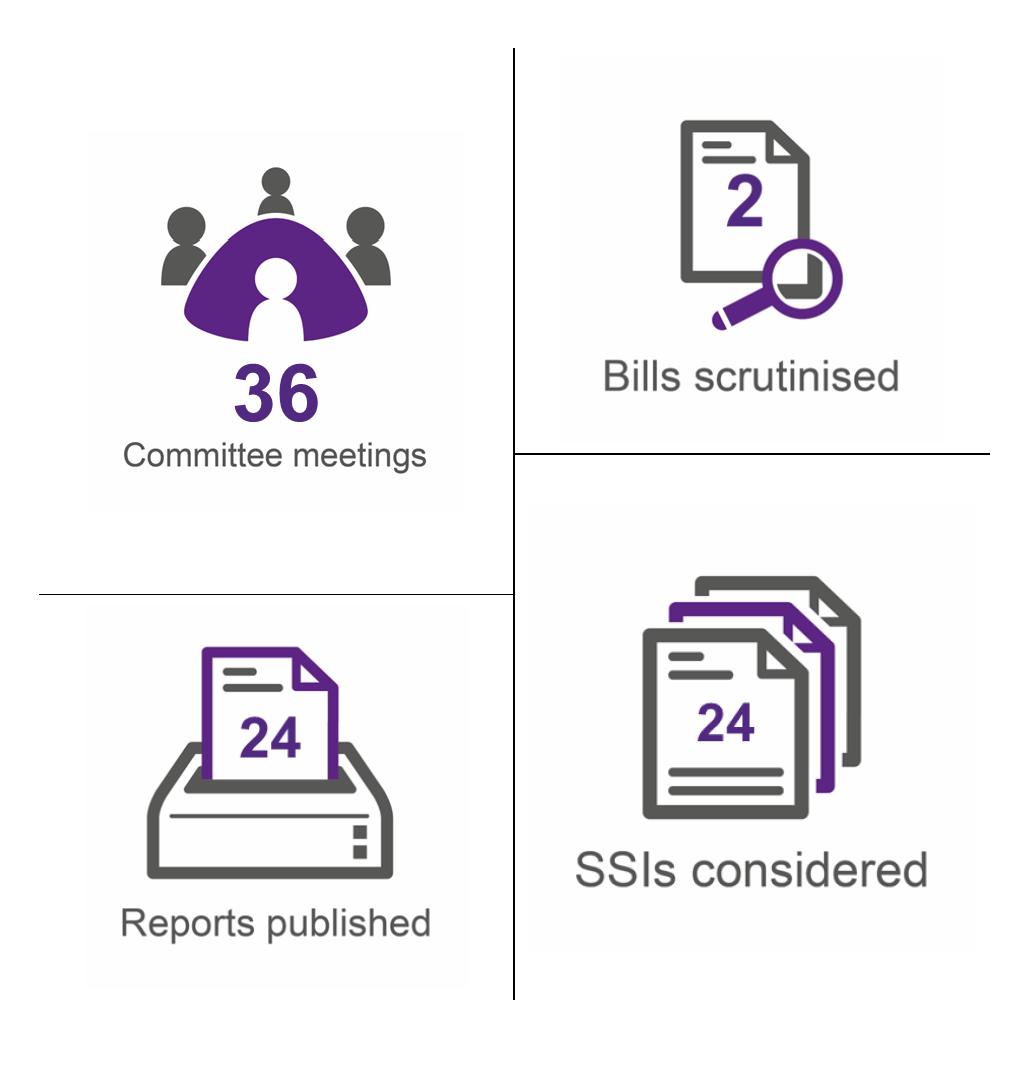
The Committee met 36 times during the Parliamentary year. Four meetings were held entirely in private, 3 were held entirely in public, and the other 29 meetings included items taken in public and in private.
Examples of business which the Committee agreed to consider in private include:
evidence heard earlier during meetings;
consideration of possible witnesses for evidence sessions;
its work programme; and
draft reports.
Agendas and minutes of all meetings are published on the Net Zero, Energy and Transport Committee webpage on the Scottish Parliament website.
Legislation
Over the reporting period, the Committee has considered two Bills;
Land Reform (Scotland) Bill
The Land Reform (Scotland) Bill was introduced on 13 March 2024. This wide-ranging and complex legislation proposed significant reforms across several areas, including land management, community engagement, the community right to buy, and the transfer of land. It also introduces a broad range of changes to agricultural holdings and small landholdings. The Committee's Stage 1 scrutiny took place during the previous reporting year, and details can be found in the Committee's Stage 1 Report.
The Committee considered the Bill at Stage 2 on 3, 10, 24 and 25 June 2025. The Parliament agreed that the Land Reform (Scotland) Bill be passed at Stage 3 on 5 November 2025. The Bill subsequently received Royal Assent on 16 December 2025 and became the Land Reform (Scotland) Act 2025.
Ecocide (Scotland) Bill
The Ecocide (Scotland) Bill was introduced on 29 May 2025 by Monica Lennon MSP as a Member’s Bill. Following its introduction, the Parliament referred the Bill to the Committee for Stage 1 consideration.
The Bill would introduce a new criminal offence of ecocide in Scotland. Ecocide is defined in the Bill as causing severe environmental harm intentionally or recklessly, where the harm has serious adverse effects and is either widespread or long-term. The Bill provides that the offence could apply to both individuals and organisations, with courts able to impose significant penalties following conviction. It also includes provision for liability in certain circumstances where senior individuals within an organisation are involved in, or responsible for, the offending conduct. In bringing forward the Bill, Ms Lennon argued that conduct causing severe environmental harm should be recognised as a serious criminal offence in its own right, with penalties that properly reflect the scale and seriousness of the damage caused.
The Committee launched a call for views on the Bill on 30 June 2025, which closed on 9 September. Responses are available on the Committee’s website , as is a Scottish Parliament Information Centre (SPICe) summary of the responses received.
Between September 2025 and January 2026, the Committee held a series of evidence sessions on the Bill, hearing from a broad range of stakeholders, including legal experts, environmental rights advocates, industry representatives, regulators, prosecutors, academics and finally from the Scottish Government and the Member in Charge. As scrutiny progressed, the Committee also considered the potential implications of the Bill for planning functions and agreed to seek views in writing from local authorities, COSLA, and Heads of Planning Scotland. The Official Reports of all evidence sessions and written submissions to the Committee are available on the Bill’s homepage.
The Committee published its Stage 1 report on the Bill on 23 January 2026, and the Scottish Government responded to the Committee’s report on 4 February 2026. The Stage 1 debate was held on 5 February 2026. After the debate, the Scottish Parliament agreed that the general principles of the Bill be approved.
The Bill was subsequently referred back to the Committee for Stage 2 consideration. After discussing its work programme and the time remaining before the end of the parliamentary session, the Committee concluded that there was no realistic prospect of addressing the issues identified during Stage 1 scrutiny within the time available. The Committee therefore agreed, by majorityi, to write to the Presiding Officer, Chair of the Parliamentary Bureau, on 18 February 2026, setting out its position.
The Presiding Officer responded to the Committee’s letter on 3 March 2026. Her reply noted the Committee’s concerns about the limited time available for meaningful Stage 2 scrutiny before the end of the parliamentary session. The reply said the Bureau had considered the Committee’s position when determining the Bill’s timetable and acknowledged the practical constraints identified in the Committee’s letter.
The Committee noted the Presiding Officer's letter at its meeting on 10 March and, other than referring to future work on issues related to the Bill in its legacy report, took no further action on the Bill.
Scottish Statutory Instruments (SSIs)
Scottish statutory instruments are proposed new laws laid under the authority of existing primary legislation (the "parent Act"). The Parliament has a short period of time in which to consider whether they should become law. During the Parliamentary year, the Committee considered:
1 super affirmative instrument
15 affirmative instruments
8 negative instruments
All of the Committee's SSI reports can be read on the Scottish Parliament website.
Additionally, 2 'laid-only' instruments (i.e. subject to no procedure) that were laid in the Parliament fell under the Committee's remit.
Notable examples of the Committee's scrutiny of subordinate legislation include the:
The Climate Change (Scotland) Act 2009 (Scottish Carbon Budgets) Amendment Regulations 2025
The Climate Change (Emissions Reduction Targets) (Scotland) Act 2024 moved Scotland from a system of annual and interim emission reduction targets on the path to net zero by 2045, to a system of carbon budgets. Carbon budgets set a limit on the amount of greenhouse gases that can be emitted in Scotland over a five-year period. The Climate Change Committee published advice to the Scottish Government on setting carbon budgets in May 2025. This instrument set the levels for the four five-yearly carbon budgets from 2026 to 2045 in line with the Climate Change Committee's advice. Alongside the instrument, the Scottish Government also published a statement setting out, in indicative terms, the policies and proposals likely to be in the Scottish Government's draft Climate Change Plan. The Committee also considered the statement during its scrutiny.
The Committee launched a targeted call for views in June 2025 and received 12 responses, which are available on the Committee's webpage. The Committee then took evidence from the Climate Change Committee on 2 September 2025 and then from academics on the related issue of climate change adaptation (considered further later in this report) on 9 September 2025, followed by the Cabinet Secretary for Climate Action and Energy on the same day.
The Committee agreed, by divisioni, to recommend that the Parliament approve the instrument and published its report on 30 September 2025.
The National Bus Travel Concession Schemes (Miscellaneous Amendment) (Scotland) Order 2026
The instrument amends the existing concessionary travel schemes for older and disabled people and for young people, giving Scottish Ministers the power to suspend or withdraw concessionary travel entitlement where an individual is found to have breached standards of conduct while using the scheme. It also establishes procedural requirements, including notice of the grounds for suspension and an opportunity for the individual concerned to make representations before a decision is taken.
The Committee first took evidence on the instrument on 20 January 2026 from the Minister for Agriculture and Connectivity and Scottish Government officials. Members raised concerns that the Committee was being asked to approve the instrument before seeing the draft code of conduct that would govern how the new power would operate in practice. In light of those concerns, the Minister did not move the motion to approve the instrument at that meeting.
The instrument was subsequently withdrawn and re-laid on 29 January 2026, with a draft code of conduct provided to the Committee. The Committee returned to the instrument on 17 February 2026, when it again took evidence from the Minister. This second evidence session focused on the scope of the draft code of conduct, the proposed review and appeals process, the role of Transport Scotland in decision-making, and how proportionality would be ensured, particularly for children or someone in a vulnerable group. Following that evidence session, the Committee agreed, by divisionii, to recommend that the Parliament approve the Order and published its report on 6 March 2026.
Proposals for UK Statutory Instruments (UK SIs)
In some circumstances, the Scottish Parliament is invited to consider whether it agrees with a decision by the Scottish Government to consent to provision within devolved competence being made via UK statutory instruments. This procedure is governed by the Statutory Instrument Protocol, which was developed and agreed by the Scottish Parliament and Scottish Government in response to Brexit and applies in relation to policy areas previously covered by EU Law. Under the Protocol, Type 1 notifications require the Scottish Government to seek the approval of the Scottish Parliament of a proposed decision to grant consent to UK Ministers making provision in a devolved area. Type 2 notifications are notified to the Scottish Parliament after the Scottish Ministers have given their consent to UK Ministers. These are limited to instruments of a technical nature that do not make policy changes.
During the Parliamentary year, the Committee received:
10 'Type 1' consent notifications
0 'Type 2' consent notifications
Legislative Consent Memorandums
A Legislative Consent Memorandum (LCM) is lodged in relation to any Bill in the UK Parliament that proposes to legislate on devolved matters, change the legislative competence of the Scottish Parliament, or change the executive competence of the Scottish Ministers. UK Bills meeting any of these criteria should not normally be passed without the consent of the Scottish Parliament. The Scottish Government must lodge an LCM for any such Bill so that the Parliament can scrutinise whether consent ought to be given.
During the Parliamentary year, the Committee was designated lead committee for scrutiny of LCMs for 4 UK Bills, 3 of which (see below) also had supplementary LCMs. More information on these LCMs can be found on the Committee website:
Planning and Infrastructure Bill
The Scottish Government lodged an LCM on the UK Planning and Infrastructure Bill on 27 March 2025, followed by a supplementary LCM on 13 August 2025. A second supplementary LCM was lodged on 24 October 2025. The Bill covers a number of different subject matters, including planning, nationally significant infrastructure projects, the transmission, distribution and supply of electricity, forestry matters, transport and roads, the operation of harbours, the environment, and compulsory purchase. It is primarily aimed at accelerating housing development and infrastructure projects across England, with the legislation seeking to deliver 1.5 million new homes and expedite decisions on 150 major infrastructure projects during the current UK Parliament. The Bill is also intended to support the UK Government’s “Clean Power 2030” initiative by removing barriers to clean energy projects.
The provisions requiring consent related principally to reforms to the consenting regime for electricity infrastructure under the Electricity Act 1989 and to powers for Scottish Ministers to charge fees for harbour orders. These electricity provisions were intended to modernise application, consultation and decision-making processes for major electricity infrastructure. The harbour provisions would enable recovery of costs associated with port development applications.
The Committee took evidence on the original LCM from the then Acting Cabinet Secretary for Net Zero and Energy on 27 May 2025. Following that scrutiny, the Committee reported on 26 June 2025 and recommended, by majorityi, that the Scottish Parliament give consent to the electricity infrastructure provisions, while withholding consent at that stage for the harbour fee provisions pending resolution of concerns about commencement arrangements.
The supplementary LCM reflected amendments to the Bill which ensured that repeal of existing harbour fee powers would take effect only when replacement fee regulations were in force in Scotland, thereby avoiding any regulatory gap. In its report published on 16 September 2025, the Committee welcomed the intergovernmental agreement reached on this issue and recommended that the Scottish Parliament give consent to the revised harbour provisions, while maintaining its earlier recommendation that consent also be given to the electricity consenting provisions.
Sustainable Aviation Fuel Bill
The Scottish Government lodged an LCM on the UK Sustainable Aviation Fuel Bill on 25 July 2025. The LCM laid on 25 July was followed by two supplementary LCMs, the first laid on 27 October 2025, and the second on 17 December 2025. The Bill establishes a revenue certainty mechanism, funded through an industry levy, intended to encourage the domestic production and use of sustainable aviation fuel (SAF) across the UK.
The Committee took evidence over three meetings: on 30 September 2025 from academic experts, environmental organisations and technical specialists; on 28 October 2025 from industry representatives, including airline and energy sector stakeholders; and on 4 November 2025 from the Scottish Government, when it heard from the Minister for Agriculture and Connectivity.
When gathering evidence, the Committee also took the opportunity to consider more broadly the prospects for sustainable aviation fuel production and distribution in Scotland, and its potential role in reducing the carbon footprint of flights to and from Scotland. This wider scrutiny examined the conditions needed for a domestic SAF sector to develop, including infrastructure, feedstock, investment and the relationship with Scotland’s wider decarbonisation ambitions.
The Committee published its report on 21 January 2026. In its conclusions, it welcomed the agreement reached between the Scottish and UK Governments on the consent issues raised during scrutiny, particularly amendments requiring UK Ministers to consult devolved administrations before exercising certain regulation-making powers affecting devolved matters. The Committee recommended that the Scottish Parliament consent to all relevant provisions of the Bill, while also calling on the Scottish Government to provide further clarity on how Scotland would influence future decisions on sustainable aviation fuel production, levy arrangements and industrial development, including the potential role of Grangemouth and Scotland’s renewable energy capacity in supporting a domestic SAF sector.
Biodiversity Beyond National Jurisdiction Bill
On 25 September 2025, the Scottish Government lodged an LCM on the Bill. A supplementary LCM was lodged on 22 December 2025, and a second supplementary LCM was lodged on 12 January 2026. The Biodiversity Beyond National Jurisdiction Bill is intended to enable the UK to implement the Agreement under the United Nations Convention on the Law of the Sea on the Conservation and Sustainable Use of Marine Biological Diversity of Areas Beyond National Jurisdiction, often referred to as the High Seas Treaty. Its purpose is to create a domestic legal framework for protecting marine biodiversity in areas of the ocean that lie beyond national jurisdiction, which make up around two-thirds of the world’s oceans.
The Committee took oral evidence on the LCM from the Cabinet Secretary for Climate Action and Energy on 9 December 2025.
The Committee published its report on 7 January 2026. It recommended that the Scottish Parliament give consent to clauses 15 to 19 of the Bill, which relate principally to marine licensing and powers connected to implementation of the international agreement in devolved areas. However, because the Scottish Government had not provided sufficient detail on its negotiating position or on the implications of clauses 2 to 14 before the Bill reached an advanced stage at Westminster, the Committee made no recommendation on those provisions. In its conclusions, the Committee also expressed concern that the late provision of information had limited meaningful parliamentary scrutiny and reiterated wider concerns about the operation of the legislative consent process where committee scrutiny is sidelined.
Railways Bill
An LCM on the UK Railways Bill was lodged on 5 November 2025, followed by a supplementary LCM on 20 February 2026. The Bill provides for the creation of Great British Railways (GBR) as a new publicly owned rail body responsible for rail infrastructure and passenger services across Great Britain. It also introduces new arrangements for rail funding, access to infrastructure, and oversight of passenger interests through a strengthened passenger watchdog. For Scotland, the relevant provisions affect a number of executive powers exercised by Scottish Ministers in relation to rail strategy, funding and rail service delivery.
As part of its scrutiny, the Committee issued a targeted call for views and received three written responses. The Committee then took evidence from the Cabinet Secretary for Transport on 10 March 2026.
The Scottish Government recommended consent to all relevant provisions in both the original and supplementary memoranda, on the basis that the Bill does not reduce devolved powers and would provide additional public-sector options for rail delivery in Scotland. Following scrutiny, the Committee recommended that the Scottish Parliament agree to the Scottish Government’s draft legislative consent motion covering both the original Bill provisions and the subsequent amendments included in the supplementary memorandum.ii
The Committee published its report on the Legislative Consent Memorandum and supplementary Legislative Consent Memorandum on the Railways Bill on 17 March 2026.
Draft Climate Change Plan
The Committee’s principal piece of work over the reporting period was scrutiny of the Scottish Government’s draft Climate Change Plan, which sets out how Scotland intends to meet its statutory carbon budgets. The draft Plan, covering the period 2026 to 2040, was laid before the Scottish Parliament on 6 November 2025. This triggered a statutory 120-day parliamentary scrutiny period, ending on 5 March 2026, during which the Parliament and its committees considered the draft. Following this, the Scottish Government is required to lay a Climate Change Plan, which the Cabinet Secretary said would be done before the end of this parliamentary session on 26 March.
The Committee led the Parliament’s cross-committee scrutiny of the draft Plan. In that coordinating role, it sought to ensure that scrutiny covered all seven sectors within the Plan, while also examining those sectors most closely aligned with its remit: energy supply, transport and waste, alongside broader questions of governance, delivery, monitoring and fiscal arrangements. Other subject committees (the Rural Affairs and Islands Committee, the Local Government, Housing and Planning Committee, and the Health, Social Care and Sport Committee) contributed to this scrutiny by taking evidence and publishing reports, while six further committees provided written submissions to inform the Committee’s final report.
To support its scrutiny, the Committee undertook an extensive programme of evidence gathering and public engagement. This included drawing on a call for views conducted during summer 2025, which received 101 responses on what should be included in the forthcoming Plan. After the draft Plan was published, the Committee also launched targeted public engagement focused on four themes identified through earlier citizens’ engagement work. The Committee met with Members of the Scottish Youth Parliament in January 2026 and visited Aberdeen, holding community engagement sessions with local groups and visiting the recently established Energy Transition Zone. More information is set out in the Committee outreach section below.
Alongside this engagement, the Committee took oral evidence over seven meetings. Five meetings were held with expert witnesses from academia, industry, regulators, environmental organisations and public bodies between November 2025 and January 2026. This was followed by sector-specific evidence from the Cabinet Secretary for Transport on 3 February 2026 and final evidence from the Cabinet Secretary for Climate Action and Energy on 10 February 2026. More information on the Committee's scrutiny of the draft climate change plan is available on the Committee's website.
The Committee published its report on the draft plan on 27 February 2026. It recognised that the draft Plan contained some positive developments, including the reopening of the Climate Engagement Fund and new just transition indicators. However, the Committee concluded that the draft Plan fell somewhat short as a delivery-focused document. It recommended that the final Plan should set out more clearly how key policies would be implemented, identify who is responsible for delivery, include clearer timelines and targets wherever possible, and provide fuller supporting data on emissions modelling, costs and benefits. The Committee also recommended the development of a comprehensive set of performance indicators, which could be shown through a public-facing dashboard, to allow progress to be monitored transparently and corrective action to be taken as required.
The Committee further highlighted a number of significant risks within the draft Plan, including the pace of electric vehicle uptake, decarbonisation of homes and freight transport, reliance on negative emissions technologies, and delivery of woodland creation and peatland restoration targets. It also stressed the importance of affordable electricity as a key enabling condition for the successful delivery of net zero policies. In addition, the Committee expressed concern about the compressed timetable between the end of parliamentary scrutiny and the expected laying of the final Plan, warning that this limited the Scottish Government’s opportunity to reflect meaningfully on parliamentary recommendations before finalising the document.
The Parliament held a cross-Committee debate on the draft Climate Change Plan on 5 March 2026.
Inquiries and other short-term or rolling scrutiny work
Ferry Services in Scotland
Over the reporting period, one of the Committee’s continuing areas of scrutiny has been ferry services in Scotland, with particular focus on progress at Ferguson Marine Port Glasgow (FMPG), the publicly owned shipyard responsible for completing two dual-fuel ferries for the Clyde and Hebrides network. The Committee has maintained a watching brief on the delivery of the vessels, the increasing cost of the programme, and the wider implications for island ferry services and public expenditure.
A major part of the Committee’s scrutiny during the year concerned continued changes to the projected completion timetable and cost of MV Glen Rosa. In May 2025, FMPG advised that delivery was expected in the second quarter of 2026, with an estimated total cost to complete of £185 million. In December 2025, FMPG advised that the delivery date had slipped to the fourth quarter of 2026, and in January 2026 the projected cost increased further to £197.5 million. The Committee monitored these revisions closely through written correspondence and evidence, seeking explanation for the causes of delay.
On 19 September 2025, the Committee visited the FMPG yard in Port Glasgow to meet management and staff and see first-hand how the construction of the MV Glen Rosa was progressing. The Committee took evidence from FMPG on 10 March 2026, hearing from the Chair, Chief Executive Officer and Chief Financial Officer on progress with the completion of MV Glen Rosa, the delivery timetable, cost forecasts and the future pipeline of work for the yard.
The Committee also examined operational issues affecting MV Glen Sannox, which entered service during the reporting period but subsequently required warranty repairs following the emergence of hull cracks linked to vibration. Members considered the implications of these repairs for service reliability and questioned FMPG on how lessons learned from MV Glen Sannox were being applied to MV Glen Rosa.
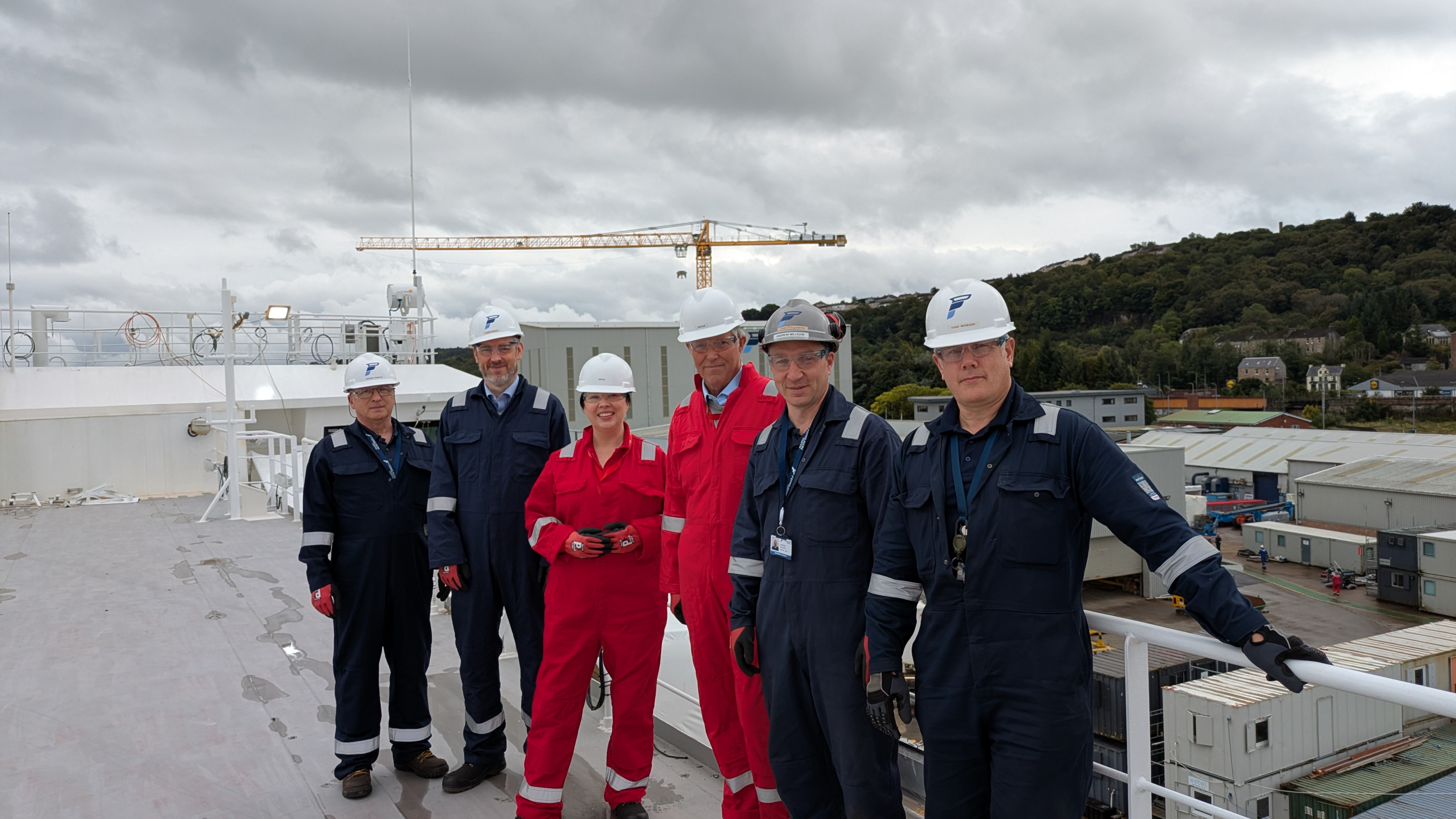
Members visiting Ferguson Marine, Port Glasgow
Plans for Future of Grangemouth (Project Willow study)
In May 2025, the Committee considered proposals for hydrogen-related development at the Grangemouth industrial site, focusing on the hydrogen elements of the Project Willow feasibility study. Project Willow was commissioned jointly by the UK and Scottish Governments and Petroineos (site owners) to assess options for the future use of the Grangemouth site following the planned closure of oil refining operations. The study identified nine potential low-carbon industrial projects, four of which involve low-carbon hydrogen and were considered by the Committee as part of its work.
This work took place against the backdrop of significant industrial change at Grangemouth. In September 2024, Petroineos announced plans to convert the refinery into a fuel import terminal, citing declining profitability and the need for substantial further investment. In April 2025, crude oil processing at the refinery ceased, resulting in the reported loss of around 430 jobs. Given the strategic importance of the wider Grangemouth industrial complex to Scotland’s economy and energy infrastructure, the Committee sought to examine the extent to which hydrogen-related proposals could support industrial transition, emissions reduction and future employment at the site.
The Committee took evidence over two meetings in May 2025. The first session on 13 May considered the wider prospects for low-carbon hydrogen production and use in Scotland, including the role of hydrogen in industrial decarbonisation and transport. A second session, on 20 May 2025, heard from two panels of witnesses representing both the green hydrogen and blue hydrogen sectors.
The evidence focused on four hydrogen-related proposals within Project Willow: the production of sustainable aviation fuel and renewable diesel using hydrogenated esters and fatty acids; fuel switching from natural gas to hydrogen; the production of e-methanol and methanol-to-jet fuel; and ammonia production for shipping and chemicals. Across both evidence sessions, the Committee explored the viability of these projects, the infrastructure required to support them, and the extent to which they could contribute to Scotland’s net zero targets and to the long-term future of Grangemouth as a low-carbon industrial hub.
A key theme in evidence was the relationship between hydrogen production and carbon capture and storage. Witnesses highlighted that several of the proposed projects would depend on access to carbon capture infrastructure, particularly through the development of the Acorn project and the wider Scottish Cluster. Evidence suggested that without timely progress on carbon capture and storage, the commercial viability of several Project Willow projects would be significantly constrained. The Committee also heard that investor confidence in hydrogen and carbon capture projects depends heavily on policy certainty, particularly decisions by the UK Government on Track-2 carbon capture funding and timelines.
Adapting to the impacts of climate change
On 18 November 2025, the Committee took evidence from the Climate Change Committee on Scotland’s readiness to adapt to the impacts of climate change, including progress made to date and areas where further action may be required. This built on evidence received on 9 September 2025 from experts in adaptation, which was part of the Committee's scrutiny of the carbon budget regulations referred to earlier in this report. Both sessions considered the findings of the third UK Climate Change Risk Assessment, which identified 61 climate-related risks and opportunities for Scotland, including coastal erosion, wildfires, impacts on agriculture, and risks to health and wellbeing, many of which require more urgent action. The Committee also explored the implementation of the Scottish Government’s third climate adaptation programme, Scottish National Adaptation Plan 2024–2029, and the relationship between adaptation policy and wider scrutiny of the draft Climate Change Plan.
Annual check-ins with the Scottish Government
Given the breadth of its remit, the Committee agreed at the start of the session that annual check-in sessions with the Scottish Government would provide a useful opportunity to receive updates on relevant policy developments. These sessions also enabled consideration of topical issues and scrutiny of how Scottish Government budget allocations were being used.
On 7 October 2025, the Committee took evidence from the Cabinet Secretary for Transport on the Scottish Government’s transport policies, priorities and recent performance across the portfolio.
Discussion focused on the two strategic frameworks underpinning transport policy, the National Transport Strategy 2 and the second Strategic Transport Projects Review, particularly in relation to decarbonisation, connectivity and infrastructure delivery. Members examined the Scottish Government’s revised approach to its car kilometre reduction target, alongside ferry infrastructure, including progress towards the purchase of Ardrossan Harbour. Bus investment was also considered, including the Bus Infrastructure Fund, the Scottish Zero Emission Bus Challenge Fund and the Plugged in Communities Grant Fund. Rail and road infrastructure were discussed, including electrification works across the Fife and Borders rail network, progress on dualling the A9, and consultation on the A96 corridor review.
Budget scrutiny 2026-27
On 13 January 2026, the Scottish Government introduced the Budget (Scotland) (No. 5) Bill. A Budget Bill is lodged annually to allow the Scottish Parliament to consider the Scottish Government’s tax and public spending proposals before the new financial year begins in April. An outline of the Scottish budget process is available on the Parliament’s website. The Committee wrote to the Scottish Government on 1 December 2025 ahead of the Budget Bill. The Cabinet Secretary for Climate Action and Energy responded to the Committee’s letter on 13 January 2026.
In its letter, the Committee examined how Scottish Government spending decisions support delivery of statutory climate obligations and wider net zero objectives. Building on the previous year’s focus on delivery of actions to meet the net zero by the 2045 statutory target, the Committee considered the relationship between spending decisions in the Scottish Budget and the measures required to reduce emissions across the economy. In doing so, the Committee drew particularly on the three strands of work emerging from the Joint Budget Review (JBR), a collaborative initiative between the Scottish Government and the Scottish Parliament designed to improve transparency around the climate impact of public spending.
Following the laying of the draft Budget Bill the Committee took evidence from the Cabinet Secretary for Transport on transport-related spending priorities within the 2026–27 Budget on 3 February 2026. Discussion focused on how investment decisions support public transport, infrastructure and the transition to net zero. Members examined funding for concessionary travel schemes, bus services and rail, including the extent to which spending decisions support affordability, reliability and accessibility across the transport network. The Committee also considered progress on major infrastructure projects such as the A9 dualling programme, alongside the balance between capital investment and day-to-day service delivery.
The Committee also scrutinised spending on sustainable and active travel and electric vehicle charging infrastructure. Further discussion covered funding for ferry services, including the proposed upgrade of Ardrossan Harbour, as well as proposals relating to air departure tax and private jet taxation.
On 10 February 2026, the Committee took evidence from the Cabinet Secretary for Climate Action and Energy on budget allocations across the Climate Action and Energy portfolio. Members examined how overall spending plans support Scotland’s climate and energy objectives, including investment in offshore renewables and the wider energy transition. The Committee considered whether the scale and pace of planned investment matched the level of change required to meet emissions reduction targets.
The session also considered support for communities through the Community and Renewable Energy Scheme, the use of Crown Estate revenues, and how these funding streams contribute to renewable energy development and local benefit. Members further explored resourcing for environmental regulators and other public bodies, and discussed how spending plans relate to both the JBR and delivery of the Climate Change Plan.
Across both evidence sessions, the Committee focused on whether budget decisions were sufficiently aligned with long-term climate commitments and implementation priorities.
Appointments
Appointment to the Board of Environmental Standards Scotland
During the reporting period, the Committee considered one appointment to Environmental Standards Scotland: for a new Board member. Under the UK Withdrawal from the European Union (Continuity) (Scotland) Act 2021, Scottish Ministers may appoint a person to the Board of ESS only if the Scottish Parliament has approved the appointment.
At its meeting on 30 September 2025, the Committee agreed its approach to scrutinising the proposed appointment, including considering information provided by the Scottish Government and reserving the option of taking evidence from the candidate if necessary. Following correspondence from the Cabinet Secretary on 12 February 2026 setting out the proposed candidate and the appointment process, the Committee considered the nomination at its meeting on 17 February 2026. In doing so, the Committee considered whether the recruitment exercise appeared fair and open, whether the proposed candidate met the statutory requirements for Board membership, and whether any conflicts of interest arose. The Committee agreed to recommend that the Scottish Parliament approve Laura Young for appointment to the Board of Environmental Standards Scotland.
Public Bodies
On 17 February 2026, the Committee took evidence from NatureScot as part of its general scrutiny of key public bodies within its remit. The session provided an opportunity to consider NatureScot’s most recent Annual Report and Accounts, its strategic priorities, and its operational performance, including the delivery of new statutory responsibilities.
The Committee heard evidence from Professor Colin Galbraith, Chair of NatureScot and Nick Halfhide, Chief Executive. Members discussed a wide range of issues relevant to NatureScot’s role as Scotland’s nature agency, including biodiversity restoration, protected area management, species licensing, planning advice and the organisation’s contribution to wider environmental policy objectives. The Committee also discussed Nature Scot's role in promoting the Scottish Outdoor Access Code.
The session also considered NatureScot’s 2026–2030 Corporate Plan, which sets out its purpose of halting biodiversity loss by 2030 and supporting biodiversity restoration across land, freshwater and marine environments by 2045, in line with the Scottish Government’s biodiversity ambitions. The Committee also explored NatureScot’s expanding regulatory role, including responsibilities arising from the Wildlife and Muirburn Management (Scotland) Act 2024.
This session built on the Committee’s wider scrutiny of biodiversity and nature conservation during the parliamentary session, including work on the Scottish Biodiversity Strategy, natural capital investment, and the integration of biodiversity considerations across planning and environmental governance.
Proposed Environmental Standards Scotland Strategy 2026 to 2031
As part of its scrutiny of public bodies within its remit, the Committee sometimes considers statutory documents subject to parliamentary approval. On 10 March 2026, it took evidence on Environmental Standards Scotland's proposed Strategy for 2026 to 2031. Under the UK Withdrawal from the European Union (Continuity) (Scotland) Act 2021, any revised strategy prepared by Environmental Standards Scotland that goes beyond minor changes must be laid before Parliament and is subject to a 40-day scrutiny period, during which the Committee considers the document and decides whether to make any recommendation to Parliament. Members heard from Dr Richard Dixon, Chair; Mark Roberts, Chief Executive; and Neil Langhorn, Head of Strategy and Analysis. Discussion focused on the organisation’s strategic priorities for 2026 to 2031, including its approach to monitoring compliance with environmental law and environmental governance in Scotland. Following the evidence session, the Committee agreed it was content with the document.
The Royal Botanic Gardens Edinburgh
On 16 June 2025, Members of the Committee visited another organisation that sits under the Committee's remit - the Royal Botanic Garden Edinburgh . Members met with senior staff from the Garden and discussed their work to address the biodiversity and climate crises, including their scientific research. Members also discussed the financial challenges impacting the delivery of the Edinburgh Biomes Project, which involves the restoration of the Garden's nineteenth-century glasshouses but has faced increases in cost for several reasons. Following the visit, the Committee wrote to the Cabinet Secretary for Rural Affairs, Land Reform and Islands on 25 June 2025 to ask about the Scottish Government's position on the cost of the project and on future capital budget allocations. The Cabinet Secretary responded on 30 July 2025.
Following the discussion, Members were given a tour of the gardens, including the archives, the rainwater garden, and some of the glasshouses.
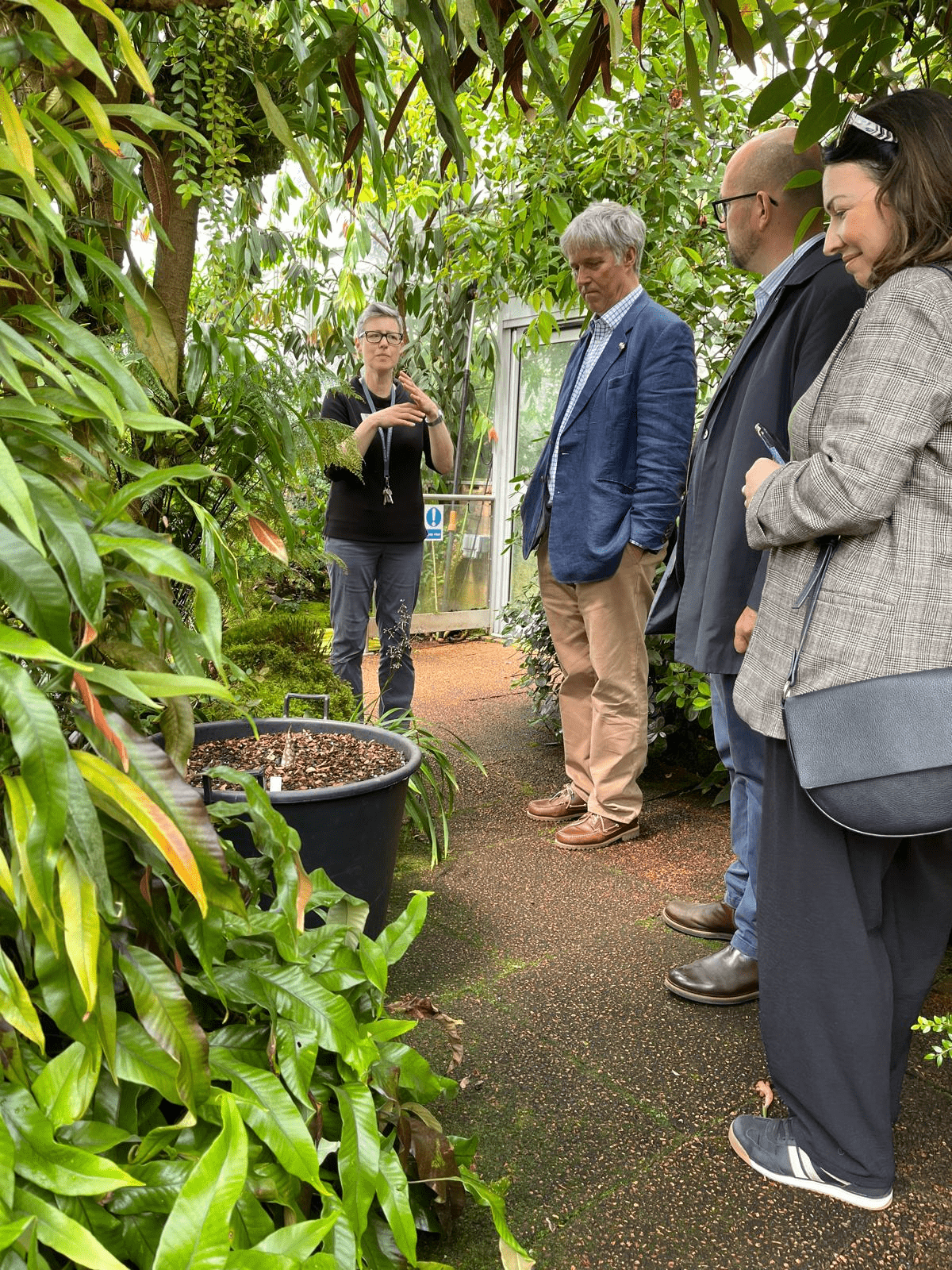
Members visiting the Royal Botanic Garden, Edinburgh
Petitions
The Committee considered one petition during the reporting period, PE2123, lodged by Asthma + Lung UK Scotland. The petition called on the Scottish Parliament to urge the Scottish Government to amend the Air Quality Standards (Scotland) Regulations 2010 by setting new limit values for nitrogen dioxide and fine particulate matter aligned with the World Health Organization 2021 air quality guidelines.
Some of this work began during the previous reporting period, when the Committee first considered the petition at its meeting on 1 April 2025 and agreed to write to the Scottish Government seeking an update on its review of the second Cleaner Air for Scotland strategy. After receiving the Scottish Government’s response on 22 April 2025, the Committee returned to the petition on 13 May 2025 and agreed to write to a range of stakeholders to seek views on both the petition and the Government’s response. All correspondence relating to the Committee's scrutiny of the petition can be found on the Committee's website.
The Committee considered the petition again on 16 September 2025. Having reviewed the written evidence received, it agreed to close the petition under Rule 15.7 of Standing Orders. In closing the petition, the Committee also agreed to write to the Scottish Government to draw attention to issues raised in the evidence submitted, in particular the view expressed by a number of respondents that Scottish air quality standards should be aligned with the World Health Organization’s 2021 guidelines. The Committee also asked the Scottish Government to consider whether legal requirements should be strengthened as part of its forthcoming review of Scotland’s clean air strategy.
Advisers
The role of a committee adviser is to support committee scrutiny by providing expert knowledge and/or experience in a particular policy area. Advisers are usually appointed to support a specific inquiry or discrete piece of work, such as a Bill. But advisers can also be appointed to provide advice on a specific aspect of a Committee’s remit over a longer timescale – spanning multiple inquiries or bits of work, or being appointed as a “standing” adviser for the whole session.
The Committee has retained the services of two standing advisers over the last year:
Professor Colin Reid, Emeritus Professor of Environmental Law, University of Dundee: adviser on environmental standards and regulation in a post-Brexit context (October 2022 to the present).
Dr Kirsten E H Jenkins, Senior Lecturer in Energy, Environment and Society, the University of Edinburgh: adviser on climate change and net zero targets (January 2024 to the present).
Equal opportunities and Committee outreach
Public participation and engagement on the Draft Climate Change Plan
As part of its scrutiny of the draft Climate Change Plan, the Committee placed particular emphasis on hearing from people who might not normally participate in formal parliamentary scrutiny but whose lives are likely to be directly affected by climate policy.
Alongside formal evidence taking, the Committee launched a targeted online consultation after the draft Plan was laid. This was structured around four themes drawn from the recommendations of the Committee’s earlier Climate Change People’s Panel: making climate policy accessible and relatable; supporting participatory and community-led decision making; improving transparency and accountability; and ensuring households receive practical advice and financial support. This approach was designed to explore how people experience climate policy in practice and what they see as necessary for successful delivery.
The Committee also met Members of the Scottish Youth Parliament's Transport, Environment and Rural Affairs Committee on 13 January 2026. Discussion focused on the same four themes, with particular attention given to whether the draft Plan addressed issues important to young people and how climate policy could be communicated more clearly and meaningfully them.
To hear directly from local communities, the Committee visited Aberdeen Science Centre on 19 January 2026, where members met around 25 participants from local community groups. The session used the same themes as the online consultation and youth engagement work, enabling participants to discuss how climate policy is experienced locally, the barriers communities face in contributing to net zero, and what support is needed to enable participation in the transition.
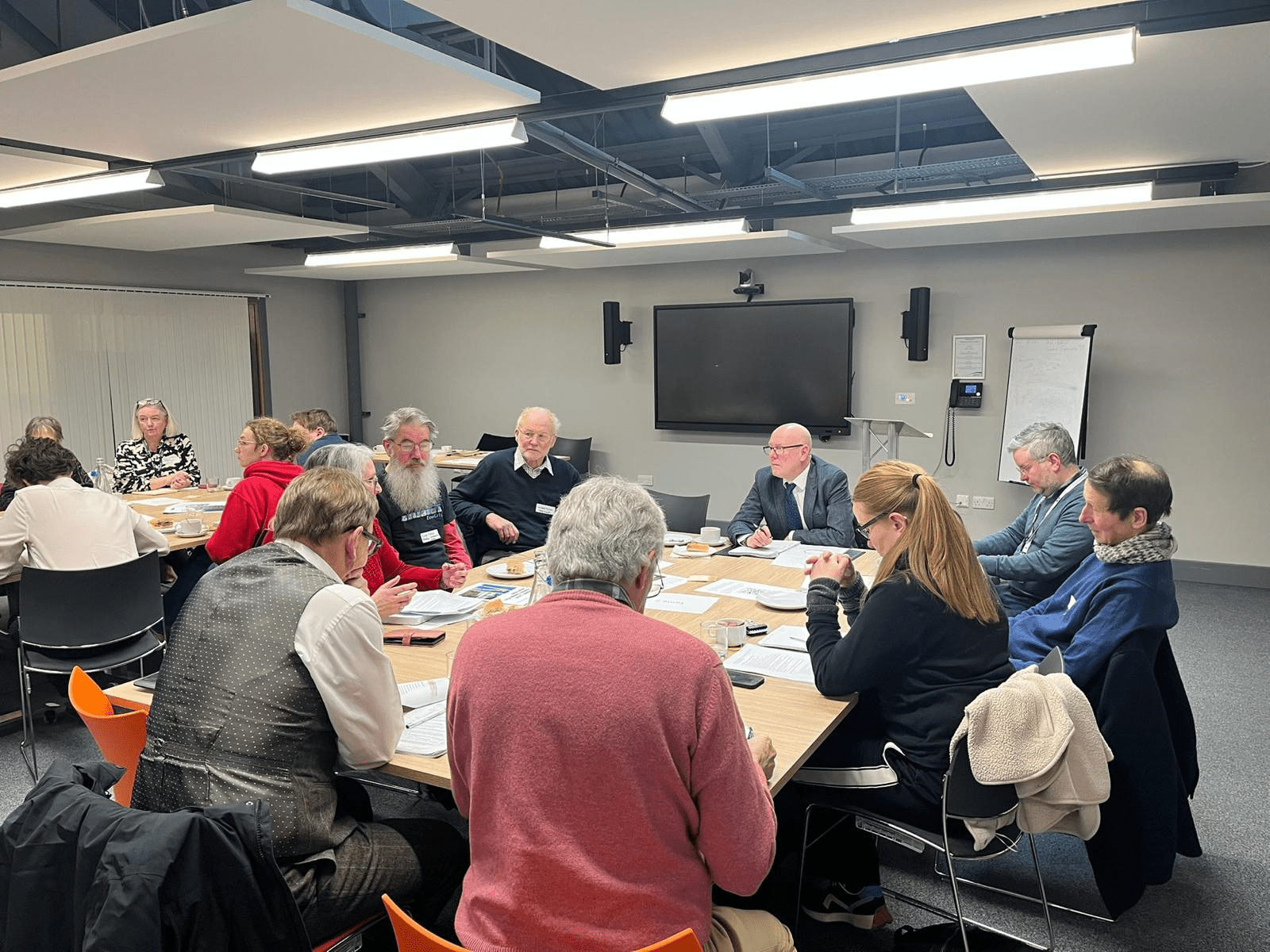
Committee members meeting with community representatives in Aberdeen
As part of the same visit, the Committee also met representatives from the Energy Transition Zone, North East Scotland College and ORE Catapult to explore how energy transition is being delivered in practice in the north-east of Scotland, including skills development, innovation and the role of regional institutions in supporting the transition to net zero.
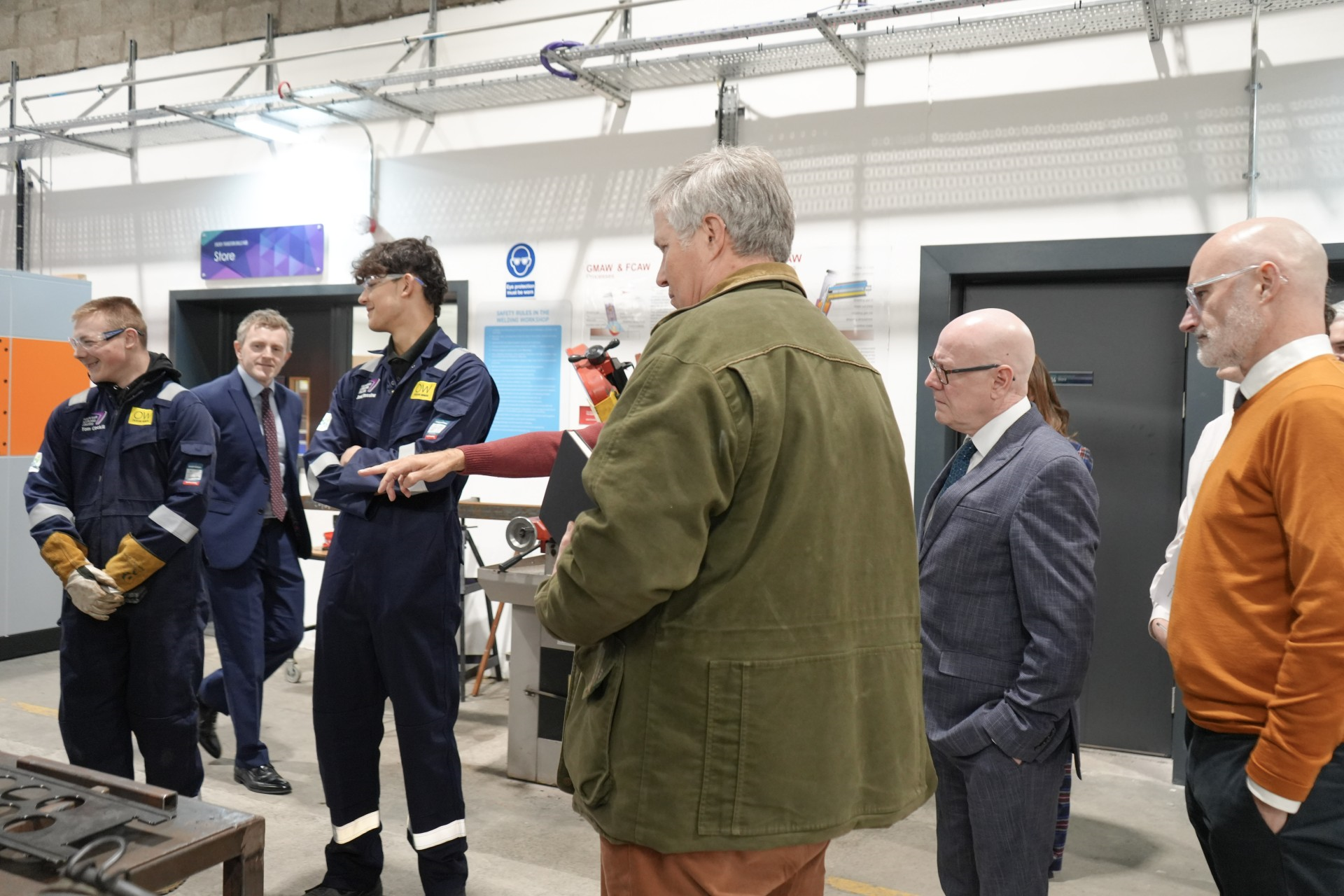
Members meeting with students at the Energy Transition Skills Hub
Views gathered through this engagement work were analysed by SPICe and used to inform the Committee’s wider scrutiny of the draft Plan, alongside formal written and oral evidence.