Environment, Climate Change and Land Reform Committee
Environment, Climate Change and Land Reform Committee Annual Report 2017-18
Video
Introduction
The role of the Committee is to consider and report on matters falling within the responsibility of the Cabinet Secretary for Environment, Climate Change and Land Reform.
This report covers the work of the Environment, Climate Change and Land Reform Committee during the Parliamentary year from 12 May 2017 to 11 May 2018.
This report covers the previous membership of the Committee during the reporting year:
Alexander Burnett (from 8 June 2016 – 28 June 2017)
Maurice Golden (from 8 June 2016 – 28 June 2017)
Emma Harper (from 8 June 2016 – 16 November 2018)
David Stewart (from 8 June 2016 – 11 January 2018)
Kate Forbes (from 8 June 2016 –19 April 2018)
Gil Paterson (from 19 April 2018 – 24 May 2018)
Inquiries
Based on the work of the sub-group on Air Quality, the Committee conducted an inquiry into Air Quality in Scotland and held numerous evidence sessions with experts and stakeholders to consider the scale of the issue and the robustness of Scottish plans to tackle this. This evidence was supplemented by issuing a call for views and a fact-finding visit to Corstorphine, Edinburgh, to hear the views of those in the local community. The Committee published a report of its findings in February 2018 and a debate was held in the Debating Chamber on 17 April 2018.
In January and February 2018, the Committee considered the environmental impact of salmon farming in advance of the Rural Economy and Connectivity (REC) Committee’s wider inquiry into the salmon farming industry. The Committee asked the Scottish Parliament Information Centre (SPICe) to commission research on aquaculture and took evidence on the results from the report’s authors, stakeholders and regulators, before reporting ahead of the REC Committee’s inquiry. The Committee wrote to the REC Committee on Monday 5 March 2018 setting out its findings and the view of the Committee.
The Committee appointed Donald Cameron as reporter to the REC Committee on this inquiry.
The following topics were also considered by the Committee during evidence sessions:
Water Industry Commission for Scotland;
Crown Estate Scotland;
Scottish Land Commission;
Scottish Government's Wildlife Crime in Scotland - Annual Report 2016;
Committee on Climate Change - Annual Progress Report;
Scottish Government’s Review of the National Outcomes and National Indicators; and
Deposit Return Schemes and Waste in Scotland (based on the work of the sub-group on Deposit Return Schemes).
EU Scrutiny
Focus on the implications of the UK decision to leave the EU has been ongoing throughout the year and the Committee held evidence sessions with EU environmental law experts, the Cabinet Secretary for Environment, Climate Change and Land Reform and the Minister for UK Negotiations on Scotland’s Place in Europe to discuss progress and implications for environmental protections. The Committee has focussed its evidence sessions on the following specific areas:
The environmental implications for Scotland of the UK leaving the EU;
The EU Withdrawal Bill and UK Withdrawal from the European Union (Legal Continuity) (Scotland) Bill;
The development and implementation of Common Frameworks; and
EU environmental and animal welfare principles.
In November 2017, various Members of the Committee travelled to Brussels to meet with the Commission and representatives of non-Member States, while in December the Convener and Deputy Convener went to London to meet with officials and counterpart committee members on the environmental implications for Scotland of the UK decision to leave the EU.
EU funding streams were also a focus of the Committee’s scrutiny of the Draft Budget 2018-19 resulting in the Committee being “gravely concerned about the loss of funding, once the UK exits the EU, to projects aimed at tackling climate change and the environment.”
Bills
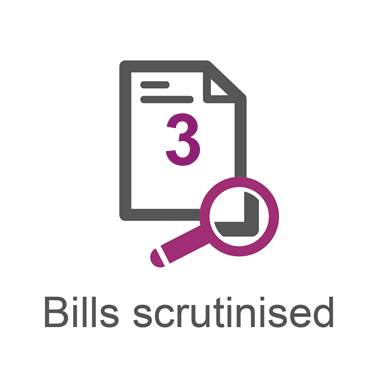
Image © Scottish Parliamentary Corporate Body – 2018. Licensed under the Scottish Parliament Copyright Licence
Draft Budget 2018-19
The Committee considered Scottish Government expenditure that fell within its remit and agreed to focus on the research elements. In addition, the Committee wrote to the Scottish Government agencies (Scottish Natural Heritage, the Scottish Environment Protection Agency), Marine Scotland, Scotland’s Rural College and Scottish Water, conducted a call for views and took oral evidence. The Committee then reported to the Finance and Constitution Committee.
Wild Animals in Travelling Circuses (Scotland) Bill
The Wild Animals in Travelling Circuses (Scotland) Bill was introduced on 10 May 2017 and the Environment, Climate Change and Land Reform Committee was designated as the lead Committee.
The Bill proposed making it an offence for circus operators to use (performance, display or exhibition) wild animals in travelling circuses. The Committee issued a call for views, received 43 written submissions and held evidence sessions with various stakeholders and the Cabinet Secretary for Environment, Climate Change and Land Reform. The Committee reported on the Bill at Stage 1 on 22 September 2017.
Scottish Crown Estate Bill
The Committee scrutinised the Scottish Crown Estate Bill at Stage 1 and expects to publish its findings in a report before summer recess 2018.
Debates
The Committee held a debate in the Debating Chamber of the Scottish Parliament on its report on Air Quality in Scotland Inquiry on 17 April 2018.
Subordinate Legislation
During the course of the reporting year, the Committee scrutinised:
6 SSIs subject to the affirmative procedure; and
18 SSIs subject to the negative procedure
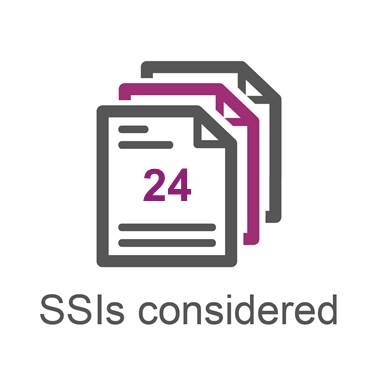
Image © Scottish Parliamentary Corporate Body – 2018. Licensed under the Scottish Parliament Copyright Licence
Petitions
The Committee considered 2 petitions in the reporting year.
The Committee considered PE1615 by Logan Steele, on behalf of the Scottish Raptor Group, on a state licensing system for gamebird hunting in Scotland.
The Committee considered PE1636 by Michael Traill calling on the Scottish Parliament to urge the Scottish Government that all single use cups are 100% biodegradable.
Engagement and Innovation
As part of its scrutiny of the environmental implications for Scotland of the UK leaving the EU, the Committee undertook a series of EU visits and meetings:
Met with its sister committee from the National Assembly for Wales on 30 November 2017.
Met with the EU Commission and representatives of non-Member States in Brussels in November 2017.
The Convener and Deputy Convener met with MPs and Lords in Westminster in December 2017.
These meetings helped members: develop their understanding of the complex issues involved in the Committee’s EU inquiries; gain valuable intelligence from key decision makers at the EU and UK level; and explore the issues of particular concern to specific sectors.
Marine Protected Areas were the focus of a fact finding visit to Oban and Mull during the summer recess and the Committee met with various stakeholders to hear about the effect of Marine Protected Area designation on business and leisure in the area.
The Committee met with local community representatives in Corstorphine, Edinburgh, to discuss the issue of air quality on one of Scotland’s most polluted roads.
The Committee engaged with public bodies such as Scottish Environment Protection Agency, Scottish Natural Heritage and Scottish Water through a number of work streams.
In parallel with the Committee’s consideration of the Wild Animals in Travelling Circuses (Scotland) Bill, the Scottish Parliament’s education service used the Bill as a live example of the passage of legislation and asked school groups visiting Holyrood for their views on whether wild animals in travelling circuses should be banned. Their views were then considered by the Committee.
The Committee engaged with other parliamentary committees to work collaboratively on topics of mutual interest for example responding to the Public Audit and Post-Legislative Scrutiny Committee on links between the work of parliamentary Committees and Audit Scotland, contributing to the Equalities and Human Rights Committee inquiry into human rights and the Scottish Parliament and contributing to the Local Government and Communities Committee work on the National Performance Framework National Outcomes.
The Committee assigned 3 reporters:
Claudia Beamish attended meetings of the Rural Economy and Connectivity Committee on the Forestry and Land Management (Scotland) Bill in relation to the land management provisions of the Bill;
Donald Cameron attended meetings of the Rural Economy and Connectivity Committee on their work on the impacts of salmon farming; and
Mark Ruskell was appointed as the Committee’s EU Reporter.
The Committee trialled an anonymous staff survey for those employed by Crown Estate Scotland, to inform its scrutiny of the Scottish Crown Estate Bill. Of 41 staff, 20 responded.
The Committee has one of the highest numbers of followers amongst parliamentary Committees on Twitter, with 2978 followers (as of 11 May 2018).
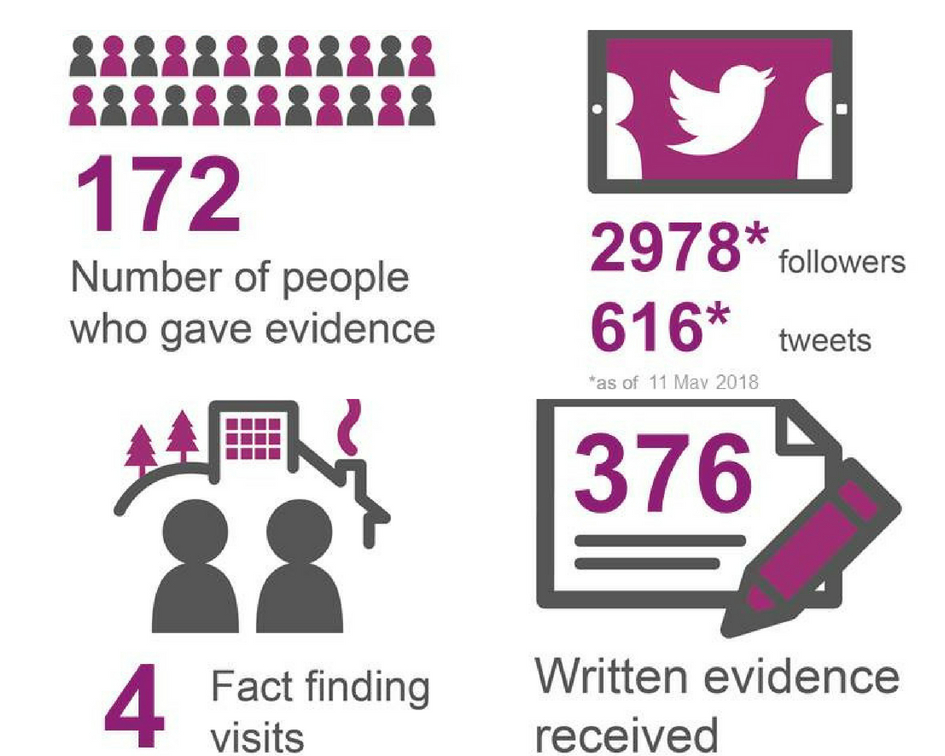
Image © Scottish Parliamentary Corporate Body – 2018. Licensed under the Scottish Parliament Copyright Licence
Equalities
Through its engagement strategy, the Committee has committed to promoting “gender equality in its practices and create an inclusive environment to facilitate this”.
It has encouraged diversity in its witness panels and of the 172 witnesses who gave evidence to the Committee this year, 56 (32.5%) have been women and 116 (67.5%) have been men. This compares to the previous year, where 40 (25.5%) of the 157 witnesses were women and 117 (74.5%) were men.
To engage with witnesses that were unable to provide formal evidence in person, the Committee utilised video conferencing technology to hear evidence from 2 witnesses.
Meetings
The Committee met 35 times during the parliamentary Year. One meeting was held entirely in private to consider a draft report and 34 other meetings included items in private.
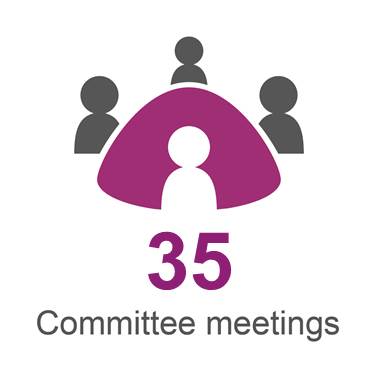
Image © Scottish Parliamentary Corporate Body – 2018. Licensed under the Scottish Parliament Copyright Licence