Land Use in Scotland - Session 7 Subject Profile
This briefing outlines issues and policy developments related to land use in Scotland. It sets out the context for Scotland's land use policies and describes Scotland's major land uses, highlighting key legislation and topical issues for Session 7 of the Scottish Parliament.
Key points
Major rural land uses in Scotland include agriculture, forestry, and moorland management, and managing land for climate and nature. These land uses often overlap and take place on the same holding.
Agriculture is a dominant land use in Scotland, and is made up of owner-occupied and tenanted farms and crofts. Agriculture policy is undergoing a period of significant policy reform, which has been underway since the UK voted to leave the EU in 2016.
Forestry and woodland management is also a significant land use in Scotland. Commercial forestry for timber harvesting continues, whilst forestry has also become increasingly important as a tool to mitigate climate change and address biodiversity loss. Woodland covers an estimated 19% of Scotland, with plans to increase this to 21% by 2032. Public forestry grants support new woodland creation.
Estate, moorland and deer management overlap with each other, and with agriculture and forestry, and moorlands are often managed for livestock grazing as well as grouse shooting.
Climate change and biodiversity loss are driving changes to traditional land management and opening up new ways of managing and using land, such as peatland restoration.
Scotland's fourth land use strategy was published in March 2026, and aims to take a strategic view of Scotland's land uses.
Scottish land use: In figures
Figure 1 below highlights a selection of statistics in relation to land use and land management.
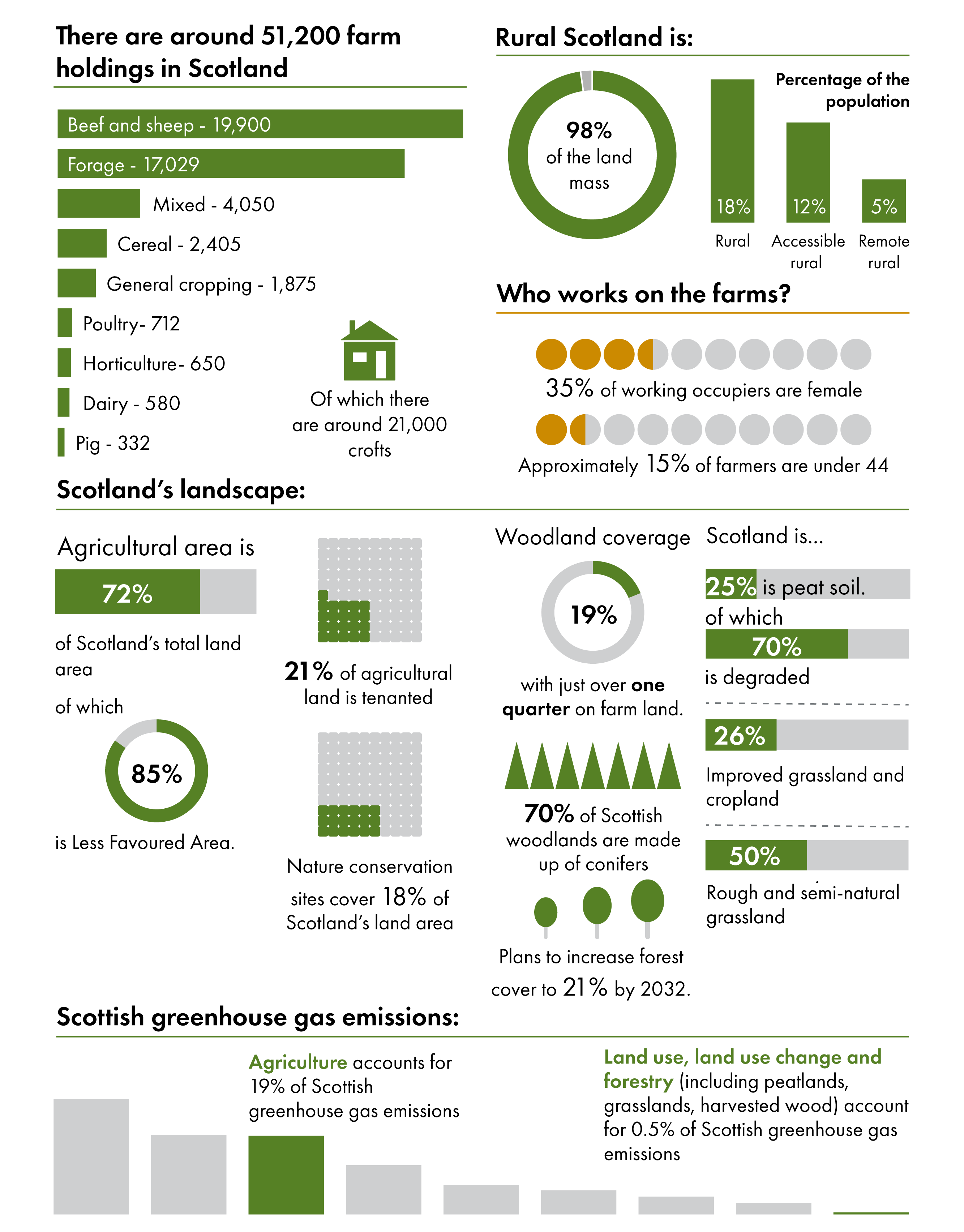
*NB: 'Forage' refers to holdings that grow forage crops to feed livestock, such as hay or silage.
Agriculture
Scotland's agricultural area
Around 5.6 million hectares of land is farmed in Scotland (approximately 72% of Scotland's total land area)1i. Of this area, 85% is classified as Less Favoured Area (LFA)1, covering most of Scotland aside from areas along some of the coasts, and within the central belt. Land becomes classified as LFA if it is considered to be more difficult to farm because of climate and geographic conditions. In terms of agricultural production, LFA areas are are mainly used for extensive production of beef cattle and sheep.
Scotland's agricultural land produces a variety of food crops and livestock products for human consumption, animal feeds and raw materials for, e.g. whisky production.
Cereal and crop production and mixed farming are mainly limited to the drier, fertile areas of the east and north-east of Scotland, with dairy farming in the south-west.
The area used for crop production (producing cereals, oilseeds, potatoes, vegetables for human consumption, vegetables and other crops for feeding stock, and fruit) comprises 10.6% of the agricultural area in 2025ii. Cereals (wheat, barley and oats) accounted for 74% of the area of crops grown in 2025, with barley, a key ingredient in Scotland's whisky production, being the biggest cereal - nearly 50% of the area of crops is comprised of barley1. Of the remaining crops grown, oilseeds make up 5.5% of the crop area, potatoes 5.1%, vegetables for human consumption 3.8%, and orchard and soft fruit 4.2%.
Though potatoes, fruit, and vegetables make up a smaller proportion of the land area used for agriculture, these are nonetheless important sectors for Scotland. Scotland grows around 75% of the UK's seed potatoes - the potato tubers that are planted to produce a potato crop - and 40% of Scottish seed potatoes were exported in 20254. Soft fruits like raspberries and strawberries are another important crop in Scotland, with the east of Scotland being a "major hub for British production"5.
Strawberry polytunnels in Perthshire
.jpg)
Scotland has approximately 1.65 million cattle, 6.54 million sheep, 312,000 pigs and 12.4 million poultry (using 2025 figures)1. The area of rough grazing and common grazing (land shared by multiple crofters for grazing livestock) covers 58% of the total agricultural area. The area of grass covers 23%1.
Table 1 sets out agricultural production by area in 2025 for some crops and land usesiii. The full detailed breakdown of land use by area can be found in the supporting documents to the 2025 June Agricultural Census.
| Crop/land use | Hectares |
|---|---|
| Cereals | 440,919 |
| - of which, barley | 295,323 |
| Oilseeds | 32,777 |
| Potatoes | 30,364 |
| Vegetables for human consumption | 22,672 |
| Orchard and soft fruit | 2,127 |
| Total grass | 1,311,747 |
| Rough grazing | 2,681,176 |
| Common grazings | 578,721 |
Organic farming
The total area of organic land (fully organic land and land in conversion to organic production) increased by 44% between 2018 and 20248, and by 28% between 2024 and 2025. The total organic area represented 3.3% of Scotland's total agricultural area in 20259. In 2025 (Scotland's most recent figures) 2.1% of cattle, 2.7% of sheep, 0.2% of pigs, and 2.3% of poultry were farmed organically9. 'Organic farming' is an approach to food production which does not use artificial fertilisers, pesticides or genetically modified organisms and follows a common set of practices. To be certified as organic, agricultural products must be produced to a specific set of standards that are set out in regulation. The 2021 SNP manifesto made a commitment to "double the amount of land used for organic farming - and double the amount of organic produce that comes from Scotland with a focus on more of it being used in public sector food procurement." The commitment around doubling the amount of land does not appear to have been met, though there have been increases in organic land in recent years.
Scottish farms
Based on 2025 June Agricultural Census results, there are around 48,000 agricultural holdings in Scotland1, and around 17,000 farm businesses (one business may have multiple holdings).12
Agricultural holdings also take many different forms. The majority are owner-occupied farms, but around 21% of Scotland's agricultural land is rented. Agricultural tenancies and crofting are explored later in the briefing.
Where to find data and statistics:
Good overall sources of agricultural data can be found in the June Agricultural Census, an annual publication, and in the Scottish Government's Agricultural Statistics Hub.
The Scottish Government's page on 'agriculture, fisheries and rural statistics' links to agricultural statistics on the cereal and oilseed rape harvest, organic farming, greenhouse gas emissions and nitrogen use, and pesticide use, among other things.
Economics in Scottish agriculture
In Scotland, "agriculture and hunting" accounted for approximately 1% of gross value added (GVA) in 20231. 66,773 people make up the total agricultural workforce (2025 figures), including seasonal and casual staff.2 This is a smaller industry in the context of overall Scottish employment. However, it is a significant industry in rural Scotland, with 'agriculture, forestry and fishing' accounting for around 16% of total Scottish employment in rural areas in 20253. This figure only includes activities closely related to primary production, and does not include employment within other parts of the supply chain, such as food manufacturing.
Farm Business Income (FBI) is the headline business-level measure of farm income. Farms and crofts receive public money to support food production, incentivise environmental activities, and fund other interventions on farms or in the supply chain. The FBI survey gives figures for agricultural incomes with and without agricultural support. This fluctuates from year to year. In 2024-25 (the most recent year for which we have data), there was a significant increase in average farmi income to £58,800, the third highest average income since 2012-13.4 In 2024-25, the average farm made a profit of £500 from agricultural activities, while agricultural activities on their own are usually loss-making in Scotland.4 The average farm made around £8,100 from diversified activities (e.g. renting out buildings, or generating renewable electricity). The average farm also made a total profit (of £13,100) without support. This is also relatively unusual - the average farm has only made a profit without support in three of the past ten years.4
However, the average masks large variation between farms and farm types. The farms in the lower quartile (the bottom 25%) made on average -£32,709 with subsidies, and -£67,183 without subsidies, and the upper quartile (the top 25%) made on average £288,927 with subsidies and £223,655 withoutii.
Figure 2 shows the overall impact of grants and subsidies on the average income of different farming sectors using 2024-25 figures. For most farm types, though, unusually, not for the average farm in Scotland, the average FBI falls below zero when grants and subsidies are excluded.
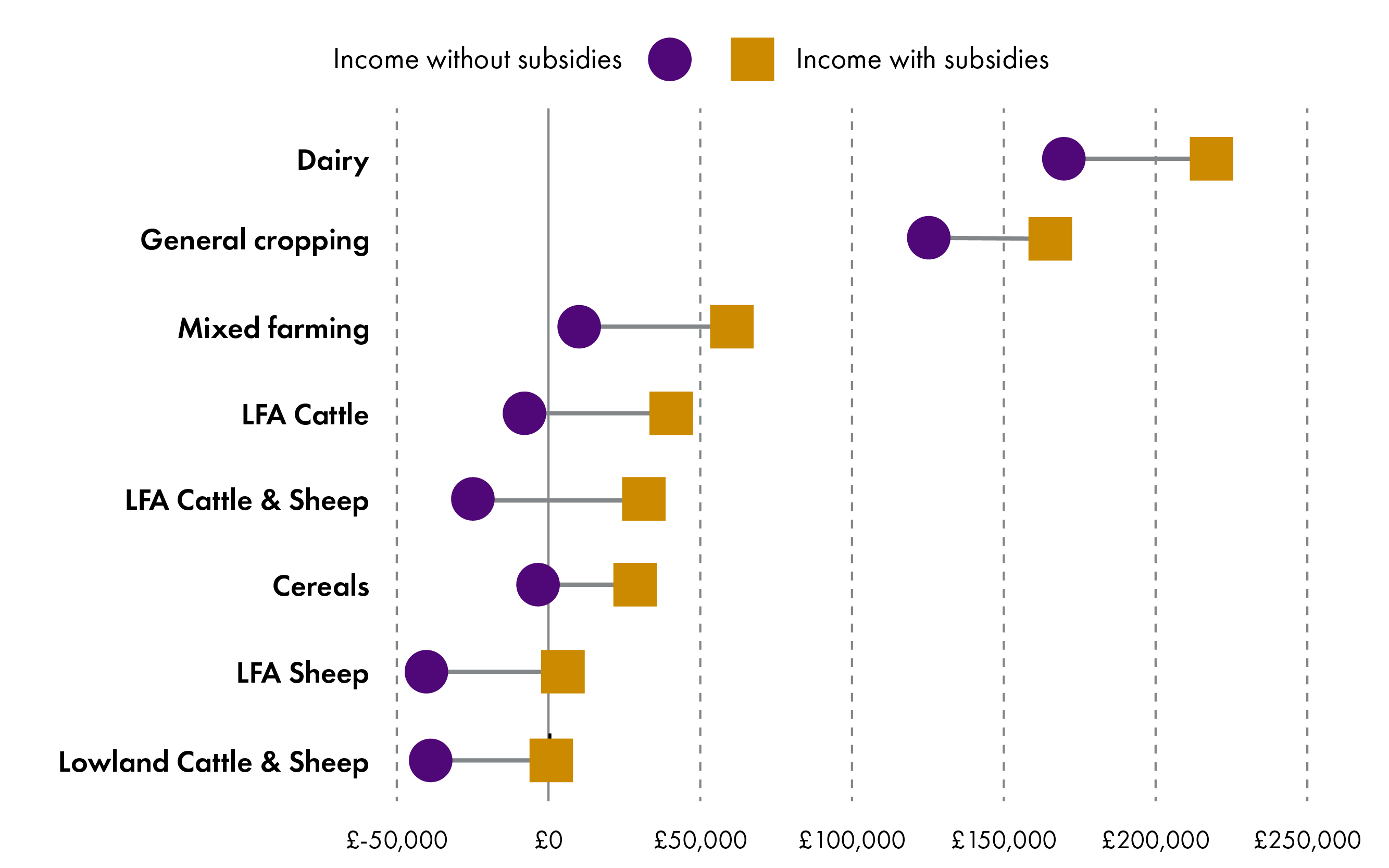
Regardless of annual fluctuations, most sectors of Scottish agriculture rely on public financial support, though some farm types typically do not receive general agricultural funding (e.g. from the Basic Payment Scheme); this includes horticulture, pigs and poultry4. Until the UK left the EU, the majority of these subsidies came from the EU via the Common Agricultural Policy and are now provided through the Scottish block grant (the funding pot provided to the Scottish Government by the UK Treasury). Unlike when the UK was a member of the EU, agriculture funding is no longer 'ring-fenced' (earmarked) for agriculture. Since the 2025-26 budget, agricultural funding is now part of the wider Scottish Government budget, with greater discretion around spend. However, commitments have been made to maintain the current level of funding; the recently published Rural Support Plan sets out that the overall level of funding remains the same in cash terms for the whole plan period, to 2030-31.
Session 6 included periods of considerable business volatility for farmers and crofters as a result of domestic and international events. A few of these are highlighted below (these are issues that have affected the whole agriculture sector; there have been other events affecting specific sub-sectors, such as bird flu, and the challenges in the pig sector):
EU exit -
The process of leaving the EU came with several challenges for Scottish farming and crofting, including difficulty recruiting farm workers as free movement between the UK and EU came to an end, and trade difficulties resulting from the end of free movement of goods between the UK and the EU. For some farm sectors, the EU export market is very important, for example, for beef and sheep. When the UK left the EU, trade barriers such as additional paperwork and checks at the border, as well as no agreement on trade in certain products such as seed potatoes, meant that trade became more challenging. In April 2026, the UK Government reported that UK exports of food and agricultural goods have fallen by 22% since 2018.
The UK Government is now working on a new food trade agreement with the EU - the Sanitary and Phytosanitary agreement - which "aims to simplify the checks required for agri‑food products moving between the UK and the EU"9.
The Covid -19 Pandemic -
The pandemic resulted in significant disruption for some farming sectors, compounding existing difficulties with recruiting seasonal labour due to travel difficulties at the time, and closure of markets such as hotels and restaurants in response to lockdowns at home and abroad.
The cost of living crisis and the Russian invasion of Ukraine -
The Russian invasion of Ukraine in February 2022 intensified an already growing cost of living crisis for households and businesses in the UK. Inflation began rising in 2021 largely due to challenges for global supply chains once economies began reopening after the initial phases of the pandemic, and a variety of factors also caused energy prices to begin to rise. This was compounded by the invasion of Ukraine in February 2022, which pushed up energy prices further. Food prices rose sharply during this period, by around 30% between May 2021 and May 2024 with significant consequences for household budgets. For farmers and crofters, while 2022-23 was a profitable year for some farm types, for many across the agricultural sector, significant increases in the costs of production squeezed margins considerably, with the cost of fuel and animal feed doubling and the cost of fertiliser tripling at points. This particularly affected livestock, pigs, poultry and horticulture.
Where to find data and statistics
Information on farm incomes are available as 'Total income from farming' statistics (the official measure of the net income from the agriculture industry in Scotland), and annual 'Scottish farm business income' estimates (estimates at farm business level).
Agricultural tenancies
Tenant farmers are those who rent, rather than own, their farms.
In the late 19th Century over 90% of farms in Scotland were tenanted1. In 2026, this picture is different, with approximately 21% of agricultural land rented in 2025. This has fallen by approximately 12% since 20132.
A proportion of rented holdings are crofts – a specific type of land tenure unique to Scotland. Crofts are governed by a separate body of legislation. This is covered more in the next section.
After legislative reforms in recent decades, there are now several possible tenancy arrangements for non-croft agricultural holdings:
Leases of less than a year for grazing or mowing.
Short Limited Duration Tenancies (SLDT) of up to 5 years.
Limited Duration Tenancies (LDTs) of minimum 10 years.
Modern Limited Duration Tenancies (MLDTs) (these have replaced LDTs and like them are minimum of 10 years).
Repairing tenancies with a minimum term of 35 years. The idea of these tenancies is that the tenant takes more responsibility for equipping the farm than they would have under an MLDT in return for a lower rent.
“1991 Act tenancies” or “secure tenancies” entered into under the Agricultural Holdings (Scotland) Act 1991 or preceding legislation, where the tenant’s security of tenure (their legal right to stay on the property) is protected by that legislation.
Limited partnership tenancies where the landlord or their agent is the limited partner, and the tenant is the general partner.
Small landholdings, an old and rare form of tenancy governed by recently updated legislation. There is more information on small landholdings in a later section.
3,821 are 1991 Act tenancies
1,258 are Short Limited Duration Tenancies,
743 are Limited Duration Tenancies
175 are Modern Limited Duration Tenancies.
One function of tenancy is as a route into farming for new entrants. In 2009, research prepared for the Tenant Farming Forum explored this, outlining a staged entry into farming for new entrants as they gradually accumulate the necessary capital, experience and skills, with tenancy being a final stage. More recently, the Scottish Land Matching Service - a collaboration between the Scottish Government and farming organisations - has sought to facilitate opportunities for new entrants by matching them with established farmers and to develop collaborations such as partnerships or contracts.
Agricultural holdings legislation
Tenant farms are regulated by a specific body of law on “agricultural holdings”.
The law of agricultural holdings is complex and has evolved over time. It governs certain elements of the contractual terms between landlord and tenant and set out the rights and responsibilities of each party. The types of things provided for in agricultural holdings legislation includes:
The terms of different types of leases,
The process around reviewing rents,
Rules and procedures around ending a tenancy under different circumstances,
Rules and procedures around passing on a tenancy,
Any rights to buy that apply to the type of tenancy, and
Rules around compensation for improvements to the holding.
Key pieces of legislation governing agricultural holdings are:
The Agricultural Holdings (Scotland) Act 1991 ('the 1991 Act')
The Agricultural Holdings (Scotland) Act 2003 ('the 2003 Act')
This section includes a brief summary of agricultural tenancy reform. More detailed background information on the older reforms up until 2014, as well as a history of tenant farming in Scotland, can be found in a previous SPICe briefing.
Agricultural Holdings (Scotland) Act 1991
The 1991 Act was the first step to modernise the law around agricultural holdings.
A guidance document from the Scottish Government’s Farm Advisory Service explains:
Before 1991 there were many different forms of heritable tenancy, the rights and obligations in which were dictated by the legislation (and fashion) when these tenancies were originally created, often several generations previously. A change in legislation in 1991 effectively brought all of these arrangements together, thereafter to be referred to as ‘a 1991 Act Tenancy’ and governed by a single set of regulations...
The Act established security of tenure by restricting the conditions under which 'notices to quit' (i.e. a notice made by the landlord to terminate the tenancy) can be served, made provision to compensate the tenant for improvements made by them, and provided rules about rent variations including a periodic right to a rent review. The 1991 Act also set rules around succession to, and assignation of, tenancies.
Long-term tenancies entered into before 2003 (or after 2003 with explicit agreement that it is governed by the 1991 Act) are typically 1991 Act tenancies (also sometimes referred to as a 'secure tenancy').
Just over half of existing agricultural tenancies are 1991 Act tenancies1. However, Farm Advisory Service guidance notes that:
Since 2003 it has not been possible to inadvertently create a secure heritable tenancy [i.e. a 1991 Act tenancy]- it is still possible to create one but it must be explicitly stated that this is the case and the landlord would have to do so in the knowledge that they are unlikely to ever have possession of their farm again in the future.
Agricultural Holdings (Scotland) Act 2003
The Agricultural Holdings (Scotland) Act 2003 created two new types of farm tenancy: Limited Duration Tenancies (LDTs) and Short Limited Duration Tenancies. These types of tenancies are often referred to as '2003 Act tenancies'.
The Act also introduced a pre-emptive right to buy for secure tenants who have tenancies under the Agricultural Holdings (Scotland) Act 1991 or earlier legislation (this does not apply to the new 2003 Act tenancies). This means that tenants have first refusal on buying their farm when the landlord wants to sell.
In addition, it provided tenant farmers with a right to diversify and carry out non-agricultural activities, subject to consent from the landlord. It also, among other things, provided for disputes to be referred to the Land Court, improved tenants’ right to compensation at the end of their tenancy for improvements they have made to their holding, and provided that 1991 Act tenants could assign (e.g. transfer) their tenancy to certain family members before their death (with the landlord given the right to object).
The Land Reform (Scotland) Act 2016
The 2016 Act was broader than agricultural tenancies but nevertheless made some important changes to agricultural holdings legislation.
This followed an extensive review of agricultural holdings legislation between 2013 and 2015. The Agricultural Holdings Legislation Review published its final report on 27 January 2015 and made wide-ranging recommendations. Many, but not all, of these reforms were taken forward in the 2016 Act.
Changes made by the 2016 Act included, among other things:
Establishing two new types of agricultural tenancy:
Modern Limited Duration Tenancies, and
Repairing Tenancies
Allowing for conversion of 1991 Act tenancies or Limited Duration Tenancies into Modern Limited Duration Tenancies.
Enabling a tenant to apply to the Land Court to order the sale of a holding to a tenant or third party where a landlord is in breach of certain obligations under the tenancy.
Changes to the rules around assignation and succession of agricultural tenancies.
Establishing a process by which a tenant with a 1991 Act tenancy can either relinquish their tenancy to the landlord in exchange for compensation or, if the landlord does not wish to buy them out, assign the tenancy to a new entrant or progressing farmer for the tenancy's market value.
The 2016 Act also established the role of the Tenant Farming Commissioner as part of the new Scottish Land Commission. The Tenant Farming Commissioner's role is, among other things, to prepare and promote codes of practice on agricultural holdings, inquire into alleged breaches of the codes, and refer questions of law to the Land Court.
The Explanatory Notes on Part 10 of the 2016 Act outline the provisions on agricultural holdings in more detail.
Land Reform (Scotland) Act 2025
Significant reforms were also made in Session 6 in Part 2 of the Land Reform (Scotland) Act 2025.
Among other things, the 2025 Act does the following (Scottish law firm Gillespie Macandrew provides an overview of the final provisions of the Act in more detail):
Creates a duty to publish a 'model lease for environmental purposes' (by 16 December 2027) and a 'model lease for hutting' (by 16 December 2028). The model lease for environmental purposes is intended to provide a template for leasing land where the primary land use is not agriculture. The model lease for hutting is intended to provide a template for leasing land for small, temporary recreational shelters.
1991 Act tenants must pre-register their interest in exercising their right to buy with the Registers of Scotland. Section 99 of the 2016 Act removed this registration requirement, but this provision never came into force. The 2025 Act removed Section 99 of the 2016 Act, and conferred a power on Scottish Ministers to modify the registration requirements by regulation.
Makes changes to the lists of improvements for which tenants are entitled to compensation at the end of a tenancy.
Makes changes to further facilitate diversification on tenant farms.
Updates the provisions around compensation to tenants for damage from game or game management.
Sets out a new 'standard claim procedure' for claims made at the end of a tenancy. Scottish Ministers may, by regulations, apply this procedure to any claim for compensation.
Makes changes to rent review procedures,
Amends the rules of good husbandry and estate management (which had not been amended since 1948) to place more emphasis on sustainable and regenerative agriculture and reflect modern practices and expectations.
Makes changes to the rules around resumption - the landlord's ability to take back land under certain conditions before the lease has expired. Among other things, the Act provides compensation to tenants in respect of the value of the land being resumed for 1991 Act tenants and 2003 Act tenants (in addition to existing forms of compensation).
The changes to the rules around resumption were some of the most contested in Part 2 of the 2025 Act. In particular, there was disagreement around whether the provisions should apply to 2003 Act tenancies, and several raised that, while the bill expands compensation for resumption, it does not do the same for when a tenant has been served a 'notice to quit' (a notice from the landlord terminating the tenancy ) where planning permission has been granted for the whole holding.
In response to the debates around these two areas, two new time-limited powers were conferred on Scottish Ministers at Stage 3 of the bill. Within five years of Royal Assent (i.e. before 16 December 2030), Scottish Ministers may, by regulations:
Change or clarify the method for determining new types of compensation provided for by the 2025 Act in relation to 2003 Act tenancies, and
Create an additional entitlement for compensation for a tenant who has been served a notice to quit where the landlord has obtained planning permission for non-agricultural use of the land and to change or clarify the method for determining that compensation.
Small landholdings
Small landholdings are tenanted holdings less than 50 hectares under a specific, and quite rare, type of agricultural tenancy. 'Small landholdings' are different from 'smallholdings'; a smallholding is a general term for a small farm.
This type of tenancy has long been governed by a series of laws called the Small Landholders (Scotland) Acts 1886 to 1931, and can only be found outwith the traditional 'crofting counties' of Argyll, Inverness, Ross and Cromarty, Sutherland, Caithness, Orkney and Shetland.1 There is thought to be 59 of these holdings remaining in Scotland; the largest number can be found on Arran.2
During the 20th and 21st centuries, crofters and other agricultural tenants have seen legislation updated and been given new rights which are enshrined in modern legislation. However, the law governing small landholdings has not been updated for nearly a century. The small number of remaining holdings with this form of tenure therefore don't have these same rights.2
Discussions around reforming small landholdings legislation were ongoing for some time prior to legislation. A more detailed overview of this process can be found in a previous SPICe briefing.
Latterly, a legislation review of small landholdings in Scotland - a requirement under the Land Reform (Scotland) Act 2016 - was laid before the Scottish Parliament in March 2017. Following the review, a consultation was held in 2022, and finally, provisions modernising small landholdings legislation were included in the Land Reform (Scotland) Act 2025. These provisions include rights to, for example, diversification, succession and assignation and a pre-emptive right to buy. A process for creating new small landholdings is also set out in the 2025 Act.
Tenancy reform in Session 7
Out of the provisions in Part 2 of the Land Reform (Scotland) Act 2025, it is only the duties to produce model leases which are yet in force. It is therefore possible that the tenancy reforms in the 2025 Act will be commencedi in Session 7.
The provisions of the 2025 Act include several new powers for Scottish Ministers. Two of those powers, as discussed in the previous section, are time-limited and will expire on 16 December 2030. These are the powers to amend the provisions around compensation for resumption for 2003 Act tenancies, and to introduce a new compensation requirement where a notice to quit has been served due to planning permission for non-agricultural use of the land.
Given that this five-year period will expire before the end of this Parliamentary session, conversations around the use of these powers may be expected in Session 7.
Scottish Ministers also have a power to modify the requirement to pre-register a tenant's interest in buying the holding should it come up for sale (this is known as 'pre-emptive right to buy', not all tenancy types have this right). Currently, tenants must register their interest in exercising their right to buy with the Registers of Scotland.
Section 99 of the Land Reform (Scotland) Act 2016 sought to remove this requirement to register because this is considered by some to be “unduly burdensome for the tenant farmer”1. However, Section 99 has never been commenced (in other words, it has never become law). The Policy Memorandum for the Land Reform (Scotland) Act 2025 states that it was not commenced “in order for proposals to be developed that could deliver the benefits of registration while minimising the costs”.1
The 2025 Act repealed Section 99 of the 2016 Act, replacing it with a power to modify the requirements in secondary legislation. Conversations around this change may be expected in Session 7.
Crofting
Crofting is part of the overall picture for Scottish agriculture, and is covered by Scotland's agricultural policy (outlined later in this briefing). However, crofting is a unique system of land tenure in Scotland, and therefore has additional policies and separate legislation governing it.
Crofts are small agricultural holdings originally only found in the traditional 'crofting counties' (Argyll, Inverness, Ross and Cromarty, Sutherland, Caithness, Orkney and Zetland (Shetland)), but now also in designated parts of Argyll and Bute, Highland, Moray and North Ayrshire (following extension of crofting tenure to these areas in 20101). As of 2024/25 there are 21,836 crofts in Scotland, 15,229 are tenanted and 6,607 owned.2
Crofters must, by law, be ordinarily resident on, or within 32km of their croft, not misuse or neglect the croft, and cultivate and maintain it or put it to some other purposeful use.2
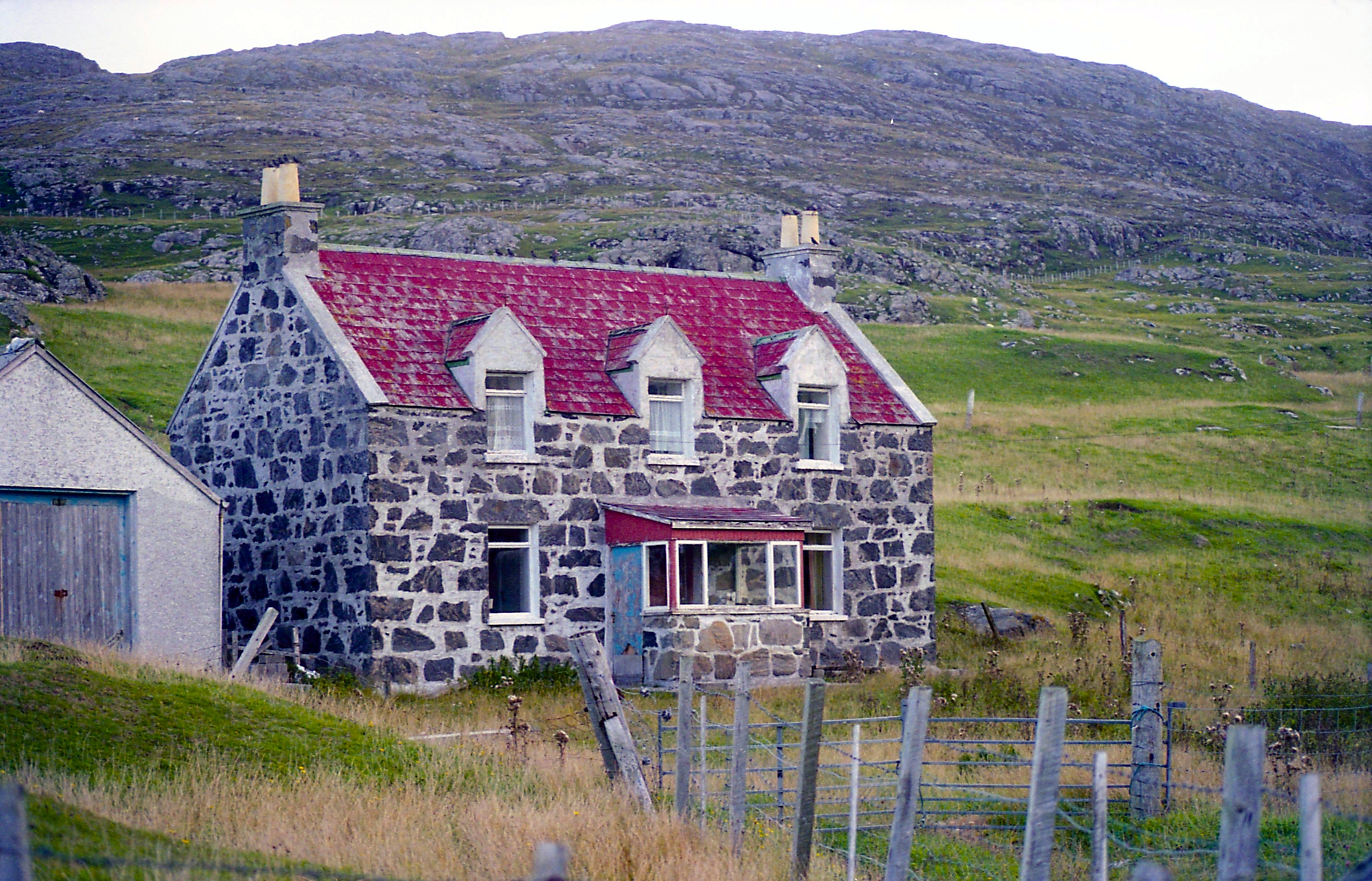
"Croft House on Barra - 35mm Film SLR" by Logos: The Art of Photography is licensed under CC BY-NC-SA 2.0
Many crofts are small (the average croft is around 5 hectares4), and most crofters have other employment off the croft. Crofting households spend an average of 14 hours per week on croft related activities, and 32 hours of paid non-crofting work5. The mean income from crofting in 2022 was £4,5385.
Whilst the majority of crofters are male, the number of female crofters doubled between 2014 and 2018 - from 13% to 26% and increased again to 30% in 20225. Work on 'women in agriculture' from 2017 found that women have more proportionate elected representation in crofting organisations than in general farming ones, and that women tend to play a larger role in decision-making on crofts. The same work also found that inheritance of a holding by a woman was more common in crofting in comparison with agriculture overall (34% compared to 24%).8
Crofting land is generally poor quality and mainly consists of rough grazing and permanent grassland with some arable land. Crofting agriculture is based primarily on raising livestock, though 43% of crofters also grow some crops5. Many crofters also undertake some sort of diversification (e.g. B&B businesses, camping/glamping, forestry)5.
The Crofting and Scottish Land Court Act 2026
Crofting law
Crofting has been protected and regulated by a unique set of laws since the end of the nineteenth century. The first crofting legislation, the Crofters Holdings (Scotland) Act 1886, followed the report of the Napier Commission in 1884 and gave crofters security of tenure, together with the right to a fair rent, the value of improvements they had made to the croft, and the right to bequeath the tenancy to a family successor. Crofters were given the right to buy their croft by the Crofting Reform (Scotland) Act 1976.
Crofting law is complex and has gone through several iterations. Crofting law made since 1955 was consolidated in 1993 and the Crofters (Scotland) Act 1993 remains the key piece of legislation. Since then, the law has been amended by the Crofting Reform etc. Act 2007, the Crofting Reform (Scotland) Act 2010, the Crofting (Amendment) (Scotland) Act 2013, and, most recently, the Crofting and Scottish Land Court Act 2026.
The most recent legislative reforms can be traced back to to the 'Crofting Law Sump' established in October 2013. The purpose of ‘the Sump’ was to gather together details of the significant problem areas within existing crofting legislation. Its final report was published in November 2014, and made a number of proposals for reform.
The Scottish Government established the Crofting Legislation Stakeholder Consultation Group to consider The Sump report. This group reported to the Scottish Government that a Bill should be introduced to resolve all 57 issues identified by the Sump. In responding to the Sump report in September 2015, the Minister at the time stated intentions to develop a programme of work, including legislation, to be brought forward in Session 5.
In 2017, the Scottish Government held a consultation on crofting policy and legislative options and priorities for a new crofting bill. An analysis of responses was published in March 2018. In April 2018, then Cabinet Secretary Fergus Ewing announced that the Scottish Government would take a 'two-phased approach' to crofting reform. The first phase was to "focus on delivering changes which carry widespread support...and result in practical everyday improvements to the lives of crofters and/or streamline procedures that crofters are required to follow".1 A Bill was planned to do this in Session 5. This would be done alongside a programme of non-legislative reform, to be set out in a National Development Plan for Crofting.
The second phase was planned for the longer-term, aiming to review crofting legislation more fundamentally. This was planned for a future Parliamentary session.
However, in October 2019, the Cabinet Secretary wrote to the Rural Economy and Connectivity Committee, informing it that due to the pressures of preparing for EU exit, work on a new crofting bill would have to be put on hold.2 As a result, a crofting bill was not brought forward in Session 5. However, a National Development Plan for Crofting was published in March 2021.
The Crofting and Scottish Land Court Act 2026
The Crofting and Scottish Land Court Bill was introduced in June 2025, and became an act in May 2026 ('the 2026 Act'). The 2026 Act makes a number of changes, including facilitating transferring a croft between family members, strengthening the role of grazings committees, strengthening the Crofting Commission's enforcement powers, prohibiting transfer of crofts to non-individuals, making it easier for crofters to put the land to 'environmental use' (for example, peatland restoration) under the crofting duties, and improving the crofting registration system. The Act also merges the Scottish Land Court and the Lands Tribunal for Scotland, keeping the name 'Scottish Land Court'.
Crofting is regulated by the Crofting Commission, which maintains the Register of Crofts, regulates and reorganises crofting, and promotes the interest of crofting. The Crofting Commission in its current form was established in 2012 following the Crofting Reform (Scotland) Act 2010. The 2026 Act has expanded and strengthened the Commission's enforcement role. Among other things, the Crofting Commission now has a duty to investigate a breach of crofting duties where these are reported by the landlord or other crofters.
Future reform
While the changes made by the 2026 Act were welcomed, stakeholders continued to push for the second, more fundamental, review of crofting law committed to in 2018. The Rural Affairs and Islands Committee supported this position in its Stage 1 report.
Consequently, an amendment was passed at Stage 3 of the Bill requiring Scottish Ministers to begin a review of crofting legislation within three years of Royal Assent (i.e. by 18 May 2029). The review must consider the effectiveness of the main crofting acts, whether further legislation is required and whether legislation needs to be consolidated. The Scottish Government must publish a report on the review "as soon as reasonably practicable" after the review. In its legacy report, the Rural Affairs and Islands Committee recommended that its successor committee take time to consider the report when it is published.
During Stage 3, then Minister for Agriculture and Connectivity, Jim Fairlie MSP, committed to commencing the review within two years if the SNP remains in government:
It is right that we allow up to three years for an incoming Government to decide its approach. However, I put on the record that, if my party remains in government, we will commence the review within two years of royal assent, well ahead of the three-year deadline, and we will seek to build on the engagement that we have carried out during this parliamentary session.
On 20 May 2026, Jim Fairlie MSP was appointed Minister for Agriculture, Marine and the Islands, with continuing responsibility for crofting. It is therefore expected that the review will begin before May 2028.
In addition, the 2026 Act commits Scottish Ministers to carry out a consultation on "measures to improve the regulation of common grazings" within 5 years of Royal Assent (i.e. by 18 May 2031).
Agriculture policy
Agriculture policy is made up of regulations, financial assistance and advice which together support food production, rural communities, and the delivery of essential 'public goods' from land use. Public goods are those things which are available to all and which are often necessary for survival, such as clean water, clean air, functioning ecosystems, a healthy climate, and flood regulation.
Financial and advisory support for agriculture
Agriculture is supported by significant amounts of public money, which, through a number of different funding schemes, underpins financial viability for many farm businesses, as well as supporting business development, collaboration and knowledge exchange, and environmental activities.
The figure below provides an overview of the support that is provided. Budget figures used are drawn from an illustrative budget split between support schemes based on 2026-2027 and 2025-2026 figures, set out in the 2026-31 Rural Support Plan.
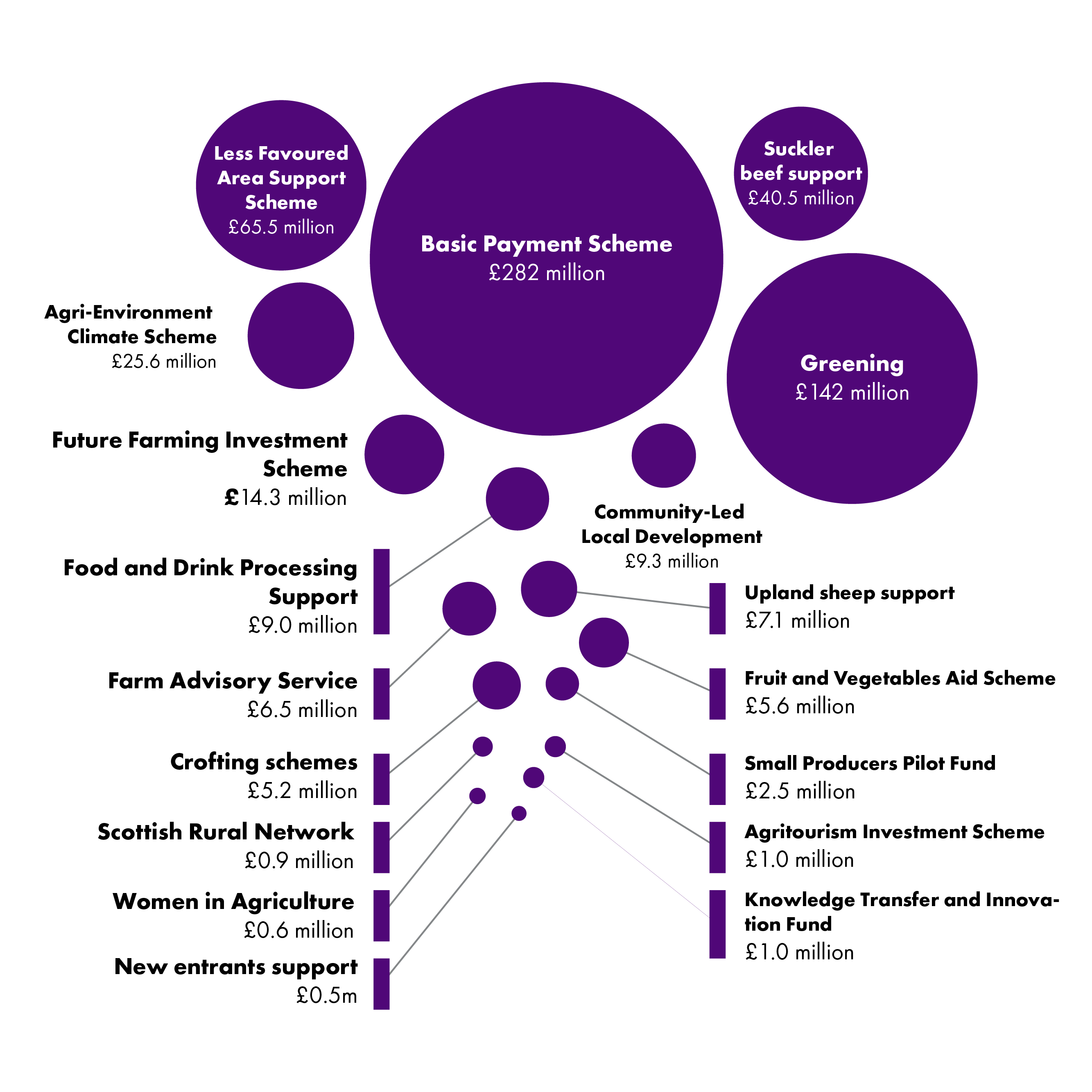
Infographic: SPICe; Data: Illustrative budget split between support schemes based on 2026-2027 and 2025-2026 figures set out in the 2026-31 Rural Support Plan.
A brief description of these support schemes, in order of budget size, is set out below:
The Basic Payment Scheme (BPS) supplements farm business incomes and accounts for just over 40% of agricultural funding. It is available to farmers and crofters who farm a minimum of three hectares and who meet certain eligibility criteria (i.e. you must carry out an agricultural activity above specified minimum levels). Nearly 70% of Scotland's agricultural area (5.9m hectares) is claimed under the Basic Payment Scheme by around 17,000 businesses (one business can claim multiple holdings).1 Businesses who claim BPS must adhere to basic regulatory standards (the 'Statutory Management Requirements'), and also to non-statutory standards for 'Good Agricultural and Environmental Condition', which, for example, prohibits certain activities on peatlands or wetlands. These requirements are collectively known as 'cross-compliance'. To receive BPS payments you must also participate in 'Greening'.
Greening (now also referred to as 'Enhanced Greening') is a payment in exchange for carrying out certain environmental activities depending on the type of land you farm. It is mandatory to participate in Greening to claim BPS, though not all farm types have significant greening requirements. Greening accounts for just over 20% of agricultural funding.
The Less Favoured Area Support Scheme supports farm business incomes for farms and crofts on poorer quality land. This scheme accounts for just under 10% of agricultural funding.
The Scottish Suckler Beef Support Scheme and Scottish Upland Sheep Support Scheme provide a payment per head of livestock for male and female beef calves, and ewe hoggs (young female sheep) on the poorest quality land. These schemes are collectively known as 'voluntary coupled support' and account for around 6% of agricultural funding.
The Agri-Environment Climate Scheme funds a wide range of environmental interventions on farms, such as creating ponds for wildlife, planting certain crops or leaving areas unharvested for a time, and creating and managing hedgerows. This accounts for just under 4% of agricultural funding.
The Future Farming Investment Scheme is a new scheme which provides capital grants to farmers to improve their environmental performance.
Community-led Local Development funds community projects in local areas (this programme used to be called LEADER under the EU Common Agricultural Policy).
The Food and Drink Processing Support Scheme is a new scheme which has replaced the Food Processing, Marketing and Co-operation Scheme. It provides grants for food and drink businesses.
The Farm Advisory Service provides one-to-one advice, online resources, and a programme of events to support farmers and crofters.
There are several Crofting support schemes. The Croft House Grant supports crofters to improve and maintain housing, the Crofting Agricultural Grants Scheme provides grants to make improvements to crofts, and the Crofting Cattle Improvement Scheme hires out Scottish Government-owned bulls (male cows) to groups of crofters to support cattle breeding in areas where there is no bull.
The Small Producers Pilot Fund is a new scheme which provides capital grants to small farmers.
The Knowledge Transfer and Innovation Fund supports projects for skills development, knowledge transfer and innovation projects.
The Agritourism Investment Scheme is a new capital grant scheme which supports investment in agritourism.
The Scottish Rural Network supports people in rural and island communities to take part in policy development and provides information and support for rural development.
The Women in Agriculture Practical Training Fund provides financial support for women to attend training courses.
New entrants schemes include the Land-based Pre-apprenticeship Programme to prepare young people for employment in agriculture, the Next Generation Practical Training Fund funds training for new entrants, and the Scottish Land Matching Service, an online noticeboard for farmers offering and seeking opportunities for collaborative working and offering independent advice and facilitation for those considering joint ventures in farming and crofting.
Note that the Forestry Grants Scheme is also part of this picture and open to farmers and crofters. However, this is discussed in the forestry section.
Reforming agricultural support
Agricultural policy reform has been underway in Scotland since the UK voted to leave the European Union (EU) in 2016. The UK’s departure from the EU in 2020 means that Scotland is no longer subject to the Common Agricultural Policy (CAP), which has shaped agricultural policy and support for decades.
The timeline below illustrates the steps taken to reform agricultural support over the last ten years.
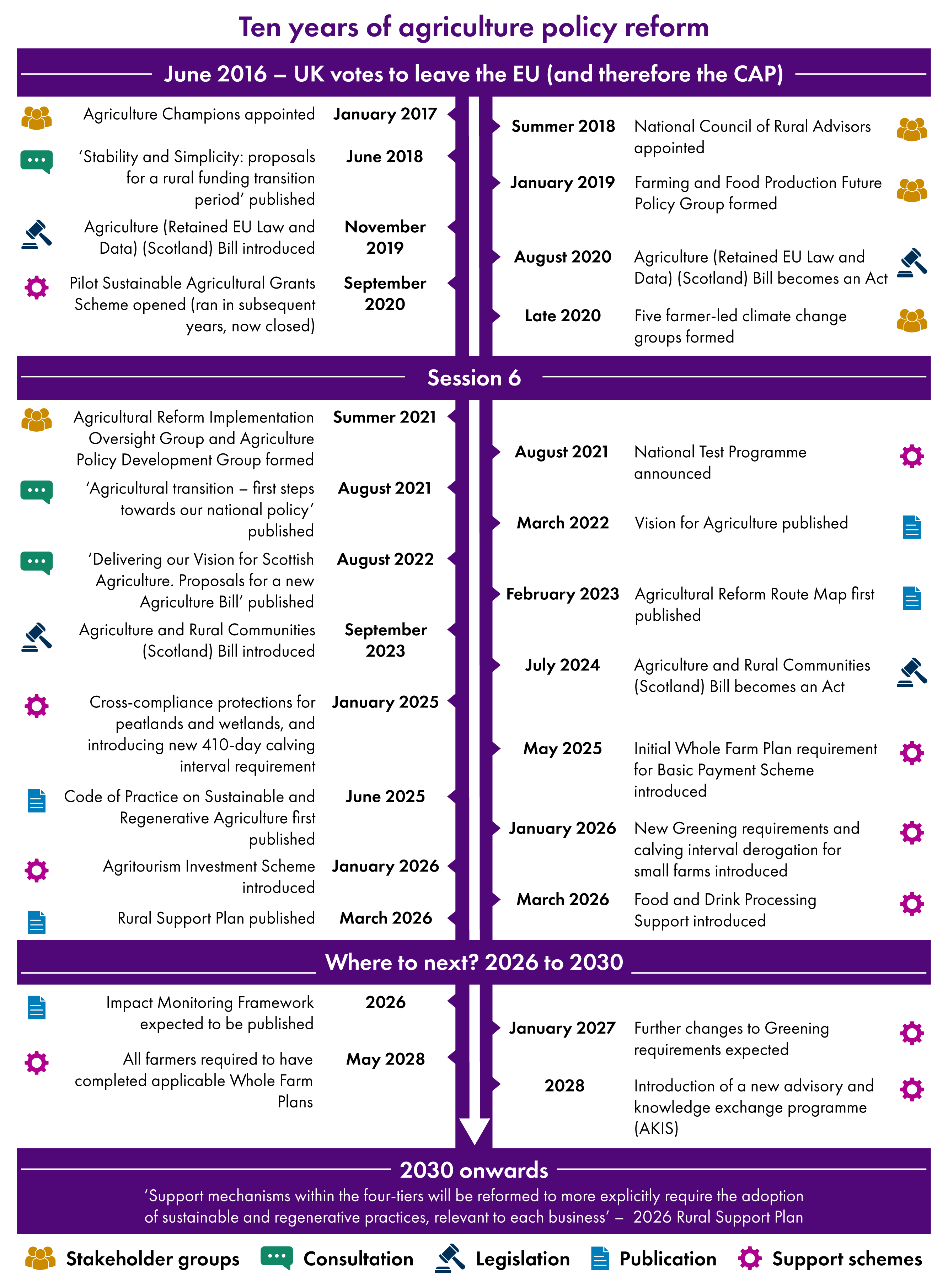
SPICe
The reform process has included multiple stakeholder groups, publications, consultations and legislation. During Session 5, a number of initial discussion groups were set up, each of which reported with ideas for reform, and the Scottish Parliament passed the Agriculture (Retained EU Law and Data) (Scotland) Act 2020 ('the 2020 Act'). The 2020 Act gave powers to Scottish Ministers to make changes to the legacy EU CAP legislation that still governs Scottish agriculture policy today. The 2020 Act only allows Ministers to 'simplify and improve the operation of' that legislation, not to make wholesale changes or to set up new schemes. These powers have been used several times to, for example, make changes to the Greening and suckler beef support schemes.
When the 2020 Act was passed, these powers were only available to Scottish Ministers until May 2026, at which time it was anticipated that there would be new legislation in place to underpin new support schemes. However, this 'sunset clause' (the legal provision bringing the power to an end by a specific date) was removed by the Agriculture and Rural Communities (Scotland) Act 2024 as it became clear that some schemes would carry on beyond 2026.
What happened in Session 6?
At the start of Session 6, it was anticipated that a "new, post-Common Agricultural Policy, support payment system" would be in place in 2025-26, and the Scottish Government explicitly aimed for this policy to "stay broadly in line with the objectives of the new CAP as far as possible" to help facilitate rejoining the EU1. The Scottish Government made an early commitment to produce a "preliminary package of measures to reduce greenhouse gas emissions from agriculture" by the UN climate change conference - COP26 - held in Glasgow in November 2021. It also committed to, by 2025, "shift half of all funding for farming and crofting from unconditional to conditional support"1.
In October 2021, the Scottish Government published details of a 'National Test Programme' to "support farmers and crofters to play their part in Scotland becoming a global leader in sustainable and regenerative agriculture". The programme had a budget of £51m covering 2022-2024 and was made up of two 'tracks'.
Track 1 supported farmers to gather data about their businesses through carbon audits and soil testing, as well as animal health and welfare interventions, including giving suckler beef producers access to MyHerdStats, a digital tool to provide insights into herd performance. Track 1 is known as 'Preparing for Sustainable Farming'. Track 2 included a farmers survey and other actions to inform the wider agricultural reform programme.
The announcement on the National Test Programme was closely followed by a 'Vision for Agriculture', published in March 2022. This formalised the Scottish Government's goal of Scotland becoming a "global leader in sustainable and regenerative agriculture".
The vision goes on to state:
This commitment will sit at the heart of a robust and coherent framework to underpin Scotland's future agriculture support regime from 2025 onwards.
Scotland will have a support framework that delivers high quality food production, climate mitigation and adaptation, and nature restoration.
In February 2023, the Scottish Government published the first version of the Agricultural Reform Route Map, which set out plans for transforming agricultural support over time.
Importantly, the route map set out the structure for a new agricultural support framework. While CAP support is divided into two 'pillars' - Pillar 1 broadly providing income support payments and Pillar 2 providing everything else - a new Scottish agricultural support framework is set to be divided into four 'tiers':
.png)
Tier 1 consists of a direct payment to farmers. This supports farmers' and crofters' incomes.
Tier 2 consists of 'enhanced' support. The original route map noted: "the enhanced tier goes a step further than Tier 1 and will focus on measures that will reduce greenhouse gas emissions and restore and improve nature....Eligibility is dependent upon successfully undertaking Tier 1 and demonstrating contribution towards the Tier 2 requirements."
Tier 3 goes one step further and provides payments for farmers in return for targeted activities to support climate change mitigation and nature restoration or improves business sustainability.
Tier 4 consists of complementary support, such as advice and professional development.
To deliver this new framework, new primary legislation was required, and the Agriculture and Rural Communities (Scotland) Bill was introduced in September 2023.
The Agriculture and Rural Communities (Scotland) Act 2024
Following two consultations (these are detailed in a previous SPICe briefing), the Scottish Government brought forward legislation in Session 6 to begin the process of creating a new agricultural support system. The Agriculture and Rural Communities (Scotland) Act 2024 ('the 2024 Act') is ‘framework’ legislation: it does not set out detailed requirements but it gives Scottish Ministers powers to, among other things, create new support schemes, set eligibility requirements, and make other rules about receiving support.
Section 1 of the 2024 Act sets five objectives for Scottish agricultural policy:
the adoption and use of sustainable and regenerative agricultural practices,
the production of high-quality food,
the promotion and support of agricultural practices that protect and improve animal health and welfare,
the facilitation of on-farm nature restoration, climate mitigation and adaptation, and
enabling rural communities to thrive.
Alongside general powers allowing Scottish Ministers to create new types of agricultural support, the 2024 Act also allows Scottish Ministers to :
make regulations to cap or taper the total amount of support that one recipient is entitled to,
make regulations about refusing or recovering support where this is in the public interest, and
provide support during exceptional market conditions (where there is significant disturbance in the agricultural market),
make regulations around continuing professional development for farmers and crofters.
The Act also requires Ministers to produce two documents: an overview of support - the ‘Rural Support Plan’ - every five years, and a Code of Practice on Sustainable and Regenerative Agriculture.
In addition, a 'statement on food security' must be laid in the parliament every three years. This section came into force on 16 June 2025, so the first statement can be expected by 16 June 2028.
What is sustainable and regenerative agriculture?
The Scottish Government has a goal of Scotland becoming a global leader in sustainable and regenerative agriculture. These terms do not necessarily have one single definition, but have been further explained by the Scottish Government in the Code of Practice on Sustainable and Regenerative Agriculture ('the Code') published in March 2026.
The Code defines sustainable and regenerative as the following:
Sustainable agriculture refers to producing food in a way which means the business can be profitable, but the management activities do not have an adverse impact on people or natural resources such as soil, water, air and biodiversity. Regenerative agriculture refers to managing land in a way which allows for the renewal of natural resources.
The Code is clear that "sustainable" means environmentally, socially and economically sustainable.
The Code also outlines five principles of regenerative agriculture:
Minimise soil disturbance
Maximise crop diversity
Keep soil covered
Maintain living roots
Integrate livestock
The Code then goes on to detail practical measures which support sustainable and regenerative agriculture.
Changes to date
Scottish agricultural support continues in the form of legacy EU CAP schemes, underpinned by EU CAP regulations assimilated into UK law. The basic functions of the schemes, therefore, are unchanged. Details of agricultural support schemes are set out in an earlier section.
However, there have been some notable changes to how some of the schemes are operated. These changes include:
A new standard for 'good agricultural and environmental condition' of peatlands and wetlands from 2025. This standard now includes a list of prohibited activities on peatlands and wetlands. This is part of 'cross-compliance' - a set of rules which farmers and crofters must follow to receive payments.
A new 410-day ‘calving interval’ (a maximum number of days between a cow having two calves) was introduced in 2025 (with derogations for small businesses introduced in 2026) for the Suckler Beef Support Scheme, aiming to increase efficiency.
To receive basic payments from 2025, farmers and crofters need to have made a start on producing 'whole farm plans'. Whole farm plans are made up of five plans and audits around climate change, biodiversity, animal welfare, soil health and integrated pest management. By 15 May 2025, farmers and crofters were required to have completed two relevant audits; by 15 May 2028, farmers and crofters must have completed all applicable audits for their business.
In 2026, changes to requirements meant that the number of farms required to participate in environmental activities as part of ‘Greening’ increased by around 65% (from 21% to 35% of farming businesses; around 65% remain exempt from many requirements). This has meant that more farmers and crofters have to maintain 'Ecological Focus Areas', 5% of the farm which is managed to benefit the environment. This will rise to 7% from 1 January 2027.
In addition, over the last few years, several new grant schemes have run to improve sustainability, business efficiency and prepare for future changes, though the size of these schemes has been small compared to the overall agricultural budget. These schemes include:
The Sustainable Agricultural Capital Grants Scheme (now closed)
Preparing for sustainable farming (the scheme supporting carbon audits and soil testing under the National Test Programme; now closed)
The Future Farming Investment Scheme (from 2025)
The Agritourism Investment Scheme (from 2026)
The Food and Drink Processing Support scheme (from 2026).
Scottish Government documents produced earlier in Session 6, such as the 2022 Vision for Agriculture and the original version of the Agricultural Reform Route Map, gave the impression that a ‘new’ support system would be taking shape by 2026. The latter document stated, for example, that “in 2026 Basic Payment Scheme will end and Base and Enhanced Support will be introduced.”
In particular, Tier 2 – the ‘enhanced tier’ – was expected to be operational by 2026, and an indicative list of measures set out proposals for new activities. However, by autumn 2025 it became clear that schemes would remain similar from 2026. The existing Greening scheme was adapted to become ‘Enhanced Greening’ in place of a new Tier 2. The Basic Payment Scheme continues as Tier 1, but with steps taken towards requiring all farms to have whole farm plans in place by 2028.
Next steps
The first Rural Support Plan (RSP), required under the Agriculture and Rural Communities (Scotland) Act 2024, was published on 24 March 2026. Publication had been delayed and therefore arrived too late to be considered in the Session 6 Rural Affairs and Islands Committee.
The first RSP sets out five outcomes which largely mirror the objectives of the 2024 Act, with sub-outcomes underneath. It then reiterates the goal of creating the new four-tier framework, but notes that for the five-year period that the plan covers:
This Plan reflects what is currently available through legacy CAP support, including the Scottish Rural Development Programme (SRDP) and other existing support, mapped into the new four-tier framework.
The RSP sets out the total agricultural budget (£711m, including £58.7m in forestry grants, £23.5m for animal diseases, and £10m for smaller scale, one-off and generalist rural support) and makes three commitments in relation to funding over the plan period:
over time, at least half of all funding will be targeted towards nature restoration and climate mitigation and adaption
70% of funding will be allocated to Tiers 1 and 2
we will apply a funding split of 70 / 30 between Tiers 1 and 2.
The RSP provides a table which indicates that, currently, around 80% of funding is allocated to tiers 1 and 2 (in the form of legacy CAP schemes like the Basic Payment Scheme, Greening, the beef and sheep support schemes, and the Less Favoured Areas Support Scheme), with the remaining 20% allocated to tiers 3 and 4. The RSP signals that this will remain the case for this year and the following three years, but commits to moving 10% of the total budget (around £67m) out of the schemes in tier 1 and into tiers 3 and 4 in 2030-31. The question of how funding is to be divided is a key point of contention between some stakeholders. Farming organisations push to retain more funding in tiers one and two - the tiers that directly support farm incomes - while environmental and other organisations contend that the “engines of change” to address climate change and biodiversity loss will be in the schemes in Tier 3 and 4.
The RSP committed to a "period of certainty, investment and preparation" until 2030, and "an ongoing programme of improvements and reforms will continue to the existing support packages that the industry use now and understand."
One of the reforms expected during this period is further enhancement of the Greening scheme. From 2027, farmers and crofters with more than 15ha of arable land will be required to dedicate 7% of their land as Ecological Focus Areas, up from 5%. Furthermore, from 2028, a new advisory service (known as the Agricultural Knowledge and Innovation System, or AKIS), is expected to be introduced.
From 2030, the RSP states that:
Support mechanisms within the four-tiers will be reformed to more explicitly require the adoption of sustainable and regenerative practices, relevant to each business.
This will involve the implementation of revised eligibility and activity requirements (all tiers), essential standards for the base tier, packages of measures for the enhanced tier, targeted measures and conditions for the elective tier, and appropriate learning and knowledge transfer activities in the complimentary tier.
The SNP 2026 Manifesto also makes a commitment to
build on whole farm plans to develop individual farm action plans which support actions for nature and climate and sustainable food production
Responding to the Rural Support Plan, the National Farmers Union Scotland welcomed the five-year funding clarity, particularly around continuing direct payments but again stressed that “more detail is needed on how schemes will operate in practice and how existing support will transition into the new system”. Other stakeholders, such as Scottish Environment LINK, who consider the current payments system to be “ineffective and unfair”, welcomed plans for some funding changes expected in 2030, but underscored that the plan “still does not go far enough to outlining the concrete changes industry will be asked to make”. They contend that there has been a “lost decade of potential to reform farming policy”.
The timeline for future changes and their scope and scale remain somewhat unclear, beyond the broad indications set out in the Rural Support Plan.
Forestry
Scotland's forests and woodlands
The Scottish Forestry Strategy 2019-2029 states that:
The forestry and timber sector comprises tree nurseries and businesses focused on planting, managing and harvesting forests and woodlands, as well as wood processors producing a range of wood products, including sawn timber, composite boards, paper, pallets, biomass and bark. Businesses range in scale from artisan furniture-makers, family-owned contracting micro-businesses and community-based biomass enterprises, to UK-wide woodland management companies and multi-million pound panel, pulp, paper and sawmills operating internationally.1
Forests and woodlands make up 19% of Scotland's land area2. This is just under half of the UK’s forests and woodlands, and above the UK average coverage of 14%, but less than most of the countries in the EU. Scotland has a goal of increasing woodland coverage to 21% by 2032 and 23% by 2040 as part of commitments on climate change3. To do so, there are commitments to plant 12,000 in 2026/27, increasing by 2,000ha per year to 18,000 hectares per year by 2029/30.
There are no strict technical differences between the definition of 'forests' and 'woodlands'. These terms are often used interchangeably. However, the terms 'forestry' and 'forest' are often -but not always - used to refer to commercial tree growing, whilst 'woodland' is often - but again, not always - associated with trees that are managed for recreational or environmental purposes. 'Forests' are also often used to refer to larger tree-covered areas, and 'woodland' to smaller pockets of trees within the landscape.
Approximately 31% of Scotland’s forest area is publicly owned, for example by Forestry and Land Scotland (the Scottish Government agency responsible for managing the national forest estate), and the remainder is privately owned2.
71% of Scotland’s wooded area is made up of conifers, and 29% is made up of broadleaved species. This is compared with 44% and 52% conifers in Wales and Northern Ireland respectively (though both have significantly smaller total areas of forest), and 23% conifers in England2.
In Scotland, 63% of the stocked area of conifers is made up of fast-growing, non-native Sitka spruce2. Native Scots pine makes up the second-largest area of stocked conifers, at 15%.
Many of Scotland’s forests are for productive use and produce timber. A 2024 report on the Economic Impact of Forest-Based Activities in Scotland found that the forestry sector is worth £1.1bn to the Scottish economy, made up of £394m from primary wood processing, £384m from forestry, and £252m from tourism. The sector employs 34,140 people.
The area of Scottish native woodland (woodland where over 50% of the canopy is composed of native species) amounts to 32% of the total woodland area7. This is less than the 49% of woodland across the whole of the UK classed as native. Some of Scotland’s native woodlands are classed as ‘ancient’ woodlands – woods that have been wooded since at least 1750. They are important because of their rich flora and fauna - and because they have evolved over many centuries, they cannot be recreated if destroyed.8
The Scottish Biodiversity Delivery Plan 2024-2030 has some targets in relation to native and ancient woodland:
To meet the annual woodland creation target set in the Scottish Government Climate Change Plans. The Delivery Plan suggests that this is 18,000 hectares of new woodland annually (including 4000ha of native woodland).iii
By mid-2027, develop the new Register of Ancient Woodlands, to include locational data, a definition of the required ‘protected and restored’ condition of ancient woodlands, and a process for recording ancient woodlands that reach the required standard.
Ensure support mechanisms are in place for landowners to restore priority ancient woodlands by 2030, where the initial priority list is those protected/ designated woodlands that are currently in unfavourable condition.
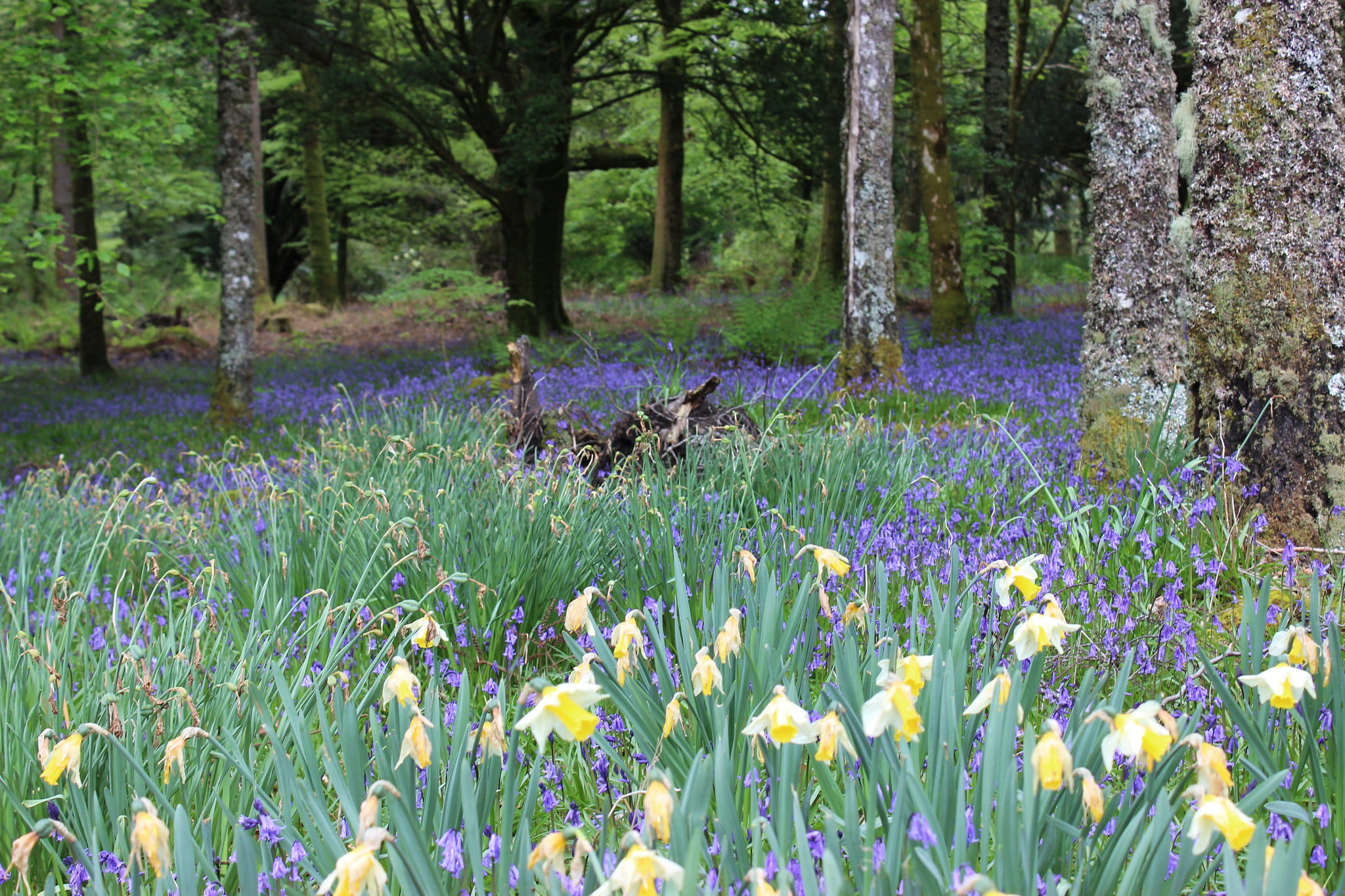
Integrating forestry and farming is one of the Scottish Government’s commitments as part of the most recent Climate Change Plan, aiming to “support knowledge transfer and skills development on planting and managing trees as part of a farm business throughout the lifetime of the CCP to increase tree planting and improve management of trees on farmland" and "review, update and develop mechanisms, as appropriate, to better support the establishment and management of trees on farms including future agricultural support and the Forestry Grant Scheme."
More forestry statistics can be found in Forest Research’s annual publication updated each September.
Forest policy and governance
Forestry has long been a devolved matter, though its governance has changed in recent years. Until 2018, Forestry Commission Scotland (FCS) was the forestry agency of the Scottish Government, and was linked to its counterparts in England and Wales. The organisations were all accountable to a single set of Forestry Commissioners. However, following similar legislative changes in Wales in 2013, this changed for Scotland with the passage of the Forestry and Land Management (Scotland) Act 2018 (the 2018 Act). Following the 2018 Act, the powers and duties held by the Commissioners were transferred to Scottish Ministers (where they relate to Scotland). Two new organisations were established to replace FCS: Forestry and Land Scotland, and Scottish Forestry. Forestry and Land Scotland’s role is to manage the Scottish forest estate; Scottish Forestry is responsible for forestry policy, regulation, advice, and grant payments.
Scottish Forestry published a ten-year Scottish Forestry Strategy in February 2019, required under the 2018 Act. The strategy includes a fifty-year vision for Scottish forestry:
In 2070, Scotland will have more forests and woodlands, sustainably managed and better integrated with other land uses. These will provide a more resilient, adaptable resource, with greater natural capital value, that supports a strong economy, a thriving environment, and healthy and flourishing communities.
It also includes three objectives:
Increase the contribution of forests and woodlands to Scotland’s sustainable and inclusive economic growth;
Improve the resilience of Scotland’s forests and woodlands and increase their contribution to a healthy and high quality environment;
Increase the use of Scotland’s forest and woodland resources to enable more people to improve their health, well-being and life chances;
And six priorities:
Ensuring forests and woodlands are sustainably managed
Expanding the area of forests and woodlands, recognising wider land-use objectives
Improving efficiency and productivity, and developing markets
Increasing the adaptability and resilience of forests and woodlands
Enhancing the environmental benefits provided by forests and woodlands
Engaging more people, communities and businesses in the creation, management and use of forests and woodlands
The strategy is accompanied by a series of implementation plans, and regular progress reports against actions.
A new Scottish Forestry Strategy is due to be published during Session 7 as the current strategy comes to an end in 2029.
Forestry grants
Scottish Forestry manages a programme of grants for woodland creation and management. This is known as the Forestry Grants Scheme (FGS) and has been in place since 2015.
Support exists for:
woodland creation
agroforestry
woodland improvement grant
sustainable management of forests
tree health
harvesting and processing
forest infrastructure
forestry co-operation.
In 2026-27, the Scottish budget for the FGS was £58.6m. This has fluctuated in recent years, between a high of around £77m in 2023-24 and a low of around £45m in 2024-25.
Support for woodland creation makes up a large proportion of the FGS budget. This is a key element in delivering the Scottish Government's woodland creation targets under the climate change plan. Applicants can choose from several different grant 'options', e.g. prescribed categories of woodland creation. Some of the options are for specific types of categories of species, and other options are for specific areas or circumstances.
Cumulative statistics from the Forestry Grants Scheme state that around 48% of woodland creation occurs under native woodland options (Scots pine, upland birch, native broadleaves, natural regeneration, native broadleaves in the Northern & Western Isles, and native low density planting)i. 52% of woodland creation occurs under the conifer and remaining options (conifer, diverse conifer, broadleaves, small or farm woodland). However, this varies significantly across Scotland. Conifer and other options are much more prevalent in South and central Scotland (over 80% in each), while the native options dominate in the Highlands and islands (91%).2
A recently published evaluation of the FGS between 2015 and 2021 showed that 65% of conifer planting during that time period was Sitka spruce, followed by Caledonian Scots pine at 11% and Scots pine at 10% during that time period. 76% of the broadleaved woodland creation was native mixed broadleaves.3
The FGS underwent a consultation and review in 2023. The consultation analysis highlighted a number of views on desired changes, but "there was no stakeholder consensus on how to evolve future grant support for forestry". A 'Future Forestry Support Programme' is underway until 2028. The Woodland Creation Route Map, published in September 2025, states that 2024-2028 is "the initial scoping stage of the Future Forestry Support Programme, developing the themes from the consultation exercise and setting the context for the future support for forestry in Scotland". In the meantime, enhancements were made to FGS in 2023 and again in 2025.
In addition to grants, forestry receives other financial benefits. There is no income and corporation tax on income from timber sales in commercial forestry, nor capital gains tax on growing timber. In addition, commercial woodland can also qualify for Business Property Relief (BPR) from inheritance tax after two years of ownership. Historically this relief has been available at 100% with no upper limit, although from April 2026 full relief will be limited to the first £2.5 million of qualifying business and agricultural assets, with any excess receiving 50% relief. These tax arrangements are reserved to the UK Government.
Industry standards
In light of the role of forestry and forest management in sustainable land use, several industry standards and accreditation schemes have been established.
The main one is the UK Forestry Standard (UKFS), which defines requirements and produces guidelines for sustainable forest management developed by the forest agencies of the UK and devolved governments. Forestry grant recipients are expected to adhere to UKFS requirements. The UKFS is reviewed and updated by Scottish Forestry; the most recent version has been in place since October 2024.
The UKFS is divided into legal forestry requirements – i.e. those set out in law - and good forestry practice requirements. The latter are linked to international commitments and are required for grant payment. For example, to receive grant payments, no more than 65% of the area may be allocated to a single species. The requirements are complemented by guidelines. The Natural Environment (Scotland) Act 2026 will provide Scottish Forestry with a new power to create regulations under the 2018 Act, in relation to Ministers' duty to promote sustainable forest management including for the purpose of requiring compliance with the UKFS. This power is not yet in force, though is expected to be commenced in October 2026.
A second standard exists in the form of the UK Woodland Assurance Standard (UKWAS). This is a voluntary certification standard, and draws on the UKFS as the basis for best practice and combines with the requirements from two certification schemes; the Forestry Stewardship Council (FSC) and Programme for the Endorsement of Forest Certification (PEFC). UKWAS is independent of government and acts as an audit for the independent certification schemes, paid for by the forest or woodland owner.
Finally, the Woodland Carbon Code is the UK carbon standard that provides assurance regarding the integrity of carbon credits from woodland creation. The code is managed by Scottish Forestry on behalf of all of the UK forestry authorities.
Participation in the Woodland Carbon Code is voluntary, and requires 'additionality' - that registered projects would not have gone ahead without the incentive provided by carbon credit revenues.
Timber production
Timber has a large number of uses and the timber industry comprises a variety of enterprises, from wood production and forest management to haulage and timber processing. Scotland’s timber output is largely made up of softwood produced from Scotland’s conifer plantations. Scottish Forestry estimates using 2023 data suggest that around 98% of timber removals from Scotland are softwood. Around half of this goes to sawmills, with the remainder going to, among other things panels/pulp & paper, and woodfuel. Of the amount that goes to sawmills, just under half of this provides sawnwood for, among other things, construction, fencing, packaging and pallets. Just over half of the amount that goes to sawmills provides chips, sawdust and bark.1
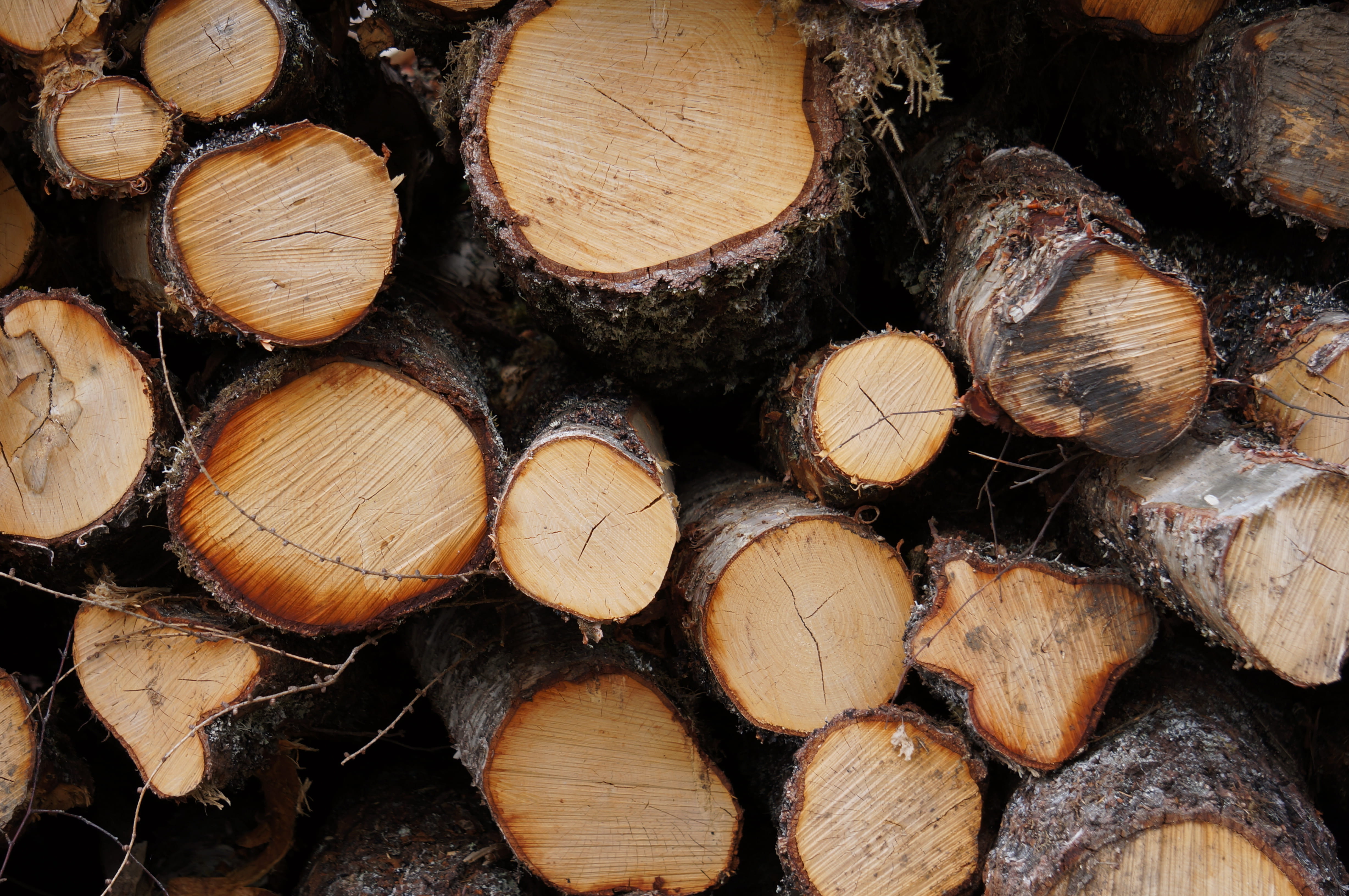
The UK is reliant on imports for wood and wood products. Figures from 2024 suggest that imports of wood account for 88% of the UK's apparent consumption (production plus imports, minus exports)2. Interest in timber as a building material is growing in response to climate change, due to its potential to replace higher-carbon alternatives.
In the Climate Change Plan 2026-2040, the Scottish Government committed to
continue to implement the timber development programme through an annual programme of projects that support the promotion and development of wood products for use in construction.
The Strategic Timber Transport Scheme co-finances projects that support sustainable transport of timber in rural areas in Scotland.
Forestry and the environment
Forests and woodlands provide environmental benefits, which can vary depending on how they are managed, or created, in the case of new woodlands. Trees absorb carbon dioxide from the atmosphere. Forests are therefore known as ‘carbon sinks’, meaning that they remove carbon from the atmosphere and store it. Trees and woodlands are also home to a wide range of species and support a number of 'ecosystem services' (the things that nature provides that humans need to survive and thrive, such as clean air, clean water, and flood regulation).
Some of Scotland's woodlands are rare, diminishing, and highly valuable for biodiversity. Coastal temperate rainforests are rare both in Scotland and globally. Estimates suggest that only 30,000 hectares remain of Scotland's rainforests, these can be found on the west coast. The rainforest provides habitat for a large and diverse collection of rare lichens and bryophytes (e.g. mosses). There is an action in the Scottish Biodiversity Delivery Plan 2024-2030 to improve the condition and health of Scotland's rainforests to allow them to expand. This is being delivered by the Scottish Government's strategic approach to restoring and expanding Scotland's rainforest.
Caledonian pinewoods are made up of Scots pine and other native species such as birch, rowan and alder. These support "characteristic species that occur nowhere else"1, such as black grouse, capercaillie and the Scottish crossbill. Britain's largest native Scots pinewood can be found around Abernethy, in the Cairngorms National Park.
Scotland's ancient woodlands are defined as woodlands which have been continually wooded since at least 1750. These are often rich in wildlife and represent a natural ecosystem which has existed for many years, including under traditional management by people. Once these are destroyed, they cannot be recreated2. Under the National Planning Framework 4, developments should not be supported if they result in any loss of ancient woodlands, ancient and veteran trees, or adverse impact on their ecological condition. There is an existing Ancient Woodland Inventory, which is a provisional guide to these sites. There has also been a long-standing commitment to produce a Register of Ancient Woodlands. At the time of writing, NatureScot (the public body responsible for Scotland's nature), Scottish Forestry and other partners are working on delivering this commitment.
The area of woodlands in favourable condition is one of NatureScot's key performance indicators, but this indicator is declining. NatureScot noted in its most recent annual report that there are significant pressures on protected woodlands:
Our review of native woodlands in favourable condition, based on SCM [site condition monitoring] data, as well as observational information from the sector, shows that 31% of protected woodland features are in favourable condition. This is a reduction from last year’s 33% and a statistically significant reduction over the last 8 years from 36% in 2017/18. This suggests that protected woodlands and, by extension, ancient and natural woodlands are mostly in unfavourable condition and that the proportion in unfavourable condition is steadily increasing.
The key negative pressures are high grazing impacts, mostly by deer, invasive species, particularly Rhododendron and tree disease, especially in woodlands with ash, elm, juniper and alder components. Native woodlands planted over the last 25 years remain in generally poor condition, with little progress towards natural woodland ecosystem development, largely because of high grazing impacts.3
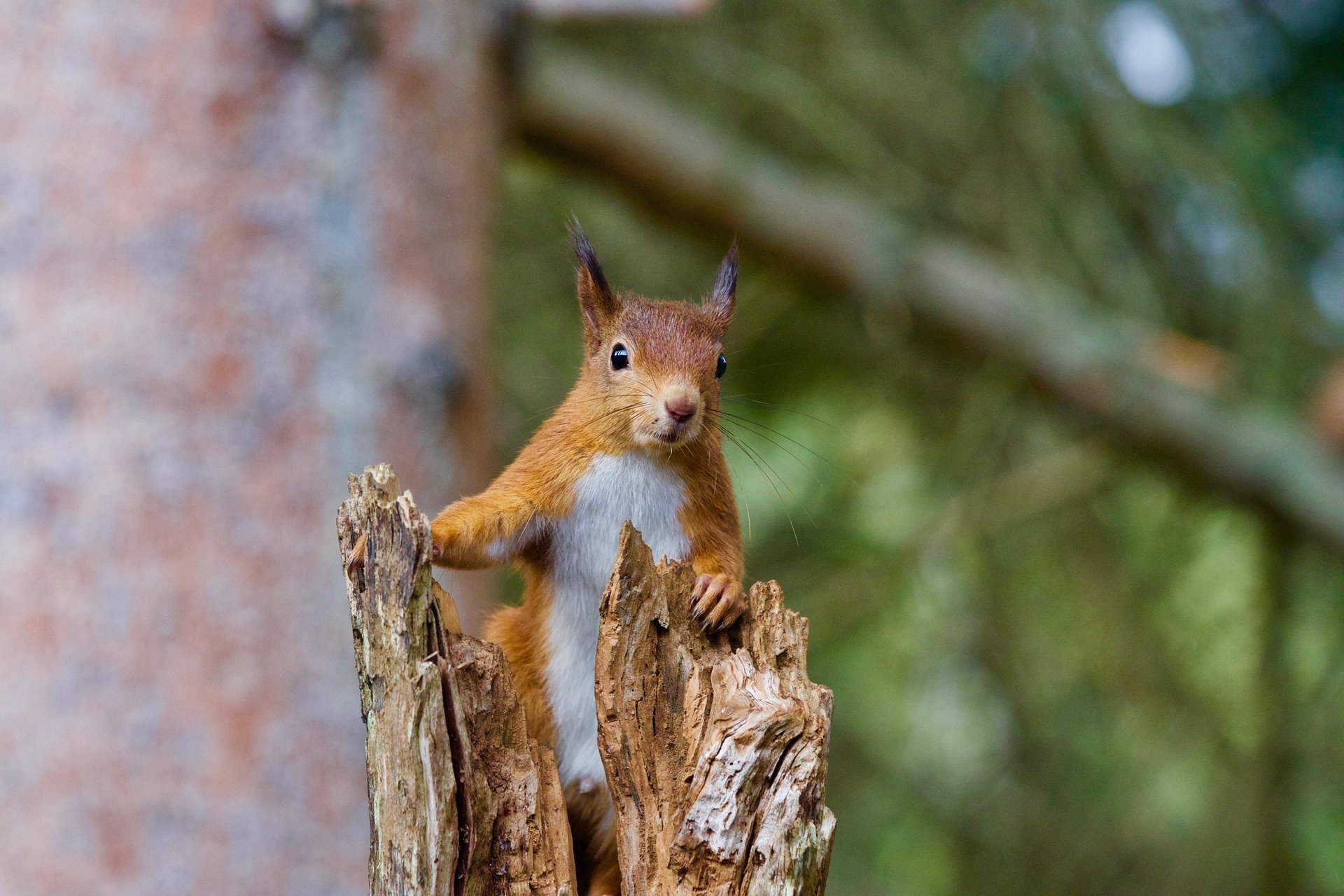
Image by Nadia Tighe from Pixabay
Climate change also affects forests and woodlands. For example, changes to temperatures, rainfall and weather patterns can affect the prevalence and susceptibility of trees to pests and diseases4, and there are risks from drought, wildfires, and more extreme weather. A routemap produced by Scottish Forestry outlines how to protect Scotland's forests from climate change and create resilient woodlands.
Scottish greenhouse gas statistics are published in June each year and report on emissions compared to the baseline in 1990. Forestry and woodlands are included in the 'Land Use, Land Use Change and Forestry' category, and are expected to contribute to greater carbon sequestration (locking up carbon) over the coming decades.
For biodiversity, surveys of different sets of species provide indicators for the health and diversity of woodlands. The Scottish Terrestrial Breeding Bird survey includes the woodland bird index, which shows the strongest positive trend of the bird indices, increasing by over 50% since 1994. The 'State of Nature' report is published every three years by a partnership of public bodies and environmental organisations, and reports more widely on the state of the UK's biodiversity, broken down by country.
Forests and people
Forests and woodlands are important areas for recreation and attract visitors and tourists. A 2024 report on the Economic Impact of Forest-Based Activities in Scotland estimated that forest-related tourism brings £252m to the Scottish economy, and employs 18,130 people.
Forests and woodlands are the second most-visited type of outdoor space in Scotland. Scotland’s People and Nature Survey 2023/24 reported that 39% of visits to the outdoors took place in woodland areas, and 87% of respondents had visited a forest or woodland in the past year.
Community-run or -owned woodlands are also an important type of woodland for people. There are over 200 community woodlands groups in Scotland who own or manage woodlands of various sizes for the purpose of recreation, supporting nature, economic or commercial reasons, renewable energy, or social inclusion.1
Estate, moorland, and deer management
Estate management
There is no single definition of what constitutes a rural estate, but they were traditionally large holdings owned by landowning families with sporting and agricultural interests. Modern-day estates may still be family owned (though are not always) and are usually multi-enterprise businesses with several different income streams.
Estates usually have some form of agriculture in the form of land let to tenant farmers or in-hand farming businesses. Many also run sporting businesses, providing shooting, stalking or fishing experiences. Others may have other enterprises, such as holiday lets, hospitality, and other tourism opportunities, and commercial forestry. Increasingly, estates may also carry out environmental activities, in the form of woodland creation, peatland or other nature restoration. Most of these topics are covered above, but the sections below will set out more information on grouse moor and deer management.
Recent legislation has defined what is considered a 'large landholding'. The Land Reform (Scotland) Act 2025 ('the 2025 Act') defined a large landholding as a holding of 1,000 hectares or more. Large landholdings are expected to have additional obligations once the relevant sections come into force. These include a requirement to produce a land management plan, developed with engagement with communities and tenants. The plan must set out, among other things, the long-term vision for the holding, steps taken to engage with communities and tenants, steps taken to comply with codes of practice around access and deer management, and how the estate intends to manage land to contribute to climate change mitigation and adaptation and biodiversity recovery.
The requirement to produce land management plans is not yet in force, and will be a likely topic of discussion in Session 7. For more information on these new obligations, the 2025 Act and wider land reform policy in Scotland, see the SPICe subject profile on land reform.
Moorland management
Moorlands are comprised of a range of habitats, including dry and wet heath, blanket bog and rough grasslands. Moorlands are mainly managed for shooting and livestock grazing.
Managing moorland for grouse shooting is a common form of land use and management in Scotland, particularly on larger rural estates. Grouse shooting takes the form of either 'driven' or 'walked up' grouse shooting. Driven grouse shooting is the practice of using ‘beaters’ – people on foot – to flush red grouse from the ground to be shot by a line of hunters. Walked up shooting involves the shooters walking across moorland, sometimes with dogs, flushing birds as they go.
Driven grouse shooting tends to require more intensive land management to provide a higher density of grouse required for the shoot. Management involves muirburn, feeding the birds medicated grit to control disease, and predator control1.
Muirburn is the intentional and controlled burning of moorland vegetation. It is often carried out to encourage new growth for grazing animals, maintain certain types of landscapes and habitats, and reduce the risk of wildfires. It is a key part of grouse moor management but is also done to manage moorland for livestock grazing. Carrying out muirburn is known as ‘making muirburn’.
Significant changes in Session 6 - the Wildlife Management and Muirburn (Scotland) Act 2024
Session 6 of the Scottish Parliament saw significant legislative change in this area via the Wildlife Management and Muirburn (Scotland) Act 2024 ('2024 Act'), which introduced:
Licensing for grouse moors (for the killing and taking of red grouse) - which commenced in 2024. The 2024 Act requires that a licence holder comply with the Code of Practice on Grouse Moor Management. NatureScot also has powers to suspend or revoke a licence where certain wildlife crimes have been committed.
Muirburn licensing - due to begin in the 2026 muirburn season (from 15 September). From this point onwards, a licence will be required to carry out muirburn on any land in Scotland. It will be an offence to carry out muirburn without a licence.
Licensing for the use of certain wildlife traps by land managers for predator control - these provisions are not yet commenced while the licensing system is being developed.
A ban on the practice of snaring (a formerly legal method of predator control used on many grouse moors), which has been in force since October 2024.
Licensing functions in this area are delivered by NatureScot, the public body responsible for nature in Scotland.
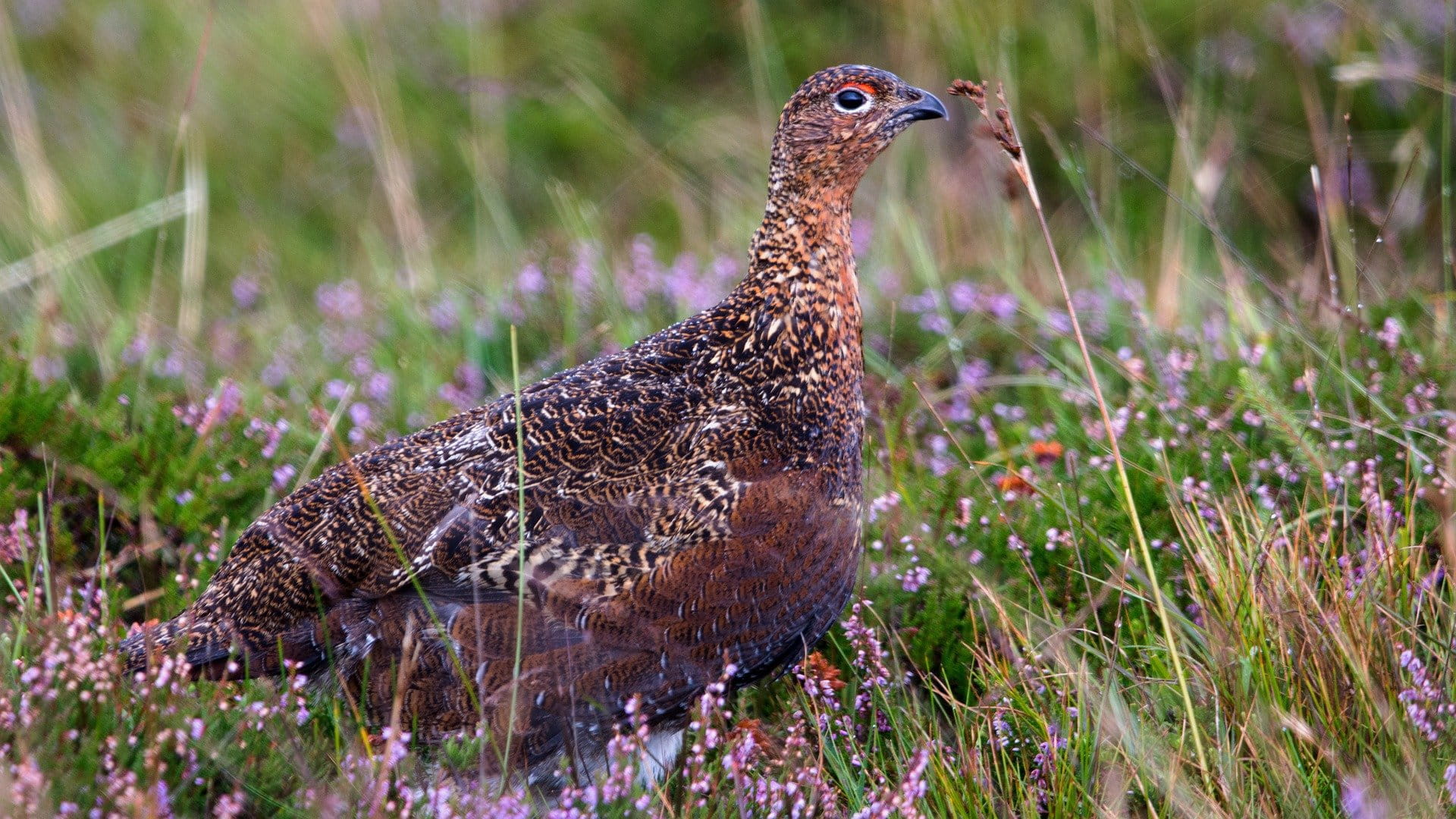
Image by dpexcel from Pixabay
Background to the 2024 Act
Driven grouse shooting has been a controversial topic for many years, the debate on the one hand emphasising the contribution to the rural economy and role of grouse moor management practices in sustainable land management, and on the other, the environmental impact of some grouse moor management practices and reported links to illegal killing of birds of prey to prevent these from predating grouse.
As a result of these issues, the Scottish Government set up an independent group in 2017 to
examine the environmental impact of grouse moor management practices such as muirburn, the use of medicated grit and mountain hare culls and advise on the option of licensing grouse shooting businesses.
In doing so it will look at what can be done to balance the Government's commitment to tackling wildlife crime with grouse moor management practices, so that this form of management continues to contribute to our rural economy, while being sustainable and compliant with the law.
As part of the review, research on the Socioeconomic and Biodiversity Impacts of Driven Grouse Shooting in Scotland was commissioned from the SEFARI institutes.
The Grouse Moor Management review group delivered their report to the Scottish Government in 2019. The report made a number of recommendations, including
"that a licensing scheme be introduced for the shooting of grouse if, within five years from the Scottish Government publishing this report, there is no marked improvement in the ecological sustainability of grouse moor management, as evidenced by the populations of breeding Golden Eagles, Hen Harriers and Peregrines on or within the vicinity of grouse moors being in favourable condition", noting that "Ultimately, whether or not to license the shooting of grouse is a political decision."
"additional regulation for the land management practices of muirburn, managing Mountain Hares and the use of medicated grit. For muirburn we propose licensing; for the management of Mountain Hares we propose increased legal regulation; and for the use of medicated grit we propose a voluntary Code of Practice."
In response, the Scottish Government announced in November 2020 that licensing for grouse moors would be introduced in Session 6. In addition, the Scottish Government announced that it would introduce licensing requirements for muirburn and significantly restrict burning on peatlands.
The Scottish Government introduced the Wildlife Management and Muirburn (Scotland) Bill in March 2023. SPICe produced a briefing with more detailed background explanation on these issues to accompany the Bill as introduced.
Protection for mountain hare was increased in 2021 through an amendment to the Wildlife and Countryside Act 1981 (as amended by the Animals and Wildlife (Penalties, Protections and Powers) Act 2020). Since March 2021, it has been an offence to intentionally kill, injure or take mountain hares at any time unless a licence is obtained from NatureScot.
Guidance on the use of medicated grit was integrated into the Code of Practice for Grouse Moor Management (as required by the 2024 Act).
As set out above, a new muirburn licensing scheme is expected to be in effect from the start of the 2026 season on 15 September 2026.
To date, a licence has only been required for muirburn outwith the muirburn season in the autumn and winter. The new provisions require a licence for making muirburn at any time of year, with stricter conditions for muirburn on peatlands.
Deer management
There are four species of wild deer established in Scotland: two native species, roe deer and red deer; and two introduced species, sika and fallow deer.
Deer are a common resource, they belong to no-one until they are killed or captured, and the right to hunt deer usually belongs to the landowner or tenant.1 Deer are a culturally important species in Scotland, and tourism associated with deer stalking (a type of hunting) and deer watching, as well as the sale of venison, are sources of income in the rural economy.2
Overall deer numbers have increased over the last 50 years1, and in the absence of natural predators deer numbers are managed by shooting and fencing (in or out) to protect other public interests such as conservation, forestry and road safety. Deer can cause extensive damage and conflict with land-management interests by overgrazing and trampling vulnerable habitats and preventing young trees from growing. This can impact Scotland's climate change and biodiversity goals1.
It is difficult to accurately determine deer populations. An estimate of 750,000 deer from all four species has been frequently cited, though, more recently, it has been suggested that the overall population is approaching one million deer (this is compared to 1.8 million cattle, and 6.6 million sheep). Red deer make up the largest group1. However, whilst national estimates are considered valuable, experts recommend focusing on the impacts of deer at different scales, rather than absolute numbers1.
Deer Management Groups have been formed in the uplands over several decades to coordinate deer management (primarily red deer) between neighbouring landowners. Since the 1960s, these groups have formed voluntarily, encouraged by the deer authority of the time, and since 1992, they have been represented collectively by the Association of Deer Management Groups. The purpose of the groups is to collaborate across a local area, and they are encouraged to produce deer management plans.
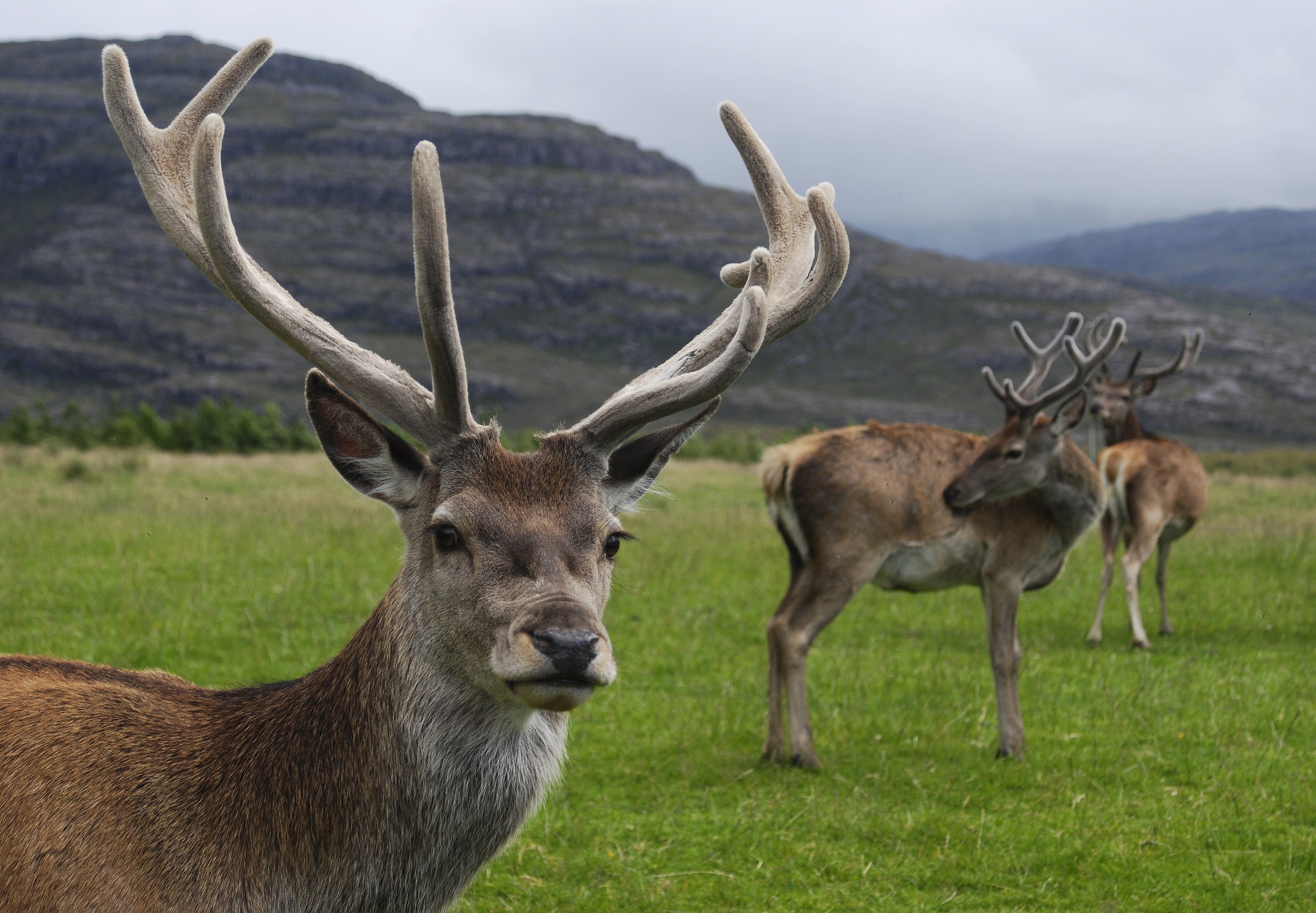
The main piece of legislation governing deer management is the Deer (Scotland) Act 1996 ('the 1996 Act'). There were significant changes to this legislation in Session 6 as a result of the Natural Environment (Scotland) Act 2026 ('the 2026 Act').
Under the 1996 Act, NatureScot (formerly known as Scottish Natural Heritage; note that this is still their statutory name which appears in legislation), the public body responsible for nature in Scotland, is responsible for securing the conservation, welfare, and sustainable management of deer in Scotland. The 1996 Act also sets close seasons (a period in each year during which no person can kill deer) for female deer of each species. Since October 2023, there are no close seasons for male deer of any species.
Where deer are having a significant impact, NatureScot has a variety of powers, although voluntary action by deer managers is the preferred approach. Under Section 6A, NatureScot can require landowners or occupiers to submit deer management plans on a fixed timescale. Section 7 of the Act provides a mechanism for NatureScot to negotiate a (voluntary) control agreement with landowners, which would aim to reduce the impact of deer. Section 8 of the Act also provides backstop powers for NatureScot to implement a (compulsory) control scheme. If the terms of a control scheme are not met, NatureScot may intervene and recover costs. Section 8 powers had not been used until 2024, when a control scheme was approved for an estate in Sutherland.
The 2026 Act strengthened NatureScot's role in protecting the environment against damage from deer. It made changes to the grounds for intervention, including introducing a new ground for NatureScot to exercise their powers for the purpose of nature restoration. This allows (but does not require) NatureScot to intervene if deer or management actions (or lack of action) are likely to hinder projects aimed at a relevant target, strategy or plan relating to the environment, climate change, or biodiversity restoration. This includes projects such as woodland creation, peatland restoration, or other environmental improvement efforts that are part of public strategies or statutory targets. It is necessary to show a connection to a statutory duty or a public plan or strategy. This means that nature restoration is one of the grounds for NatureScot to intervene under Section 6A, establishing Section 7 control agreements or Section 8 control schemes.
The 2026 Act made some changes to the process around creating Section 7 control agreements and Section 8 control schemes, and introduced a right to request action by NatureScot where deer are not being managed, and includes a new schedule setting out procedures for control agreements. The 2026 Act also registers control schemes against the land title, meaning that the scheme continues to apply to future owners or occupiers, and clarifies that control schemes can target individual landowners or occupiers within a broader control area, particularly when some are not engaging with the management plan. NatureScot can take action against non-compliant individuals and recover costs. NatureScot may also require information to be provided, and enter land for the purpose of gathering information where this has not been provided.
The 2026 Act also requires NatureScot to update and review the Code of Practice on deer management (see below for more information). This revision should include the circumstances where it may intervene in deer management or control. NatureScot must consult those with an interest in, and/or practical experience of deer management when reviewing the Code, and report on the consultation. The Code must then be laid in Parliament.
Furthermore, the 2026 Act also expanded the rights of occupiers and grazings committees to kill or take deer to prevent damage, or where they are causing damage under specific circumstances, and removed the requirement to have a venison dealer's licence for the sale of venison, recognising that venison is already subject to the same food standards legislation as other meat and wild game.
Finally, the 2026 Act created a requirement to produce a national deer management and venison plan within 5 years of the section coming into force, and includes a requirement to review the operation of the modifications to deer management provisions made by the 2026 Act within 10 years of that section coming into force. Neither deadline will fall within Session 7 of the Scottish Parliament. At the time of publishing no provisions on deer management in the 2026 Act are yet in force (though some are due to come into force in October 2026).
Background to the 2026 Act
Changes to deer management policy and legislation have been made in successive stages over the past few decades, with the aim of securing sustainable deer management which limits deer impacts:
Changes to governance arrangements took place in the 1990s and 2000s, which ultimately resulted in NatureScot assuming responsibility for deer management in 2010.
Part 3 of the Wildlife and Natural Environment (Scotland) Act 2011 made amendments to the 1996 Act. It required NatureScot to draw up the Code of Practice on sustainable deer management, and provides powers for NatureScot to introduce a competence test for deer hunters by regulation, if the voluntary approach to securing this does not work.
A Code of Practice on Deer Management was published in 2012.
A revised deer strategy, Scotland’s Wild Deer: A National Approach, was published in April 2015, following a review of the previous 2008 strategy.
The Land Reform (Scotland) Act 2016 made further changes, including removing the exemption from non-domestic rates for shooting estates, requiring NatureScot to review the Code of Practice on Deer Management by 2019, and providing NatureScot with a power to require a deer management plan to be produced if certain conditions are met.
Despite these changes, progress towards achieving sustainable deer management has been raised by successive Parliamentary committees.
Following a Rural Affairs, Climate and Environment (RACCE) Committee inquiry on deer management in Session 4, the Scottish Government asked NatureScot to carry out a review of the effectiveness of deer management in Scotland. Deer Management in Scotland: Report to the Scottish Government from NatureScot was published in October 2016.
A further inquiry by the Session 5 Environment, Climate Change and Land Reform Committee (the successor to the RACCE Committee) in 2017 assessed the findings of NatureScot’s 2016 report. Expressing continuing concerns about existing deer management, the Committee concluded their inquiry by recommending that an independent working group be set up.
As a result, the Scottish Government established the Deer Working Group in 2017. It was asked to review the existing arrangements for the management of wild deer in Scotland, and to make recommendations for changes to ensure their sustainable management. An extensive final report, The Management of wild deer in Scotland: Deer Working Group report was published in 2020.
The report stated that:
despite the [existing deer] culls, the evidence discussed in Part Three [on damage to public interests] shows that wild deer are continuing to have damaging impacts on the environment, forestry, agriculture and other land uses. Amongst other damaging impacts, the number of recorded deer vehicle collisions is increasing with consequent human injuries and other costs. Against that background, as SNH [Scottish Natural Heritage, now NatureScot] has pointed out, the evidence indicates that reducing deer densities over much of Scotland would reduce many of their damaging impacts and costs, while still allowing the benefits derived from wild deer to be largely maintained.
The report includes recommendations for both statutory and non-statutory interventions across areas such as deer welfare, emergency control measures and the regulatory system.
In response to recommendations, the Scottish Government said in March 2021 that "now is the time to step-up our deer management work", stating:
The twin climate and biodiversity crises require a much greater urgency to our efforts to ensure sustainable deer management and we must recognise that more can and must be done to better realise our ambitious targets on vital issues such as forestry regeneration, woodland creation, peatland restoration and habitat improvement.
The Government accepted most of the recommendations in the report, with the caveat that many are detailed and will require further careful consideration or consultation.
In 2024, the Scottish Government published a consultation on 'Managing deer for climate and nature'. The consultation paper said "the purpose of our proposals is to modernise the legislation which governs deer management in Scotland and ensure it is fit for purpose in the context of the biodiversity and climate crises". An analysis of the responses was published.
The Policy Memorandum to the 2026 Act sets out which of the Deer Working Group's recommendations were taken forward, and provides some commentary on the recommendations which were not taken forward in the legislation.
The Scottish Biodiversity Delivery Plan 2024-2030 includes an action to:
Attain deer cull at level at which habitats and ecosystems can recover and regenerate, and where deer densities are maintained at sustainable levels. This is done by increasing the national cull by 25-30% (from 200,000 – 250,000) sustained over several years; achieving densities of 5-8 deer per km² in each of the DMG’s in the Cairngorms National Park; and, low deer densities of around 2 deer per km² where woodland regeneration is a priority and required to achieve UK Forest Standard.
Land use, climate change and nature recovery
Land use and land management are key areas for both reducing greenhouse gas emissions to mitigate climate change, and to halt and reverse biodiversity decline and restore nature.
Climate change and land use
In relation to climate change, different land uses contribute to greenhouse gas emissions, or contribute to removing greenhouse gases from the atmosphere.
Scottish greenhouse gas statistics are published in June every year, and cover the year two years prior (e.g. statistics published in 2026 detail emissions in 2024). Agriculture, and 'land use, land use change and forestry' (or 'LULUCF'), which covers emissions from land apart from agriculture, such as carbon removals from forestry and emissions from peatlands, are the two emissions categories of most relevance for land use sectors.
In 2024 (published in June 2026), agriculture accounted for around 19% of greenhouse gas emissions from Scotland. The largest sources of emissions within the agricultural sectors are (from research which uses 2018 figures):
‘Enteric methane’ (i.e. digestive emissions from grazing animals), which accounts for just under half of Scottish agricultural emissions,
manure management (approximately 14%),
emissions from mobile machinery (e.g. tractors, approx 10%), and
emissions from inorganic fertilisers (approx 8%).
Land use, land use change and forestry accounted for 0.5% of Scottish greenhouse gas emissions, though this masks significant emissions from degraded peatlands which release greenhouse gases into the atmosphere (peatlands emitted more than Scotland's industry sector in 2023, see the section on peatland restoration), as well as significant removals from trees and woodlands, which absorb carbon dioxide from the atmosphere.
The Climate Change (Scotland) Act 2009, as amended, is the main piece of legislation governing Scotland's climate change obligations. It sets a duty to reach net zero (where emissions are equal to removals, meaning that Scotland's 'net' emissions are zero) by 2045. Since 2024 when additional legislation was enacted, five-year 'carbon budgets' are set, setting a maximum amount of emissions which may be emitted for that five-year period. Plans for how carbon budgets are to be met, which involves reducing emissions in each budget period, are set out in a five-yearly climate change plan. The most recent climate change plan (CCP) was published in March 2026 after extensive parliamentary scrutiny at the end of Session 6.
The Climate Change Plan 2026-2040 (CCP) makes commitments in relation to agriculture, forestry, and peatland restoration.
For agriculture, the CCP sets out policies and proposals to reduce emissions from soils, agricultural machinery and livestock, among other things. This focuses in large part on reforming post-EU CAP agricultural policy (discussed in more detail in the section on agriculture policy reform). The CCP states that "the primary driver of emissions reductions from the baseline in agriculture will come from the Agricultural Reform Programme which is being designed to incentivise the uptake of climate change mitigation measures." As a new system of agricultural support is being designed, one area of scrutiny in Session 7 is likely to be whether it supports reduced emissions from agriculture.
The aim is to ensure that a reformed support for agriculture "will deliver high quality food production, climate mitigation and adaptation, and nature restoration"1. Several policies are related to this, such as new requirements for farmers to protect peatlands and wetlands, and new requirements to drive efficiency in beef production as part of the Scottish Suckler Beef Support Scheme. A SPICe blog (published in December 2025) explores the agriculture policies and proposals of the draft CCP in more detail (the CCP has since been finalised with some changes - including outlining emissions reductions expected from different agricultural mitigation measures - but the key policies and proposals for agriculture remain the same).
For land use, land use change and forestry the CCP focuses on reducing emissions from degraded peatland through a funded programme of peatland restoration, and setting targets for new woodland creation (also supported by grant funding). Peatland restoration and woodland creation are explored in more detail in later sections.
Biodiversity and land use
Biodiversityi is undergoing unprecedented decline globally. An international panel of experts underscored in 2019 that biodiversity decline threatens people's basic needs at a similar level to climate change. A 'National security assessment on global ecosystems' carried out by the UK Government and published in January 2026 found that "global ecosystem degradation and collapse threaten UK national security and prosperity", for example, in relation to food security.
Land provides habitat for a diverse range of species and supports ecosystems and ecosystem services. Land use and management can affect those habitats and ecosystem services, and is a key pressure on biodiversity in Scotland and globally. Conversely, sensitive land use and management can also support nature and biodiversity, and help to halt and reverse biodiversity loss.
During session 6, there were significant high-level policy developments at both a global and Scottish level which have set commitments around addressing the 'nature crisis'.
At UN-level, a new Global Biodiversity Framework (GBF) was adopted in 2022 at COP15 of the UN Convention on Biological Diversity. Parties - including the UK - agreed an overarching mission to halt biodiversity loss by 2030, supported by 23 individual 2030 targets, including to:
Conserve and effectively manage at least 30% of land and sea through well-connected protected areas or other area-based conservation measures ( known as ‘30 by 30’).
Restore 30% of all degraded ecosystems.
Reduce pollution, tackling pesticides, hazardous chemicals and plastics.
Reduce the global footprint of consumption and support sustainable choices.
Phase out harmful subsidies.
Integrate biodiversity into policy and planning across sectors.
Enhance biodiversity and sustainability in agriculture, aquaculture, fisheries, and forestry.
To implement the GBF, the Session 6 Scottish Government created a new strategic framework consisting of:
a Scottish Biodiversity Strategy (2024) with a vision to halt biodiversity loss by 2030 and restore nature by 2045
six-year Biodiversity Delivery Plans: the first covers 2024-2030
the Natural Environment (Scotland) Act 2026, which requires statutory nature targets to be set, with draft regulations laid within 12 months of section 1 of the Act coming into force (this section was not commenced in Session 6).
The biodiversity strategy and delivery plan include several policies and actions relating to land use and management. As in the climate change plan, the reform of agricultural support, peatland restoration and woodland creation and management are key policies which also need to deliver for biodiversity and nature restoration. Objectives set out in the Biodiversity Delivery Plan 2024-2030 which relate to land use include:
Ensure increased uptake of high diversity, nature-rich, high-soil carbon, low-intensity farming methods while sustaining high-quality food production,
Introduce an agricultural support framework which delivers for nature restoration and biodiversity alongside climate and food production outcomes.
Ensure that forests and woodlands deliver increased biodiversity and habitat connectivity alongside timber and carbon outcomes.
In relation to the target to conserve and effectively manage at least 30% of land, at the moment, around 18% of terrestrial Scotland is under some form of conservation designation (although not all of these areas are in good condition), meaning there is a need to protect approximately 990,000 ha more land. NatureScot has published a framework for getting to 30 by 30 which, on land, includes piloting a new form of conservation area with land managers called 'Nature30' sites, as well as working to boost the condition of existing protected areas. Nature30 sites can only be recognised where there is the consent of the landowner or manager.
Furthermore, as a result of the Natural Environment (Scotland) Act 2026, passed at the end of Session 6, Scottish Ministers must set legally binding nature recovery targets, with draft regulations laid within 12 months of section 1 of the Act coming into force (this section has not yet been commenced). Before making regulations to set targets, Scottish Ministers must seek and have regard to scientific advice, and consult anyone who might be interested in or affected by the regulations. Scottish Ministers must set at least one target in relation to each of the following, alongside any other matter they consider appropriate:
the condition or extent of any habitat,
the status of any species (including in particular those which are or may become threatened),
the environmental conditions for nature regeneration.
As such, nature restoration and nature recovery are increasingly expected to be a driver for land use change and may influence how land is used and managed in the future. Broader and more detailed information on biodiversity and nature can be found in the SPICe Environment Subject Profile.
Managing land for nature and climate
Managing land and making land use decisions to reduce emissions, sequester carbon, and support biodiversity is increasingly common.
As the weight of evidence around climate change and biodiversity loss have become clearer, land uses have diversified to include:
Land use for carbon storage to mitigate climate change, for example in peatlands, coastal habitats and forests;
Land use for climate change adaptation, for example for flood prevention; and
Land use to support biodiversity, such as habitat creation.
All of these land uses can - and often do - overlap with each other, and with other land uses such as agriculture and commercial forestry.
In Scotland, the nature-based solutions that are most often discussed are:
forestry, including both planting new forests and managing existing ones to ensure long-term carbon storage; and
peatland restoration, where management restores degraded peatlands which emit greenhouse cases into the atmosphere, to healthy peatlands which store greenhouse gases.
Managing land for nature and climate can also take other forms, such as restoring coastal habitats such as saltmarsh, good soil management on agricultural land, planting hedgerows and creating wildlife habitat on farmland, planting trees in urban environments, and managing freshwater environments to support carbon storage, climate change adaptation, biodiversity and managing diffuse pollution. Nature-based solutions can also take other forms, for example, natural flood management approaches.
Peatland restoration
Restoring Scotland's peatlands is a key pillar of the Scottish Government's climate change plans.
More than 20% of Scotland is covered by peat and the majority of the UK’s peatlands are found in Scotland.
Peatlands can provide an important habitat for wildlife and much of Scotland’s drinking water filters through peatland catchments making them important for drinking water. Peatlands also hold most of Scotland’s carbon store, estimated at the equivalent of 140 years’ worth of Scotland’s total annual greenhouse gas emissions. However, NatureScot estimates that 80% of Scotland's peatlands are damaged, and in a damaged state, peatlands emit, rather than store, greenhouse gases. Peatlands are a significant source of emissions in Scotland, responsible for emitting 6.16 MtCO2ei in 20231. For comparison, Scotland's industry sector emitted 5.1 MtCO2e, and the agriculture sector emitted 7.5 MtCO2e in 2023. 2.
Peatland restoration involves a variety of interventions such as blocking drains and removing trees to raise the water table, returning the land to a wetter state and encourage peat-forming vegetation to grow. Restoring peatlands aims to prevent the land from emitting greenhouse gases, reducing Scotland's emissions.
The Scottish Government's most recent Climate Change Plan (CCP) commits to
increase peatland restoration by 10% each year to 2030 and maintain levels after that leading to the restoration of more than 400,000 hectares by 2040
The Scottish Government’s Peatland Action Five Year Partnership Plan, published in December 2025, clarifies that the baseline for the 10% increase is 12,000ha to be restored in 2025/26.
Much of Scotland's peatland restoration is delivered using Peatland ACTION funding, which is administered by NatureScot, the public body responsible for Scotland's nature. According to the CCP, since 1990, 90,000 hectares (ha) of peatland has been restored through Peatland ACTION.
Peatland restoration targets have slipped for some years. The previous target, set in the 2018 Climate Change Plan, was to restore 20,000 hectares of peatlands per year from 2019, but this has never been met. Nevertheless, this is an area where significant progress has been made in recent years. 14,860ha were restored in 2024/25, 42% more than in 2023-24. Over the last four years, the number of hectares restored per year has roughly tripled. In 2025, 15,448 hectares were restored.
The 2024-2030 Biodiversity Delivery Plan includes a commitment to, by the end of March 2027, "Develop a national peatland monitoring framework that incorporates on-site and remotely sensed assessments of biodiversity indicators, climate resilience and associated functions within the wider landscape, hydrological and ecological network contexts."
Woodland creation
Planting trees absorbs carbon from the atmosphere and stores it in the tree for as long as it is standing (or longer, depending on the end use of the timber). Forestry planting is a major pillar of the Scottish Government's climate change strategy, with a target to increase woodland creation to 18,000 hectares per year by 2029/30. Creating, protecting, managing and restoring Scotland's woodlands is also part of delivering Scotland's biodiversity strategy.
Woodland creation is another area where long-standing targets have not been met. Previous targets set out in the Climate Change Plan update in 2020 aimed for 18,000ha of woodland creation per year by 2024/25. Over the last few years, woodland creation has fluctuated between just over 8000ha (2022/23) and 15,000ha (2023/24) in a single year. In 2025/26, 7,220ha of new woodland were created, including 4,240ha of native woodland.
Woodland creation (including natural regeneration) is supported by the Forestry Grants Scheme. This scheme's budget has fluctuated in recent years. Around £77m was available for woodland grants in 2023/24; this dropped to £45m in 2024/25. This has since increased somewhat again, to £53m in 2025/26, and to £58.6m in 2026/27.
What environmental benefits will be provided by a new or existing woodland depends, among other things, on the location of the woodland, how it is managed, the soil types a woodland is planted on (e.g. whether the soil has a high carbon content which could be affected by tree planting; it is no longer permitted to plant trees on peatlands, for example), the species present or planted, the age and diversity of the woodland, and the habitats and landscapes that any new woodlands replace.
The Scottish Biodiversity Strategy Delivery Plan 2024-2030 has a priority action to " Ensure that forests and woodlands deliver increased biodiversity and habitat connectivity alongside timber and carbon outcomes." The document states:
We will continue our programme of woodland creation as set in the Scottish Government Climate Change Plans currently 18,000 hectares of new woodland annually (4,000 hectares of native woodland). In doing so we will increase biodiversity across all woodlands initially by developing a tool to allow Woodland Ecological Condition (WEC) assessments and encouraging more owners to actively management their woodland to improve resilience
Adapting land and land use to climate change
Climate change is impacting land uses such as agriculture and forestry, and affecting how land is used and managed to adapt to these changes.
The UK Climate Change Committee (CCC) produces an independent risk assessment of UK climate risk. The most recent assessment, supported by the Met Office and known as CCRA4, was published in May 2026, alongside several related research reports. Based on CCC advice, the UK Government then produces the UK Climate Change Risk Assessment (CCRA), published every five years (the most recent one was published in 2022). Based on these publications, the Scottish Government produces a Scottish National Adaptation Plan (SNAP) every five years, with the most recent one covering the period 2024-2029.
Climate change impacts Scottish, UK and global agriculture. In Scotland, abstraction licenses (licenses to draw water from rivers) have been suspended during several recent summers due to prolonged dry conditions. UK-wide, CCRA4 highlights that, “under 2⁰C of global warming, which is currently expected around 2050, the UK’s climate would look significantly different from today”. This means that, for example “extreme agricultural drought, where the ground becomes so dry that plants struggle to survive, would become three times more likely than in the late 20th century”. The report also notes that “Climate change impacts overseas can act as 'imported' risks for the UK. For example, the UK is vulnerable through food supply systems, as around 40% of food consumed domestically is imported – around 18% of UK fruit and vegetables are produced in regions particularly vulnerable to climate change.”
Two of the CCRA’s eight priority risk areas are in relation to agriculture. The report notes (see report for footnotes):
“Risks to the viability of farming: farmers are already being impacted by the effects of flooding, heat, and drought, often in consecutive seasons and at unprecedented severity. For example, yields in the UK were over 10% lower than the 10-year average for crops like wheat and oats due to the hot and dry spring and summer in 2025. By 2050, under 2°C of global warming level, the amount of high-quality farmland is projected to drop from an average of around 40% of land in England and Wales (between 1961–1990) to just over 10% by 2050. In the worst years, this disruption is likely to make some farms unviable.
Risks of food insecurity and inflation: roughly 40% of the food we eat is imported and international climate impacts can be more important for food prices in the UK than domestic ones. Foods hit by extreme weather are already rising in price and contributing to recent inflationary pressures. Extreme heat in summer 2022 caused food prices in Europe to increase by 0.7 percentage points. By 2050, under 2°C of global warming, simultaneous crop failures in multiple major producer regions could lead to increased food prices, hitting those on low incomes the hardest.”
Chapter 13 of CCRA4 is focussed on land. The CCC recommends that the UK adopt a target in relation to domestic food production, where "from now through to 2050, domestic food production as a share of food consumed should be sustainably maintained at 60% at least" The CCC notes that "achieving this will ensure the UK meets food production targets (while maintaining per capita consumption levels) even under climate change".
In relation to forestry, the CCC notes that
"Climate change will impact UK woodland and forestry and will require an increase in resilient practices to support the health of newly planted trees and maintain timber production. This means planting will need to include species that will thrive under expected climate conditions. There needs to be a diversity of species to avoid risks that arise from monocultures such as rapid spread of tree pests or diseases, or the spread of wildfire from more flammable species such as pine."
CCRA4 proposes a target that "by 2030, all trees planted should be suitable for a future climate, and no more than 65% of an area of planting should be covered by a single species." The CCC notes in relation to this target that "trees that are suitable for a future climate will vary depending on location in the UK, and local site conditions", and that guidance from the UK Forestry Standard states that no more than 65% of the area on one site should be comprised of a single species.
The CCRA4 sets out priority adaptation actions to achieve climate change adaptation objectives for land in section 13.2.1. The document highlights several important actions for climate change adaptation that are relevant for all land-use types. This includes increasing diversity (e.g. Of crops, tree species) and connectivity between habitats, managing invasive non-native species, pests, pathogens and diseases, and preparing for and acting to reduce the occurrence and spread of wildfires.
For farmland, actions to adapt to climate change include uptake of resilient soil and water management practices, changing the type of timing of farm practices, technology and precision farming, and an increase in on-farm biodiversity.
For the uplands, CCRA4 highlights actions to rewet blanket bog and peatlands, minimise soil erosion, and assist movement of species.
For woodlands, CCRA4 emphasises the importance of species and site selection for future climate, natural regeneration of woodland, and resilient woodland practices regarding rotations, actions to reduce losses during drought or storms, and reducing the spread of wildfires.
Wildfires
A risk that has been moving up the policy agenda in recent years is wildfires. The last few years have seen severe wildfires in rural Scotland, notably:
The fires at Carrbridge and Dava in June/July 2025, which affected almost 12,000ha and were reported as the “biggest in Scotland’s history”.
The peatland wildfire in the Flow Country, Caithness and Sutherland, in 2019.
Most recently, the fire near Aviemore, in the Cairngorms National Park, in July and August 2026.
Many wildfires – and most in Scotland – are started by human activities, such as unattended barbecues or campfires, discarded glass bottles (acting like a magnifying glass and igniting dry materials), controlled burns gone wrong, arson, and cigarette disposal.
The James Hutton Institute has been undertaking work to assess and plan for climate risks such as wildfires as part of the Scottish Government’s strategic research programme. This includes a fire danger assessment of Scottish habitat types. The report, published in 2023, described the types of fires and the conditions that are most prevalent in Scotland:
“Wildfire occurrence is likely to be determined by a combination of environmental and climatic influences i.e., temperature and amount of rainfall, but are most often caused by deliberate or accidental human influences (Arnell et al, 2021). In addition, the distribution of wildfires in Scotland is believed to be non-random in both time and space; in particular, fuel hazard in spring, with abundant dead herbaceous and aerial shrub fuels, is quite different from that in summer where most above-ground fuel is alive, while grass fuels are more abundant in the north-west of Scotland (Davies and Legg, 2016). Severe wildfire is considered an intermittent hazard as the most serious incidents are concentrated in a few dry years. Wildfire incidents are most prevalent in the spring because of the availability of dead and dry fine vegetation as fuel, but widespread wildfires have also occurred in some hot, dry summers (Perry et al., 2022).
“According to Gazzard et al. (2016), most small wildfires in the UK occur at the rural-urban interface or on arable land, as this is where fires are most likely to be ignited by human activity; however, many of the larger wildfires occur in more remote areas, especially moorland, forests, and peatland bog. Drier moorland community types appear to be at greater risk of severe burns than blanket bog communities (Grau-Andrés et al., 2018). Wildfires are a common occurrence in grass and shrub dominated moorland vegetation and in gorse (Ulex europaeus) stands close to urban areas. Wildfires within forests in Scotland are much less common, though they do occur during exceptional weather conditions and in young plantations of conifers, especially where these are adjacent to heather or grass-dominated vegetation, or where heather has re-invaded older stands after thinning. 1
Climate change is playing a major role in the likelihood of wildfires. A recent study (September 2025) on UK heatwaves and temperate wildfire risk published in Nature found that “climate change is resulting in more extreme fire weather during major heatwaves” and that “Future intense summer heatwaves can therefore be expected to align the most severe conditions for fire ignition, spread and impact in traditionally non-fire prone regions, producing humid temperate landscapes susceptible to extreme wildfire events.”2
Central to Scottish planning and preparedness for wildfires is the Scottish Wildfire Forum. The forum was established in 2004. Members of the forum include the Scottish Fire and Rescue Service, Firebreak Services, the Cairngorms National Park Authority, Forestry and Land Scotland, local authorities, The Heather Trust, NatureScot, the Scottish Gamekeepers Association, NFUS, SLE, the Scottish Crofting Federation, and others.
Wildfire planning and response is coordinated by the Scottish Fire and Rescue Service (SFRS). The SFRS produced its wildfire strategy in 2023. It notes that“the location of SFRS wildfire resources, equipment and PPE, remains relatively unchanged since the formation of the national service in 2013. The methods used to deal with wildfires, although effective, are resource intensive and rely upon tactics that have been in place for decades”.
The new strategy “considers the increased risk of wildfire and changing climate in Scotland; the latest developments in wildfire management, training and operational procedures; and the advances in technology that have been made in PPE and equipment.”3
The strategy places emphasis on partnership working, stating:
“We will continue to work closely with the land management sector to ensure we have an effective and tailored approach to education and prevention, including a common understanding of the appropriate use of Muirburn and prescribed burning, and to further utilise the expertise, influence and networks of various agencies” 3
It sets out plans to:
“Work with key partners to develop a multi-agency prevention agenda and influence the introduction of key policies in the future”
“Implement a tiered classification of fire stations for wildfire response, including the roll-out of new specialist vehicles, equipment and PPE”
“Review the distribution of Wildfire Danger Assessments and measure how effective they are in preventing wildfires”.
In terms of recent Scottish Government activity, it hosted a ‘wildfire summit’ in October 2025 in response to the recent large wildfires. Reporting back from the summit to the Parliament, the Minister highlighted the following conclusions and actions –
“Strong support for a wildfire warning system”,
Looking to develop “Scotland-specific fire risk models”,
“Evaluating the unintended consequences of alternative land management practices that may increase fire risk to determine how those policies can better align to Scotland’s increasing wildfire risk”,
Strengthening preparedness, with a “gap in multi-agency training…identified”. There was a commitment to “work with the Scottish multi-agency resilience training and exercising unit to develop a national table-top exercise and to improve preparedness in a truly collaborative way across all agencies”,
Recent investment from the SFRS in new equipment and PPE with further investment being considered,
Exploring a “mountain rescue-style voluntary response model, with trained wildfire wardens to support local efforts”,
Enhancing co-ordination,
“Reviewing helicopter access protocols, including through exploration of the potential for a central budget, contractual arrangements and a trump card approach to ensure that public sector needs are prioritised.”
Need for improved communications, "interoperability and improved command and control arrangements across large-scale incidents”,
Expanding the Community Asset Register and overcoming barriers to adding new assets and volunteers,
Overcoming barriers relating to insurance coverage for wildfire response, including clarifying liability and ensuring responders are not penalised for taking action,
Commitment to properly resourcing emergency services and land managers, including an increase to the SFRS budget for 2026.
The Scottish Government published a strategic action plan for wildfires in March 2026 in partnership with SFRS, which sets out actions for preventing, preparing for and responding to wildfires. The key actions under each heading below are replicated from the strategy:
Prevention:
Strengthening public awareness of wildfire risks and responsible outdoor behaviour and access;
Enhancing the robustness and effectiveness of wildfire danger assessments and early warning systems through improved data, research and scientific evidence;
Implementing new fire prevention byelaws, including those coming into force in the Cairngorms National Park in April 2026, and enabling the potential future use of similar measures by local authorities;
Promoting land management practices — such the use of firebreaks and regulated muirburn — that reduce fuel loads and help prevent the spread of wildfire; and
Actively encouraging landholdings of all sizes to consider wildfire mitigation. New community engagement obligations introduced by the Land Reform (Scotland) Act 2025 will improve transparency around land management practices, including in relation to the Scottish Outdoor Access Code.
Preparedness
Investment by SFRS in new wildfire units, vehicles, equipment and specialist capabilities;
Strengthening multi‑agency training and exercising, including national table‑top exercises;
Enhancing the Community Asset Register and reviewing insurance arrangements for land managers and volunteers;
Reviewing helicopter access protocols and identifying opportunities to strengthen aerial support during peak wildfire risk periods.
Response
Developing a multi‑agency ‘Concept of Operations’ (CONOPS) ahead of the 2026 wildfire season;
Enhancing local and regional Incident Response Plans to protect responders, communities and the natural environment; and
Exploring a mountain rescue‑style approach to trained wildfire volunteers, with a potential trial in Cairngorms National Park.
The Cairngorms National Park Authority (CNPA) published the UK’s first wildfire management plan in June 2025. The plan covers reducing the risk of wildfires starting, improving the effectiveness of firefighting, and building wildfire resilience in the landscape, including land managers assessing and planning for wildfire risk, recommending that the Scottish Wildfire Forum develop a more robust system for developing Wildfire Danger Rating Assessments by spring 2026, and for larger landholdings to have a stock of PPE and firefighting equipment with staff trained in firefighting. The national park also introduced a byelaw banning fires and barbecues between 1 April and 30 September each year.
Scotland's Land Use Strategy
As this briefing illustrates, land is required for a wide variety of things, including for agriculture, forestry, and nature as well as housing, transport, and other infrastructure such as renewable energy and public and private buildings. Increasingly, policymakers have looked to a more holistic – or strategic – way of looking at land use in Scotland. This recognises that land is finite, that maximizing the number of benefits that a given piece of land provides may be necessary to deliver public policy objectives for the economy, environment and society, and that, sometimes, looking at a landscape scale is necessary to achieve those goals.
This has been driven in large part by discussions around climate change. The Climate Change (Scotland) Act 2009 introduced a duty on Scottish Ministers to produce a Land Use Strategy every five years. The first strategy was published in 2011, and updates were published in 2016 and 2021. The Land Use Strategy that is currently in force was published in March 2026. The 2026 Land Use Strategy follows a consultation with stakeholders which highlighted the following 'key objective areas':
Mapping and data: e.g. working with stakeholders to better understand competing priorities and spatial trade-offs,
Finance, policy and incentives: e.g. working with stakeholders to explore factors that influence land management decisions.
Communication, skills and education: working with stakeholders to communicate multiple demands on land use and support skills and education.
Regional/local approaches to delivery: working with stakeholders at regional and catchment scales.
The strategy includes an 'action point' to, within 12 months:
"publish a delivery plan based on the objective areas identified through consultation [set out above]" and
"publish a refreshed set of land use principles to support the embedding of integrated and resilient land use across all relevant area".
It also includes an action point to develop a monitoring and evaluation framework for integrated and resilient land use.
Following the passage of the Climate Change (Emissions Reductions Targets) (Scotland) Act 2019, Scottish Ministers are now required to report to the Scottish Parliament on progress towards implementing the objectives, proposals and policies of the land use strategy, at the end of each financial year.
In addition, the Scottish Government and civil society organisations have looked to regional approaches to strategic land use. Following two pilots in Aberdeenshire and the Borders between 2013 and 2015, the Scottish Government included a policy in the 2016 Land Use Strategy to “encourage the establishment of regional land use partnerships”. The aim of the partnerships is to bring together local people, land managers and other stakeholders to better integrate land uses and produce regional land use frameworks. The aim of the frameworks is to identify how national, regional and local priorities will be delivered.
In its advice to the Scottish Government on rolling out regional land use partnerships and frameworks, the Scottish Land Commission stated that “we propose Regional Land Use Frameworks should be indicative spatial plans which identify opportunities, choices and priorities for all land use, including forest and woodland strategies, in order to stimulate delivery and be accessible to all within a region”.
A second round of four regional land use partnership pilots - Cairngorms, Loch Lomond & the Trossachs, Northwest Highlands and South of Scotland - was carried out between 2021 and 2024. The pilots ended in 2024, however, then Cabinet Secretary for Rural Affairs, Land Reform and Islands, Mairi Gougeon MSP, "decided to transition the RLUPs from pilot programme to a formal initiative"1. The 2026-2040 Climate Change Plan sets out a commitment to
"supporting the four successful Regional Land Use Partnerships to transition from pilots to Scottish Government-backed initiatives, and using the learning from these Partnerships, seek opportunities to expand land use partnership working over the longer term."2
Planning - separate but linked
The Fourth National Planning Framework (NPF4) was adopted in February 2023. This document sets out a spatial plan for Scotland and outlines priorities for planning and development and planning policies.
Given that most development requires some land, there are intersections between land use policy and planning policy. For instance, under the Planning (Scotland) Act 2019, the planning authorities are to produce a ‘forestry and woodland strategy’ setting out policies and proposals in relation to conservation, protection and expansion of woodlands.
However, most land management activities are not within the scope of planning policy - e.g. you do not need to get planning permission for planting trees (though you often need other types of permissions and consents).
Some types of development relevant to land management businesses - such as fencing, building sheds, and agriculture and forestry private ways - are within scope of the planning system, but some of these fall under 'permitted development'. Development that qualifies as permitted development does not require specific planning permission, but sometimes requires notification to the planning authority.
For more information on planning, see the recent SPICe briefing 'Planning in Scotland: An introduction'
Land use research
Scotland has a number of bodies and institutions which have a focus on rural affairs and land-based research.
The Scottish Government’s Rural & Environment Science and Analytical Services (RESAS) division commission and carry out research to inform policy development. Their research is carried out according to a strategy published every five years. The most recent strategy covering 2027-2032 was published in March 2026.
The research is carried out by six main research providers: James Hutton Institute, Scotland's Rural College, Moredun Research Institute, Royal Botanic Garden Edinburgh, Biomathematics and Statistics Scotland and Rowett Institute.
These institutes operate individually but also collectively as ‘SEFARI’ – the Scottish Environment, Food and Agriculture Research Institutes.
The RESAS research programme draws on expertise from other research institutes, and the main research providers also carry out research beyond the Scottish Government strategic programme.
Cover Image credit
Cover image: Image by Greg Montani from Pixabay
Sources
Scottish Government. (2025, October 30). Scottish Agricultural Census 2025. Retrieved from <a href="https://www.gov.scot/publications/results-from-the-scottish-agricultural-census-june-2025/" target="_blank">https://www.gov.scot/publications/results-from-the-scottish-agricultural-census-june-2025/</a> [accessed 22 May 2026]
Scottish Agricultural Organisation Society. (2026, February). Scottish Seed Potatoes - Key facts and figures. Retrieved from <a href="https://saos.coop/assets/media/files/pdfs/_Seed%20Potatoes%20-%20Key%20Facts%20and%20Figures%20Feb%202026.pdf" target="_blank">https://saos.coop/assets/media/files/pdfs/_Seed%20Potatoes%20-%20Key%20Facts%20and%20Figures%20Feb%202026.pdf</a> [accessed 12 May 2026]
SRUC. (2020, April). Alternative crop factsheet: Soft fruits. Retrieved from <a href="https://www.sruc.ac.uk/media/rmaceyvf/sac_soft-fruit-factsheet-v1-0.pdf" target="_blank">https://www.sruc.ac.uk/media/rmaceyvf/sac_soft-fruit-factsheet-v1-0.pdf</a> [accessed 12 May 2026]
Scottish Government. (2025, August 14). Organic Farming in Scotland: 2024. Retrieved from <a href="https://www.gov.scot/publications/organic-farming-in-scotland-2024/" target="_blank">https://www.gov.scot/publications/organic-farming-in-scotland-2024/</a> [accessed 12 May 2026]
Scottish Government. (2026, August 20). Organic Farming in Scotland: 2025. Retrieved from <a href="https://www.gov.scot/publications/organic-farming-in-scotland-2025/pages/organic-land-use/" target="_blank">https://www.gov.scot/publications/organic-farming-in-scotland-2025/pages/organic-land-use/</a> [accessed 24 August 2026]
Scottish Government. (2026, March 18). Scotland's Fourth Land Use Strategy: supporting evidence pack. Retrieved from <a href="https://www.gov.scot/publications/scotlands-fourth-land-use-strategy-supporting-evidence-pack/pages/4/" target="_blank">https://www.gov.scot/publications/scotlands-fourth-land-use-strategy-supporting-evidence-pack/pages/4/</a> [accessed 13 May 2026]
Office for National Statistics. (2025, April 17). Regional gross value added (balanced) by industry: all ITL regions. Retrieved from <a href="https://www.ons.gov.uk/economy/grossvalueaddedgva/datasets/nominalandrealregionalgrossvalueaddedbalancedbyindustry" target="_blank">https://www.ons.gov.uk/economy/grossvalueaddedgva/datasets/nominalandrealregionalgrossvalueaddedbalancedbyindustry</a> [accessed 13 May 2026]
Scottish Government. (2025, December 3). Businesses in Scotland: 2025. Retrieved from <a href="https://www.gov.scot/publications/businesses-in-scotland-2025/" target="_blank">https://www.gov.scot/publications/businesses-in-scotland-2025/</a> [accessed 23 July 2026]
Scottish Government. (2026, April 21). Scottish farm business income: annual estimates 2024-2025. Retrieved from <a href="https://www.gov.scot/publications/scottish-farm-business-income-annual-estimates-2024-2025/" target="_blank">https://www.gov.scot/publications/scottish-farm-business-income-annual-estimates-2024-2025/</a> [accessed 13 May 2026]
Defra. (2026, April 8). Improving EU trade: what you need to know. Retrieved from <a href="https://defrafarming.blog.gov.uk/2026/04/08/improving-eu-trade-what-you-need-to-know/" target="_blank">https://defrafarming.blog.gov.uk/2026/04/08/improving-eu-trade-what-you-need-to-know/</a> [accessed 22 July 2026]
Land Reform Review Group. (2014, May 23). The land of Scotland and the common good: report. Retrieved from <a href="https://www.gov.scot/publications/land-reform-review-group-final-report-land-scotland-common-good/pages/71/" target="_blank">https://www.gov.scot/publications/land-reform-review-group-final-report-land-scotland-common-good/pages/71/</a> [accessed 14 May 2026]
Scottish Government. (2022, August 29). Delivering our vision for Scottish agriculture - proposals for a new Agriculture Bill: consultation. Retrieved from <a href="https://www.gov.scot/publications/delivering-vision-scottish-agriculture-proposals-new-agriculture-bill/" target="_blank">https://www.gov.scot/publications/delivering-vision-scottish-agriculture-proposals-new-agriculture-bill/</a> [accessed 14 May 2026]
Scottish Government. (2018, September). Small Landholdings Legislation: A guide to the law in Scotland. Retrieved from <a href="https://www.gov.scot/binaries/content/documents/govscot/publications/advice-and-guidance/2018/09/small-landholdings-legislation-guide-law-scotland/documents/00540732-pdf/00540732-pdf/govscot%3Adocument/00540732.pdf" target="_blank">https://www.gov.scot/binaries/content/documents/govscot/publications/advice-and-guidance/2018/09/small-landholdings-legislation-guide-law-scotland/documents/00540732-pdf/00540732-pdf/govscot%3Adocument/00540732.pdf</a> [accessed 18 May 2026]
Scottish Government. (2022, October 22). Small Landholdings Modernisation: Consultation. Retrieved from <a href="https://consult.gov.scot/agriculture-and-rural-economy/small-landholdings-modernisation/" target="_blank">https://consult.gov.scot/agriculture-and-rural-economy/small-landholdings-modernisation/</a> [accessed 18 May 2026]
Scottish Parliament. (2024, March 14). Land Reform (Scotland) Bill: Policy Memorandum. Retrieved from <a href="https://www.parliament.scot/-/media/files/legislation/bills/s6-bills/land-reform-scotland-bill/introduced/policy-memorandum-accessible.pdf" target="_blank">https://www.parliament.scot/-/media/files/legislation/bills/s6-bills/land-reform-scotland-bill/introduced/policy-memorandum-accessible.pdf</a> [accessed 18 May 2026]
Scottish Parliament. (2010, August 6). Crofting Reform (Scotland) Act 2010. Retrieved from <a href="https://www.legislation.gov.uk/asp/2010/14/contents" target="_blank">https://www.legislation.gov.uk/asp/2010/14/contents</a> [accessed 15 April 2021]
Crofting Commission. (2025, November). CROFTING COMMISSION Annual Report & Accounts 2024/25. Retrieved from <a href="https://www.crofting.scotland.gov.uk/wp-content/uploads/2025/11/Crofting-Commission-Annual-Report-2024-25.pdf" target="_blank">https://www.crofting.scotland.gov.uk/wp-content/uploads/2025/11/Crofting-Commission-Annual-Report-2024-25.pdf</a> [accessed 20 May 2026]
Scottish Crofting Federation. (2026). About Crofting. Retrieved from <a href="https://www.crofting.org/about-scf/about-crofting/#:~:text=the%20Crofting%20Acts%3F-,How%20big%20is%20a%20croft%3F,-The%20average%20size" target="_blank">https://www.crofting.org/about-scf/about-crofting/#:~:text=the%20Crofting%20Acts%3F-,How%20big%20is%20a%20croft%3F,-The%20average%20size</a> [accessed 20 May 2026]
Scottish Government. (2022, December 22). Economic conditions of crofting: survey 2019 to 2022. Retrieved from <a href="https://www.gov.scot/publications/survey-economic-conditions-crofting-2019-2022/pages/7/" target="_blank">https://www.gov.scot/publications/survey-economic-conditions-crofting-2019-2022/pages/7/</a> [accessed 20 May 2026]
Scottish Government. (2017, June 23). Women in farming and the agriculture sector: research report. Retrieved from <a href="https://www.gov.scot/publications/women-farming-agriculture-sector/" target="_blank">https://www.gov.scot/publications/women-farming-agriculture-sector/</a> [accessed 13 May 2021]
Scottish Government. (2018, April 12). Crofting update. Retrieved from <a href="https://blogs.gov.scot/rural-environment/2018/04/12/crofting-update/" target="_blank">https://blogs.gov.scot/rural-environment/2018/04/12/crofting-update/</a> [accessed 18 May 2021]
Scottish Parliament Rural Economy and Connectivity Committee. (2019, October 11). Letter from the Cabinet Secretary to the Rural Economy and Connectivity Committee. Retrieved from <a href="https://archive2021.parliament.scot/S5_Rural/RECC_20191011_Cab_Sec_RE_-_Crofting_Bill.pdf" target="_blank">https://archive2021.parliament.scot/S5_Rural/RECC_20191011_Cab_Sec_RE_-_Crofting_Bill.pdf</a> [accessed 18 May 2021]
Scottish Government. (2021, September 7). A fairer, greener Scotland Programme for Government 2021-22. Retrieved from <a href="https://www.gov.scot/binaries/content/documents/govscot/publications/strategy-plan/2021/09/fairer-greener-scotland-programme-government-2021-22/documents/fairer-greener-scotland-programme-government-2021-22/fairer-greener-scotland-programme-government-2021-22/govscot%3Adocument/fairer-greener-scotland-programme-government-2021-22.pdf" target="_blank">https://www.gov.scot/binaries/content/documents/govscot/publications/strategy-plan/2021/09/fairer-greener-scotland-programme-government-2021-22/documents/fairer-greener-scotland-programme-government-2021-22/fairer-greener-scotland-programme-government-2021-22/govscot%3Adocument/fairer-greener-scotland-programme-government-2021-22.pdf</a> [accessed 27 May 2026]
Scotland's Forestry Strategy 2019–2029. (n.d.) Retrieved from <a href="https://www.gov.scot/publications/scotlands-forestry-strategy-20192029/pages/4/" target="_blank">https://www.gov.scot/publications/scotlands-forestry-strategy-20192029/pages/4/</a> [accessed 14 August 2021]
Forest Research. (2025, September 25). Forestry Statistics 2025. Retrieved from <a href="https://www.forestresearch.gov.uk/tools-and-resources/statistics/publications/forestry-statistics/forestry-statistics-2025/" target="_blank">https://www.forestresearch.gov.uk/tools-and-resources/statistics/publications/forestry-statistics/forestry-statistics-2025/</a> [accessed 11 June 2026]
Scottish Government. (2026, March 24). Scotland's Climate Change Plan: 2026–2040. Retrieved from <a href="https://www.gov.scot/publications/scotlands-climate-change-plan-2026-2040-annexes/pages/14/#LULUCF" target="_blank">https://www.gov.scot/publications/scotlands-climate-change-plan-2026-2040-annexes/pages/14/#LULUCF</a> [accessed 11 June 2026]
Forest Research. (2025, September). Forestry Facts & Figures 2025. Retrieved from <a href="https://cdn.forestresearch.gov.uk/2025/09/FFF2025_acc.pdf" target="_blank">https://cdn.forestresearch.gov.uk/2025/09/FFF2025_acc.pdf</a> [accessed 18 June 2026]
NatureScot. (2023, February 2). A guide to understanding the Scottish Ancient Woodland Inventory (AWI). Retrieved from <a href="https://www.nature.scot/doc/guide-understanding-scottish-ancient-woodland-inventory-awi" target="_blank">https://www.nature.scot/doc/guide-understanding-scottish-ancient-woodland-inventory-awi</a> [accessed 23 June 2026]
Scottish Forestry, Pers. Comm.. (2026). (n.p.): (n.p.).
Scottish Forestry. (2026). Forestry Grant Scheme Statistics - May 2026. Retrieved from <a href="https://www.forestry.gov.scot/publications/forestry-grant-scheme-statistics-may-2026" target="_blank">https://www.forestry.gov.scot/publications/forestry-grant-scheme-statistics-may-2026</a> [accessed 22 June 2026]
Scottish Forestry. (2025, September 11). An evaluation of the Forestry Grant Scheme. Retrieved from <a href="https://www.forestry.gov.scot/publications/evaluation-forestry-grant-scheme" target="_blank">https://www.forestry.gov.scot/publications/evaluation-forestry-grant-scheme</a> [accessed 22 June 2026]
Scottish Forestry. (2025, February 23). Markets for Scottish Timber. Retrieved from <a href="https://www.forestry.gov.scot/markets-scottish-timber" target="_blank">https://www.forestry.gov.scot/markets-scottish-timber</a> [accessed 22 June 2026]
Forest Research. (2025, September 25). Forestry Statistics 2024, 3: Trade. Retrieved from <a href="https://www.forestresearch.gov.uk/tools-and-resources/statistics/publications/forestry-statistics/forestry-statistics-2024/2024-3-trade/" target="_blank">https://www.forestresearch.gov.uk/tools-and-resources/statistics/publications/forestry-statistics/forestry-statistics-2024/2024-3-trade/</a> [accessed 22 June 2026]
NatureScot. (2026, January 30). Caledonian Pinewood. Retrieved from <a href="https://www.nature.scot/landscapes-and-habitats/habitat-types/woodland-habitats/caledonian-pinewood" target="_blank">https://www.nature.scot/landscapes-and-habitats/habitat-types/woodland-habitats/caledonian-pinewood</a> [accessed 23 June 2026]
NatureScot . (2026). Annual Report and Accounts 2024-25. Retrieved from <a href="https://www.nature.scot/doc/naturescot-annual-report-and-accounts-2024-25" target="_blank">https://www.nature.scot/doc/naturescot-annual-report-and-accounts-2024-25</a> [accessed 20 August 2026]
Forest Research. (2016, March). The influence of climate change on forest insect pests in Britain. Retrieved from <a href="https://www.forestresearch.gov.uk/documents/6975/FCRN021.pdf" target="_blank">https://www.forestresearch.gov.uk/documents/6975/FCRN021.pdf</a> [accessed 15 2021]
Community Woodlands Association. (2021). Community Woodlands Association. Retrieved from <a href="https://www.communitywoods.org/" target="_blank">https://www.communitywoods.org/</a> [accessed 15 August 2021]
Grouse Moor Management Group . (2019, December 19). Grouse Moor Management Group: report. Retrieved from <a href="https://www.gov.scot/publications/grouse-moor-management-group-report-scottish-government/" target="_blank">https://www.gov.scot/publications/grouse-moor-management-group-report-scottish-government/</a> [accessed 15 August 2021]
Deer Working Group. (2020, February 5). The management of wild deer in Scotland: Deer Working Group report. Retrieved from <a href="https://www.gov.scot/publications/management-wild-deer-scotland/" target="_blank">https://www.gov.scot/publications/management-wild-deer-scotland/</a> [accessed 15 August 2021]
NatureScot. (2025, April 4). Deer Management in Scotland - Frequently Asked Questions. Retrieved from <a href="https://www.nature.scot/doc/deer-management-scotland-frequently-asked-questions-faqs" target="_blank">https://www.nature.scot/doc/deer-management-scotland-frequently-asked-questions-faqs</a> [accessed 29 June 2026]
UN Convention on Biological Diversity. (1993, December 29). Article 2. Use of terms. Retrieved from <a href="https://www.cbd.int/convention/articles/default.shtml?a=cbd-02" target="_blank">https://www.cbd.int/convention/articles/default.shtml?a=cbd-02</a> [accessed 30 June 2026]
Scottish Government. (2025, June 10). Scottish Greenhouse Gas Statistics . Retrieved from <a href="https://www.gov.scot/publications/scottish-greenhouse-gas-statistics-2023/pages/section-b--results---net-emissions-of-scottish-greenhouse-gas-emissions/" target="_blank">https://www.gov.scot/publications/scottish-greenhouse-gas-statistics-2023/pages/section-b--results---net-emissions-of-scottish-greenhouse-gas-emissions/</a> [accessed 30 June 2026]
Gagkas, Z., Rivington, M., Glendell, M., Gimona, A., & Martino, S. (2023, March). Fire danger assessment of Scottish habitat types. Deliverable 2.3b for the Project D5-2 Climate Change Impacts on Natural Capital. Retrieved from <a href="https://www.hutton.ac.uk/wp-content/uploads/2024/03/Deliverable-D2_3b-Fire-Danger-Fuels-Final-6-3-23.pdf" target="_blank">https://www.hutton.ac.uk/wp-content/uploads/2024/03/Deliverable-D2_3b-Fire-Danger-Fuels-Final-6-3-23.pdf</a> [accessed 22 July 2026]
Ivison, K., Little, K., Orpin, A., Belcher, C., Clay, G., Doerr, S., … Kettridge, N. (2025). Unprecedented UK heatwave harmonised drivers of fuel moisture creating extreme temperate wildfire risk. Nature Communications Earth & Environment.
Scottish Fire and Rescue Service. (2023, September 27). Wildfire strategy. Retrieved from <a href="https://www.firescotland.gov.uk/outdoors/wildfires/our-wildfire-strategy/" target="_blank">https://www.firescotland.gov.uk/outdoors/wildfires/our-wildfire-strategy/</a> [accessed 23 July 2026]
Scottish Rural Network. (2025). Regional Land Use Partnerships. Retrieved from <a href="https://www.ruralnetwork.scot/regional-land-use-partnerships/" target="_blank">https://www.ruralnetwork.scot/regional-land-use-partnerships/</a> [accessed 1 July 2026]