Additional Support For Learning
This briefing has two broad purposes. The first is to outline the policy, legislative and funding context for Additional Support for Learning (ASL) in Scotland. The second is to provide practical information to support Members in responding to constituency casework related to ASL.
Summary
This briefing has two broad purposes. The first is to outline the policy, legislative and funding context for Additional Support for Learning (ASL) in Scotland. The second is to provide practical information to support Members in responding to constituency casework related to ASL.
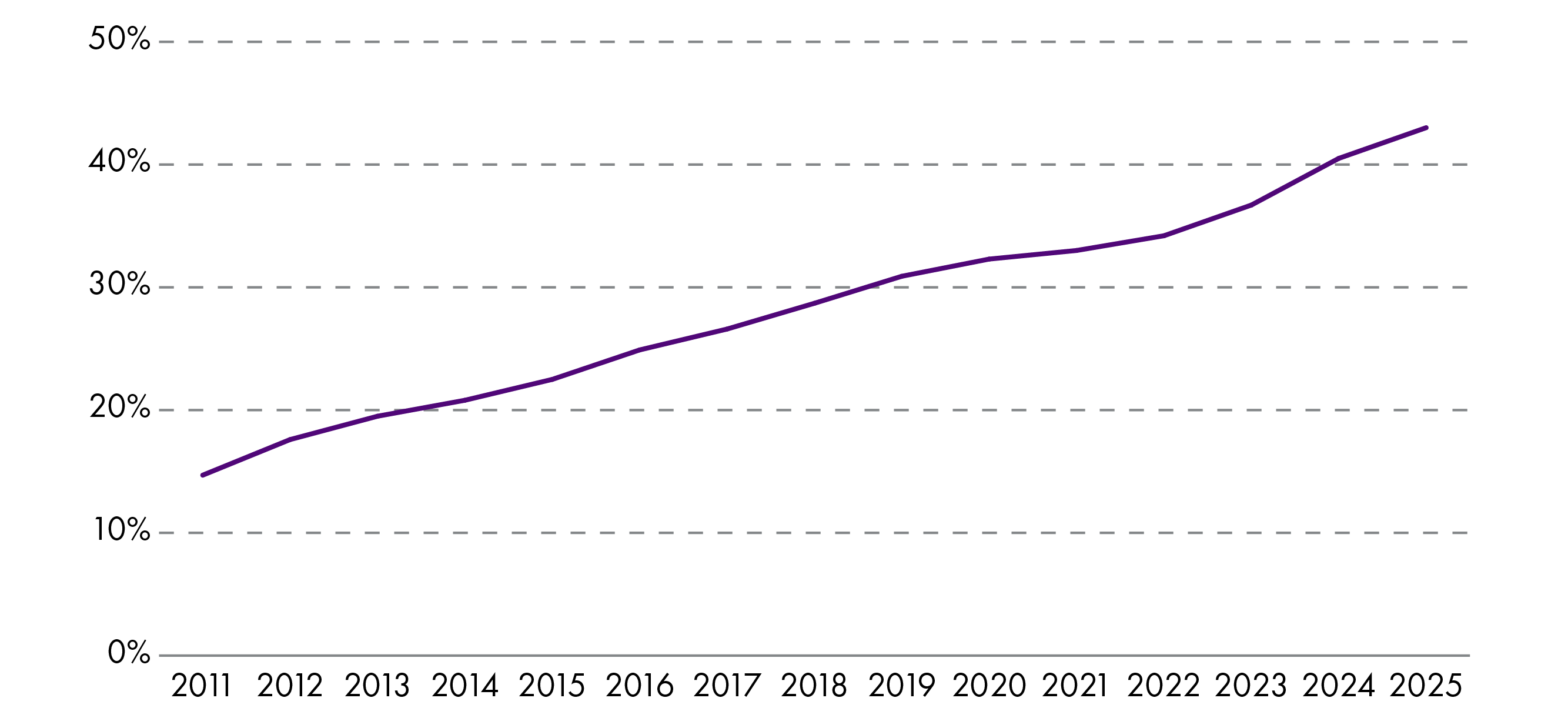
The policy section sets out the statutory framework, primarily the Education (Additional Support for Learning) (Scotland) Act 2004, alongside related duties under the Standards in Scotland's Schools etc. Act 2000 and the Equality Act 2010. ASL is defined broadly and does not rely on formal diagnosis. A large and growing proportion of pupils are identified as having one or more additional support needs (ASN). In 2025, over 40% of pupils in publicly funded schools were recorded as having an ASN. Evidence suggests increasing complexity of need, alongside a strong correlation between deprivation and ASN.
It is difficult to assess overall ASL resourcing. Expenditure on special education has risen in real terms in recent years but the number of specialist ASN teachers across the system has been flat over ten years, which contrasts with the increases in pupils identified with ASN.
The second part of this briefing is intended to support MSPs in their casework. It outlines expectations around engagement with families, explains the main planning mechanisms used to support children and young people (including Co-ordinated Support Plans (CSPs), Individualised Educational Programmes (IEPs) and Child’s Plans), and sets out the legal framework for placing requests, including routes of appeal. It also summarises the options available for dispute resolution, including mediation, adjudication and the ASN tribunal.
Policy background and commentary on implementation
This section focuses on the the policy framework, the prevalence of ASN in Scotland's schools and implementation of policy. The support provided to pupils with ASN is a central part of debates around school education.
Local authorities secure the provision of education in their areas. This includes providing for additional support needs.
In this area legislation references 'education authorities'. In practice these are local authorities fulfilling duties in relation to education. In this briefing, the term 'local authorities' is used.
Legislative framework
Local authorities have a range of duties in relation to the support of pupils with additional support needs. A key piece of legislation in this area is the Education (Additional Support for Learning) (Scotland) Act 2004 (the 2004 Act). There are also relevant duties under the Standards in Scotland’s Schools etc. Act 2000 (The 2000 Act) and the Equality Act 2010 (the 2010 Act). There is statutory guidance on the implementation of the 2004 Act. In February 2026, the Scottish Government issued a consultation on new statutory guidance.
The 2004 Act defines ASN:
A child or young person has additional support needs for the purposes of this Act where, for whatever reason, the child or young person is, or is likely to be, unable without the provision of additional support to benefit from school education provided or to be provided for the child or young person.
Section 1(1) of the 2004 Act
Section 1 of the 2004 Act goes on to define additional support by reference to what is generally provided by the local authority for pupils of the same age or stage. That is, additional support is compared to a concept of ‘general provision’ in the local authority. What is generally provided may not be the same from place to place or over time.
The 2004 Act places a range of duties on local authorities. These include:
making arrangements to identify pupils with ASNi (section 6)
make adequate and efficient provision for such additional support as is required by the pupil; this duty is qualified and the local authority need not do anything if it would result in “unreasonable public expenditure being incurred” (section 4)
establish whether a Co-ordinated Support Plan (CSP) is required, and if it is, to prepare one.
These duties interact with duties under the Equality Act 2010, particularly in relation to disabled pupils.
The 2000 Act provides that local authorities must deliver school education that is "directed to the development of the personality, talents and mental and physical abilities of the child or young person to their fullest potential." (Section 2(1) of the 2000 Act). In other words there should be an individualised approach to the provision of school education.
ASN has a broad definition and does not rely on a formal diagnosis, e.g. from an educational psychologist. The intention is that the school would put in place support for a child to access the curriculum and wider education experience when and where needs emerge and regardless of formal diagnosis.
There is no formal definition of what can and cannot count as an ASN – it can include: pupils for whom English (or Gaelic) is not their first language; disabled pupils; those suffering bereavement; injuries; social, emotional or behavioural difficulties; or indeed being very able. There is not a significance test to determining whether a particular condition or situation would constitute an ASN.
Presumption of Mainstreaming
Section 15 of the 2000 Act provides that local authorities will provide school education to all pupils “in a school other than a special school” unless one (or more) of the following circumstances arises:
it would not be suited to the ability or aptitude of the child
it would be incompatible with the provision of efficient education for the children with whom the child would be educated
it would result in unreasonable public expenditure being incurred which would not ordinarily be incurred.
The 2000 Act says that “it shall be presumed that those circumstances arise only exceptionally”. If one of the circumstances listed above applies, the local authority may provide education to a child in mainstream education, but it “shall not do so without taking into account the views of the child and of the child’s parents in that regard”.
The 2000 Act applies to all children for whom the education authority is providing school education. The policy intention as set out in the Explanatory Notes to the 2000 Act was to “strengthen the rights of children with special educational needs to be included alongside their peers in mainstream schools.” It is also argued that there are wider benefits of inclusive education. For example, a 2017 UNICEF document stated that inclusive education:
Improves learning for all children – both those with and without disabilities.
Promotes understanding, reduces prejudice and strengthens social integration.
Ensures that children with disabilities are equipped to work and contribute economically and socially to their communities.
Since 2000, the approach to support pupils’ educational needs has moved on. As noted above, the approach now uses a definition of “additional support needs” which is very broad and encompasses more than 40% of pupils and feasibly, at one time or another, could apply to every pupil. For the large majority of pupils with ASN, questions around mainstreaming are unlikely to arise.
In 2019, the Scottish Government published guidance on the presumption to provide education in a mainstream setting. This guidance says that mainstreaming “must be delivered within an inclusive approach.” The guidance reiterates the “four key features of inclusion”:
Present
Participating
Achieving
Supported.
Questions and disputes between families and local authorities can arise around access to specialist facilities or support either within mainstream settings or at special schools. Avenues of dispute resolutions are set out later in this paper.
Numbers of pupils with additional support needs
There has been significant growth in the number of pupils who are recorded with at least one ASN on schools’ management information systems. Data on pupils with additional support needs is published annually by the Scottish Government.
The chart below shows the growth in the percentage of public (i.e. publicly funded) schools’ pupils being identified and recorded as having an ASN since 2011.
Scottish Government. (2026). Pupil census supplementary statistics 2025. Retrieved from https://www.gov.scot/publications/pupil-census-supplementary-statistics/
It is not clear to what extent the rise in these statistics is due to changes in the population and changes to practices of identification and recording of ASN. The Scottish Government’s publication, Pupil and teacher characteristics 2025, says:
The number of pupils identified with ASN has increased markedly since 2009 and there continue to be year on year increases ... The increase in pupil numbers is partly driven by increased awareness and identification of additional support needs, as well as a change in how ASN statistics were gathered in 2010, ensuring that these record any type of additional support provided to pupils. This should be borne in mind when using and interpreting these statistics.
The then Cabinet Secretary for Education and Skills, Jenny Gilruth MSP, told the Session 6 Education, Children and Young People Committee:
[In the past] there would have been pupils in the classrooms who had additional support needs. Their needs were not identified or met, and they probably left school without the support that they should have had. We are now much more attuned to additional support needs, and we need to get better at providing the support that goes along with that.
Scottish Parliament. (2026). Education, Children and Young People Committee, Meeting date: Wednesday, January 21, 2026. Retrieved from https://www.parliament.scot/chamber-and-committees/official-report/search-what-was-said-in-parliament/ECYP-21-01-2026?meeting=20027&iob=201087#orscontributions_M5613E438P774C3005188
Qualitative data suggests that in recent years there has been an increase in the number of children with additional support needs and in the severity/complexity of those needs.34
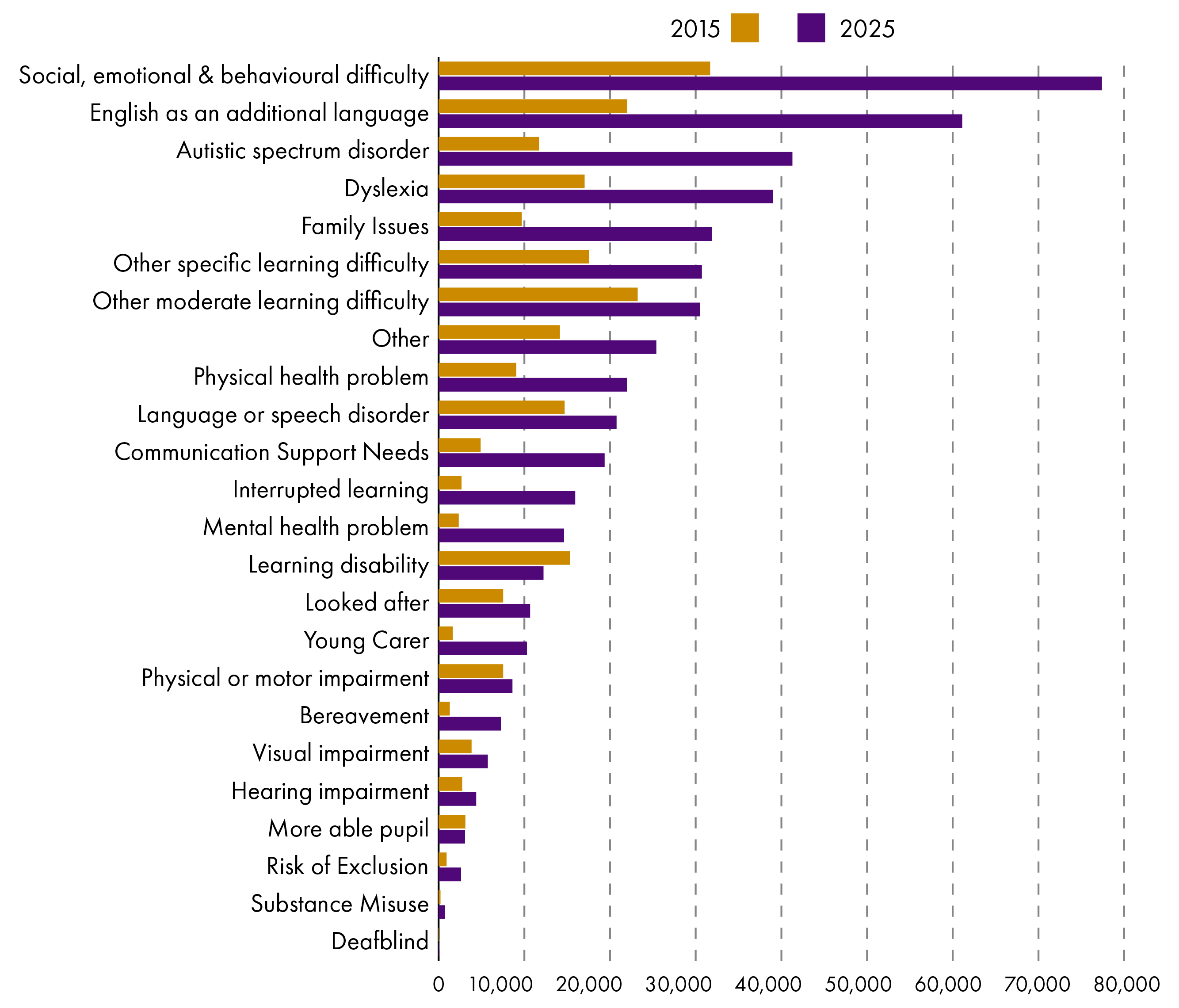
There are a range of categories of additional support needs that can be recorded. The following chart shows the number of school pupils who have been recorded as having one of the categories of ASN. There are two sets of data presented: 2015 and 2025. In 2015 153,106 pupils (24.5% of all pupils) were identified as having at least one ASN. In 2025, 299,445 pupils were identified with at least one ASN.
Note that pupils can have more than one ASN, so the number of pupils under each category does not sum to the total.
Scottish Government. (2026). Pupil census supplementary statistics 2025. Retrieved from https://www.gov.scot/publications/pupil-census-supplementary-statistics/
“Social, emotional and behavioural difficulty” (SEBD) was the largest ASN category in both 2015 and 2025; 77,405 pupils were identified as having SEBD in 2025 and the proportion of pupils with SEBD has more than doubled between 2015 and 2025. “English as an additional language” was the second highest category in 2025 with 61,107 pupils identified under this category. Again the number of pupils in this category increased significantly in the period.
Some of the largest proportional increases were among the smaller categories; the proportion of pupils identified as requiring additional support in relation to “Mental health problem”, “Interrupted learning”, and “Young Carer” categories all increased roughly 6-fold between 2015 and 2025.
Pupils can be assessed by a professional as being disabled and parents/carers of the pupils themselves can declare that the pupil has a disability. In 2025, 26,092 pupils had been assessed and/or declared as disabled. This is around 10% of all pupils. Local authorities have duties under the Equality Act 2010 to support pupils with a disability.
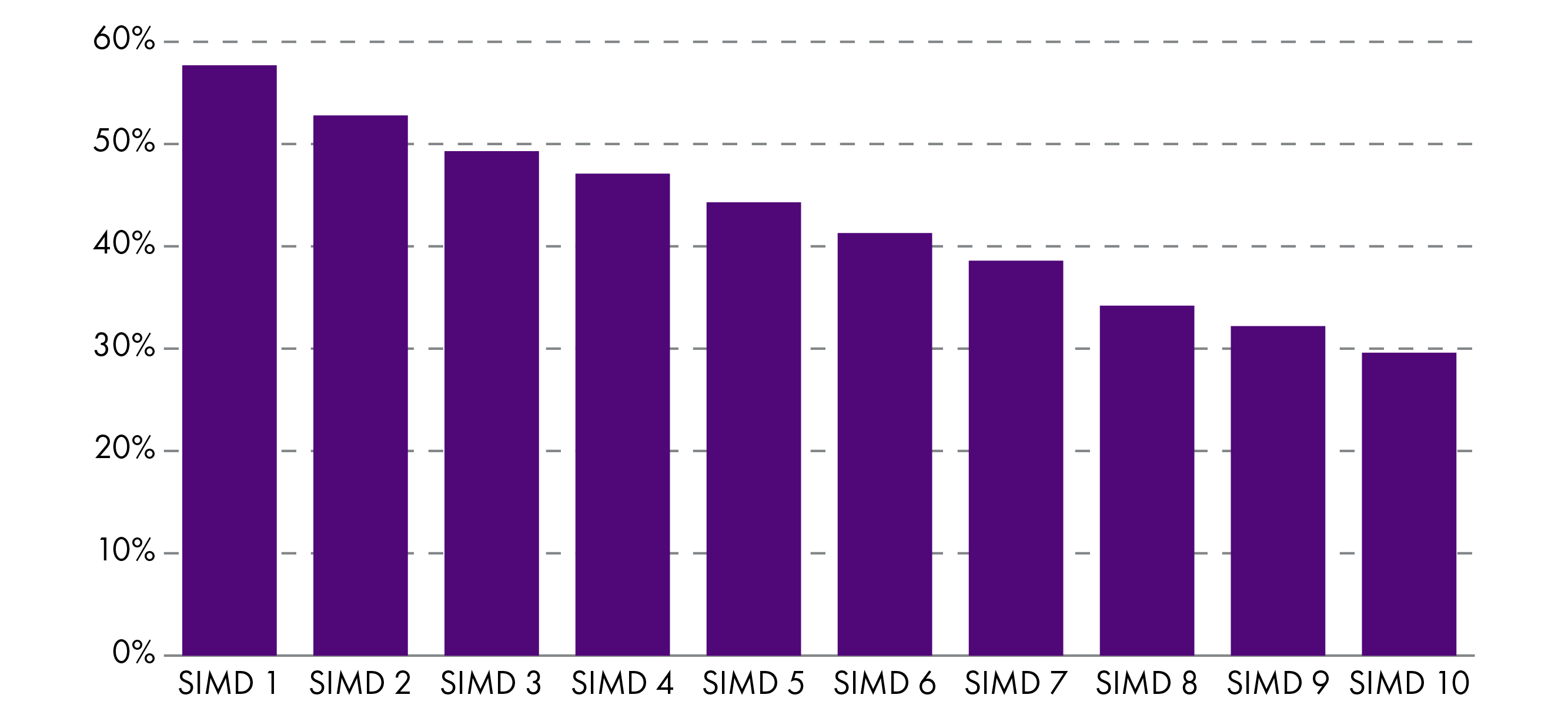
There is a correlation between the likelihood of a pupil being identified as having ASN and their level of deprivation (using geographic measure - Scottish Index of Multiple Deprivation). This is demonstrated by the chart below (SIMD1 is the most deprived decile, SIMD 10 is least deprived).
Scottish Government. (2026). Pupil census supplementary statistics 2025. Retrieved from https://www.gov.scot/publications/pupil-census-supplementary-statistics/
Resources and funding
At one level, given that over 40% of pupils have an identified ASN, it is likely that all of the resources directed to school education directly or indirectly support pupils with ASN. Identifying specific spend on ASN is not possible. All teachers and support staff are very likely to involved in supporting pupils with ASN. Some teachers have specialist roles in supporting pupils with ASN.
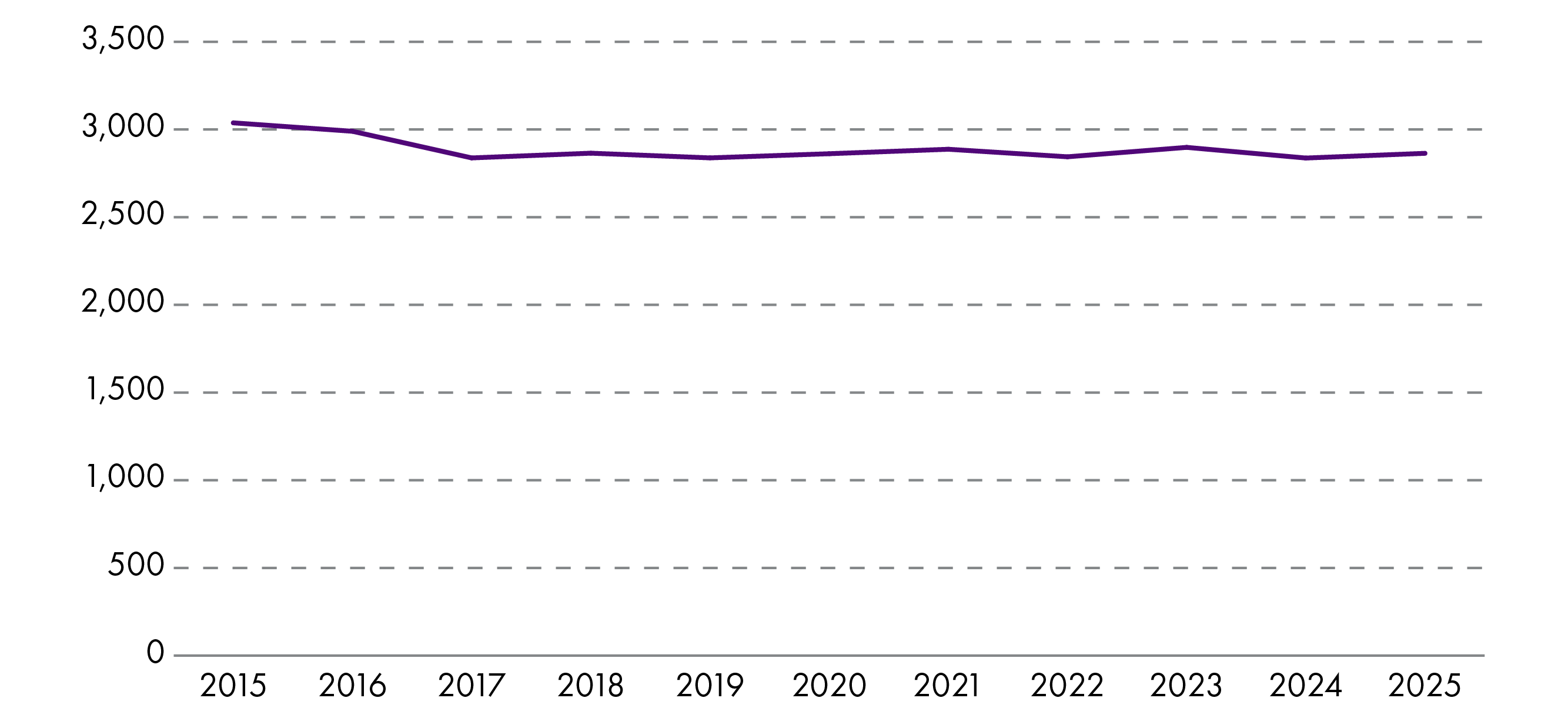
The chart below shows the number of FTE “ASN teachers”i over the past 11 years of data, 2015-2025.
Scottish Government. (2026). Teacher census supplementary statistics 2025. Retrieved from https://www.gov.scot/publications/teacher-census-supplementary-statistics/
We can see that the number of “ASN teachers” has been broadly stable since 2017, after falling somewhat between 2015 and 2017. This is in contrast to the marked increase in the number of pupils identified with ASN over the same period. The total number of FTE teachers (i.e. all teachers) in schools increased by 6% between 2015 and 2025.
We also have consistent data on FTE Pupil Support Assistants, Behaviour Support staff, and Educational Psychologists from 2018. It is debatable whether Pupil Support Assistants are or should be considered solely an additional support resource. Recall that the 2004 Act defines additionality by reference to what is generally provided by the local authority for pupils of the same age or stage. In practice, the majority of Pupil Support Assistants are likely to spend a good deal of their time supporting pupils with ASN.
| Year | Pupil Support Assistant | Behaviour Support | Educational Psychologist |
| 2018 | 13,803 | 122 | 368 |
| 2019 | 13,909 | 148 | 372 |
| 2020 | 15,263 | 148 | 378 |
| 2021 | 16,299 | 187 | 383 |
| 2022 | 16,606 | 184 | 398 |
| 2023 | 17,330 | 137 | 400 |
| 2024 | 17,046 | 359 | 396 |
| 2025 | 16,908 | 375 | 396 |
There has been a fairly consistent trend of the number of Pupil Support Assistants increasing since 2018. There are over 3,000 more Pupil Support Assistants in 2025 than in 2018. However, there have been falls in the number of Pupil Support Assistants in 2024 and 2025. This is somewhat offset by the increase in Behaviour Support staff in those years. There may have been some element of reclassification following a greater focus on supporting positive behaviour in recent years.
Funding of some interventions to support ASN can require significant resource – for example, places in specialist schools. Other interventions could be low-cost, for example, providing yellow writing pads, differentiation of teaching and learning. This makes understanding the totality of spend on ASL difficult to determine. Added to this, local authorities report on spend on ASL differently.
Audit Scotland published a report in February 2025 on ASL and noted the difficulty in determining the total spend on ASL in education and other services. Audit Scotland noted:
It is not possible to determine the scale, complexity and nature of additional support needs across Scotland due to inconsistencies and gaps in data recording. Almost all ASL is provided in mainstream classes, which means it is not possible to identify how much is spent providing it. It is also difficult to quantify the amount of spending on support provided through other public services such as the National Health Service (NHS).
Audit Scotland recommended that the Scottish Government and councils should develop better quality data and “evaluate, both nationally and locally, how ASL is planned for, funded and staffed as part of core education provision.”
Local authorities do report spend on ASL, but this is inconsistent. Some local authorities report £0 spend on ASL under mainstream primary and secondary education, which is not feasible. We can trust that the spend identified as Special education spending will be more reliable or at least consistent over time. Guidance on local authority returns is clear that this should not include ASL spend from primary or secondary schools’ budgets, but does include centrally held school budgets relating to supporting ASL.
Collectively, councils planned to spend around £990 million on Special education in 2025-26. The outturn of the expenditure on Special education in 2021-22 was £680 million. Spend on Special education was around 12.7% of the total spend on Primary, Secondary and Special education in 2021-22; it was planned to be 14.5% in 2025-26. The spend on Special education has also been growing in real terms. The chart below shows the real terms spending on Special education from 2017-18 to 2025-26, indexed to 2021-22. The planned spending in the current year on Special education is 21% higher in real terms than in 2021-22.ii
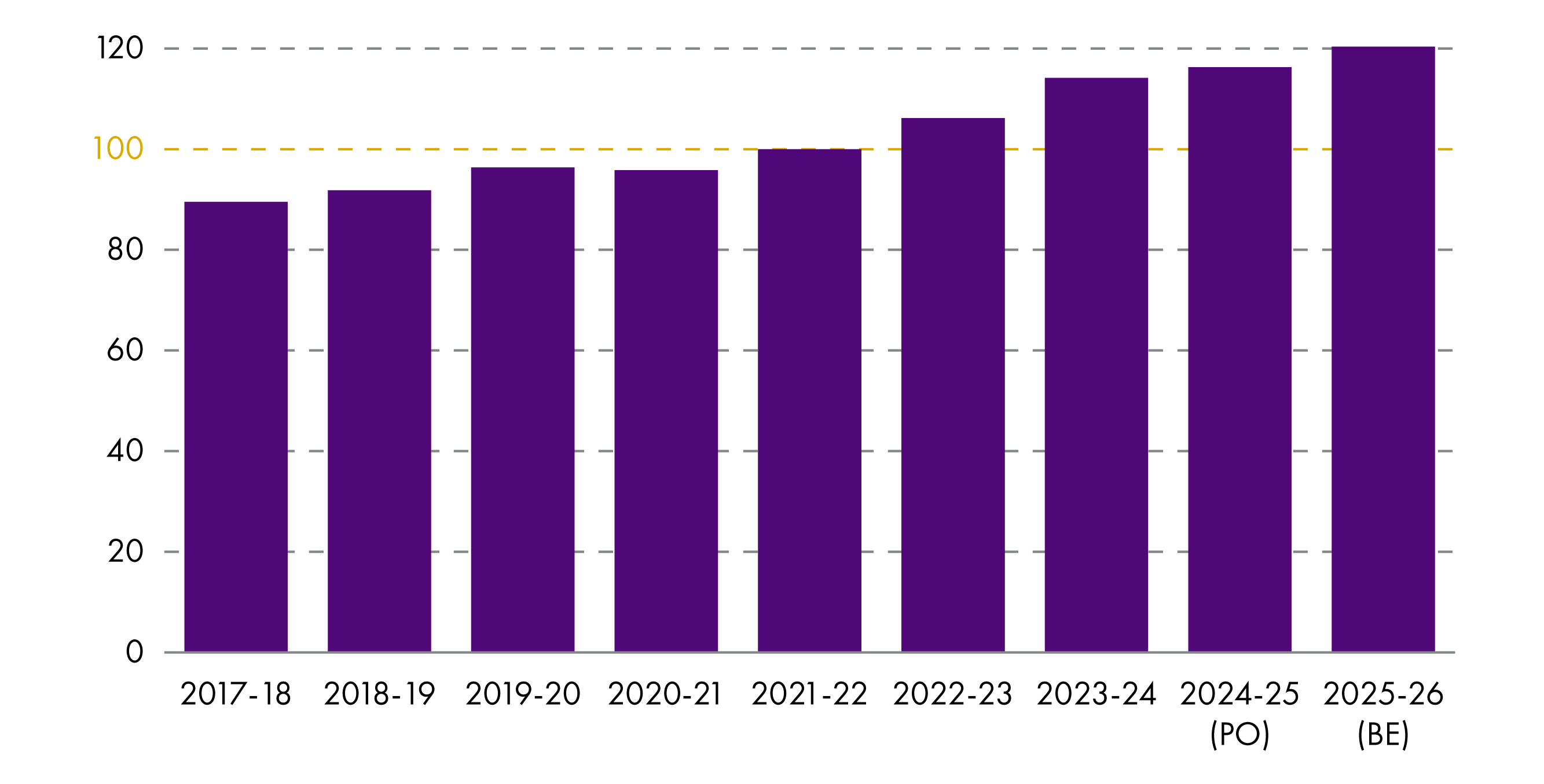
Scottish Government . (2025). Scottish Local Government Financial Statistics & Provisional Outturns and Budget Estimates 2025. Retrieved from https://www.gov.scot/collections/local-government-finance-statistics/
Policy development and critique
The policy and practice to support pupils with additional support needs is a regular feature of education debates in Scotland. In 2023-24, the Education, Children and Young People Committee undertook an inquiry into ASL and the principle of the presumption of mainstreaming. Among the Committee's conclusions were:
The Committee was alarmed to hear there was strong evidence to suggest that the majority of ASN pupils are not having their needs met.
The Committee agrees with the policy intention behind the 2000 Act's presumption of mainstreaming. However, the gap between the policy intention and how this has been implemented in practice is intolerable.
(Paragraphs 62 and 63 of the inquiry report)
Enlighten Scotland published a ‘Challenge Paper’ in December 2025 on additional support needs. This called for “an independent Expert Committee of Enquiry” to examine the causes of the rise in identified ASNs and to explore the approach in Scotland.
Policy development in this area in Session 6 was mainly framed around the response to a Review of Additional Support for Learning implementation which was published in June 2020. This review was led by Angela Morgan and is commonly referred to as the "Morgan Review". The Morgan Review was wide-ranging and made recommendations to both the Scottish Government and local government. The joint response from Scottish Government and COSLA accepted all of the recommendations of the review directed at local or national government. The Government published an action plan alongside this response which set out how the recommendations would be taken forward. The fourth and final progress report on the action plan was published in March 2026, along with a final update on the action plan.
The final report stated that the actions contained in the action plan had largely been completed. It highlighted work under three 'key strands':
communication
national measurement framework
refresh of the Code of Practice.
The final report highlighted improved partnership working between the Scottish Government and local government and other stakeholders, as well as other areas where there had been progress. The final report concluded that "the current approach has not yet achieved the cultural shift or scale of change" that was envisaged in the Morgan Review. The final report's conclusion highlighted a need for more co-ordinated support for pupils and families from across the public sector, not just education services. It said:
Crucially, achieving the aspirations of the Review requires system‑wide commitment that extends beyond education. Many of the barriers to making progress stem from wider structural, workforce, health, social care and community‑level factors. Securing coordinated buy‑in, prioritisation and appropriate resourcing across the whole public sector has proven difficult and remains a significant limiting factor in achieving sustained improvement. The Public Sector Reform agenda provides an opportunity for us to consider things differently going forward. ...
A more collective and coordinated approach across the whole of the Scottish Government and the wider public sector is essential if progress is to be embedded and transformational change realised in how we support children and young people. The complexity of this work - with multiple interdependencies across services - stands in contrast to the pressing and immediate needs of the children, young people and families who require support now.
In February 2026, the Government consulted on an updated Code of Practice/statutory guidance on the 2004 Act. The consultation highlighted three areas where the new Code of Practice would be changed:
to put beyond doubt local authorities’ duties in relation to confirming reasons for decisions made on placing requests and parents right of appeal to any decision
strengthen guidance on transitions between primary and secondary schools
address issues regarding the complexity of use of support plans including where certain plans are appropriate.
The Scottish Government publishes a National Improvement Plan every year, which sets out the main areas of work it will undertake to support improvement in education. The latest National Improvement Plan (NIP) covers 2026. In relation to supporting pupils with ASN, the NIP noted that the Scottish Government had commissioned Enquire “to improve communication of the key information which different audiences need to meet the needs of children with additional support needs.” In relation to data on ASN, the NIP stated:
Following on from the data summit on ASL which was held in November 2025, a data improvement plan will be developed to set out the short, medium and long-term actions that can be taken to implement data improvements in ASL. This work will form a core part of the wider ASL Review.
In March 2026, the Scottish Government published a short review of the delivery of ASL which was undertaken by the former head of school inspection at Education Scotland, Janie McManus. This found "a gap between Scotland's ambition for inclusion and how additional support is experienced". It continued:
This gap is visible from the early years onwards. It is not a gap in commitment. It reflects a system that has had to adapt to levels and complexity of need that have evolved faster than the infrastructure designed to support them. Support often becomes more reliable only once needs escalate; early intervention is not always protected; and children and young people with similar needs do not always experience similar support.
The review made six recommendations which were around:
national planning and staged intervention
workforce alignment
early intervention capacity
national visibility of need, progress, and impact
delivery model
curriculum design, delivery, and assessment.
Taken together, these recommendations are calling for greater consistency in approach and multi-agency working, supporting capacity to provide ASL, and a more coherent approach. Prior to the election, the Scottish Government said that it accepted the six recommendations.
The ASL Project Board, which led on the action plan, was disbanded prior to the election. It is likely that, in Session 7, there will be continued need for collective action across local government and the Scottish Government to respond to Janie McManus' recommendations and continue the work of the ASL Project board.
Supporting constituents
MSPs may find that the provision of Additional Support for Learning is a common subject in correspondence from constituents. There are a range of avenues of support that constituents may wish to access. Enquire is the national helpline and support service for parents on issues in relation to Additional Support for Learning. It's Untangling ASL pages provide a helpful range of advice and information.
This briefing covers a few key issues and sets out:
principles that are expected to underpin the relationships between families and professionals
planning processes
placing requests
options for dispute resolution.
Principles for working with families and young people
Professionals are expected to work with and include families and pupils in decisions and planning about the additional support pupils may receive.
The 2017 statutory guidance states:—
Parents must also be encouraged and have the opportunity to be involved fully in discussions and decisions about their child's learning. Most parents want what is best for their children and have unique knowledge and experience to contribute to understanding and meeting their child's additional support needs. They, therefore, have a key role to play in their child's education and account must be taken of their views and the perspective they bring.
Professionals need to involve parents and take account of their views on their child's development and education at the earliest opportunity. Partnership with parents is, therefore, central to ensuring that children and young people with additional support needs benefit fully from school education.
Local authorities and schools are likely to used a staged intervention approach. This is a structured process used to identify the level of support required to meet the needs of a child or young person.
Plans
For children with complex additional support needs, there is likely to be a formal planning process and parents/carers and pupils should be meaningfully involved in that process. There are a number of planning processes that a school/local authority might utilise to decide on the support to be put in place and to review how and whether the support is effective.
In 2025, of the 299,445 pupils who had an identified additional support need, 1,165 (0.4% of those with an ASN) had a Co-ordinated Support Plan, 36,593 (12.2%) had an Individualised Educational Programme, and 60,111 (20.1%) had a Child's Plan. Pupils can have more than one plan.
Co-ordinated Support Plan
The only statutory plan in school education is the Co-ordinated Support Plan (CSP). Local authorities have a statutory duty to put in place a CSP if the statutory conditions are met. These are that a child has longstanding ASN arising from one or more complex factors or multiple factors which require significant additional support to be provided by more than one service. The CSP is seen as particularly important as it can open up additional routes of redress through the ASN tribunal (more on this in a later section). The statutory guidance on the 2004 Act states that local authorities must “seek and take account of the views of children and their parents, and young people themselves” throughout the process of determining whether a CSP is required and then developing the CSP. CSPs must contain (among other things):
the education authority's conclusions as to the factor or factors from which the additional support needs of the child or young person arise
the educational objectives intended to be achieved, taking account of those factors
the additional support required to achieve these objectives
details of those who will provide this support.
The use of CSPs has been declining over the past decade or more.1
After concerns that CSPs are under-used in local authorities, a short-life working group was established and this reported in November 2021. This found “variations in awareness and understanding of the legislation, support and planning process” including in the purpose and statutory requirements on local authorities. The working group made recommendations around:
culture and relational approaches
the availability and accessibility of information and guidance for children, young people, parents, carers and professionals
ensuring sufficient resource is available to provide time for genuine collaboration and multi-disciplinary planning and to support the delivery of agreed outcomes for children and young people.
Individualised Educational Programmes
An Individualised Educational Programme (IEP) is a tailored, individualised plan or programme of support which is expected to last up to a year. Learning targets within the plan are usually of multiple months or by term and this plan is reviewed. This plan may also be known locally as an additional support plan, or other similar name.
The 2017 statutory guidance states that an IEP is single agency plan to ensure that supports from the resources within the school or education authority are put in place to meet the pupils’ needs.
Child's Plan
Child plans are single or multi agency plans based on an assessment guided by the Getting it Right for Every Child (GIRFEC) National Practice Model. Like the IEP, this is a non-statutory plan.
GIRFEC Guidance states that “all decision-making regarding a child’s plan within GIRFEC should seek, have regard to and act on the views of the child or young person and their family.” The child’s plan should set out:
which services or people will provide support
who is accountable for that support
the way in which that support will be provided.
Placing requests for pupils with additional support needs
Placing requests for mainstream schools and special schools or special units have different statutory bases and appeal routes for parents/carers. They are similar and it is useful to set out both circumstances.
For mainstream placing requests Section 28A of the Education (Scotland) Act 1980 sets out parents’ and carers’ rights in relation to making placing requests. Local authorities must accede to a placing request unless one or more of a number of conditions applies (as set out under section 28(3) of the 1980 Act). A key consideration will be whether additional resource is required to meet the placing request and this means that places at schools are essentially limited by the operating capacity of the school. Importantly, the 1980 Act sets out grounds for refusal that the local authority can rely on to refuse a placing request; these grounds do not automatically mean that a local authority must refuse a request.
In addition to issues around additional resource being required, some of the other grounds to refuse a placing request include:
the placement would be “seriously detrimental” to the continuity of the child's education or the educational well-being of pupils attending the school
the education normally provided at the specified school is not suited to the age, ability or aptitude of the child
where the specified school is a special school, the child does not have additional support needs requiring the education or special facilities normally provided at that school.
Scottish Government guidance for parents on choosing a school states:
A school may not have enough places to satisfy all the requests they have received. Each council must produce guidelines to be followed in deciding who should be accepted in these circumstances. The guidelines should normally give the first places to children living within the catchment area of the school. Preference may be given to children who already have brothers or sisters at the school. Guidelines may also cover schools where a child can study a subject or take a course that is not available at his or her local school. Guidelines may apply to all the schools run by a council, or only to certain schools.
There is an appeal route for parents who do not agree with a local authority's refusal of a placing request. In the first instance the parent/carer should appeal to the local appeals committee. There is an option of a further appeal to a Sheriff should the parent/carer not be satisfied with the decision of the appeals committee. The Scottish Government's guidance is a useful resource on the appeals processes. This says—
Before you decide to appeal, you should consider:
whether you agree with what the council has said;
whether what the council has said is allowable; and
whether the council's guidelines have been followed.
Schedule 2 of the Education (Additional Support for Learning) (Scotland) Act 2004 provides for the process of placing requests when the child has additional support needs. The 2004 Act includes specific provisions or placing requests to a relevant special school or unit or where the child has a Co-ordinated Support Plan.
The 2004 act largely replicates the 1980 Act. A local authority must accede to the request unless one of the criteria set out in paragraph 3 of Schedule 2 of the 2004 Act apply. These are similar to the reasons in the 1980 Act set out above.
There is an additional ground of refusal in para 3(1)(f). This is in the circumstance where a parent/carer requests the local authority place the child in an independent special school and the local authority has identified another school which would meet the needs of the child. In this case, if “it is not reasonable, having regard both to the respective suitability and to the respective cost … of the provision for the additional support needs of the child” at the independent school, then there are grounds for refusal.
Appealing placing decisions where a child has (or will have) a Co-ordinated Support Plan would be considered by the ASN Tribunal. In addition, an appeal would also be made to the tribunal where the placing request is made to a special school (including special units), whether under the management of an education authority, or an independent or grant-aided special school. More details can be found on the tribunal's website.
There can be some confusion around what counts as a special school. The definition of ‘special school’ is set out in section 29(1) of the 2004 Act. This includes a class or unit forming part of a public school “the sole or main purpose of which is to provide education specially suited to the additional support needs of children or young persons selected for attendance at the school, class or (as the case may be) unit by reason of those needs”.
Resolving disputes
Disagreements between parents/carers or the child (if appropriate) and schools/local authorities around the type and level of support being provided would normally be expected to be resolved through discussions, for example during the planning processes.
Where discussions and planning processes do not resolve disagreements, there a number of avenues for dispute resolution if a parent/carer (or in some cases, the child) considers that additional support needs are not being met. These are:
right to have a ‘supporter’ present in discussions or an ‘advocacy worker’ make representations to the local authority
right to advocacy services, free of charge, for those taking cases to the ASN Tribunal
independent mediation
independent adjudication
the ASN Tribunal will consider certain issues involving Co-ordinated Support Plans, placing requests and disability discrimination claims under the Equality Act 2010.
A recent academic paper provided a comparison of the use of the Tribunal in Scotland and similar routes of redress in other jurisdictions.1 It said that in 2023/24 the rate of appeals to the Tribunal in Scotland was 2.5 per 10,000 (2-18 population). This was higher than in Wales (0.7 per 10,000), but lower than in Northern Ireland (10.0 per 10,000) and England (13.9 per 10,000).
Sources
Scottish Government. (2026). Pupil census supplementary statistics 2025. Retrieved from <a href="https://www.gov.scot/publications/pupil-census-supplementary-statistics/" target="_blank">https://www.gov.scot/publications/pupil-census-supplementary-statistics/</a>
Scottish Parliament. (2026). Education, Children and Young People Committee, Meeting date: Wednesday, January 21, 2026. Retrieved from <a href="https://www.parliament.scot/chamber-and-committees/official-report/search-what-was-said-in-parliament/ECYP-21-01-2026?meeting=20027&iob=201087#orscontributions_M5613E438P774C3005188" target="_blank">https://www.parliament.scot/chamber-and-committees/official-report/search-what-was-said-in-parliament/ECYP-21-01-2026?meeting=20027&iob=201087#orscontributions_M5613E438P774C3005188</a>
Scottish Parliament. (2024). SPICe Summary of Local authority Responses on Additional Support for Learning Inquiry. Retrieved from <a href="https://www.parliament.scot/-/media/files/committees/education-children-and-young-people-committee/correspondence/2024/spice-summary-of-local-authority-responses-on-additional-support-for-learning-inquiry.pdf" target="_blank">https://www.parliament.scot/-/media/files/committees/education-children-and-young-people-committee/correspondence/2024/spice-summary-of-local-authority-responses-on-additional-support-for-learning-inquiry.pdf</a>
Scottish Parliament. (2024). SPICe Summary of Responses on Additional Support for Learning Inquiry. Retrieved from <a href="https://www.parliament.scot/-/media/files/committees/education-children-and-young-people-committee/correspondence/2024/spice-summary-of-responses-on-additional-support-for-learning-inquiry.pdf" target="_blank">https://www.parliament.scot/-/media/files/committees/education-children-and-young-people-committee/correspondence/2024/spice-summary-of-responses-on-additional-support-for-learning-inquiry.pdf</a>
Scottish Government. (2026). Teacher census supplementary statistics 2025. Retrieved from <a href="https://www.gov.scot/publications/teacher-census-supplementary-statistics/" target="_blank">https://www.gov.scot/publications/teacher-census-supplementary-statistics/</a>
Scottish Government . (2025). Scottish Local Government Financial Statistics & Provisional Outturns and Budget Estimates 2025. Retrieved from <a href="https://www.gov.scot/collections/local-government-finance-statistics/" target="_blank">https://www.gov.scot/collections/local-government-finance-statistics/</a>
Marsh, A., & Fernie, L. (2025). Additional Support for Learning in Scotland – 2004 to 2024. Scottish Educational Review, (55).
Additional Support for Learning in Scotland – 2004 to 2024. (2025). Scottish Educational Review, 55. doi: https://brill.com/downloadpdf/view/journals/ser/55/1-2/article-p38_4.pdf