Rural Economy and Connectivity Committee
Stage 1 Report on the South of Scotland Enterprise Bill
Summary of conclusions and recommendations
Overall conclusion
The Committee fully supports the creation of a new enterprise agency for the south of Scotland.
The Committee supports the general principles of the Bill and recommends to the Parliament that they be agreed to.
The need for a new enterprise agency
The Committee is in no doubt that the creation of a new enterprise agency in the south of Scotland is required. It is clear that the area faces a significant number of economic, social and geographic challenges which are not being sufficiently addressed through current economic support mechanisms. It supports the Scottish Government's view that the the new agency will help support the enterprise and skills needs of the area and provide a vehicle by which to encourage economic growth.
The Committee commends the significant consultation and preparation work carried to date by the South of Scotland Economic Partnership (SoSEP). It is of the view that this provides a solid foundation on which to develop the new agency.
Area to be covered by the agency
The Committee recognises that communities in adjoining local authority areas may face similar challenges to those in Dumfries and Galloway and Scottish Borders council areas. It calls on the Scottish Government and Scottish Enterprise (SE) to ensure that these areas continue to have access to economic development opportunities appropriate to their needs.
The Committee is satisfied with the proposal that the new enterprise agency should cover Dumfries and Galloway and Scottish Borders council areas only.
The Committee calls on the Scottish Government to confirm that the Bill provides for the new agency to have sufficient flexibility to allow it to operate outwith its geographical boundaries and to collaborate with other enterprise agencies in order to fulfil its role.
Interaction of the agency with existing bodies
The Committee is clear that the creation of a new south of Scotland enterprise agency should enhance the current support landscape rather than adversely impact on any existing provision.
The Committee therefore calls on the Scottish Government to ensure the development of appropriate mechanisms to facilitate collaboration and coordination between the new agency and all of the various existing agencies operating in the region, including the Strategic Board. This should build on the positive work already being carried out by SoSEP in this regard. The Committee calls on the Scottish Government to provide information on how it proposes to proceed in this matter before Stage 2 consideration of the Bill.
Agency powers and objectives
The Committee acknowledges that the broad aims for the new agency set out in section 5 of the Bill have been drafted with the express purpose of avoiding a prescriptive approach and thus providing it with flexibility with regard to its activity.
However, the Committee is of the view that the aim to "improve the amenity and environment" of the area covered by the new agency would benefit from being supplemented with a greater level of detail. It therefore calls on the Scottish Government to amend this aim at Stage 2 to make specific provision in relation to—
the sustainable use of the environment
The Committee further calls on the Scottish Government to amend the aim of "furthering the economic and social development of the South of Scotland" to make specific provision in relation to—
encouraging the development of a sustainable economy
supporting the enhancement of transport networks and digital connectivity
supporting community land ownership and assets ownership
furthering fair work
encouraging the creation of a more balanced demographic
Following the recommendation in the Delegated Powers and Law Reform (DPLR) Committee's report on the delegated powers in the Bill, the Committee also calls on the Scottish Government to provide clarity as to whether the purpose of section 5(3) of the Bill is to allow more detail to be added to the aims set out in sections 5(1) and 5(2), or if it is to allow modifications to section 5 as a whole.
The Committee notes that the new south of Scotland enterprise agency will not have the compulsory purchase powers that are available to SE and HIE (HIE). However, it is satisfied from the evidence heard that these are not required and will not put the new agency at a disadvantage.
The Committee further notes that the Cabinet Secretary for the Rural Economy will reflect further on whether there should be any change to the proposal that the new agency should not have the powers held by existing enterprise agencies to enter on to land without permission and to require people to provide information.
Location of the new agency
The Committee agrees with the Scottish Government's intention that the services of the south of Scotland enterprise agency should be co-located with other agencies where this is practical. It considers that this will bring significant benefits, in terms of having a presence in and being accessible across its whole area, aiding the provision of a "one-stop shop" approach, as well as being more cost-effective.
Governance of the new agency
The Committee is in no doubt of the importance of getting the board membership right and ensuring that it is made up of individuals with as wide a range of interests, skills, expertise and experience relevant to the south of Scotland as is possible.
The Committee notes the considerable support for and interest in the proposed new agency across all sectors in the south of Scotland. It considers it to be essential that this interest is harnessed and used to encourage applications from as wide a range of interests as possible.
Accountability of the new agency
The Committee calls on the Scottish Government to bring forward an appropriate amendment to the Bill to include a requirement that the new agency carries out work to obtain feedback on its performance and effectiveness from communities and other stakeholders to inform the action plan development process. It considers that this should apply when the agency is drawing up a new or modified version of the Action Plan and also when keeping it under review as already required by the Bill.
Ministerial powers of direction
Further to recommendations by the DPLR Committee, the Committee calls on the Scottish Government to—
amend section 15 to require the Scottish Government to consult the new agency before issuing it with a direction; and
amend section 15 to include a requirement that Scottish Ministers must provide written reasons for the making of a direction, and that those reasons should be published with the direction under section 15(3).
Equal opportunities
The Committee calls on the Scottish Government to confirm that the Bill as drafted is sufficient, in conjunction with all applicable existing equalities legislation, to ensure that the new agency fully meets its responsibilities in relation to the furtherance of equal opportunities, including gender equality.
Finance
The Committee notes the estimated funding for the new agency that are set out in the Financial Memorandum. It considers the Scottish Government's intention to ensure initially that there is an equivalence in budget between the new agency and HIE to be an appropriate and proportionate approach.
The Committee also notes the Cabinet Secretary's assertion that the £42m funding for the new agency in 2022/23 would provide an overall increase in funding for the area. However, it would welcome an estimate of how much of an increase in funding this would represent prior to Stage 2 consideration of the Bill.
Introduction
The South of Scotland Enterprise Bill ("the Bill") was introduced to the Parliament by Fergus Ewing, Cabinet Secretary for the Rural Economy ("the Cabinet Secretary")on 24 October 2018. The Rural Economy and Connectivity Committee was designated as lead committee at stage 1.
According to the Bill’s policy memorandum, the high-level policy aim of the South of Scotland Enterprise Bill is to establish a new public body to take a fresh approach to the enterprise and skills needs of the South of Scotland. The region is currently served by national agencies, Scottish Enterprise, Skills Development Scotland and the Scottish Funding Council, as well as the two local authorities.
Consideration by the Rural Economy and Connectivity Committee
The Committee launched a call for views on 12 November 2018 which ran to 9 January 2019 and resulted in 24 written submissions. An online survey was also conducted which received 93 responses. The Committee took oral evidence on the Bill between November 2018 and January 2019 from a range of local authorities, social enterprise and business interests and community groups.
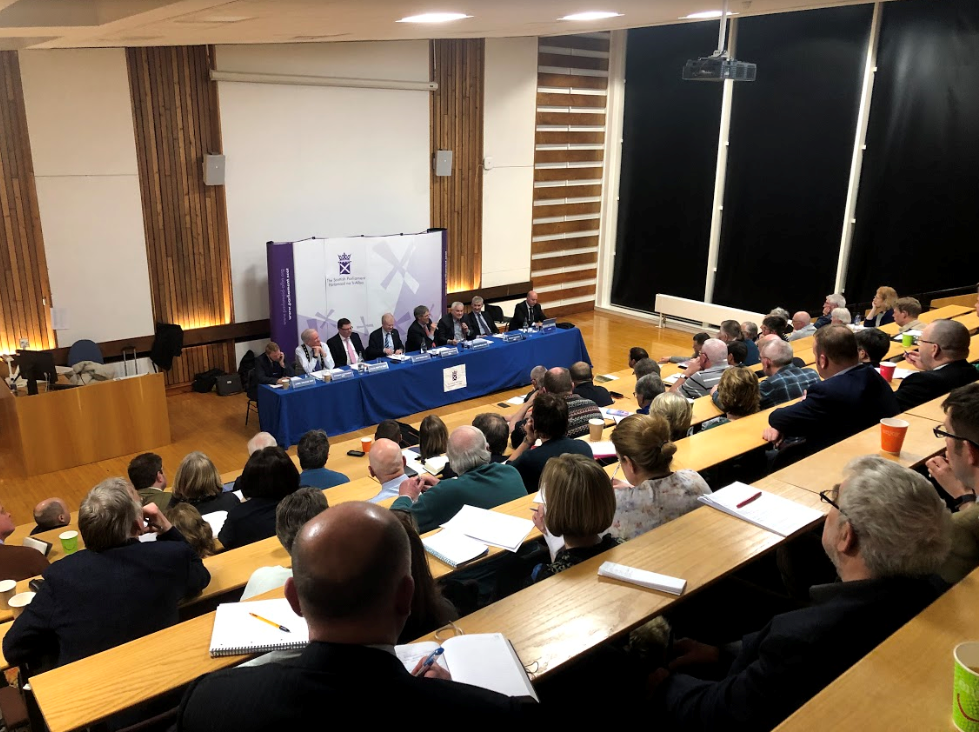
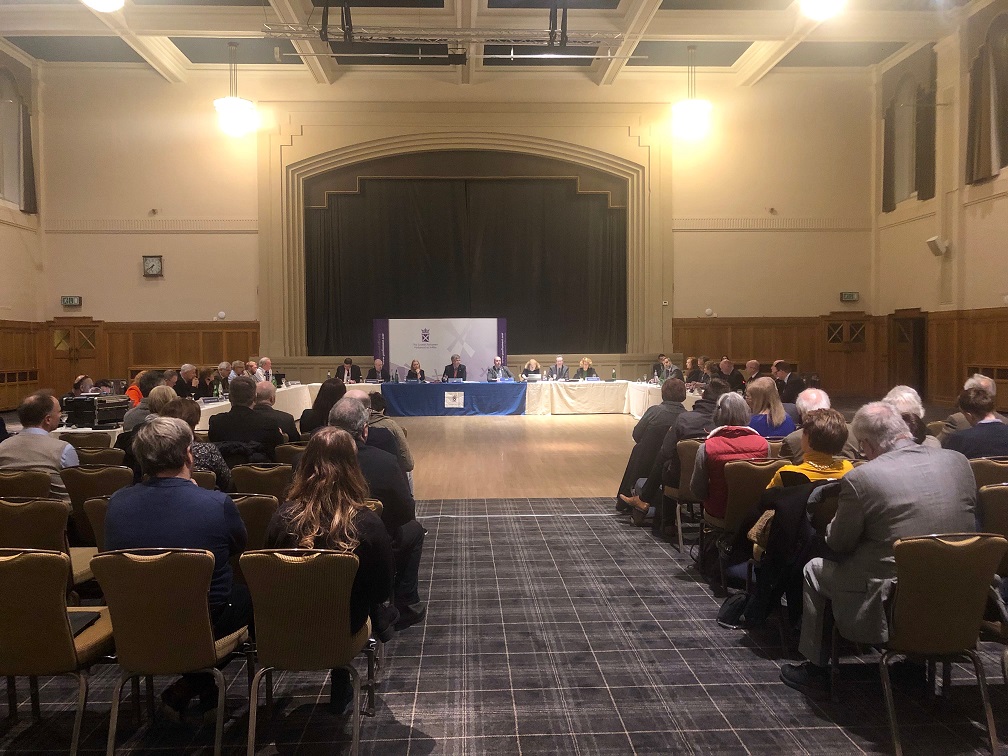
As part of its evidence gathering, the Committee held a formal external meeting and an informal workshop in Dumfries on 14 January 2019 as well as a discussion event in Galashiels on 23 January 2019. These sessions were particularly well attended by a wide range of representatives of stakeholder groups and members of the public. The Committee is grateful to all those who participated, providing valuable input to its consideration of the Bill.
Consideration by other committees
The Delegated Powers and Law Reform (DPLR) Committee published a report on its scrutiny of the delegated powers provisions of the Bill on 23 January 2019. The Committee comments on observations made by the Delegated Powers and Law Reform Committee in its report in paragraphs 91 and 136.
The Finance and Constitution Committee did not report on the Financial Memorandum associated with the Bill.
Background to the Bill
The First Minister announced an end-to-end review of Scotland's enterprise and skills bodies in May 2016. The review's terms of reference acknowledged that for the Scottish Government to achieve its economic aspirations, Scotland needs to see a "transformational step change in our performance across a range of outcomes."
Phase 1 of the Scottish Government's Enterprise and Skills Review reported in October 2016. One of its key recommendations was the creation of a "new vehicle to meet the enterprise and skills needs of the South of Scotland".
Phase 2 of the Enterprise and Skills Review provided more clarity on what the role of the new agency should be, how it would be structured and the geographical area in which it should operate . According to the Scottish Government's report, the new organisation "will operate with a clear understanding of the assets, challenges and opportunities of the economy of the South of Scotland".
The review process identified a number of challenges facing the economy of the Scottish Borders and Dumfries and Galloway area, namely—
an ageing population with an out-migration of young people;
relatively low levels of productivity and GDP growth;
transport and digital connectivity challenges;
higher concentrations of low-paying, lower-skilled sectors;
a number of "fragile" communities across the region; and
relatively low levels of private sector investment and research and development.
Many of these challenges were also mentioned in evidence to the Committee, in responses to its online survey and at its informal discussion events.
In addition to these challenges, the Scottish Government's consultation also recognised a number of strengths and assets enjoyed by the area. These include—
a strong community spirit, characterised by a high degree of cohesion, resilience and commitment to the local area.
a natural environment that provides a high quality of life, a good place to raise a family and plenty opportunities for healthy living.
a rich historical and cultural heritage, particularly important in terms of developing the area's tourism industry.
a good strategic location, being relatively close to the north of England, the Central Belt of Scotland, and Northern Ireland.
Following this, the Scottish Government published more detailed proposals, followed by a public consultation between March and June 2018 and a report analysing responses.
The Scottish Government established the South of Scotland Economic Partnership (SoSEP) in January 2018, with the aim of bringing a “fresh approach to economic development”, taking forward stakeholder engagement and paving the way for the new enterprise agency. Chaired by Professor Russel Griggs, SoSEP brings together individuals from the private, third and education sector with the seven public sector agencies supporting economic development in the South of Scotland.
This Bill is a technical, enabling Bill which specifically focuses on the creations and set up of the new agency. Wider, practical issues regarding the operation of the agency are not covered in the Bill as drafted. It provides for—
the establishment of the agency;
its objectives and powers;
operational matters;
accountability and ministerial powers;
the transfer of property and liabilities; as well as
governance and staff.
The need for a new enterprise agency
Scottish Enterprise (SE) currently account manages 107 companies in the region – 42 in Dumfries and Galloway and 65 in Scottish Borders. Over the past two years, SE has spent between £3 million and £5 million annually – in both grants and services – supporting companies headquartered in the area. They also support companies which are headquartered elsewhere but have operations in the area.
Overall, the Committee heard strong support for the creation of the new enterprise agency. Over 80% of respondents to the Committee’s online survey agreed with the idea of a new agency being established for the south of Scotland. This sentiment was mirrored by a significant majority of those who provided oral and written evidence and by those who attended the informal public meetings in Dumfries and Galashiels.
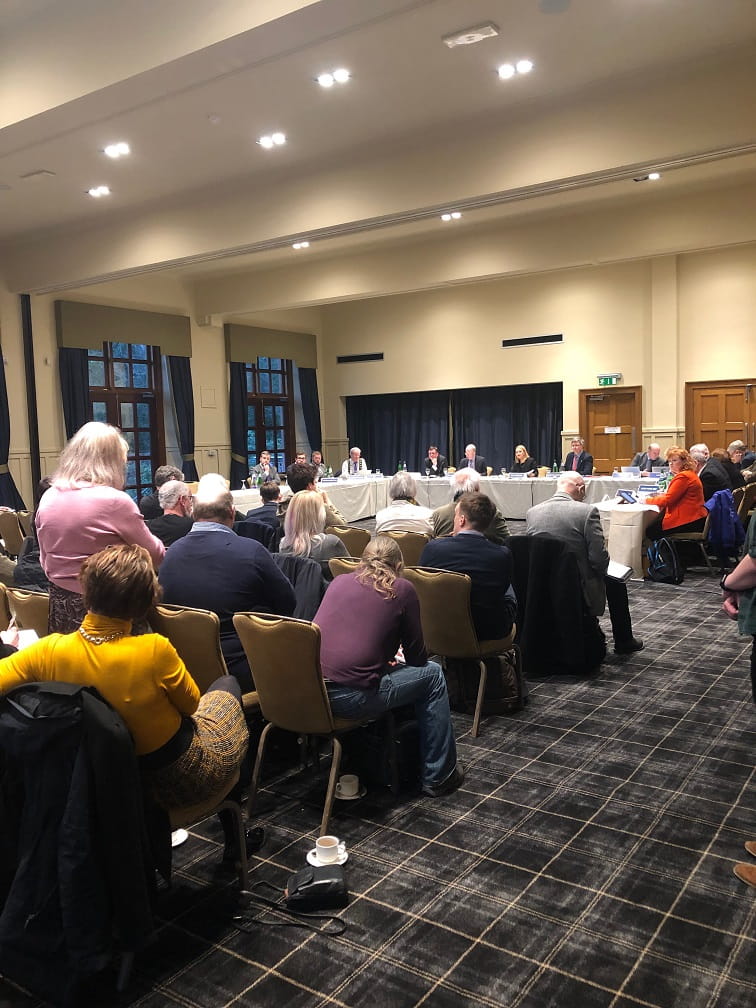
At the Committee's external meeting in Dumfries, Councillor Elaine Murray spoke for both Dumfries and Galloway and Scottish Borders Councils and stated—
We believe that its establishment can transform the efforts of current partners and drive forward the economy of the south by connecting efforts around a regional agenda and providing structure, focus, alignment and momentum. The agency must be built in and for the south of Scotland, so that it gives us collectively the power to address the social and economic challenges that bedevil our large and distinctive rural region and to maximise the potential of our considerable assets.
Rural Economy and Connectivity Committee 14 January 2019 [Draft], Councillor Murray, contrib. 4, http://www.scottish.parliament.uk/parliamentarybusiness/report.aspx?r=11893&c=2145312
Although those who engaged with the Committee overwhelmingly supported the creation of a new agency, it must be recorded that around 10% of respondents to the online survey were opposed to it in principle.
Many of those respondents who opposed the Bill believed there are already enough agencies in Scotland, and that SE should simply improve or change what they currently do in the south of Scotland. Some respondents felt that the creation of a new agency would be a waste of money, especially at a time when public finances are being squeezed. There were concerns that most of the agency’s budget will go on agency running costs, thus diverting funds “away from delivery areas which could more directly benefit the economy.”
It was argued by many witnesses that the south of Scotland has its own particular needs and challenges which justified the creation of a new enterprise agency to serve the area. Stakeholders highlighted the variation across the region, the interconnected nature of the economy and the need for tailored support. For example, the Scottish Council for Development and Industry said—
We know that there is currently a productivity issue across the south of Scotland, and there are many economic challenges to do with wages, housing and other issues that drive the economic development of the region. To overcome those challenges, we need the agency to span public, private and third sectors and, in particular, to find opportunities in the challenges to drive economic development forward.
Rural Economy and Connectivity Committee 12 December 2018, Matt Lancashire (Scottish Council for Development and Industry), contrib. 5, http://www.scottish.parliament.uk/parliamentarybusiness/report.aspx?r=11845&c=2138397
The Committee was keen to establish the views of people in the south of Scotland as to whether the performance of SE has to date been sufficient to meet the economic and social needs of the area.
It was felt by some that support for social enterprises has been “minimal” up to now. The view was expressed that because many of the enterprises in the south of Scotland are small, often employing fewer than 5 people, that SE does not appear to be interested in supporting them. There was also a belief that SE, as well as other central-belt based organisations, does not have a sufficient understanding of challenges facing social enterprises in rural areas.
The Scottish Borders Social Enterprise Chamber also noted that social enterprises in the south of Scotland do not feel the benefit of SE as most firms are small organisations with fewer than five employees. It argued for more flexible support for smaller organisations to provide work opportunities for young people, as well as older people in the area. It said—
When they need investment, they do not meet the threshold or hit the targets to be account managed...We do not want more of the same; I hope that the new agency will be the innovation that is needed.
3
The Committee understands that whilst SE provides account management and specialist support to social enterprises with growth ambitions, Business Gateway also has a role in supporting start-up social enterprises. It is understood that both work with the Scottish Government-funded Just Enterprise programme, which is designed to help social enterprises and social entrepreneurs achieve their trading ambitions.
Norma Austin Hart of Dumfries and Galloway Third Sector Interface said that she did not want to be directly critical of SE, which she felt had been constrained by its powers. She viewed as positive the introduction of a new model based on Highlands and Islands Enterprise (HIE). She said—
We, in the third sector, welcome that, because it represents an opportunity to look at communities and the regeneration of our economy and our area in a different way. The place-based approach is extremely welcome.
Rural Economy and Connectivity Committee 12 December 2018, Norma Austin Hart, contrib. 16, http://www.scottish.parliament.uk/parliamentarybusiness/report.aspx?r=11845&c=2138408
An attendee at the Committee's informal discussion event in Galashiels said that there had been some success stories in the Scottish Borders from SE support, and expressed the view that the new agency should be on the Highland and Islands Enterprise model which would deliver improvements.
When the Chief Executive of SE appeared before the Committee, he challenged the assertion that the agency had failed the south of Scotland. He explained that the agency had limited resources within which to work, and over the past 10 years it had focused those resources on sectors and on growing companies that it considered have the maximum impact on growth for Scotland. He said that in managing demands for support, SE has supported companies that have “the capability to grow in certain places and sectors”. However, he acknowledged that—
Under that model, fewer of those companies have come from the south than have come from other parts of Scotland. That is a fact...I recognise that there have been gaps in our provision. That is probably not unusual, given our limited resources. However, as we go forward, I will deploy our resources in a way that recognises the importance of regions.
Rural Economy and Connectivity Committee 19 December 2018 [Draft], Steve Dunlop, contrib. 17, http://www.scottish.parliament.uk/parliamentarybusiness/report.aspx?r=11860&c=2140699
Mr Dunlop went on to explain that work was underway to create regional economic partnerships across Scotland. He said that he saw SE playing a full role in these, partnering with the south, with HIE and with other regional economic partnerships “on a systematic basis”.
He also made clear that SE has a close interest in social enterprises with a dedicated resource focusing in that sector, account managing around 20 social enterprises, about 6 of which are in the south of Scotland. He said—
We see social enterprises through the same lens as any other business so, if a social enterprise is of scale and has growth potential, we will support it...We would like to see more activity in social enterprises and anything that we can do to allow them to grow is certainly on our agenda. We do not have anything against social enterprise—quite the contrary.
Rural Economy and Connectivity Committee 19 December 2018 [Draft], Steve Dunlop (Scottish Enterprise), contrib. 4, http://www.scottish.parliament.uk/parliamentarybusiness/report.aspx?r=11860&c=2140686
HIE told the Committee that it views social enterprise is an important opportunity in remote communities. Its representative, Douglas Cowan, said that the sector is particularly strong in the Highlands and Islands and adds around £144 million-worth of gross value to the Highlands and Islands economy. He indicated that according to a 2017 census on social enterprise in Scotland, there were 441 social enterprises in the south of Scotland which delivered more than £70 million worth of GV. He said—
...there is certainly something there to work with. I think that there is an opportunity for the new agency to engage with that sector in a different way from the way in which it has been engaged with in the past.
Rural Economy and Connectivity Committee 19 December 2018 [Draft], Douglas Cowan, contrib. 75, http://www.scottish.parliament.uk/parliamentarybusiness/report.aspx?r=11860&c=2140757
The Committee questioned the Cabinet Secretary on the views expressed by those giving evidence to the Committee which suggested that SE has not met the economic and social needs of the South. It also asked whether he anticipates the new agency taking a different approach to SE to better meet the specific needs of the south of Scotland.
In response, the Cabinet Secretary acknowledged that whilst SE has had a presence and has done good work in the South of Scotland, it is perhaps perceived as being as remote given that it does not have a physical presence in that part of the country. He expressed the view that the creation of the new agency would address this issue. He said—
...I am therefore optimistic that the new body will be able to provide the local feel, accountability and presence that SE has perhaps been perceived by some not to have had, despite all the good work that it has done over the years.
Rural Economy and Connectivity Committee 30 January 2019 [Draft], Fergus Ewing, contrib. 4, http://www.scottish.parliament.uk/parliamentarybusiness/report.aspx?r=11924&c=2149873
The Committee noted from the evidence presented by Professor Russel Griggs in Dumfries that the creation of the new agency provided an opportunity to take a fresh approach to economic development in the area. He said—
We want to stop talking about businesses and talk instead about growing enterprises. It does not matter whether the enterprise is a community, a social enterprise, a small business or a large one. We want to see a culture of change through the new enterprise agency, with an understanding that we give support to everybody who wants to help to grow the economy.
Rural Economy and Connectivity Committee 14 January 2019 [Draft], Professor Griggs, contrib. 22, http://www.scottish.parliament.uk/parliamentarybusiness/report.aspx?r=11893&c=2145330
The Committee heard from several witnesses about the importance of placemaking and the role that new agency could have in developing this approach in the south of Scotland. For example, Ian Cooke of the Development Trust Association Scotland said—
A key challenge for the new agency will be to look at what it can do beyond its narrow economic remit. Unless there is more affordable housing, young people will leave or will not come back to the south. The agency needs to have a wider vision and look at how economics sits within the creation of good-quality places where folk want to work and live.
Rural Economy and Connectivity Committee 14 January 2019, Ian Cooke, contrib. 189, http://www.scottish.parliament.uk/parliamentarybusiness/report.aspx?r=11893&c=2145497
This view was shared by Dr Calum Macleod of Community Land Scotland who suggested that there was a need to look at the conditions that will need to exist in order to improve the prospects for repopulation in rural areas. He said—
The solution needs to focus on placemaking and on having in place the right conditions and infrastructure, and the opportunities for jobs and for the wellbeing of communities more broadly... It is clear that the agency has an important part to play, if not an exclusive remit, at the regional level in that regard.
Rural Economy and Connectivity Committee 14 January 2019, Dr Macleod, contrib. 190, http://www.scottish.parliament.uk/parliamentarybusiness/report.aspx?r=11893&c=2145498
The Committee agrees that it will be important that the new agency has a focus on placemaking in all aspects of its work.
The Committee is in no doubt that the creation of a new enterprise agency in the south of Scotland is required. It is clear that the area faces a significant number of economic, social and geographic challenges which are not being sufficiently addressed through current economic support mechanisms. It supports the Scottish Government's view that the the new agency will help support the enterprise and skills needs of the area and provide a vehicle by which to encourage economic growth.
The Committee commends the significant consultation and preparation work carried to date by SoSEP. It is of the view that this provides a solid foundation on which to develop the new agency.
Area to be covered by the agency
The Scottish Government views the South of Scotland as a distinct area requiring a “tailored approach” to economic development. The Bill defines that area as that covering Dumfries and Galloway and Scottish Borders local authority areas.
Some respondents stressed that the geographical area covered by the new agency is actually quite diverse. Some believe that the Scottish Borders has no special relationship or similarities with areas of Dumfries and Galloway. One respondent to the Committee's online survey asked:- “what does Stranraer have in common with Eyemouth?”
The Committee notes that the area to be covered by the new agency is not the only part of Scotland experiencing economic, social and demographic challenges. In terms of GVA per head, for example, neither area is even in the bottom 5 of Scotland’s local authority areas. Indeed, it has long been the case that East Ayrshire and North Ayrshire perform less well across various key indicators, for example output per head, unemployment and economic inactivity.
The Committee further observes that in the Scottish Government’s analysis of consultation responses, it was noted that some respondents questioned the geographical boundaries of the “South of Scotland” as defined by the Enterprise and Skills Review. They suggested that other similar rural communities – amongst others, South Ayrshire, East Ayrshire and South Lanarkshire - face similar problems to Dumfries and Galloway and the Scottish Borders and would therefore also benefit from the new agency’s activities.
The Committee explored this issue. with witnesses, and the clear message was given that the geographical boundaries of the new agency as proposed in the Bill were the most appropriate. For example, Rob Dickson of SoSEP said—
Rurality is greater across those two council areas than in the areas that extend into South Ayrshire or South Lanarkshire, or the other Ayrshires. Even on a measure of population density, one can see that the changes are quite stark when one crosses into those other areas.
Rural Economy and Connectivity Committee 14 January 2019 [Draft], Rob Dickson (South of Scotland Economic Partnership), contrib. 39, http://www.scottish.parliament.uk/parliamentarybusiness/report.aspx?r=11893&c=2145347
When questioned on this issue, the Cabinet Secretary explained to the Committee that consideration was given at the consultation stage as to whether the Ayrshire councils and South Lanarkshire Council should be included within the geographical boundaries within which the new agency would operate. He advised that the majority view expressed was that it should have the geographical boundaries proposed in the Bill.
He went on to explain that the three Ayrshire councils are already co-operating on the Ayrshire growth deal and that South Lanarkshire is linked to the Glasgow city region deal. He also indicated that there are proposals for regional economic partnerships which “are designed to ensure that there is good performance on economic development in every part of the country”.
The Cabinet Secretary also stressed the importance of collaboration between public sector bodies at all levels was key to delivering improvements. As an example of such collaboration, he highlighted work carried out by SE and HIE to work out a common scheme to assist all five of Scotland’s ski resorts to access funding to upgrade their facilities. However, the Cabinet Secretary also indicated that that he was mindful of the need to monitor progress to ensure that there was no negative impact on neighbouring local authority areas. He said—
We must keep a watching brief to make sure that the bordering areas that will not be in the south of Scotland enterprise area do not lose out. I am sure that we will monitor and keep an eye on that as we proceed.
Rural Economy and Connectivity Committee 30 January 2019 [Draft], Fergus Ewing, contrib. 11, http://www.scottish.parliament.uk/parliamentarybusiness/report.aspx?r=11924&c=2149880
The Committee also heard in evidence that businesses in the area that the new agency will cover might have to rely on businesses in other areas to supply some of the raw materials that they need, or to access services, skills or apprenticeships. It questioned whether the Bill would provide for this. The Cabinet Secretary indicated that a flexible approach would be taken in relation to cross-border issues. Felicity Cullen of the Scottish Government Legal Directorate also explained that the Bill provided for this. She said—
The body will operate in Dumfries and Galloway and in the Scottish Borders, but section 7 has been drafted deliberately to allow it to do things that will help it to undertake its functions without limiting it to those areas.
Rural Economy and Connectivity Committee 30 January 2019 [Draft], Felicity Cullen (Scottish Government), contrib. 14, http://www.scottish.parliament.uk/parliamentarybusiness/report.aspx?r=11924&c=2149883
The Committee recognises that communities in adjoining local authority areas may face similar challenges to those in Dumfries and Galloway and Scottish Borders council areas. It calls on the Scottish Government and SE to ensure that these areas continue to have access to economic development opportunities appropriate to their needs.
The Committee is satisfied with the proposal that the new enterprise agency should cover Dumfries and Galloway and Scottish Borders council areas only.
The Committee calls on the Scottish Government to confirm that the Bill provides for the new agency to have sufficient flexibility to allow it to operate outwith its geographical boundaries and to collaborate with other enterprise agencies in order to fulfil its role.
Interaction of the agency with existing bodies
The South of Scotland is currently served by national agencies, Scottish Enterprise, Skills Development Scotland and the Scottish Funding Council, as well as the two local authorities. The respective responsibilities of each of these bodies are as follows—
Scottish Enterprise – along with HIE, SE has statutory powers to promote and assist economic development, enterprise and international competitiveness across Scotland. This includes working directly with businesses to increase turnover, exports, employment and innovation. The Bill’s Policy Memorandum states that SE will continue to have a presence in the south of Scotland, delivering national level programmes. These are likely to include Regional Selective Assistance and the Scottish Manufacturing Advisory Service.
Skills Development Scotland – SDS is Scotland’s national skills agency. It develops and reports on a range of sectoral and regional labour market intelligence, holds data on the learning and employment status of 16 to 24-year olds and directly contracts for Modern Apprenticeships and other skills programmes. It also provides career information, advice and guidance in schools and its centres across the country. SDS will continue to deliver national training programmes and careers advice in the South.
Local authorities – since 2008, Business Gateway services have been delivered by Scotland’s 32 local authorities. Business Gateway provides advice, information and training to people looking to either start their own business or grow an existing one. In addition, local authorities can support businesses in areas such as skills advice, grants or loans, land and services, procurement advice, recruitment assistance and some wage subsidies.
Scottish Funding Council - is the national strategic body responsible for the funding of teaching and learning provision, research and other activities taking place in Scotland’s colleges and universities. The agency develops policies and strategies that support Scottish Government priorities in these areas, and works with other public bodies to ensure the quality of teaching in colleges and higher education institutions is assessed and enhanced.
The Committee considered with witnesses how the new agency will work with SE, which will continue to play a role in the South of Scotland. Matt Lancashire of the Scottish Council for Development and Industry said—
We should not look at Scottish Enterprise and the new agency as competing and combative entities. For the new south of Scotland agency to work, it will need to work with Scottish Enterprise in order for them to be more than the sum of their parts.
Rural Economy and Connectivity Committee 12 December 2018 [Draft], Matt Lancashire, contrib. 18, http://www.scottish.parliament.uk/parliamentarybusiness/report.aspx?r=11845&c=2138410
Professor Russel Griggs of SoSEP set out his aspirations for how the various enterprise agencies will work together. He said—
As the agency develops, it may well develop some skill sets that are useful to the rest of Scotland. As we grow the three economic development agencies across Scotland, we want to see better sharing of expertise between them; we do not need an expert for everything that we do in every one of the agencies. That will get round the issue of duplication.
Rural Economy and Connectivity Committee 14 January 2019 [Draft], Professor Griggs, contrib. 31, http://www.scottish.parliament.uk/parliamentarybusiness/report.aspx?r=11893&c=2145339
There was agreement that more needs to be done in the region to support business start-ups and growth companies, and also build the skills-base. It was acknowledged, however, that these are currently operational areas of SE, Business Gateway and Skills Development Scotland, all of whom will continue to have a presence in the area.
However, when questioned about the risk of duplication, some witnesses spoke of their hopes for the new agency in providing “additionality”, and emphasised the need for partnership and collaboration. Members were keen to establish whether the various organisations working in the south of Scotland view the new agency as being in addition to, rather than replacing, the work they are already delivering in the area. Chris Brodie of Skills Development Scotland said—
...that is absolutely how we see the work of the new agency. I am a member of the SOSEP board, and a strong theme for us is that the new agency is not about replacing or taking away. The problems of the south are deep seated and will require a long-term commitment from all the partners around this table.
Rural Economy and Connectivity Committee 19 December 2018 [Draft], Chris Brodie, contrib. 88, http://www.scottish.parliament.uk/parliamentarybusiness/report.aspx?r=11860&c=2140770
The issue of organisational clutter, as well as concerns about additional bureaucracy, arose in some submissions to the Committee's online survey. On the suggestion the new agency could perhaps add to organisational clutter in the region, Steve Dunlop of SE said—
I am extremely confident that we will see a less cluttered landscape. I expect the hand-offs and sharing of resource to be invisible to the customer—people should simply see the system and wherever they come into it, they should get excellent service. We are all committed to delivering that.
Rural Economy and Connectivity Committee 19 December 2018 [Draft], Steve Dunlop, contrib. 114, http://www.scottish.parliament.uk/parliamentarybusiness/report.aspx?r=11860&c=2140796
In a similar vein, Michael Cross of the Scottish Further and Higher Education Funding Council highlighted the work already being done by SoSEP to encourage collaboration in the south of Scotland. He said—
One of the things that struck me was the momentum that Russel Griggs and Rob Dickson have lent to the agenda. They have convened the right stakeholders around one table and have developed a clear focus on accelerating growth in the south of Scotland.
Rural Economy and Connectivity Committee 19 December 2018 [Draft], Michael Cross, contrib. 125, http://www.scottish.parliament.uk/parliamentarybusiness/report.aspx?r=11860&c=2140807
Rob Dickson of SoSEP provided further information on the work being undertaken by the partnership in this regard. He said—
The willingness of the partners to sit around the table and contribute their resources in new and different ways has been one of the most exciting things that the partnership has been able to achieve in the past year...The accountability needs to sit with each agency, which is positioned clearly as delivering something in the south for which it should be accountable, in time, to the south of Scotland enterprise agency.
Rural Economy and Connectivity Committee 14 January 2019 [Draft], Rob Dickson, contrib. 71, http://www.scottish.parliament.uk/parliamentarybusiness/report.aspx?r=11893&c=2145379
During the evidence session in Dumfries, the Committee asked Dumfries and Galloway Council about the risk of duplication, especially as councils will continue to have vital roles to play in economic development and business support. Asked about possible mechanisms which could prevent duplication, Councillor Elaine Murray responded—
It could be done through some sort of memorandum of understanding between the different partners on what we all bring to the table and what we expect one another to contribute...We will need to have something in place to ensure that the agency works as effectively as possible.
The Cabinet Secretary acknowledged that SE will have a continuing role in the south of Scotland in certain areas as there would be nothing gained by duplicating an expert range of services in each economic development agency. However, in terms of his aspirations for the relationship between SE and the new agency, he stated—
The two bodies will sit alongside each other; they will be equals. The south of Scotland body will not be subservient. There will be an equality of relationship. They are different bodies. SE will be bigger—it will have a bigger budget and it will serve a bigger population—but they will be equals. Scottish Enterprise will not run the new agency. The new agency will run itself and be the master of its own fate, and it will be accountable to ministers and Parliament.
Rural Economy and Connectivity Committee 30 January 2019 [Draft], Fergus Ewing, contrib. 62, http://www.scottish.parliament.uk/parliamentarybusiness/report.aspx?r=11924&c=2149931
The Committee sought a response from the Cabinet Secretary to the concerns that were raised in evidence about the additional bureaucracy that might be associated with the introduction of a new agency, given that it will not displace in entirety some existing services. He said—
An element of bureaucracy will always be with us...The aim is to ensure that the body operates as efficiently as possible...—quickly and responsively and by going out to speak to people and find out what is happening. That is how things are achieved. If there are any specific examples of bureaucracy, I am happy to look into them and see what can be done about them.
Rural Economy and Connectivity Committee 30 January 2019 [Draft], Fergus Ewing, contrib. 60, http://www.scottish.parliament.uk/parliamentarybusiness/report.aspx?r=11924&c=2149929
The Cabinet Secretary also emphasised the importance of collaboration between the enterprise agencies, local authorities and other public bodies. He noted the specific suggestion heard in evidence that there should be a Memorandum of Understanding setting out their respective and shared roles. His view was that although this could be one method of ensuring the necessary collaboration takes place, the most important factor was a commitment to effective joint working between all parties.
The Committee is clear that the creation of a new south of Scotland enterprise agency should enhance the current support landscape rather than adversely impact on any existing provision.
The Committee therefore calls on the Scottish Government to ensure the development of appropriate mechanisms to facilitate collaboration and coordination between the new agency and all of the various existing agencies operating in the region, and with the Strategic Board. This should build on the positive work already being carried out by SoSEP in this regard. The Committee calls on the Scottish Government to provide information on how it proposes to proceed in this matter before Stage 2 consideration of the Bill.
Agency powers and objectives
The Bill sets out the aims and powers of the new agency, but does not specify how these are to be achieved. It will be for the agency's Board to decide and the Scottish Government to agree on how these aims will be delivered. The Bill specifies the aims of new agency as being to—
further the economic and social development of the South of Scotland; and
improve the amenity and environment of the South of Scotland.
The Bill further states that the aim of "furthering the economic and social development of the South of Scotland" includes—
supporting inclusive economic growth
providing, maintaining and safeguarding employment,
enhancing skills and capacities relevant to employment
encouraging business start-ups and entrepreneurship,
promoting commercial and industrial efficiency, innovativeness, and international competitiveness,
supporting community organisations to help them meet their communities’ needs.
The Committee acknowledges that the list of aims in the Bill is relatively detailed and includes some objectives that have not been priorities for SE for some years. However, the lack of detail in relation to the aim to "improve the amenity and environment"attracted some attention from various respondents.
For example, the John Muir Trust called for the agency to have a role in protecting “our wildland and wild places from damaging land management practices and inappropriate development”. The Solway Firth Partnership also felt that "Sustainable use of the environment" should be considered and mentioned within the Bill. It stated—
It cannot be stressed highly enough that the natural environment including the marine and coastal environment plays a key role in the economy and cultural diversity of the south of Scotland and if it is not given due prominence in the new bill its importance is likely to be overlooked to the detriment of the region.
In its written submission, the Southern Uplands Partnership said that it believes that the Bill would benefit from enhancement of the aim to “improve the amenity and environment of the South of Scotland”. The Partnership suggested inclusion of the following specific references—
Support efforts to improve recreational provision that attracts visitors to the South of Scotland
Support initiatives that sustain and enhance Biodiversity and landscapes as a contribution to making the South Scotland an attractive place to invest.
Other respondents made suggestions as to how the list of activities set out in section 5(2) to support the aim of "furthering the economic and social development of the south of Scotland" might be developed further.
For example, Dr Calum McLeod of Community Land Scotland strongly advocated making explicit reference to supporting community ownership of land and other assets in the Bill. He was also if the view that part of the remit of the new agency should be to establish a community assets team within the new agency, similar to that operated by HIE.
Several respondents to the online survey such as Ann Johnstone, Muirhall Energy and Centrifuge Consulting Limited felt that the remit of the new agency should be strengthened in the Bill to place greater emphasis on encouraging sustainable economic growth.
In its written response, the STUC welcomed a commitment to ‘providing, maintaining and safeguarding employment’ in section 5(2) but suggested that this section should also include "a commitment to furthering fair work and collective bargaining coverage in the South of Scotland".
The Committee noted the importance of small to medium enterprises in the south of Scotland and questioned whether specific reference to these should be included on the face of the Bill. In response, the Federation of Small Businesses said—
Yes. That is a fair point. We ought to consider the nature of the economy of the south of Scotland. In the Borders, for example, more than 50 per cent of the workforce is employed by small businesses, which is not the case in other parts of Scotland...The key sectors that Scottish Enterprise focuses on in its account management are not necessarily what will drive the growth in productivity that we want to see in the south of Scotland.
Rural Economy and Connectivity Committee 12 December 2018 [Draft], Garry Clark, contrib. 10, http://www.scottish.parliament.uk/parliamentarybusiness/report.aspx?r=11845&c=2138402
Other witnesses felt that the framing of the aims for the new agency in the Bill was sufficient and would afford it the flexibility it will require for it to be most effective. For example, Professor Russel Griggs said—
The bill is fine, as long as we place it in the context of what we are talking about, which is the need to get everybody, not just businesses, to contribute to economic development in the south of Scotland.
Rural Economy and Connectivity Committee 14 January 2019 [Draft], Professor Griggs, contrib. 74, http://www.scottish.parliament.uk/parliamentarybusiness/report.aspx?r=11893&c=2145382
The Committee asked the Cabinet Secretary whether the aims set out in section 5 of the Bill, particularly in relation to those related to improving the amenity and environment, were sufficiently comprehensive to provide assurance that the particular needs of the area would be addressed. He explained that these provisions had been intentionally framed in broad terms to avoid restricting the scope and responsibilities of the new agency. He said—
It would be unnecessary to have a long list of things that will be dealt with in implementing the powers; it will be for the action plan to go into that later. However, ...the powers have been framed correctly, so that the agency will have the widest powers to assist in improving the amenity and the environment.
Rural Economy and Connectivity Committee 30 January 2019 [Draft], Fergus Ewing, contrib. 17, http://www.scottish.parliament.uk/parliamentarybusiness/report.aspx?r=11924&c=2149886
The Bill does not specifically mention transport or digital connectivity issues. This concerned some survey respondents. For example, Newcastleton & District Community Trust said that it believes the Bill lacks powers to influence infrastructure decisions on transport and connectivity and stated in its written submission that “all these factors have a direct influence on the positive outcomes (the agency) seeks to deliver”.
The Committee also heard from Councillor Mark Rowley of Scottish Borders Council who, whilst acknowledging the importance of such connectivity issues, felt that it would not be appropriate for them to appear on the face of the Bill. He stated—
...it is important that the bill is a high-level and enabling piece of legislation, and that it looks forward across 10, 20 and even 30 years and will still be relevant then. The topics that have been mentioned are very much for the board to tackle through its work plan.
Rural Economy and Connectivity Committee 14 January 2019 [Draft], Councillor Rowley, contrib. 95, http://www.scottish.parliament.uk/parliamentarybusiness/report.aspx?r=11893&c=2145403
Committee members questioned the Cabinet Secretary as to why the Bill does not mention either transport or digital connectivity, considering how important these key infrastructure issues are for the people of the south of Scotland. The point was made that an amendment was made to add explicit reference to these issues during the parliamentary consideration of the Islands (Scotland) Act 2018, when the bill as introduced made no such reference.
In responding to this, the Cabinet Secretary asserted that he did not consider it to be appropriate for these areas to be included on the face of the Bill given that the new agency would not have policy or fiscal responsibility for their delivery. He said—
The approach that we have set out in no way constricts the body in the achievement of those aims. However, there is a risk in setting out duties for a body with no budget. If one does that, it can unfairly raise expectations of the body that has been charged with duties but does not have the budget to deliver them.
Rural Economy and Connectivity Committee 30 January 2019 [Draft], Fergus Ewing, contrib. 23, http://www.scottish.parliament.uk/parliamentarybusiness/report.aspx?r=11924&c=2149892
The Committee also heard that a significant challenge for the economy in the south of Scotland is that many young people leave the area to take up jobs and further education opportunities and do not return. Many of those who provided evidence and attended the informal workshop events made clear that attracting and retaining more working-age people should be a key objective for the new agency. For example, Chris Brodie of Skills Development Scotland told the Committee—
...the demographics of the region are challenging...The working-age population is expected to fall by about 8 per cent or 12,000 people over the next 10 years, and a big driver of that is that too many young people are leaving the region for work or study.
Rural Economy and Connectivity Committee 19 December 2018 [Draft], Chris Brodie (Skills Development Scotland), contrib. 5, http://www.scottish.parliament.uk/parliamentarybusiness/report.aspx?r=11860&c=2140687
Gary Clark of the Federation of Small Businesses suggested that action to retain young people in the area should be a key objective of the new agency. He said—
We need to do more to anchor young people, in particular, in the south by creating opportunities for them to start up their own businesses or to work in local businesses.
Rural Economy and Connectivity Committee 12 December 2018, Garry Clark, contrib. 29, http://www.scottish.parliament.uk/parliamentarybusiness/report.aspx?r=11845&c=2138421
Lorna Young of Indigo Words argued that there should not necessarily be a focus on preventing young people from leaving the area, as they will naturally want to experience other places or develop skills elsewhere. She said—
What we need is a more balanced demographic...We need to provide opportunities for people who want to come back, perhaps to start a family or to experience the high quality of life in the south of Scotland. We need to understand our region’s broader offer to people in every demographic.
Rural Economy and Connectivity Committee 14 January 2019 [Draft], Lorna Young (Indigo Words), contrib. 148, http://www.scottish.parliament.uk/parliamentarybusiness/report.aspx?r=11893&c=2145456
The Cabinet Secretary acknowledged that there is a particular problem relating to the retention of young people in rural and remote areas of Scotland at a strategic level. He suggested that one of the successes of HIE and others has been to begin to address that issue. He said—
For the first time, I think, a significant majority of young people in the Highlands and Islands think that they have a future there, and that is a terrific thing. That is the overall, strategic aim on which we want to deliver.
Rural Economy and Connectivity Committee 30 January 2019 [Draft], Fergus Ewing, contrib. 32, http://www.scottish.parliament.uk/parliamentarybusiness/report.aspx?r=11924&c=2149901
The Committee is of the view that a key aim of the new agency should be to create an economic and social environment that will help to address the demographic challenges faced by the area.
The Committee notes that the DPLR Committee's report on the delegated powers in the Bill draws its attention to the already broad nature of the new agency's aims in section 5(1) and (2). The DPLR Committee recommends that further consideration is given to whether the power in section 5(3) is limited to setting out in more detail what “furthering the economic and social development of the South of Scotland”, or “improving the amenity and environment” of that area, can include, rather than a power to modify section 5 as a whole.
The Committee acknowledges that the broad aims for the new agency set out in section 5 of the Bill have been drafted with the express purpose of avoiding a prescriptive approach and thus providing it with flexibility with regard to its activity.
However, the Committee is of the view that the aim to "improve the amenity and environment" of the area covered by the new agency would benefit from being supplemented with a greater level of detail. It therefore calls on the Scottish Government to amend this aim at Stage 2 to make specific provision in relation to—
the sustainable use of the environment
The Committee further calls on the Scottish Government to amend the aim of "furthering the economic and social development of the South of Scotland" to make specific provision in relation to—
encouraging the development of a sustainable economy
supporting the enhancement of transport networks and digital connectivity
supporting community land ownership and assets ownership
furthering fair work
encouraging the creation of a more balanced demographic
Following the recommendation in the DPLR Committee's report on the delegated powers in the Bill, the Committee also calls on the Scottish Government to provide clarity as to whether the purpose of section 5(3) of the Bill is to allow more detail to be added to the aims set out in sections 5(1) and 5(2), or if it is to allow modifications to section 5 as a whole.
Comparison with powers of Highlands and Islands Enterprise
Whilst the list of aims for the new agency included in the Bill is relatively detailed, it is somewhat limited in comparison to the list of powers included in Section 8 of the Enterprise and New Towns (Scotland) Act 1990, the Act establishing SE and HIE as we now know them. For example, the 1990 Act granted SE and HIE some compulsory acquisition and other powers which are not replicated in the current Bill. Asked about this specific point when giving evidence, the Scottish Government Bill team confirmed:
It is fair to say that a lot of the complexity in the 1990 act surrounds powers that—as a matter of policy—the Government is not proposing to give to south of Scotland enterprise. Those powers include compulsory purchase powers, powers to enter on to land without permission, and powers to require people to give information under penalty of criminal sanction for not providing it. As a matter of policy, those powers are not being pursued for the south of Scotland agency.
Rural Economy and Connectivity Committee 28 November 2018, Fraser Gough, contrib. 65, http://www.scottish.parliament.uk/parliamentarybusiness/report.aspx?r=11815&c=2133246
The Committee received a submission from John Crawford, previously a solicitor in the legal section of SE. He expressed concerns about the decision to exclude compulsory land purchase and information gathering powers from the Bill, believing “these are important powers and should be clearly set out in the primary legislation”.
However, the Committee notes that when giving evidence, both SE and HIE confirmed that have never used their compulsory purchase order powers. HIE also expressed the view that the fact that the agency would not have these powers would not inhibit its work once it is working collaboratively with partners.
At the Committee's external meeting in Dumfries, representatives from both Scottish Borders and Dumfries and Galloway Councils confirmed that they saw no need for compulsory purchase powers to be included in the Bill. The point was made that if close partnership working is in place, as is intended, the compulsory purchase powers held by local authorities could be used if required.
The Cabinet Secretary told the Committee that whilst, in principle, there should be an equivalence of powers between HIE and the new south of Scotland agency, he noted the point made by other witnesses that the compulsory purchase powers held by SE and HIE have never been used by either body. He said that compulsory purchase tends to be a last resort for public bodies and the new agency will have the ability to purchase and sell its own assets and to work with other bodies such local authorities on such matters. He stated—
We do not believe that the power of compulsory purchase is a necessary one for the south of Scotland agency to have, because we expect it to work collaboratively.
Rural Economy and Connectivity Committee 30 January 2019 [Draft], Fergus Ewing, contrib. 27, http://www.scottish.parliament.uk/parliamentarybusiness/report.aspx?r=11924&c=2149896
The Cabinet Secretary also indicated that he would reflect further on the other powers held by existing enterprise agencies which are not proposed for the new agency, namely the power to enter land and the power to acquire information. He stated that he would advise the Committee of any change in the Scottish Government's position on these matters.
The Committee notes that the new south of Scotland enterprise agency will not have the compulsory purchase powers that are available to SE and HIE. However, it is satisfied from the evidence heard that these are not required and will not put the new agency at a disadvantage.
The Committee further notes that the Cabinet Secretary will reflect further on whether there should be any change to the proposal that the new agency should not have the powers held by existing enterprise agencies to enter on to land without permission and to require people to provide information.
Operational matters
Location of the new agency
The Bill provides for the location of the headquarters of the new enterprise agency to be specified by the Scottish Ministers following consultation. It is not specified in the Bill. The Policy Memorandum states that—
…it is vital that the new organisation is accessible to businesses and communities across the south of Scotland, and this will be taken into consideration when decisions on location, operational structure and approaches to service delivery are being made. Co-location with other organisations will be considered to ensure cost-effective and joined up delivery which is visible and accessible to all stakeholders.
South of Scotland Enterprise Bill Policy Memorandum, paragraph 35.
The majority of those giving evidence to the Committee were of the view that co-location would be the appropriate model. For example, the Federation of Small Business said—
Co-location has to be the answer. There is a commonality across the south of Scotland, but there is enough diversity. In the Borders, every town is different and has its individual character, and the same can be said for Dumfries and Galloway... If it is to integrate with the functions of Skills Development Scotland, the councils, business gateway and Scottish Enterprise, it needs to co-locate with those organisations.
Rural Economy and Connectivity Committee 12 December 2018 [Draft], Garry Clark, contrib. 75, http://www.scottish.parliament.uk/parliamentarybusiness/report.aspx?r=11845&c=2138467
Malcolm Roughead, chief executive of VisitScotland, was also of the view that co-location would be beneficial in terms of the profile and public perception of the new agency. He said—
…the sense of ownership of the new agency in the south is quite strong at the moment. If we are to build on that and keep the momentum going, people will have to see it and feel it—it will have to be a tangible part of their lives. The easiest way to do that is through co-location to ensure that there are people across the region and they are not just based in one place.
Neale McQuestin of New Luce Community Trust emphasised the importance of a presence across all areas of the region if the agency is to be deemed as being successful. He said—
If people in Drummore—which is as far west as you can go—wake up in two years’ time and discover that the south of Scotland enterprise agency is in Dumfries, we will have failed. If people in Eyemouth wake up in two years’ time and discover that the agency is in St Boswells, we will have failed. We need to ensure that the whole of the south is feeling the heat.
Rural Economy and Connectivity Committee 14 January 2019 [Draft], Neale McQuistin, contrib. 171, http://www.scottish.parliament.uk/parliamentarybusiness/report.aspx?r=11893&c=2145479
Professor Russel Griggs explained SoSEP's thinking on how co-location would work in practice. He said—
A lot of our resource will go on co-location with community organisations, social enterprises and businesses; we will have hot desks everywhere. That will allow us to use our resource funding to create an economic driver by providing extra income to those places.
Rural Economy and Connectivity Committee 14 January 2019 [Draft], Professor Griggs, contrib. 54, http://www.scottish.parliament.uk/parliamentarybusiness/report.aspx?r=11893&c=2145362
The Committee agrees with the Scottish Government's intention that the services of the south of Scotland enterprise agency should be co-located with other agencies where this is practical. It considers that this will bring significant benefits, in terms of having a presence in and being accessible across its whole area, aiding the provision of a "one-stop shop" approach, as well as being more cost-effective.
The Committee is content with the other provisions set out in sections 9-12 of the Bill which relate to operational matters for the new agency.
Governance and accountability
Governance of the new agency
The Bill makes provision for the Scottish Government to appoint a chair and members of the new south of Scotland enterprise agency's board. It does not specify what skills and experiences are required of them. The Policy Memorandum states—
Members will be chosen to provide a balanced mix of relevant skills and expertise which reflect the business and communities of the south of Scotland and the responsibilities of the body, but the Bill does not specify a list of required areas of expertise.
During the Committee’s public meeting in Dumfries, the issue of accountability and board membership was discussed. Some felt there should be provision in the Bill to ensure young people are on the board. Other audience members were concerned that the Scottish Government will be responsible for appointing board members. It was suggested that these appointments should be agreed by communities in the south of Scotland.
In giving evidence to the Committee, Margaret Simpson said that she did not have an issue with ministers making decisions on the membership of the board, as long as there was local discussion to ensure the best candidates are identified. She said—
It is more important that we get the right people involved on the board and that it covers the whole of the region. I keep saying that we should not be looking at the same old, same old. We need to get the quality right for the future of the south of Scotland.
Rural Economy and Connectivity Committee 12 December 2018, Margaret Simpson, contrib. 81, http://www.scottish.parliament.uk/parliamentarybusiness/report.aspx?r=11845&c=2138473
Norma Austin Hart highlighted a challenge in identifying people to represent the wide and diverse third sector in the south of Scotland, saying that—
There are 2,300 voluntary organisations in Dumfries and Galloway, and I suspect that there will be a similar number in the Scottish Borders. Of course, the third sector hopes for adequate representation on the board, but it seems to me...that it is very hard for one person to represent 2,300 organisations. I do not necessarily have an answer to that, but I think that it needs careful consideration.
Rural Economy and Connectivity Committee 12 December 2018, Norma Austin Hart, contrib. 89, http://www.scottish.parliament.uk/parliamentarybusiness/report.aspx?r=11845&c=2138481
Dr Calum McLeod of Community Land Scotland commented that the representation on the board should be as broad as possible and cover the widest possible community interests. He said—
We are talking about doing things differently. If we want the new agency to actually address economic, social, environmental and cultural issues, we need it to have bottom-up, grass-roots accountability.
Rural Economy and Connectivity Committee 14 January 2019 [Draft], Dr Macleod, contrib. 178, http://www.scottish.parliament.uk/parliamentarybusiness/report.aspx?r=11893&c=2145486
The Cabinet Secretary indicated that he had confidence in the formal public appointments system to identify the most appropriate and best qualified people to sit on the board. He made clear, however, that it would be important to ensure that the best people are encouraged put themselves forward for the role. He said—
We must reach out to try to get people beyond the usual suspects. That is not easy to do because, in general, people who have a lot to do are extremely busy doing what they are already doing—they may run businesses or hold down important posts in public bodies. However, a common view has been expressed that we should do that, and I am determined that that will be the practical way by which we will get the best calibre and contribution of local people to the south of Scotland enterprise agency.
Rural Economy and Connectivity Committee 30 January 2019 [Draft], Fergus Ewing, contrib. 30, http://www.scottish.parliament.uk/parliamentarybusiness/report.aspx?r=11924&c=2149899
The issue of whether councillors from the constituent local authorities should sit on the board was also discussed during the Committee's evidence sessions. At its meeting in Dumfries, Councillor Mark Rowley of Scottish Borders Council expressed his opposition to this. He said—
I initially thought that the councils should be represented on the board, but now I do not think that they should. The board has to run things, and councils have to become very good and critical friends of the agency once it is established. We will probably have a much louder voice if we direct our comments to the agency from outside, rather than being on the board and having to sit on our council hands.
Rural Economy and Connectivity Committee 14 January 2019 [Draft], Councillor Rowley, contrib. 103, http://www.scottish.parliament.uk/parliamentarybusiness/report.aspx?r=11893&c=2145411
In responding to questioning on this issue, the Cabinet Secretary expressed the view that representatives from local authorities often make a valuable contribution to the work of public bodies. However, he made clear that, whilst it would not be desirable for councils to have automatic positions on the board, it would be open to councillors to put themselves forward for membership and be considered alongside other applicants.
In response to the specific call for young people to be involved in the board, the Cabinet Secretary indicated that, whilst he was unsure how many would wish to be a member, the opportunity should be available to all. He explained that the Scottish Government has engaged with representatives of organisations such as Young Scot and the Scottish Youth Parliament and indicated that he would be open to considering any further specific suggestions about action which might be taken in encourage the involvement of young people.
The Committee is in no doubt of the importance of getting the board membership right and ensuring that it is made up of individuals with as wide a range of interests, skills, expertise and experience relevant to the south of Scotland as is possible.
The Committee notes the considerable support for and interest in the proposed new agency across all sectors in the south of Scotland. It considers it to be essential that this interest is harnessed and used to encourage applications from as wide a range of interests as possible.
Interaction with the enterprise agency Strategic Board
The Enterprise and Skills Review’s recommended the establishment of a Strategic Board to align and co-ordinate the activities of Scotland's enterprise and skills agencies. The Board was created in November 2017, chaired by Nora Senior, and its strategic plan was published in November. The Bill Team confirmed that the South Of Scotland agency to be part of the strategic board process, as are the chairs of other enterprise agencies.
The Committee sought to establish why, given the importance of the Strategic Board to the Scottish Government’s enterprise and skills reform agenda, there is no mention of it in either the Bill or the Policy Memorandum.
The Cabinet Secretary advised the Committee that, as the Strategic Board has no statutory footing, there would be no expectation that it should appear in the Bill. He did, however, give an undertaking to consider this matter further and advise the Committee if there is any action required.
The Committee welcomes the Cabinet's Secretary's offer to consider and provide advice on whether the Strategic Board should be mentioned on the face of the Bill.
Accountability of the new agency
The Committee noted that the Bill is clear on how the agency will report to and be held to account by Scottish Ministers. It gives them power by regulations to alter the agency’s aims, to approve the action plan, to decide on the location of the headquarters and to issue directions to the agency, without consulting it. However, the Committee was keen to explore what mechanisms would be in place to ensure that the agency will be held to account by stakeholders in the local community.
One of the online respondents, Ross Henderson, said that “some form of direct accountability to the people of the south of Scotland” should be considered in the Bill. Another respondent believes the Bill should require regular, formal meetings with community groups. The National Farmers Union Scotland supports the creation of “an advisory board made up of representatives of the established business sectors in the south of Scotland to identify opportunities and scrutinise spending”
When giving evidence to the Committee in Dumfries, Councillor Elaine Murray expressed the view that reporting back to the communities was of great importance. She said—
On the issue of accountability...I am more concerned about how people are held to account by local communities, and I would like reports on the action plan to be sent back—as they are from Police Scotland and the Scottish Fire and Rescue Service—to local authorities or to area committees, so that people in Wigtownshire or wherever can see how the agency is working for them and their community.
Rural Economy and Connectivity Committee 14 January 2019 [Draft], Councillor Murray, contrib. 109, http://www.scottish.parliament.uk/parliamentarybusiness/report.aspx?r=11893&c=2145417
Pip Tabor of the Southern Uplands Partnership also advocated a need for the agency to find a mechanism to engage with local people and be accountable to them. He said—
The partnership has started well by going out on the road and speaking to communities across southern Scotland. That is an excellent way to begin. Repeating that exercise regularly would be one way to listen to what people are saying. Someone has already said how important it is that we listen—the agency needs to take that message on board.
Rural Economy and Connectivity Committee 14 January 2019 [Draft], Pip Tabor, contrib. 206, http://www.scottish.parliament.uk/parliamentarybusiness/report.aspx?r=11893&c=2145514
In response to questions on how local accountability of the new agency might be enhanced, the Cabinet Secretary pointed to the significant amount of engagement activity with local communities and stakeholders had been undertaken by SoSEP in advance of the new agency being created. He said that it will be a matter for the agency itself to develop the best ways to undertake such activity.
The Cabinet Secretary also suggested that the agency's action plan would also cover such matters and expressed the view that oversight by the Parliament and Scottish Ministers would ensure that local engagement and local accountability are given prominence by the new statutory body. However, he also indicated that he was open to considering whether additional measures might be required to achieve this. He said—
...if the committee has particular suggestions or specific examples regarding how to set up a framework to deliver local accountability, I will be happy to work with you and consider whether these are matters for the bill, for the action plan or for the body itself.
Rural Economy and Connectivity Committee 30 January 2019 [Draft], Fergus Ewing, contrib. 36, http://www.scottish.parliament.uk/parliamentarybusiness/report.aspx?r=11924&c=2149905
The Committee calls on the Scottish Government to bring forward an appropriate amendment to the Bill to include a requirement that the new agency carries out work to obtain feedback on its performance and effectiveness from communities and other stakeholders to inform the action plan development process. It considers that this should apply when the agency is drawing up a new or modified version of the Action Plan and also when keeping it under review as already required by the Bill.
Ministerial powers of direction
The DPLR Committee, in its report on the Bill, raises issues related to Section 15(1) which provides that the new agency must comply with any direction issued to it by the Scottish Ministers. Such a direction may be general or relate to a particular function or matter and may vary or revoke an existing direction made under section 15.
The DPLR Committee asked the Scottish Government to consider whether there should be requirements on the face of the Bill to consult the new agency before giving it a direction and also to provide reasons in the published direction for making the direction. The Scottish Government’s response indicates that it expects that the power in section 15 of the Bill would only be used in exceptional circumstances – indeed, a power to direct SE and HIE in the Enterprise and New Towns (Scotland) Act 1990 has never been used.
The Scottish Government's response to the DPLR Committee also stated that although a requirement to consult is not included on the face of the Bill, it expects that Scottish Ministers would consult closely with affected interested parties, including the new agency, before issuing a direction and be clear about the reason for the direction.
The DPLR Committee observed that a power similar to that contained in section 15(1) of the Bill exists in section 14 of the 1990 Act. Section 14 allows the Secretary of State (now Scottish Ministers within devolved competence) to issue directions of a general or specific character to SE and HIE as to the exercise by those bodies of their functions. Unlike the direction-making power in the Bill, the Secretary of State (now Scottish Ministers within devolved competence) is required under section 14 of the 1990 Act to consult with SE and HIE before making any direction, which is binding on those bodies.
When the Scottish Government's Bill team gave evidence to the REC Committee, they confirmed that the absence of a consultation requirement in the Bill was not a conscious omission and could be considered for inclusion on the face of the Bill if the Committee thought it necessary.
The DPLR Committee recommended to the REC Committee that a consultation requirement should be included on the face of the Bill, on the basis that it would add clarity to the legislation and ensure it is in line with existing legislation for similar bodies; and in particular the 1990 Act in relation to directions issued to SE and HIE.
The DPLR Committee also recommended that it would be appropriate for section 15 of the Bill to be amended to include a requirement that Scottish Ministers must provide written reasons for the making of a direction.
Further to the DPLR Committee's recommendations, the Committee calls on the Scottish Government to—
amend section 15 to require the Scottish Government to consult the new agency before issuing it with a direction; and
amend section 15 to include a requirement that Scottish Ministers must provide written reasons for the making of a direction, and that those reasons should be published with the direction under section 15(3).
Equal opportunities, human rights and sustainable development
The Committee notes from the Policy Memorandum that an equality impact assessment has been completed in relation to the Bill and that, based on this assessment, the Scottish Government considers that the Bill’s provisions will not negatively impact on protected groups.
However, it also notes the written submission from Engender, which indicated that it disagreed with the suggestion in the EQIA that that there are only positive outcomes for women in the development of the new agency, with “no negative impacts of the Bill on women” identified. It stated—
As currently formulated, the Bill causes no direct negative consequences, but without a requirement to proactively address gender equality, the status quo will remain, and inequality will be further entrenched.
Engender written submission.
Engender also considers the statement in the EQIA that high-level equality principles should be embedded in the new agency's working cultures and values and taken forward as the delivery of the organisation takes shape, to be insufficient. It expressed the view that gender equality measures should be pursued at the earliest stages of policy and strategic development of the new agency.
Engender also called for reference to an overarching principle of gender equality to be included on the face of the Bill; and for the addition of a requirement for the new agency to publish a ‘Gender Strategy’ for activities “in furtherance of the overarching principle of gender equality”.
The Committee calls on the Scottish Government to confirm that the Bill as drafted is sufficient, in conjunction with all applicable existing equalities legislation, to ensure that the new agency fully meets its responsibilities in relation to the furtherance of equal opportunities, including gender equality.
The Committee notes that the Scottish Government is satisfied that the provisions within the Bill are compatible with the European Convention on Human Rights and do not give rise to any issues under it.
The Committee further notes from the Policy Memorandum that the Scottish Government has considered the potential environmental impact of the Bill within the terms of the Environmental Assessment (Scotland) Act 2005. The Scottish Government has taken the view that the Bill is likely to have no direct or indirect environmental effects and is satisfied that there is no need for a full Strategic Environmental Assessment to be undertaken.
Finance
The costings included in the Financial Memorandum (FM) are modelled on the operational and staffing costs of HIE, the organisation most similar in scope and geographical reach to the new enterprise agency. The Scottish Government also assumes a starting date for the new body of April 2020. It is anticipated that the organisation will employ between 125 and 175 people (HIE currently employs around 300 people and SE employs around 1,400), and will have a budget of between £32 million and £42 million. This will include staff costs of approximately £10 million.
The FM anticipates a budget of around £42 million in 2022/23. Illustrative budget allocations are based on a per-head equivalent of the current HIE budget: there are 448,000 people living in the HIE area and the SG allocation to HIE is £71.6 million (according to the most recent letter of strategic guidance). This works out at £160 per head, and given that the population of the South is approximately 265,000, an illustrative budget of £42 million would appear to the Committee to be a reasonable estimate.
The Committee subsequently discussed with the Cabinet Secretary the appropriateness of using HIE as a model for the funding of the new agency. He explained that south of Scotland shares many similarities with the Highlands and Islands in terms of its sparsity of population, predominance of very small businesses and the number of very small communities. It also faced many of the same economic and social challenges. He said that for these reasons, there was broad agreement that there should be an equivalence of budget between the south of Scotland agency and HIE.
The Cabinet Secretary went on to say that it was his hope that this approach would allow the new body to quickly make an impact and deliver benefits to the area. He said—
...having a budget at roughly the same level as that for HIE will, over time, allow the new body to do what HIE has helped to do in its more than five decades of existence. I hope—in fact, I am sure—that it will not take that long, but there is that feeling that the south of Scotland needs stronger recognition, and the budget is necessary to deliver on that.
Rural Economy and Connectivity Committee 30 January 2019 [Draft], Fergus Ewing, contrib. 49, http://www.scottish.parliament.uk/parliamentarybusiness/report.aspx?r=11924&c=2149918
During the Committee's formal and informal evidence sessions in Dumfries and Galashiels, there was some discussion amongst participants as to whether the £42 million budget in 2022/23 was "new money", or money that would otherwise have been allocated to other agencies or to existing local authority development functions. Gavin Stevenson, Chief Executive of Scottish Borders Council, provided his council's view on what was required. He said—
...we are looking for additional funding—it must be an addition to what we currently get. It is about having a larger rather than a smaller cake...Secondly, the funding must be sustained. Highlands and Islands Enterprise was not a success overnight—there was sustained investment to enable it to make long-term plans. We have suffered from the lack of such investment.
Rural Economy and Connectivity Committee 14 January 2019 [Draft], Gavin Stevenson, contrib. 122, http://www.scottish.parliament.uk/parliamentarybusiness/report.aspx?r=11893&c=2145430
In response to questioning on this matter, the Cabinet Secretary indicated that is that the £42 million, which would be the budget in year 3 of the agency’s operation, would represent an increase in the overall funding for the area. However, he was unable to say specifically how much of an increase, given that spend by SE on a geographical basis was complex and variable. He indicated that the Scottish Government would give further consideration to this matter in advance of Stage 2.
The Committee notes the estimated funding for the new agency that are set out in the Financial Memorandum. It considers the Scottish Government's intention to ensure initially that there is an equivalence in budget between the new agency and HIE to be an appropriate and proportionate approach.
The Committee also notes the Cabinet Secretary's assertion that the £42m funding for the new agency in 2022/23 would provide an overall increase in funding for the area. However, it would welcome an estimate of how much of an increase in funding this would represent prior to Stage 2 consideration of the Bill.
Agency creation - Issues beyond the scope of the Bill
Whilst the Committee's consideration was focused on the content of the Bill, it was made aware of a wide range of issues in gathering evidence both formally and informally which could be taken into account operationally by the new agency itself, following its establishment. These include—
The types of current and future industries which should be encouraged - for example, agriculture, forestry, tourism, research and development, computer systems development and 3D printing.
Support for new business - start up should be encouraged but then be further supported to grow and scale up to attract people to the local area.
Coordinated action - many agencies will have a focus on young people. This needs to be done in collaboration and support of one another.
Create capacity for significantly increasing apprenticeship opportunities in the south of Scotland - particularly for small and micro-businesses and for those over 25.
Addressing the skills gap - encouraging the skills to be able to take up the jobs which are in the area at all levels from apprenticeships to graduate posts to middle and senior management levels. In addition to providing re-training opportunities for older people.
Tailored support - rather than rely on a suite of existing products the agency should look to better tailor its support to what businesses need when they need it.
Raise awareness of the agency's role and create a strong organisational identity
A clear communication strategy - ensuring that all communities, businesses, third sector, including social enterprises etc. can be fully aware of its activities, services and consultations
Better identifying deprivation and need - it was noted that the Scottish Index of Multiple Deprivation does not work well in rural areas and it was hoped that the agency may be able to better facilitate the understanding and quantification of rural need.
If the Bill is passed the Committee recommends that the Scottish Government and the new south of Scotland Agency should take account of all the issues raised above as part of the development of its action plan.
Conclusion
The Committee fully supports the creation of a new enterprise agency for the south of Scotland.
The Committee supports the general principles of the Bill and recommends to the Parliament that they be agreed to.
Annex A - Extract from minutes
27th Meeting 2018 (Session 5), Wednesday 31 October 2018
3. South of Scotland Enterprise Bill (in private): The Committee considered its approach to its scrutiny of the Bill at Stage 1.
28th Meeting 2018 (Session 5), Wednesday 7 November 2018
1. South of Scotland Enterprise Bill (in private): The Committee agreed its approach to its scrutiny of the Bill at Stage 1.
31st Meeting 2018 (Session 5), Wednesday 28 November
2. South of Scotland Enterprise Bill: The Committee took evidence on the Bill at Stage 1 from— Karen Jackson, South of Scotland Economic Development Team, Team Leader, Sandra Reid, Bill Team Leader, Felicity Cullen, Scottish Government Legal Directorate, and Fraser Gough, Parliamentary Counsel, Scottish Government.
7. South of Scotland Enterprise Bill (in private): The Committee reviewed the evidence it has heard on the South of Scotland Enterprise Bill at today's meeting.
33rd Meeting 2019 (Session 5), Wednesday 12 December 2018
1. South of Scotland Enterprise Bill: The Committee took evidence on the Bill at Stage 1 from— Garry Clark, Development Management, East of Scotland, Federation of Small Businesses; Matt Lancashire, Director of Policy and Public Affairs, Scottish Council for Development and Industry; Margaret Simpson, Director, Scottish Borders Social Enterprise Chamber; Norma Austin Hart, Chief Executive Officer, Third Sector Dumfries and Galloway.
4. South of Scotland Enterprise Bill (in private): The Committee reviewed the evidence it has heard on the South of Scotland Enterprise Bill at today's meeting
34th Meeting 2018 (Session 5), Wednesday 19 December 2018
1. South of Scotland Enterprise Bill: The Committee took evidence on the Bill at Stage 1 from— Steve Dunlop, Chief Executive, Scottish Enterprise; Douglas Cowan, Director of Strengthening Communities, Highland and Islands Enterprise; Chris Brodie, Head of Sector Development Skills Planning, Skills Development Scotland; Malcolm Roughead, Chief Executive, Visit Scotland; Michael Cross, Director of Access, Skills and Outcome Agreements, Scottish Funding Council.
3. South of Scotland Enterprise Bill (in private): The Committee reviewed the evidence it heard on the South of Scotland Enterprise Bill earlier in the meeting.
1st Meeting 2019 (Session 5), Monday 14 January 2019
1. South of Scotland Enterprise Bill: The Committee took evidence on the Bill at Stage 1 from— Elaine Murray, Councillor, and Gavin Stevenson, Chief Executive, Dumfries & Galloway Council; Mark Rowley, Councillor and Executive Member for Business and Economic Development, and Bryan McGrath, Chief Officer Economic Development, Scottish Borders Council; Russel Griggs, Chair, and Rob Dickson, Lead Officer, South of Scotland Economic Partnership; Pip Tabor, Partnership Manager, Southern Uplands Partnership; Ian Cooke, Director, Development Trust Association Scotland; Dr Calum MacLeod, Policy Director, Community Land Scotland; Neale McQuistin, Board Member, New Luce Community Trust; Barbara Elborn, Secretary, Newcastleton & Distict Community Trust; Lorna Young, Consultant, Indigo Words.
2nd Meeting 2019 (Session 5), Wednesday 16 January 2019
4. South of Scotland Enterprise Bill (in private): The Committee reviewed the evidence it heard on the South of Scotland Enterprise Bill at its meeting on Monday 14 January.
4th Meeting 2019 (Session 5), Wednesday 30 January 2019
2. South of Scotland Enterprise Bill: The Committee took evidence on the Bill at Stage 1 from— Fergus Ewing, Cabinet Secretary for the Rural Economy, Sandra Reid, Bill Team Leader, Karen Jackson, South of Scotland Economic Development Team, Team Leader, and Felicity Cullen, Scottish Government Legal Directorate, Scottish Government.
4. South of Scotland Enterprise Bill (in private): The Committee reviewed the evidence it has heard on the South of Scotland Enterprise Bill at item 2.
Annex B - Written submissions and analysis of survey responses
Community Land Scotland (187KB pdf)
Dumfries and Galloway Council (550KB pdf)
Galloway and Southern Ayrshire UNESCO Biosphere (114KB pdf)
Royal Society of Edinburgh (644KB pdf)
Scottish Borders Council (408KB pdf)
Scottish Land and Estates (299KB pdf)
Scottish Local Authorities Economic Development (112KB pdf)
Scottish Trades Union Congress (STUC) (212KB pdf)
Skills Development Scotland (228KB pdf)
South of Scotland Alliance (407KB pdf)
South of Scotland Economic Partnership (587KB pdf)
Annex C - Correspondence and other evidence
On 14 January, the Committee visited Dumfries where it held an informal workshop as well as an external committee meeting. Over 50 people from a range of community groups, local authorities and business interests were present.
On 23 January, the Committee held an informal workshop with businesses, community groups, local authorities and individuals in Galashiels.
Sources
Rural Economy and Connectivity Committee 14 January 2019 [Draft], Councillor Murray, contrib. 4, <a href="http://www.scottish.parliament.uk/parliamentarybusiness/report.aspx?r=11893&c=2145312" target="_blank">http://www.scottish.parliament.uk/parliamentarybusiness/report.aspx?r=11893&c=2145312</a>
Rural Economy and Connectivity Committee 12 December 2018, Matt Lancashire (Scottish Council for Development and Industry), contrib. 5, <a href="http://www.scottish.parliament.uk/parliamentarybusiness/report.aspx?r=11845&c=2138397" target="_blank">http://www.scottish.parliament.uk/parliamentarybusiness/report.aspx?r=11845&c=2138397</a>
Rural Economy and Connectivity Committee 12 December 2018 [Draft], Margaret Simpson, contrib. 21, <a href="http://www.scottish.parliament.uk/parliamentarybusiness/report.aspx?r=11845&c=2138413" target="_blank">http://www.scottish.parliament.uk/parliamentarybusiness/report.aspx?r=11845&c=2138413</a>
Rural Economy and Connectivity Committee 12 December 2018, Norma Austin Hart, contrib. 16, <a href="http://www.scottish.parliament.uk/parliamentarybusiness/report.aspx?r=11845&c=2138408" target="_blank">http://www.scottish.parliament.uk/parliamentarybusiness/report.aspx?r=11845&c=2138408</a>
Rural Economy and Connectivity Committee 19 December 2018 [Draft], Steve Dunlop, contrib. 17, <a href="http://www.scottish.parliament.uk/parliamentarybusiness/report.aspx?r=11860&c=2140699" target="_blank">http://www.scottish.parliament.uk/parliamentarybusiness/report.aspx?r=11860&c=2140699</a>
Rural Economy and Connectivity Committee 19 December 2018 [Draft], Steve Dunlop (Scottish Enterprise), contrib. 4, <a href="http://www.scottish.parliament.uk/parliamentarybusiness/report.aspx?r=11860&c=2140686" target="_blank">http://www.scottish.parliament.uk/parliamentarybusiness/report.aspx?r=11860&c=2140686</a>
Rural Economy and Connectivity Committee 19 December 2018 [Draft], Douglas Cowan, contrib. 75, <a href="http://www.scottish.parliament.uk/parliamentarybusiness/report.aspx?r=11860&c=2140757" target="_blank">http://www.scottish.parliament.uk/parliamentarybusiness/report.aspx?r=11860&c=2140757</a>
Rural Economy and Connectivity Committee 30 January 2019 [Draft], Fergus Ewing, contrib. 4, <a href="http://www.scottish.parliament.uk/parliamentarybusiness/report.aspx?r=11924&c=2149873" target="_blank">http://www.scottish.parliament.uk/parliamentarybusiness/report.aspx?r=11924&c=2149873</a>
Rural Economy and Connectivity Committee 14 January 2019 [Draft], Professor Griggs, contrib. 22, <a href="http://www.scottish.parliament.uk/parliamentarybusiness/report.aspx?r=11893&c=2145330" target="_blank">http://www.scottish.parliament.uk/parliamentarybusiness/report.aspx?r=11893&c=2145330</a>
Rural Economy and Connectivity Committee 14 January 2019, Ian Cooke, contrib. 189, <a href="http://www.scottish.parliament.uk/parliamentarybusiness/report.aspx?r=11893&c=2145497" target="_blank">http://www.scottish.parliament.uk/parliamentarybusiness/report.aspx?r=11893&c=2145497</a>
Rural Economy and Connectivity Committee 14 January 2019, Dr Macleod, contrib. 190, <a href="http://www.scottish.parliament.uk/parliamentarybusiness/report.aspx?r=11893&c=2145498" target="_blank">http://www.scottish.parliament.uk/parliamentarybusiness/report.aspx?r=11893&c=2145498</a>
Rural Economy and Connectivity Committee 14 January 2019 [Draft], Rob Dickson (South of Scotland Economic Partnership), contrib. 39, <a href="http://www.scottish.parliament.uk/parliamentarybusiness/report.aspx?r=11893&c=2145347" target="_blank">http://www.scottish.parliament.uk/parliamentarybusiness/report.aspx?r=11893&c=2145347</a>
Rural Economy and Connectivity Committee 30 January 2019 [Draft], Fergus Ewing, contrib. 11, <a href="http://www.scottish.parliament.uk/parliamentarybusiness/report.aspx?r=11924&c=2149880" target="_blank">http://www.scottish.parliament.uk/parliamentarybusiness/report.aspx?r=11924&c=2149880</a>
Rural Economy and Connectivity Committee 30 January 2019 [Draft], Felicity Cullen (Scottish Government), contrib. 14, <a href="http://www.scottish.parliament.uk/parliamentarybusiness/report.aspx?r=11924&c=2149883" target="_blank">http://www.scottish.parliament.uk/parliamentarybusiness/report.aspx?r=11924&c=2149883</a>
Rural Economy and Connectivity Committee 12 December 2018 [Draft], Matt Lancashire, contrib. 18, <a href="http://www.scottish.parliament.uk/parliamentarybusiness/report.aspx?r=11845&c=2138410" target="_blank">http://www.scottish.parliament.uk/parliamentarybusiness/report.aspx?r=11845&c=2138410</a>
Rural Economy and Connectivity Committee 14 January 2019 [Draft], Professor Griggs, contrib. 31, <a href="http://www.scottish.parliament.uk/parliamentarybusiness/report.aspx?r=11893&c=2145339" target="_blank">http://www.scottish.parliament.uk/parliamentarybusiness/report.aspx?r=11893&c=2145339</a>
Rural Economy and Connectivity Committee 19 December 2018 [Draft], Chris Brodie, contrib. 88, <a href="http://www.scottish.parliament.uk/parliamentarybusiness/report.aspx?r=11860&c=2140770" target="_blank">http://www.scottish.parliament.uk/parliamentarybusiness/report.aspx?r=11860&c=2140770</a>
Rural Economy and Connectivity Committee 19 December 2018 [Draft], Steve Dunlop, contrib. 114, <a href="http://www.scottish.parliament.uk/parliamentarybusiness/report.aspx?r=11860&c=2140796" target="_blank">http://www.scottish.parliament.uk/parliamentarybusiness/report.aspx?r=11860&c=2140796</a>
Rural Economy and Connectivity Committee 19 December 2018 [Draft], Michael Cross, contrib. 125, <a href="http://www.scottish.parliament.uk/parliamentarybusiness/report.aspx?r=11860&c=2140807" target="_blank">http://www.scottish.parliament.uk/parliamentarybusiness/report.aspx?r=11860&c=2140807</a>
Rural Economy and Connectivity Committee 14 January 2019 [Draft], Rob Dickson, contrib. 71, <a href="http://www.scottish.parliament.uk/parliamentarybusiness/report.aspx?r=11893&c=2145379" target="_blank">http://www.scottish.parliament.uk/parliamentarybusiness/report.aspx?r=11893&c=2145379</a>
Rural Economy and Connectivity Committee 30 January 2019 [Draft], Fergus Ewing, contrib. 62, <a href="http://www.scottish.parliament.uk/parliamentarybusiness/report.aspx?r=11924&c=2149931" target="_blank">http://www.scottish.parliament.uk/parliamentarybusiness/report.aspx?r=11924&c=2149931</a>
Rural Economy and Connectivity Committee 30 January 2019 [Draft], Fergus Ewing, contrib. 60, <a href="http://www.scottish.parliament.uk/parliamentarybusiness/report.aspx?r=11924&c=2149929" target="_blank">http://www.scottish.parliament.uk/parliamentarybusiness/report.aspx?r=11924&c=2149929</a>
Rural Economy and Connectivity Committee 12 December 2018 [Draft], Garry Clark, contrib. 10, <a href="http://www.scottish.parliament.uk/parliamentarybusiness/report.aspx?r=11845&c=2138402" target="_blank">http://www.scottish.parliament.uk/parliamentarybusiness/report.aspx?r=11845&c=2138402</a>
Rural Economy and Connectivity Committee 14 January 2019 [Draft], Professor Griggs, contrib. 74, <a href="http://www.scottish.parliament.uk/parliamentarybusiness/report.aspx?r=11893&c=2145382" target="_blank">http://www.scottish.parliament.uk/parliamentarybusiness/report.aspx?r=11893&c=2145382</a>
Rural Economy and Connectivity Committee 30 January 2019 [Draft], Fergus Ewing, contrib. 17, <a href="http://www.scottish.parliament.uk/parliamentarybusiness/report.aspx?r=11924&c=2149886" target="_blank">http://www.scottish.parliament.uk/parliamentarybusiness/report.aspx?r=11924&c=2149886</a>
Rural Economy and Connectivity Committee 14 January 2019 [Draft], Councillor Rowley, contrib. 95, <a href="http://www.scottish.parliament.uk/parliamentarybusiness/report.aspx?r=11893&c=2145403" target="_blank">http://www.scottish.parliament.uk/parliamentarybusiness/report.aspx?r=11893&c=2145403</a>
Rural Economy and Connectivity Committee 30 January 2019 [Draft], Fergus Ewing, contrib. 23, <a href="http://www.scottish.parliament.uk/parliamentarybusiness/report.aspx?r=11924&c=2149892" target="_blank">http://www.scottish.parliament.uk/parliamentarybusiness/report.aspx?r=11924&c=2149892</a>
Rural Economy and Connectivity Committee 19 December 2018 [Draft], Chris Brodie (Skills Development Scotland), contrib. 5, <a href="http://www.scottish.parliament.uk/parliamentarybusiness/report.aspx?r=11860&c=2140687" target="_blank">http://www.scottish.parliament.uk/parliamentarybusiness/report.aspx?r=11860&c=2140687</a>
Rural Economy and Connectivity Committee 12 December 2018, Garry Clark, contrib. 29, <a href="http://www.scottish.parliament.uk/parliamentarybusiness/report.aspx?r=11845&c=2138421" target="_blank">http://www.scottish.parliament.uk/parliamentarybusiness/report.aspx?r=11845&c=2138421</a>
Rural Economy and Connectivity Committee 14 January 2019 [Draft], Lorna Young (Indigo Words), contrib. 148, <a href="http://www.scottish.parliament.uk/parliamentarybusiness/report.aspx?r=11893&c=2145456" target="_blank">http://www.scottish.parliament.uk/parliamentarybusiness/report.aspx?r=11893&c=2145456</a>
Rural Economy and Connectivity Committee 30 January 2019 [Draft], Fergus Ewing, contrib. 32, <a href="http://www.scottish.parliament.uk/parliamentarybusiness/report.aspx?r=11924&c=2149901" target="_blank">http://www.scottish.parliament.uk/parliamentarybusiness/report.aspx?r=11924&c=2149901</a>
Rural Economy and Connectivity Committee 28 November 2018, Fraser Gough, contrib. 65, <a href="http://www.scottish.parliament.uk/parliamentarybusiness/report.aspx?r=11815&c=2133246" target="_blank">http://www.scottish.parliament.uk/parliamentarybusiness/report.aspx?r=11815&c=2133246</a>
Rural Economy and Connectivity Committee 30 January 2019 [Draft], Fergus Ewing, contrib. 27, <a href="http://www.scottish.parliament.uk/parliamentarybusiness/report.aspx?r=11924&c=2149896" target="_blank">http://www.scottish.parliament.uk/parliamentarybusiness/report.aspx?r=11924&c=2149896</a>
Rural Economy and Connectivity Committee 12 December 2018 [Draft], Garry Clark, contrib. 75, <a href="http://www.scottish.parliament.uk/parliamentarybusiness/report.aspx?r=11845&c=2138467" target="_blank">http://www.scottish.parliament.uk/parliamentarybusiness/report.aspx?r=11845&c=2138467</a>
Rural Economy and Connectivity Committee 14 January 2019 [Draft], Neale McQuistin, contrib. 171, <a href="http://www.scottish.parliament.uk/parliamentarybusiness/report.aspx?r=11893&c=2145479" target="_blank">http://www.scottish.parliament.uk/parliamentarybusiness/report.aspx?r=11893&c=2145479</a>
Rural Economy and Connectivity Committee 14 January 2019 [Draft], Professor Griggs, contrib. 54, <a href="http://www.scottish.parliament.uk/parliamentarybusiness/report.aspx?r=11893&c=2145362" target="_blank">http://www.scottish.parliament.uk/parliamentarybusiness/report.aspx?r=11893&c=2145362</a>
Rural Economy and Connectivity Committee 12 December 2018, Margaret Simpson, contrib. 81, <a href="http://www.scottish.parliament.uk/parliamentarybusiness/report.aspx?r=11845&c=2138473" target="_blank">http://www.scottish.parliament.uk/parliamentarybusiness/report.aspx?r=11845&c=2138473</a>
Rural Economy and Connectivity Committee 12 December 2018, Norma Austin Hart, contrib. 89, <a href="http://www.scottish.parliament.uk/parliamentarybusiness/report.aspx?r=11845&c=2138481" target="_blank">http://www.scottish.parliament.uk/parliamentarybusiness/report.aspx?r=11845&c=2138481</a>
Rural Economy and Connectivity Committee 14 January 2019 [Draft], Dr Macleod, contrib. 178, <a href="http://www.scottish.parliament.uk/parliamentarybusiness/report.aspx?r=11893&c=2145486" target="_blank">http://www.scottish.parliament.uk/parliamentarybusiness/report.aspx?r=11893&c=2145486</a>
Rural Economy and Connectivity Committee 30 January 2019 [Draft], Fergus Ewing, contrib. 30, <a href="http://www.scottish.parliament.uk/parliamentarybusiness/report.aspx?r=11924&c=2149899" target="_blank">http://www.scottish.parliament.uk/parliamentarybusiness/report.aspx?r=11924&c=2149899</a>
Rural Economy and Connectivity Committee 14 January 2019 [Draft], Councillor Rowley, contrib. 103, <a href="http://www.scottish.parliament.uk/parliamentarybusiness/report.aspx?r=11893&c=2145411" target="_blank">http://www.scottish.parliament.uk/parliamentarybusiness/report.aspx?r=11893&c=2145411</a>
Rural Economy and Connectivity Committee 14 January 2019 [Draft], Councillor Murray, contrib. 109, <a href="http://www.scottish.parliament.uk/parliamentarybusiness/report.aspx?r=11893&c=2145417" target="_blank">http://www.scottish.parliament.uk/parliamentarybusiness/report.aspx?r=11893&c=2145417</a>
Rural Economy and Connectivity Committee 14 January 2019 [Draft], Pip Tabor, contrib. 206, <a href="http://www.scottish.parliament.uk/parliamentarybusiness/report.aspx?r=11893&c=2145514" target="_blank">http://www.scottish.parliament.uk/parliamentarybusiness/report.aspx?r=11893&c=2145514</a>
Rural Economy and Connectivity Committee 30 January 2019 [Draft], Fergus Ewing, contrib. 36, <a href="http://www.scottish.parliament.uk/parliamentarybusiness/report.aspx?r=11924&c=2149905" target="_blank">http://www.scottish.parliament.uk/parliamentarybusiness/report.aspx?r=11924&c=2149905</a>
Rural Economy and Connectivity Committee 30 January 2019 [Draft], Fergus Ewing, contrib. 49, <a href="http://www.scottish.parliament.uk/parliamentarybusiness/report.aspx?r=11924&c=2149918" target="_blank">http://www.scottish.parliament.uk/parliamentarybusiness/report.aspx?r=11924&c=2149918</a>
Rural Economy and Connectivity Committee 14 January 2019 [Draft], Gavin Stevenson, contrib. 122, <a href="http://www.scottish.parliament.uk/parliamentarybusiness/report.aspx?r=11893&c=2145430" target="_blank">http://www.scottish.parliament.uk/parliamentarybusiness/report.aspx?r=11893&c=2145430</a>