Criminal Justice Committee
Cross-Committee on Tackling Drug Deaths and Drug Harm Session 6 Legacy Report
Members who attended cross-committee meetings on tackling drug deaths and drug harm during the parliamentary session
Jeremy Balfour MSP
Miles Briggs MSP
Katy Clark MSP
Alex Cole-Hamilton MSP
Natalie Don MSP
Bob Doris MSP
Sharon Dowey MSP
Russell Findlay MSP
Dr Sandesh Gulhane
Patrick Harvie MSP
Clare Haughey MSP
Gillian Mackay MSP
Michael Marra MSP
Gillian Martin MSP
Roz McCall MSP
Marie McNair MSP
Pauline McNeill MSP
Carol Mochan MSP
Audrey Nicoll MSP
Paul O’Kane MSP
Collette Stevenson MSP
Alexander Stewart MSP
Paul Sweeney MSP
Sue Webber MSP
Annie Wells MSP
Elena Whitham MSP
Beatrice Wishart MSP
Introduction
This report details the cross-committee work undertaken by the Criminal Justice, Health, Social Care and Sport, and Social Justice and Social Security Committees this session.
Full details of the work of each Committee in Session 6 can be found in their annual reports and legacy reports.
Drug deaths were declared a public health emergency following a unanimous decision in the Scottish Parliament on 18 March 2021.i Subsequently, the Criminal Justice Committee held a roundtable evidence session on problem drug use on 27 October 2021. The Committee heard that:
there was an urgent need for action to be taken on the recommendations of the Taskforce;
it was time to see the outcomes from its work; and
the Parliament should provide scrutiny of the impact of the Taskforce’s work across the relevant portfolio areas.
In response to this request, the Criminal Justice Committee, Health, Social Care and Sport Committee and Social Justice and Social Security Committee agreed to undertake joint committee work to consider the impact of the measures recommended by the Scottish Drugs Deaths Taskforce in its final report. This innovative approach ensured that all the relevant issues included in the remits of the three Committees could be considered and that policies were considered in a holistic way. It is the first time a cross-cutting approach to scrutiny has been undertaken by three Committees for the full duration of a session of the Scottish Parliament.
The Scottish Drug Deaths Taskforce was formed in 2019 and made a number of recommendations on a wide range of topics that the Taskforce believed would have a positive impact on tackling the drug problem faced in Scotland and ultimately save lives.
The Committees also considered the Scottish Government's action plan in response to the Taskforce's recommendations as well as its stigma action plan.
To ensure the number of Members attending cross-committee meetings was manageable and to ensure that all parties were represented, it was agreed that each Committee should be represented at joint meetings by one member of each party represented on the committee (three from the Social Justice and Social Security Committee, three from the Criminal Justice Committee and four from the Health, Social Care and Sport Committee). The Conveners of the three Committees agreed at the outset that all political parties should be represented, and also invited a member of the Scottish Liberal Democrats, who were not represented on the Committees, to attend each of the cross-committee meetings.
Members agreed to meet initially to take evidence from relevant Scottish and UK Government Ministers and senior members of the Scottish Drug Deaths Taskforce. A decision was then made to meet roughly once every six months.
Dedications and thanks
We wish to thank all those who contributed to the committees’ joint work this session on tackling drug deaths and drug harm in Scotland. Particular thanks are extended to our late colleague, Christina McKelvie MSP, former Minister for Drugs and Alcohol Policy at the Scottish Government.
Our work this session

Statistics
Drug Deaths
Drug misuse deaths in Scotland have increased over the last two decades and reached a peak in 2020. The most recent publication of the annual drug-related death statistics shows a decrease in deaths, following an increase in 2023.
The figures, published by the National Records of Scotland, showed that 1,017 people died due to drug misusei in 2024, a decrease of 155 deaths (-13%) compared with 2023. This is the lowest number registered since 2017.

The statistics show that men are more than twice as likely to die from drug misuse than women, and the average age of those who died during this period was 45. People living in deprived areas were more than 12 times as likely to die from drug misuse compared to those living in the least deprived areas.
After adjusting for ageii there were 3.6 times as many drug misuse deaths in 2024 compared with 2000.
In 2024, 80% of all drug misuse deaths had more than one drug implicated in the death. Of all drug misuse deaths in 2024, the most common substances which were implicated in deaths were:
opiates/opioids (80%),
benzodiazepines (56%),
cocaine (47%) and
gabapentin and/or pregabalin (37%).
The number of drug misuse deaths which implicated opiates/opioids, benzodiazepines, and gabapentin and/or pregabalin fell over the latest year while the number of deaths which implicated cocaine increased and was the highest in the series in 2023 and remained unchanged in 2024.
The annual statistics have also shown an increase in deaths where synthetic opioids have been implicated. Synthetic opioids include Nitazenes and Fentanyls.
Some Nitazenes are hundreds of times more potent than heroin and they were implicated in 76 drug misuse deaths in 2024, more than three times the number of Nitazene implicated deaths in 2023. Fentanyls were implicated in 12 drug misuse deaths in 2024.
Drug Harms
Public Health Scotland also publishes the Rapid Action Drug Alerts and Response system (RADAR). RADAR is designed to act as an early warning system on drug-related risks and harms.
It contains several indicators of harm including the number of Naloxone administrations, drug-related hospital admissions and drug-related A&E attendances. The latest data (as at 2 February 2026) is shown below.
Naloxone
The total number of Naloxone administrations have reduced by 25% over the most recent quarter compared to the previous quarter. The number of administration incidents reached a peak in July 2019 but there has been an overall decline since then.

Hospital admissions
Drug-related hospital admissions have remained broadly stable over the most recent reported quarters (i.e. between Q2 and Q3 of 2025), although there has been a slight increase compared to Q3 of 2024 (+5%).
However, a breakdown by drugs implicated in these admissions shows a changing pattern since 2020, with an increase in admissions involving cocaine and cannabinoids, and declines in those involving opioids and sedatives/hypnotics.

Drug-related attendances at A&E
Drug-related attendances at A&E have increased slightly compared to the same period last year (+3%) but declined between 1 September 2025 and 30 November 2025 (-12%).
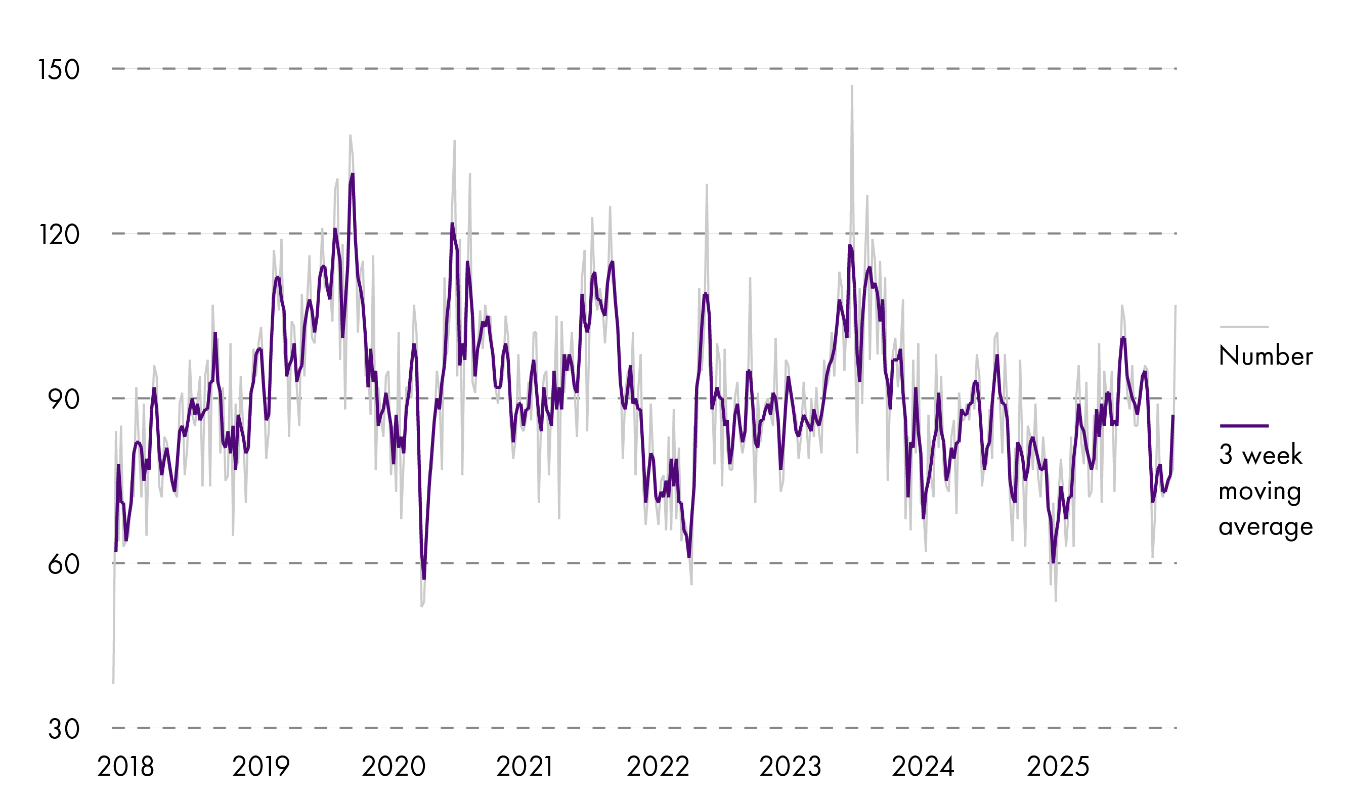
A breakdown by drugs implicated in these attendances also shows an increase in those involving cocaine, from 8.4% of all admissions in December 2017 to 17% in November 2025.

Areas of scrutiny
Throughout the parliamentary session we scrutinised the effectiveness of a number of measures to tackle drug deaths and drug harms. Our successor committees may wish to consider the impact of these measures in Session 7.
The National Mission
On 20 January 2021, the then First Minister, Nicola Sturgeon, made a statement to the Parliament which set out a National Mission to reduce drug deaths and improve lives through a range of improvements to treatment, recovery and other support services.
The First Minister appointed a Minister for Drug Policy, Angela Constance MSP, with a remit to lead Scotland's National Mission to reduce deaths and improve lives impacted by drugs.
On 9 August 2022, the Scottish Government published the National Drugs Mission Plan: 2022-2026.
Annual reports were published by the Scottish Government detailing the progress made in meeting the aims of the National Mission.
The National Mission includes the Medication Assisted Treatment Standards (MAT Standards), a new treatment target and a new approach to residential rehabilitation. It also set the groundwork for innovation such as through Safer Drug Consumption Facilities.
Rapid Action Drug Alerts and Response (RADAR) system
Public Health Scotland publishes quarterly reports of drug-related indicators on the Rapid Action Drug Alerts and Response (RADAR) system. RADAR is designed to act as an early warning system on drug-related risks and harms. The most recent quarterly report, published in January 2026, showed that compared to the previous quarter there had been:
a 25% decrease in emergency naloxone administration
a 3% increase in drug-related hospital admissions
a 12% decrease in drug-related attendances at A&E
an 18% decrease in suspected drug deaths.
In October 2025, the UK Department of Health and Social Care (DHSC) launched a drugs early warning system dashboard (external website). The data covers England, but there are plans to expand it to include information for Scotland and the other devolved nations. The dashboard publishes data similar to some RADAR indicators and currently covers:
deaths linked to synthetic opioids or xylazine-like substances, collated by DHSC and the National Crime Agency (NCA)
ambulance callouts where the opioid overdose antidote, naloxone, has been administered.
Synthetic opioids
Public Health Scotland initially published a RADAR alert about Nitazene-type opioids in January 2023. There have been a number of updates since then, most recently on 12 August 2025.
The latest update notes that Nitazenes have been detected across all parts of Scotland and that detections continue to increase. The most recent available data show Nitazenes were present in:
6% of post-mortem toxicology samples tested positive for a controlled drug (January to March 2025)
4% of samples in the ASSIST emergency department project (February to May 2025).
Between January and March 2025, Nitazenes were detected in 38 deaths. Nitazenes are most commonly found as an unexpected contaminant in drugs sold as heroin, benzodiazepines and oxycodone. Naloxone effectively reverses opioid-type drug overdoses. However, repeat doses may be required where there has been an overdose in which Nitazines are involved.
On 15 January 2025, the Misuse of Drugs Act 1971 was amended to control all substances falling under the generic definition for Nitazenes as class A drugs.
Christina McKelvie, the then Minister for Drugs and Alcohol Policy, provided information to the Members of the three Committees on 1 May 2024, stating that:
“The Home Office told us that, in maybe six to nine months, heroin will run out. It is now being supplemented by synthetic opioids and benzodiazepines, and people are shifting to injecting cocaine.”
National Naloxone Programme Scotland
The overall aim of Scotland's National Naloxone Programme (NNP) is to prevent fatal opioid overdoses. Accidental overdose is a common cause of death among people who use heroin, morphine and similar drugs. These drugs are also referred to as opioids.
Naloxone is a drug that reverses the effects of a potentially fatal opioid overdose. Administration of naloxone provides time for emergency services to arrive and for further treatment to be given.
Following training, ‘take-home’ naloxone kits are issued to:
people at risk of opioid overdose
their friends and family
service workers.
This initiative has been in place since April 2011.
Public Health Scotland (PHS) publishes annual and quarterly reports on the number of take-home naloxone kits provided in Scotland. The latest monitoring report indicates that in 2022-23, 28,689 take-home naloxone (THN) kits were issued in Scotland and that at the end of 2022-23, a total of 151,944 THN kits had been supplied in Scotland.
The most recent PHS National naloxone programme Scotland quarterly monitoring bulletin, in January 2026, estimated that 84% of people at risk of opioid overdose have been supplied with take-home Naloxone.
MAT standards
The MAT standards are ten evidence-based standards which aim to enable the consistent delivery of safe, accessible, high-quality drug treatment across Scotland. They focus on how treatment should be offered and take a person-centred approach, contributing to a number of outcomes in the National Mission.
The standards are intended to be used by Alcohol and Drug Partnerships (ADPs) for benchmarking improvements in specialist substance use treatment services.
The 2024-25 benchmarking report from Public Health Scotland report found that there was an increase in implementation of the MAT standards compared to the previous year:
91% of MAT standards 1-5 were fully implemented (compared to 90% in 2023-24)
75% of MAT standards 6-10 were fully implemented, with 16% provisional green (evidence that implementation is beginning) compared to 91% being provisional green in 2023-24.
In a letter to the Committees on 5 February 2024, the Cabinet Secretary for Justice and Home Affairs advised that the Scottish Government is committed to the MAT Standards being fully implemented in community and justice settings by April 2025, and sustainable across all settings by April 2026.
Residential rehabilitation and support
Residential rehabilitation is a well-established intervention for the treatment of drug and alcohol problems and is recognised as an important option for some people requiring treatment.
As part of the National Mission, the Scottish Government committed to invest £100 million for residential rehabilitation. It also worked in partnership with Healthcare Improvement Scotland (HIS) to improve pathways in, through, and out of, residential rehabilitation.
The National Mission on Drugs: annual report 2021 to 2022 contained the following Scottish Government commitment:
“We aim to increase the number of statutory funded placements in Residential Rehabilitation by 300% and increasing the number of beds available by 50% so that by 2026 there are at least 650 beds and 1,000 people are publicly funded for their placement each year.”
Public Health Scotland (PHS) published a series of reports on the number of individuals who start a residential rehabilitation placement in Scotland.
PHS published its Evaluation of the Scottish Government Residential Rehabilitation programme report in December 2025. It covered placements from 1 April 2019 to 31 March 2025.
The evaluation indicated that in 2024-25, 1,078 individuals started a publicly funded residential rehab placement in Scotland. This includes 993 Scottish residents and 86 non-Scottish residents. The evaluation concluded that:
“When only including Scottish residents, the data submissions suggest that the Scottish Government has already come close to meeting, and possibly has already met, its 2026 target in financial year 2024/25 (at least 993 individuals).”
The Thistle safer drug consumption facility pilot
An issue that Members considered throughout the parliamentary session was whether and how to introduce safer drugs consumption facilities (SDCFs) in Scotland.
SDCFs are supervised healthcare settings where people can inject drugs in the presence of trained health and social care professionals in clean, hygienic environments. The service aims to reduce the negative impact that injecting outdoors has on local residents, communities and businesses, reduce the harms to individuals associated with injecting drugs and support people to access help to improve their lives.
As current drug laws are reserved to the UK Parliament, any change to allow a legal exemption for those found in possession of a class A drug within a safer drug consumption facility would require new legislation at UK level. However, the UK Government has indicated that it does not intend to legislate in this way.
A SDCF in Glasgow was first proposed in 2016. A full business case was then presented to Glasgow City Council's Integrated Joint Board in 2017.
Glasgow City Health and Social Care Partnership (HSCP) worked closely with partners to develop a proposal that would allow the Lord Advocate to issue a Statement of Prosecution Policy (SPP) to the effect that it would not be in the public interest to prosecute users of the facility in terms of section 5(2) of the Misuse of Drugs Act 1971 for simple possession offences within the confines of the facility. In November 2017, the then Lord Advocate, the Rt Hon James Wolffe QC, indicated that he did not support the proposal.
In 2022, Glasgow City HSCP submitted a revised proposal to the current Lord Advocate, the Rt Hon Dorothy Bain KC, requesting further consideration to a public statement of prosecution policy that would support the implementation of a Safer Drug Consumption Facility.
On 11 September 2023, in response to a letter from the Committees seeking an update on her consideration of a pilot for a safer drugs consumption facility in Glasgow, the Lord Advocate indicated that:
“I can confirm that were a facility, of the type described in the documents which I have been provided with, to open as a pilot in Glasgow, then I would be prepared to publish a statement of prosecution policy to the effect that it would not be in the public interest to prosecute users of that facility in terms of section 5(2) of the Misuse of Drugs Act 1971 for simple possession offences committed within the confines of the facility”.
In a follow-up letter to the Committees on 8 January 2025, the Lord Advocate confirmed that:
“I am writing to update you on my consideration of a statement of prosecution policy in relation to the proposed pilot of a safer drug consumption facility in Glasgow. I understand that it is proposed that such a facility will open on 13 January 2025 … I now enclose a statement of prosecution policy relating to that facility to that effect, for the duration of its pilot”.
The Thistle safer drug consumption facility opened on 13 January 2025. It is a pilot funded for three years. The services provided by The Thistle will be independently evaluated by a research consortium led by Glasgow Caledonian University and the University of Glasgow.
The Committees took evidence in 2023 and again in 2024 on the proposal by Glasgow City Health and Social Care Partnership and NHS Greater Glasgow and Clyde to open a SDCF in the Calton area of Glasgow. The Committees also took evidence in October 2025, nine months after The Thistle opened, on its impact, challenges and any proposed future developments.
The Thistle is open 7 days a week, 365 days a year from 9am to 9pm. The Committees heard that the limitations of the opening hours mean that not all injecting episodes are undertaken within the facility, and that the operating hours should be reviewed as part of the evaluation.
The establishment of the first safer drug consumption facility in Scotland was a contentious issue, and subject to some misinformation. Members were keen to hear the views of the local community to establish the facts as part of their consideration of the impacts of the safer drug consumption facility. This included taking evidence from representatives from a local business and Calton Community Council, as well as requesting local crime data from Police Scotland during the period of The Thistle’s operation and for the preceding five years for comparison purposes. This evidence based approach, to explore measures to tackle drug harms, was also undertaken by a People’s Panel. More information on the Panel’s work is included later in this report.
This measured approach to engagement taken by the Committees, along with the use of participative deliberation through the use of a People's Panel, helped to establish the facts and address public concerns and misinformation about the safer drug consumption facility.
Members of the Committees visited The Thistle immediately prior to its opening in January 2025, and then again in June 2025.

The House of Commons Scottish Affairs Committee (SAC) undertook an inquiry into The Thistle and published its report on 3 September 2025. The SAC called on “both Governments to adopt a balanced, evidence-based approach to problem drug use”. The SAC recommended that:
“The UK Government should seriously consider the evaluation and, if the outcomes are positive, should consider the merits of SDCFs alongside consideration of other interventions to tackle problem drug use.”
In its response to the SAC report the UK Government indicated it takes a different approach to the Scottish Government to tackle drug taking in Scotland. The UK Government confirmed that it is working with the Scottish Government to enable licensed drug checking facilities to operate lawfully and sharing data and information. In response to the Committee's recommendations on expanding the services provided by The Thistle, the UK Government stated that:
“The UK Government does not support drug consumption rooms (DCRs) or the expansion of facilities at The Thistle to enable users to inhale drugs and has no plans to make legislative changes to enable the provision of such paraphernalia as part of its operation.”
The data for The Thistle's first year of operation indicates that:
The Service was accessed a total of 11,348 times. This is the number of distinct / unique occasions when The Thistle was accessed by a service user registered with the service. Access includes wound care and use of the shower, clothing store or laundry facilities.
There were 7,827 injecting episodes.
There were 93 medical emergencies. These include interventions from enhanced observation of the service user to administration of oxygen, naloxone or resuscitation.
The centre referred 612 people to other services, such as housing and addiction support.
Safer drug consumption facilities in other areas
The Edinburgh Integration Joint Board's Strategic Plan includes a commitment to the development of a business case for consideration by the Scottish Government for a Safer Drug Consumption Facility within the City of Edinburgh. This requires a public consultation, which was approved by the Board at its meeting on 22 September 2025. The Board intends to launch the consultation in early 2026.
The Scottish Affairs Committee considered SCDFs being established in other areas in Scotland as part of its inquiry and came to the following conclusion:
“There has been interest in establishing SCDFs in other parts of Scotland, and the Lord Advocate has indicated that she will consider any such applications on their merits. Rather than having multiple facilities with individual prosecution policy arrangements, it would be more appropriate for them to operate on a clear, legal basis, common to all. This would require legislative action from the UK Government and UK Parliament.”
Drug checking pilot projects
Drug checking is a service which allows individuals to anonymously submit samples of drugs to be tested. Once the samples are tested, the individuals will then receive information about the content and potency of the drugs to enable them to make more informed decisions about their use. It can assist in identifying and responding more quickly to emerging drug trends and provide vital information for Scotland’s early warning system.
The Scottish Drug Deaths Taskforce-funded research project, Researching and developing key components of a new Scottish drug checking programme, identified three areas as possible drug-checking pilot sites as well as a national hub based at the University of Dundee.
The Scottish Government is progressing implementation of a Drug Checking Pilot Project, with point-of-care testing facilities in Aberdeen, Dundee, Glasgow and Edinburgh. The operation of these drug-checking services is subject to the approval of licences from the Home Office for handling controlled drugs.
In August 2024, City Health and Social Care Partnership applied to the Home Office for a drug-checking service pilot, a separate service to The Thistle based at the same site.
On 30 October 2025, Maree Todd MSP, Minister for Drugs and Alcohol Policy and Sport, provided an update on drug-checking pilot projects.
The Minister confirmed that the Glasgow facility's application had been approved and had received its licence from the Home Office, and that the Scottish Government was “working at pace with local partners in Glasgow to enable the service to get up and running as soon as possible”.
The University of Dundee will host Scotland's first National Testing and Research Laboratory (NTRL) for drug-checking. It will be based at the Leverhulme Research Centre for Forensic Science.
The Laboratory will analyse samples provided to it through a consortium of point-of-care facilities which are being established in Aberdeen, Edinburgh, Dundee and Glasgow, to help respond to emerging trends such as highly dangerous synthetic substances and provide essential back-of-house functions such as destruction of samples.
The Minister confirmed that the point-of-care facilities in Aberdeen and Dundee had submitted licence applications and were awaiting approval, subject to the status of the NTRL being confirmed and the establishment of a national evaluation of the pilot. The Minister indicated that the fourth point-of-care facility in Edinburgh joined the project at a later date and that local partners were currently working on their licence application for submission to the Home Office.
Tackling stigma
In its final report, the Scottish Drug Deaths Taskforce called for a significant culture change in how the Scottish Government designs policies to support people affected by problem drug use and how to ensure people are treated with dignity and respect in all areas of life.
In January 2023, the Scottish Government published a National Stigma Action Plan, which outlined its plan to co-design a National Programme to tackle stigma with people affected by substance use.
A People's Panel was commissioned by the Committees to consider the question: ‘What does Scotland need to do differently to reduce drug related harms?’. The Panel (described in more detail later in this report) found that there are still systemic problems with stigma, which act as a barrier to people accessing treatment. The Panel recommended that:
“More people with lived experience should provide ongoing support and aftercare in the statutory workforce.”
In its response the Scottish Government confirmed that it is taking a number of actions to address stigma, including:
“In the coming months, we will publish a ‘Guiding Principles’ document for employers setting out how they can best support employees with lived and living experience of substance use. These principles will address stigmatising practice, allowing people recovering from substance use to flourish in the workplace. We will also shortly publish ‘Employability Support Toolkits’ to support people with lived and living experience to enter and pursue careers in the substance use sector, including statutory services.”
Misuse of Drugs Act 1971
Responsibility for drugs legislation and the treatment of drug-related issues is divided between the UK and Scottish Governments. Drugs legislation is reserved to the UK Parliament,i with the Misuse of Drugs Act 1971 regulating the production, supply and possession of controlled drugs in the UK.
The Scottish Parliament has responsibility for the provision of drug harm policy, treatment and health services in Scotland. Other devolved matters relevant to the handling of drugs and treatment of problem drug use include social work, policing and the criminal prosecution system.
There are currently no exceptions within the provisions of the Misuse of Drugs Act 1971 which would enable an SDCF to open or operate in the UK. Similarly, there are no exceptions to enable inhalation equipment to be used, or spaces established to enable drugs to be taken in a safer way, or the use of drug using equipment, such as tourniquets, to help to reduce the harm from injections.
The Thistle opened on the basis of a statement of prosecution policy issued by the Lord Advocate of Scotland which means, in effect, people can consume drugs in the facility and not be prosecuted for possession. UK law has not been changed.
As with all reserved legislation, exemptions to the Misuse of Drugs Act 1971 could only be made by the UK Parliament.
In its report, the Scottish Affairs Committee recommended the following changes to The Thistle to maximise its impact:
“Having access to equipment such as single-use tourniquets, testing drugs onsite, and allowing visitors to inhale drugs have all been highlighted as key to The Thistle achieving its maximum effectiveness. Without these, a full and fair evaluation of The Thistle will be inhibited.”
The Committee also recommended that:
“If an application for exemptions from the Misuse of Drugs Act 1971 to enable the provision of medical equipment at The Thistle were made by Glasgow City HSCP or the Scottish Government, the UK Government should consider such an application on its merits, as evidence suggests this could enable The Thistle to maximise its effectiveness.”
People's Panel
On 1 May 2024, the Committees agreed to commission a People's Panel to consider the question: ‘What does Scotland need to do differently to reduce drug related harms?’.
The intention was to hear the views of members of the public, including those with lived experience of drug use.
To support a representative and deliberative process, 500 invitations were issued to randomly selected households across Scotland.
A Stewarding Board of stakeholders including lived-experience organisations, academics, and representatives from Police Scotland and Public Health Scotland supported the Panel's work. The final panel consisted of 23 individuals aged 16 to 75, drawn from all over Scotland.
Participants received evidence from a wide range of experts. Through facilitated discussion, the Panel produced a report which included a collective statement and 19 recommendations, published in January 2025.
The Panel's key recommendation themes
Across the 19 recommendations, overarching themes emerged that shaped the Panel's vision for reducing drug harm in Scotland including:
Tackling stigma and cultural change, including national training and more compassionate, rights‑based approaches across public services.
Strengthening prevention and education, with consistent, age‑appropriate drug education and improved public awareness initiatives.
Improving access to treatment, care and recovery, ensuring integrated services, long‑term funding and clear referral pathways.
Reforming justice approaches, shifting away from imprisonment for minor drug offences and addressing drug supply and harm within prisons.
Embedding lived and living experience in service design, delivery, training and workforce development.
Addressing poverty and wider social determinants, recognising the role of housing, economic insecurity and inequality in shaping vulnerability to drug harm.
Panel engagement with the Committees and the Parliament
Panel members presented their findings to the Committees at a joint evidence session on 20 February 2025. Their testimony informed the Committees’ questioning of witnesses and Ministers. A subsequent parliamentary debate on 6 March 2025 demonstrated strong cross‑party support for the Panel's work, with MSPs highlighting the value of the recommendations and the urgency conveyed by participants.
Panel impact on the Criminal Justice Committee's work
The People's Panel played a significant role in shaping subsequent scrutiny activity. The Criminal Justice Committee initiated an inquiry into drug harms in Scottish prisons in direct response to a Panel recommendation. Details of this inquiry are provided later in this report.
Scottish Government response to the People's Panel
In February 2025, the Scottish Government formally responded to the Panel's report and accepted all 19 recommendations, either fully or in principle. Many aligned with ongoing work under the National Mission, while others were identified for integration into future strategic planning. Progress updates offered detail on implementation and indicated that the recommendations would inform the development of the Scottish Government's Alcohol and Drugs Strategic Plan.
Panel evaluation and participant feedback
Evaluation findings show that People's Panel participants valued the opportunity to learn, deliberate and shape policy recommendations. The structured process supported informed, inclusive discussion and produced a clear set of actions that the Committees and stakeholders found credible and insightful.
Recommendation for future committees
The Committees recommend that future parliamentary scrutiny continues to embed the voices of the public and those with lived and living experience through approaches such as People's Panels. The Panel's work demonstrates the importance of participatory engagement in addressing complex issues.
The People's Panel added value to joint committee scrutiny in holding the Scottish Government to account. We note that the People's Panel recommended the need for an “urgent examination of the issues around poverty” including “input from a People's Panel”. This could be a potential topic for a future People's Panel.
Criminal Justice Committee's inquiry into tackling the harm caused by substance misuse in Scottish prisons
The Criminal Justice Committee undertook a substantial inquiry during 2025 into the harm caused by substance misuse in Scotland's prisons. The inquiry was launched in response to growing concern about drug-related deaths in custody, persistent evidence of unmet mental health and addiction needs, and the recommendation of the People's Panel that the Parliament should examine the rising levels of drug supply and harm within the prison estate.
The Committee agreed that the inquiry should take a broad, evidence-based approach, examining not only enforcement and security measures but also the underlying drivers of substance use, the adequacy of healthcare and treatment, and the effectiveness of rehabilitation and throughcare. Its focus included the extent and pattern of substance use across prisons, the role of trauma and inequality, the impact on safety and wellbeing of both those in custody and staff, and whether current governance and data arrangements enable effective scrutiny and accountability.
Over the course of the inquiry, the Committee took oral evidence across six formal sessions from Scottish Government Ministers, senior Scottish Prison Service officials, NHS clinicians, Public Health Scotland, Police Scotland, and a wide range of third-sector organisations. The Committee also received 32 written submissions from stakeholders including statutory bodies, academics, professional organisations, advocacy groups and individuals. Members undertook visits to HMP Grampian and HMP Edinburgh, where they met prison staff, healthcare teams, peer mentors and voluntary organisations, gaining first-hand insight into how substance misuse affects daily life in custody.
A particularly important element of the inquiry was the Committee's engagement with people who have lived and living experience of substance use in prison, and with family members affected by imprisonment. These sessions, held privately to allow participants to speak freely, were described by Members as among the most powerful evidence received, providing a clear understanding of the human impact of policy and practice, including the effects of stigma, trauma, inconsistent care and gaps in support on recovery.
The Committee's final report, published on 16 January 2026, concludes that substance-related harm in prisons is fundamentally a public health issue with justice consequences, rather than solely a criminal justice issue. It highlights strong evidence that drug use in custody is closely linked to trauma, poverty, poor mental health and lack of purposeful activity, and that prisons often amplify existing inequalities rather than alleviating them. The report identifies systemic weaknesses in healthcare provision, inconsistency in access to mental health and addiction services, workforce pressures, overcrowding and fragmented governance as key barriers to progress.
The inquiry also found that enforcement alone cannot resolve the issue. While recognising the importance of security and the professionalism of prison staff, the Committee concluded that a whole-system, health-led approach is required, including full implementation of the Medication Assisted Treatment (MAT) standards in prisons, improved continuity of care on liberation, stronger integration between justice and health services, better data and transparency, and sustained investment in recovery-focused practice.
The Committee's report, including its conclusions and recommendations, was debated by the Parliament on 26 February 2026. Members agreed that the findings of this inquiry should inform ongoing cross-committee scrutiny of drug deaths and drug harm and provide an important evidence base for Session 7 scrutiny of both prison-based and community responses to substance misuse.
Holding the Scottish Government to account
The six-monthly updates to the Committees provided a mechanism for the Parliament to hold the Scottish Government to account. There were also 13 Ministerial Statements and six Scottish Government debates scheduled throughout the parliamentary session on the measures being taken to tackle drug deaths and drug harm.
Ministerial statements
03 August 2021 Drug Deaths
30 November 2021 Residential Rehabilitation
14 December 2021 Drugs Services
26 May 2022 Drug Deaths
23 June 2022 Medication Assisted Treatment Standards
08 September 2022 National Mission on Drugs
13 December 2022 Medication Assisted Treatment and Workforce Update
21 March 2023 Care of Co-occurring Mental Health and Substance Use Conditions
20 June 2023 Medication Assisted Treatment Standards
12 September 2023 Drug Deaths
19 December 2023 Medication Assisted Treatment Standards
12 September 2024 Drugs and Alcohol (National Mission)
05 February 2025 Medication Assisted Treatment Standards
Scottish Government debates
17 June 2021 Drug-related Deaths
26 October 2021 Mental Health Needs and Substance Use
13 January 2022 National Mission on Drugs
24 November 2022 National Drugs Mission
12 January 2023 National Drugs Mission
19 September 2023 Drug Law Reform
A National Drugs Mission Oversight Group was established in June 2022 to provide challenge, scrutiny and advice to the Scottish Government and the wider sector. The Group meets every three months to:
scrutinise the Scottish Government's plan to deliver the National Mission
identify any gaps in the plan and share suggestions for how these may be addressed
provide expert advice on policy areas and service delivery as requested by Scottish Ministers
share best practice, including from other countries which have had success in reducing deaths and harms from drug use
promote accountability in the system at a national and local level
explore how recommendations from other governance groups could be implemented in the context of limited funding and resources.
Key issues identified throughout this session are the need for more urgency to tackle this public health emergency and addressing the implementation gap in delivering some of the policies.
At the Festival of Politics event in the Scottish Parliament in August 2025, Kirsten Horsburgh, Chief Executive of the Scottish Drugs Forum (SDF), and member of the National Drugs Mission Oversight Group, said:
“There are things we are doing well in Scotland and there are obviously things we are not doing well. The things we are doing well is finally reaching a point where we have the right policy direction. But policy intent without action, the implementation gap and pace are the major issues here.”
Survey responses
To assist in evaluating the cross-committee approach adopted during this session, a survey was issued to gather reflections on its effectiveness. The survey was circulated to all those who contributed to the programme of work, including Conveners, Committee Members, members of the People's Panel, witnesses, and stakeholders who engaged with the Committees throughout the session.
The purpose of the survey was to capture views on the strengths and challenges of the collaborative scrutiny model adopted by the three committees. Respondents were invited to comment on the value of joint working, the clarity of roles and responsibilities across Committees, and the extent to which the approach supported effective scrutiny of the Scottish Drug Deaths Taskforce’s recommendations.
The survey also sought feedback on the practical aspects of the cross-committee process, including communication between Committees, coordination of work programmes, and the experience of participating in joint meetings and visits.
This feedback is intended to inform the Committees’ reflections on the approach taken during Session 6 and help shape recommendations for future collaborative scrutiny.
Benefits of a cross-committee approach
The survey sought to understand the perceived benefits of the cross-committee approach adopted during this session. Respondents highlighted a range of positive aspects, particularly around communication, collaboration, and the quality of scrutiny, whilst recognising that the model still needs to evolve and develop.
From a parliamentary perspective, an MSP reflected on the longer-term implications for scrutiny and committee culture, stating that “This reflects an understanding of, and willingness to, take a more effective and practical approach to scrutiny, and should lead to more effective outcomes in Committee work. I also believe it fosters a more collegiate approach to committee work, rather than MSPs working in their own committee bubble”.
Several respondents emphasised the value of improved communication and regular engagement. In relation to the People's Panel work, one panel Member noted that “I feel the communication between sessions was very informative”, and another describing the experience as “outstanding in every way”.
The benefits of joint working across Committees were also frequently highlighted. One stakeholder reflected that “it has been helpful to have the three Committees working together, rather than duplicating their effort […] it has been very useful to have the Cross-Committee keeping a focus on holding the Government to account on implementing the recommendations. This has helped to take some of the politics out of it, by making it more likely to find consensus across the parties”.
Respondents also pointed to the structural strengths of the approach. A People's Panel Member commented that “the positives have been strong structure and oversight, improved collaboration between Committees, valuable external visits that deepen understanding, and meaningful engagement with people with lived experience. The approach has encouraged shared purpose, accountability and coordinated national focus on tackling substance use in Scotland”.
The value of regular scrutiny was similarly noted by a Scottish Government policy official, who stated that “having six monthly meetings has meant that progress on issues or the Scottish Government's response to emerging matters has been regularly put on the record, along with the scrutiny that goes with it. These sessions and the evidence provided to the Cross Committee have helped shape policy making”.
Some respondents reflected on the wider cultural impact of the work, with one contributor observing that “the work of the Cross-Committee emphasised the importance of the shift from seeing drug problems in Scotland as a crime and justice issue to seeing them as a health and social issue”.
Others emphasised the democratic value of the cross-committee approach to scrutiny. In relation to the People's Panel, one panel Member described the process as “a positive example of democracy in action, and should be encouraged, as this approach, although part of the bureaucratic process, enables serious topics to be afforded a bit more urgency and positive outcomes than routine parliamentary business processes”.
The contribution of lived-experience voices was also recognised, with one respondent noting that they were “particularly impressed with the work of the People's Panel, which tackled […] a very complex challenge for Scotland”.
Challenges
Whilst many respondents recognised the value of a co-ordinated, cross-committee model, survey responses also identified a number of challenges with this approach. These reflections centred on issues of leadership, continuity, clarity of purpose, and the practical constraints of working across multiple committees.
Several MSPs highlighted structural and cultural barriers that they felt limited the effectiveness of the model. One Member reflected that although the three-committee, six-monthly approach provided “a structured and coordinated approach to tackling substance use in Scotland”, it can also “lack agility and continuity”, with communication between meetings described as “effective but infrequent”. Another MSP noted that whilst conveners may stay in touch between sessions, “other members don't”, and expressed uncertainty about whether “there had been much follow-up work or any improvements made from our meetings”, adding that although they felt the process had been informative, they didn't know if “it has made any improvement on the subject”.
Practical constraints around parliamentary scheduling were also raised. One Committee Convener described the meeting windows as a barrier, stating that for the Members of the three Committees it was difficult “to meet outside of the Tues-Thurs mornings”, as these sessions clashed with the Committee they were responsible for convening. Another Member reflected that the Committee “didn't meet frequently enough”.
Questions of leadership and direction were similarly noted, with one MSP observing that “there was a lack of clarity about Committee leadership”, whilst another argued that the party balance across the three Committees meant “there was never any real challenge to the approach to tackling drug-related deaths”, suggesting that Members were “too content with what was being done” and that scrutiny “should have [been] far more rigorous and challenging”.
Concerns were also raised about continuity of membership and its impact on engagement. One MSP explained, “as the membership of committees changes, so too does membership of the cross-committee group”, and this turnover may affect MSPs’ understanding of the work.
The challenge of continuity extended beyond a parliamentary perspective. One stakeholder highlighted the effect of instability within government, nothing that “in the last three years there have been four Ministers responsible for this area, and a similar number of Deputy Directors”, reflecting that this had not helped the Committee's work or the consistency of policy engagement.
Some respondents felt that engagement with people with lived experience proved challenging. One People’s Panel Member observed that involvement “has not always been consistent or sustained”, noting that contributions sometimes felt more like consultation than co-production, leaving their impact on decision-making “indirect”. An MSP expressed disappointment that “only the voices of lived experience that endorsed the Scottish Government's plans […] were ever really allowed to contribute”, adding that “there were no critical voices” included in the People's Panel.
The size and composition of the cross-committee itself was raised as a practical challenge. One MSP commented that “the Committee membership numbers as they stand are too large”.
Looking ahead to Session 7
As respondents reflected on the future of cross-committee scrutiny, a strong sense emerged that the foundations laid in this session provide a valuable platform, but that the model must evolve to meet the scale and urgency of Scotland's drug-related harms.
Respondents consistently emphasised the need for greater responsiveness, clearer accountability, and deeper integration of learning and lived experience if scrutiny is to remain effective for future parliamentary sessions. One People's Panel Member captured this sentiment, noting that whilst “the structure supports oversight and shared purpose”, its impact would be strengthened through “greater responsiveness, clearer accountability, and stronger integration of learning and lived experience”.
Several MSPs highlighted the importance of adapting the scrutiny model to better reflect the significance of the issue. One Member expressed appreciation for the Committees’ abilities to respond to topical developments but stressed that “more preventative work is required”, adding that “given the issue we are dealing with, then I would like to see a sole Committee set up to address the national issues we are facing”. Another MSP echoed this, suggesting “more frequent meetings or a Committee solely responsible for drug deaths and drug harms”. Others pointed to the need for clearer leadership, with one Member recommending that future sessions should have “a designated Convener rather than rotating the role”.
Improving communication and co-ordination between meetings was a recurring theme. A People's Panel Member suggested that cross-committee work could be strengthened by “increasing communication between meetings, creating joint workplans around shared priorities, and setting clear lines of responsibility for scrutiny”. Additional practical proposals included regular briefings, digital updates and short “learning summaries” to help share good practice.
The importance of accessible information was also raised, with a respondent from the Scottish Government suggesting a “collective Cross-Committee web page on the Parliament website” which would help interested parties “navigate historic papers and evidence”, emphasising the value of consolidating materials “all in one place”.
Respondents also stressed the need for more systematic and meaningful involvement of lived and living experience. One People's Panel Member suggested that earlier and more consistent involvement of stakeholders in agenda-setting would “strengthen collaboration and impact”. Another stakeholder urged that future work should “involve the panel members at all stages”.
One witness reflected on the barriers created by a formal parliamentary setting, explaining that whilst the process was “somewhat effective”, it could be “daunting to attend and give evidence”. This witness suggested that Committee Members should meet people “in their own environments where they may feel more comfortable and at ease to speak about issues they continue to face”. Other respondents emphasised the need for more continuous and embedded engagement, with one contributor recommending advisor panels and peer-led evidence sessions to ensure lived experience is not episodic, but integral.
Respondents also offered a range of proposals to strengthen cross-committee scrutiny in Session 7. These included:
establishing a dedicated cross-committee working group to maintain consistent focus across health, justice and social policy;
increasing the frequency of cross-committee meetings to quarterly;
ensuring lived experience is embedded through all levels of scrutiny;
enhancing data transparency through more regular reporting; and
strengthening accountability by “linking scrutiny outcomes to specific ministerial and local responsibilities”.
Some respondents also highlighted the need for scrutiny structures to adapt to emerging policy landscapes. One noted that alcohol and drug policy is “likely to be brought close together” in the next session, and that this should be reflected in how the Parliament scrutinises the work of the Scottish Government. One Member recommended scrutiny of the Scottish Government's implementation of the Health & Social Care Service Renewal Framework 2025-2035, which will provide a framework for drug and alcohol work, and the Scotland's Population Health Framework 2025-35, which will include an Alcohol and Drugs Plan, building on progress made by the National Mission on Drugs, to reduce alcohol and drug related harms and deaths.
The importance of tracking progress against recommendations was also emphasised, with one respondent suggesting that if a report is produced at the end of this session, there should be “a way of scrutinising progress against recommendations for the SG [Scottish Government] within that report”.
In response to the question about how the Scottish Parliament could take forward scrutiny in future sessions, some contributors reflected on the need for clearer mechanisms to establish cross-committee groups in future sessions. One MSP recommended that “a more formal process should be established” to provide the Parliament with a structured way to create such groups, complete with clear terms of reference where appropriate.
The cross-committee work was initiated by a request from members of the Criminal Justice Committee to meet jointly with members of the Health, Social Care and Sport Committee and the Social Justice and Social Security Committee to consider the progress made on the implementation of the recommendations of the Scottish Drug Deaths Taskforce. Alternative approaches which could be taken include:
Establishing an ad hoc committee whose membership could be made up of a selection of MSPs who are members of the relevant subject committees. This would be a separate committee.
One of the relevant committees establishing a sub-committee (under Rule 12.5) which could include members who are not members of the "parent" committee, such as members of other relevant committees.
One Committee leading on the cross-cutting topic, with other relevant committees appointing "reporters" (under Rule 12.6) to attend (public) meetings of the lead committee.i
Other respondents stressed that long-term progress will depend on “sustained collaboration”, “continuity” and “trust”. As one People's Panel Member observed, future scrutiny must become “more agile, connected and participatory”, with lived experience embedded “not as testimony, but as partnership”. This was followed by an assertion that further alignment between Parliament, local partners, and communities, will be essential to fostering “a genuine culture of compassion, accountability, and hope” in Scotland's response to substance use.
The Committees strongly encourage Members in Session 7 to continue this important scrutiny work.
Annex A - Cross-committee meetings on tackling drug deaths and drug harm
1. Reducing drug deaths in Scotland and tackling problem drug use: The Committees will took evidence from—The Right Hon Kit Malthouse MP, Minister of State for Crime, Policing and Probation, UK Government, and Marcus Starling, Head of the Drugs Misuse and Firearms Unit, Home Office, UK Government.
1. Decision on taking business in private: The Committees agreed to take item 3 in private.
2. Reducing drug deaths in Scotland and tackling problem drug use: The Committees took evidence from—David Strang, Chair, Scottish Drug Deaths Taskforce;Angela Constance, Minister for Drugs Policy, Scottish Government.
3. Review of evidence (in private): The Committees considered the evidence heard earlier under agenda item 2.
1. Decision on taking business in private: The Committees agreed to take item 3 in private.
2. Reducing drug deaths in Scotland and tackling problem drug use: The Committees took evidence from—Angela Constance, Minister for Drugs Policy, Scottish Government.
3. Work programme (in private): The Committees agreed to invite the Minister for Drugs Policy to a further evidence session in 2023. The Committees also agreed to write to the Crown Office and Procurator Fiscal Service to seek an update on their deliberations on the legality of safe drug consumption rooms and to seek information from the Scottish Government on the UK-wide Drugs Ministerial meetings.
1. Decision on taking business in private: The Committees agreed to take item 3 in private.
2. Reducing drug deaths in Scotland and tackling problem drug use: The Committees took evidence from—
Liz Nolan, Deputy Director Operations, Aberlour
Karen Reynolds, Service Manager, Renfrewshire Alcohol and Drugs Partnership
Kirsten Horsburgh, Director of Operations, Scottish Drugs Forum
Justina Murray, Chief Executive Officer, Scottish Families Affected by Alcohol and Drugs
And then from—
Angela Constance, Minister for Drugs Policy, Scottish Government
Orlando Heijmer-Mason, Head of Drugs Policy Division, Scottish Government
3. Reducing drug deaths in Scotland and tackling problem drug use (in private): The Committees agreed to meet jointly every six months to continue to monitor progress of the implementation of the recommendations of the Scottish Drug Deaths Taskforce. The Committees agreed to meet more frequently, if required, in response to events. The Committees also agreed to accept an invitation from Aberlour for three members to visit one of its support facilities, at a future date.
1. Decision on taking business in private: The Committees agreed to take item 3 in private.
2. Tackling drug deaths and drug harm: The Committees took evidence from—
Kirsten Horsburgh, Chief Executive Officer, Scottish Drugs Forum
Wez Steele, Senior Training and Development Officer, Scottish Drugs Forum
Tracey McFall, Chairperson, Scottish Recovery Consortium
Simon Rayner, Service Lead, Aberdeen Alcohol and Drug Partnership
3. Tackling drug deaths and drug harm (in private): The Committees considered the evidence heard earlier in the meeting. The Committees agreed to write to the Minister for Drugs and Alcohol Policy on various issued raised during the evidence session. The Committees also agreed to reschedule a meeting with the Minister for Drugs and Alcohol Policy to a future date.
1. Decision on taking business in private: The Committees agreed to take item 3 in private.
2. Tackling drug deaths and drug harm: The Committees took evidence from—
Elena Whitham, Minister for Drugs and Alcohol Policy
Orlando Heijmer-Mason, Head of Drugs Policy Division and Michael Crook, Drug Policy Team Leader, Harm Reduction Team, Scottish Government
Susanne Millar, Chief Officer, Glasgow City Health and Social Care Partnership
3. Tackling drug deaths and drug harm (in private): The Committees considered the evidence heard earlier in the meeting. The Committees agreed to write to the Minister for Drugs and Alcohol Policy.
1. Decision on taking business in private: The Committees agreed to take item 3 in private.
2. Tackling drug deaths and drug harm: The Committees took evidence from—
Kirsten Horsburgh, Chief Executive Officer, Scottish Drugs Forum;
Dr Emma Fletcher, Director of NHS Tayside Public Health and Chair of Dundee Alcohol and Drug Partnership;
Justina Murray, Chief Executive Officer, Scottish Families Affected by Alcohol and Drugs;
and then from—
Christina McKelvie, Minister for Drugs and Alcohol Policy; Michael Crook, Drug Policy Team Leader, Harm Reduction Team, and Alison Crocket, Unit Head, Whole Systems Unit, Drugs Policy Division, Scottish Government;
Dr Saket Priyadarshi, Associate Medical Director, Alcohol and Drug Recovery Services, NHS Greater Glasgow and Clyde.
Clare Haughey declared an interest as holding a bank nurse contract with NHS Greater Glasgow and Clyde. Dr Sandesh Gulhane declared an interest as a practising NHS GP.
3. Tackling drug deaths and drug harm (in private): The Committees considered the evidence heard earlier in the meeting and considered next steps.
1. Decision on taking business in private: The Committees agreed to take items 3 and 4 in private.
2. Tackling drug deaths and drug harm: The Committees took evidence from—
Neil Gray, Cabinet Secretary for Health and Social Care; Maggie Page, Unit Head of the Drugs Strategy Unit, and Richard Foggo, Director of Population Health, Scottish Government.
3. Tackling drug deaths and drug harm (In Private): The Committees reviewed the evidence heard and considered next steps.
4. Work programme (In Private): The Committees considered their work programme.
1. Tackling drug deaths and drug harm: Paul Sweeney reported on a recent visit to the Thistle drug consumption facility in Glasgow.
2. Decision on taking business in private: The Committees agreed to take item 3 private.
3. Tackling drug deaths and drug harm: The Committees took evidence from—
James Allan; Helen Douglas; Mairi McIntosh; Alex McKinnon; and Alison Weir, Members of the People's Panel
and then from—
Neil Gray, Cabinet Secretary for Health and Social Care; Laura Zeballos, Deputy Director Drugs Policy Division, and Maggie Page, Unit Head Drugs Strategy, Scottish Government.
Clare Haughey declared an interest as holding a bank nurse contract with NHS Greater Glasgow and Clyde.
4. Tackling drug deaths and drug harm (In Private): The Committees reviewed the evidence heard, considered next steps and agreed to meet in September.
1. Decision on taking business in private: The Committees agreed to take item 3 in private.
2. Reducing drug deaths in Scotland and tackling problem drug use: The Committees took evidence from—
Dr Saket Priyadarshi, Associate Medical Director and Senior Medical Officer, Glasgow Alcohol and Drug Recovery Services
Kelda Gaffney, Interim Assistant Chief Officer, Glasgow City Health and Social Care Partnership
Tricia Fort, Chair, Calton Community Council
Steve Baxter, Corporate Security and Investigations Manager, Wm Morrison Supermarkets Limited
and then from—
Maree Todd, Minister for Drugs & Alcohol Policy and Sport; Maggie Page, Unit Head for Drugs Strategy, Scottish Government
Dr Tara Shivaji, Consultant in Public Health Medicine - Drugs, Alcohol, Public Health Scotland
Michael Marra declared an interest as the previous Deputy Director of the Leverhulme Research Centre for Forensic Science, University of Dundee.
3. Reducing drug deaths in Scotland and tackling problem drug use (In Private): The Committees reviewed the evidence heard earlier in the meeting and agreed their approach for the legacy report. The Committees agreed to schedule a further joint meeting before the end of session.
1. Decision on taking business in private: The Committees agreed to take item 2 in private.
Collette Stevenson reflected on the joint committee scrutiny carried out over the course of the session.
2. Legacy report: The Committees considered a draft legacy report. Various changes were agreed to and the Committees agreed to forward the amended report to the Criminal Justice Committee for its consideration.